White clothing styling is the practice of building outfits around white or near-white garments to project clarity, confidence, and visual intention. The role of white clothing styling goes far beyond simply wearing a pale shade. White acts as a foundation colour that forces you to think about proportion, texture, and accessory contrast in ways that patterned or dark clothing never demands. Brands like Jvwear have built entire collections around this principle, recognising that white pieces are the backbone of any minimalist wardrobe. Mastering white is not about staying safe. It is about wearing restraint with total confidence.
What psychological and social impacts does white clothing styling have?
White clothing carries measurable psychological weight. Wearing light-coloured, professional-style white garments can increase perceived expertise by 30% in observers. That figure comes from research into enclothed cognition, the documented effect where the symbolic meaning of clothing changes how both the wearer and those around them think and behave.
The enclothed cognition effect is not limited to formal settings. A tailored white blazer, for example, aids focus and authority in high-stakes interactions because the brain associates white with competence and precision. This is sometimes called the “white coat effect,” borrowed from studies on medical professionals. The effect works internally too. Wearing white can sharpen your own sense of purpose and composure.
“White’s psychological effect is not only an external perception shift. It also delivers an internal boost of authority and focus for the wearer.” — White clothing psychology research
White does carry a social risk. When worn without warmth or contrast, it can read as cold or unapproachable. The fix is not to abandon white but to balance it. A warm-toned accessory, a soft texture, or a single earring in gold shifts the entire reading of an outfit from clinical to considered.
How to style white clothing effectively in minimalist and casual outfits
Styling white well starts with shade selection. Pure optical white suits cooler skin undertones, while off-white, ecru, and cream flatter warmer ones. Getting this wrong is the most common reason white outfits look washed out rather than polished.

Styling experts recommend a 3-pillar approach for white outfits: choose a flattering off-white shade, add warming accessories, and keep makeup minimal but warm-toned for contrast. The logic is simple. White amplifies everything around it, so every choice reads louder than it would against a dark base.
Key styling principles for white outfits:
- Shade first. Match the white tone to your skin undertone before anything else.
- One statement piece. A tan leather bag, a gold chain, or a single pair of warm-toned earrings is enough. Adding more breaks the minimalist intention.
- Texture contrast. Mix eyelet cotton with smooth linen, or ribbed knit with silk. Flat, single-texture white reads as blank rather than intentional.
- Warm makeup. A bronzed cheek or a terracotta lip stops white from draining colour from your face.
- Proportion awareness. Oversized white on top works with a fitted white bottom, and vice versa. Matching volume top and bottom creates bulk rather than ease.
Experts warn that over-accessorising all-white outfits destroys the effect. Gold earrings or a neutral belt outperform a stack of jewellery every time. The goal is to look like you made one deliberate choice, not several anxious ones.
Pro Tip: Before leaving the house in an all-white outfit, step outside into natural light and check for transparency. Bright sunlight reveals sheerness that indoor lighting hides completely.
What fabrics and garment construction matter most for white clothing?
Fabric choice is the single biggest factor in whether white clothing looks polished or problematic. Structured fabrics like ponte, thick cotton poplin, and linen prevent see-through issues and keep white garments looking intentional rather than accidental. Thin jersey and lightweight chiffon in white almost always require a layer underneath.
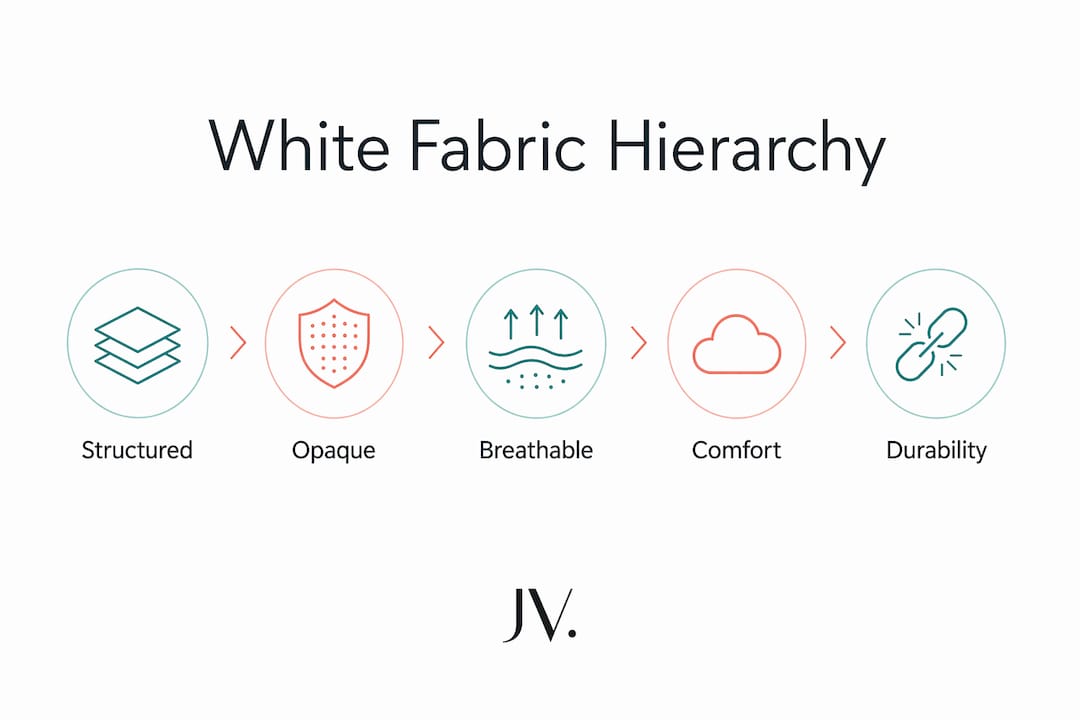
The natural light test is non-negotiable. Hold the garment up to a window before you buy or wear it. If you can see your hand clearly through the fabric, the construction is not suitable for wearing as a standalone white piece.
Fabric choices that work well for white casual wear:
- Ponte. Dense, structured, and opaque. Holds its shape across a full day of wear.
- Cotton poplin. Crisp and breathable. Works for both casual shirts and tailored trousers.
- Linen. The best warm-weather option. Natural fibres and loose silhouettes reflect solar radiation effectively, providing real temperature regulation. This is why linen thobes and loose white linen sets have been worn in hot climates for centuries.
- Ribbed cotton knit. Adds texture and structure simultaneously. A ribbed white top reads as intentional rather than plain.
- Eyelet cotton. The perforated pattern creates visual depth without adding colour, solving the flat-look problem in a single fabric choice.
Pro Tip: When buying white trousers or skirts, always check the fabric weight listed on the label. Anything under 180gsm in cotton is likely to be sheer in direct sunlight.
Comfortable fabric choices matter especially in white because the colour leaves no room for a poor fit or a limp drape. The fabric must do the structural work that pattern and colour do in other outfits.
How does white clothing fit within fashion trends and wardrobe building in 2026?
White is not a trend in 2026. It is a foundation. The language of luxury through restraint that white projects has remained consistent across decades of fashion, from the clean separates of the 1990s to the matching co-ord sets dominating casual wear now. What changes is how you build around it.
The table below compares two approaches to building a white-led wardrobe:
| Approach | Best for | Key pieces | Pitfall to avoid |
|---|---|---|---|
| Classic separates | Versatile everyday wear | White cotton shirt, white wide-leg trousers | Mixing too many white shades in one outfit |
| Matching white sets | Trend-led casual looks | White co-ord midi set, white ribbed two-piece | Wearing without one warm contrast element |
White clothing conveys confidence that transcends trends, making it a reliable minimalist wardrobe staple. That reliability is exactly why capsule wardrobe guides consistently place a white shirt and white trousers among the first ten pieces to own.
Care is where white wardrobe investment pays off or falls apart. White garments show wear faster than any other colour. Washing whites separately, using a dedicated white detergent, and storing them away from direct sunlight extends their life significantly. A well-maintained white linen shirt or a quality white midi dress will outlast three cheaper alternatives.
Minimalist white outfits rely on balance rather than brightness. The power of the look comes from careful accessory selection and fabric quality, not from the intensity of the white itself. This is why investing in fewer, better white pieces consistently outperforms buying volume.
The everyday minimalist outfit formulas that work in 2026 all share one trait. They treat white as the canvas and use one deliberate contrast element to complete the picture. A sculptural bag, a single gold hoop, or a tan sandal does the work that pattern would do in a busier outfit.
Key takeaways
White clothing styling works best when shade, fabric, and a single warm contrast element are chosen with intention rather than habit.
| Point | Details |
|---|---|
| Shade selection matters | Match the white tone to your skin undertone to avoid a washed-out appearance. |
| Fabric determines success | Choose ponte, cotton poplin, or linen to prevent sheerness and maintain structure. |
| One contrast element is enough | A single warm-toned accessory, such as a gold earring or tan bag, completes the look. |
| Texture adds depth | Mixing eyelet, ribbed, or embroidered fabrics prevents a flat, clinical appearance. |
| White boosts confidence | The enclothed cognition effect means white clothing raises both perceived and felt authority. |
Why white is the most demanding colour in your wardrobe
White is the colour that exposes every mistake and rewards every good decision. I have watched people avoid it for years because they assume it is impractical or unflattering. The truth is that white is unforgiving only when you approach it carelessly.
The most common mistake I see is treating white as a default rather than a choice. Grabbing a white top because it goes with everything is not the same as building an outfit around white intentionally. The difference shows immediately. One looks like an afterthought. The other looks like a statement.
What changed my own relationship with white was understanding the shade question. Off-white and ecru are not compromises. They are often the more sophisticated choice, particularly for warm skin tones. Once you stop reaching for the brightest optical white and start matching the shade to your colouring, the whole exercise becomes easier and more rewarding.
White also teaches you to edit. You cannot hide behind pattern or colour contrast, so you learn quickly what proportion, texture, and one good accessory can do. That skill transfers to every other outfit you build. Mastering white makes you a better dresser across your entire wardrobe, not just when you are wearing it.
— Mykola
White pieces worth adding to your wardrobe now
Jvwear’s collection gives you the building blocks for white outfit styling done properly, from structured tops to co-ord sets that remove the guesswork from proportion.
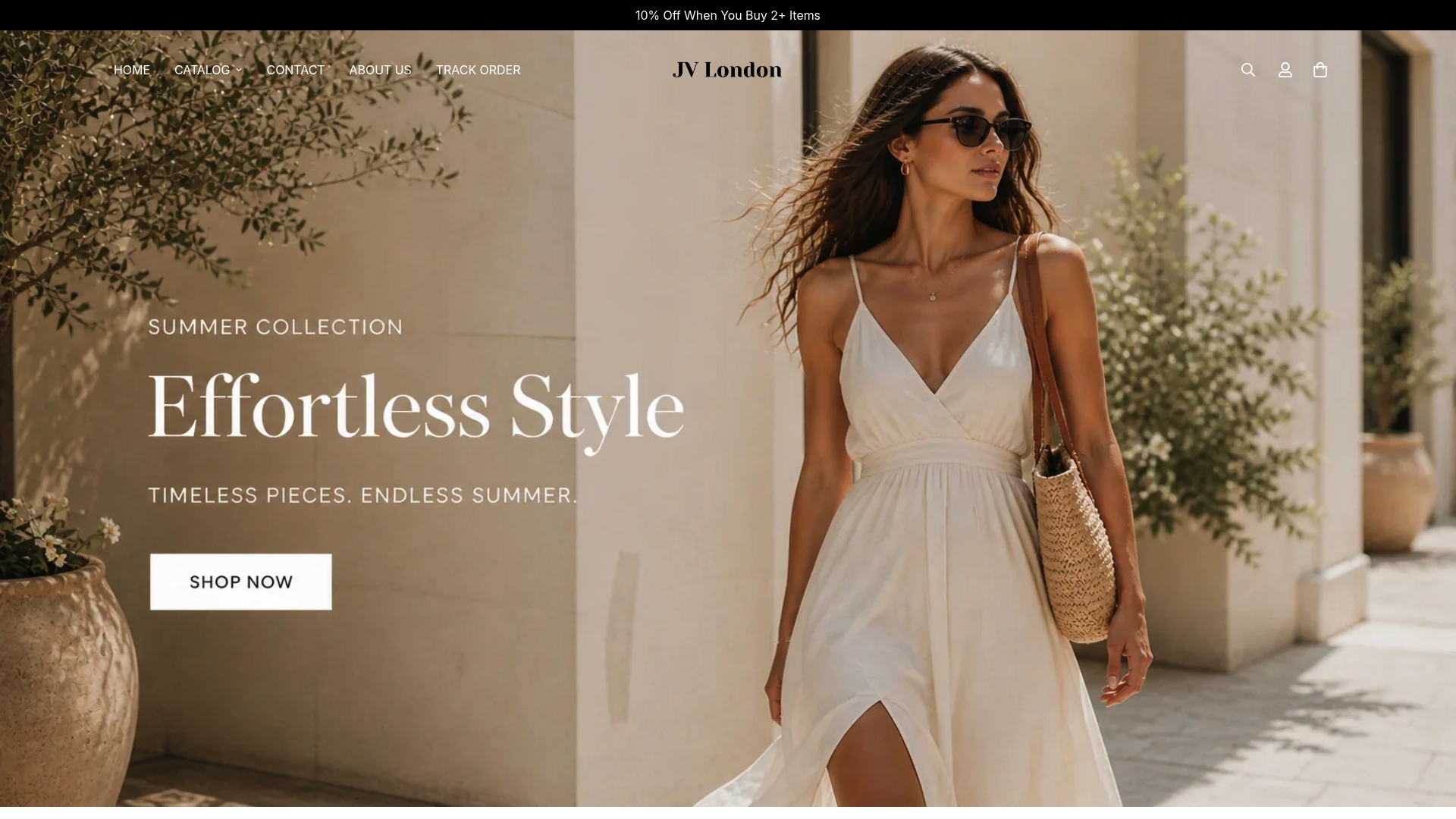
The Solvra two-piece midi set pairs a button-front cardigan with a midi skirt, giving you the matching-set silhouette that works as both a casual daytime look and a polished evening option. For a single statement accessory, the Vanya sculptural clutch in a warm neutral delivers exactly the contrast a white outfit needs without overcomplicating the look. Jvwear also carries a cardigan range that layers cleanly over white pieces for cooler days, keeping the minimalist line intact. Free UK shipping and 30-day returns mean you can test pieces at home in natural light, which is exactly how white clothing should be assessed before committing.
FAQ
What is the role of white clothing styling in fashion?
White clothing styling creates a clean, confident visual statement by using shade, texture, and minimal accessories to project clarity and intention. It functions as a foundation for both minimalist and trend-led casual outfits.
Does white clothing suit all skin tones?
White suits all skin tones when the shade is matched correctly. Cool skin tones suit bright optical white, while warm skin tones look better in off-white, ecru, or cream.
How do I stop white outfits looking flat or clinical?
Texture layering within white outfits, using eyelet, ribbed knit, or embroidery, adds visual depth and prevents a flat appearance. Adding one warm-toned contrast item, such as a tan bag or gold earring, completes the effect.
What fabrics work best for white casual wear?
Ponte, cotton poplin, and linen are the most reliable choices. These fabrics are opaque, structured, and breathable, making them suitable for everyday white outfits across different seasons.
How many accessories should I wear with an all-white outfit?
Styling experts recommend one statement accessory for an all-white look. One bag, one pair of earrings, or one belt preserves the minimalist intention and avoids visual clutter.