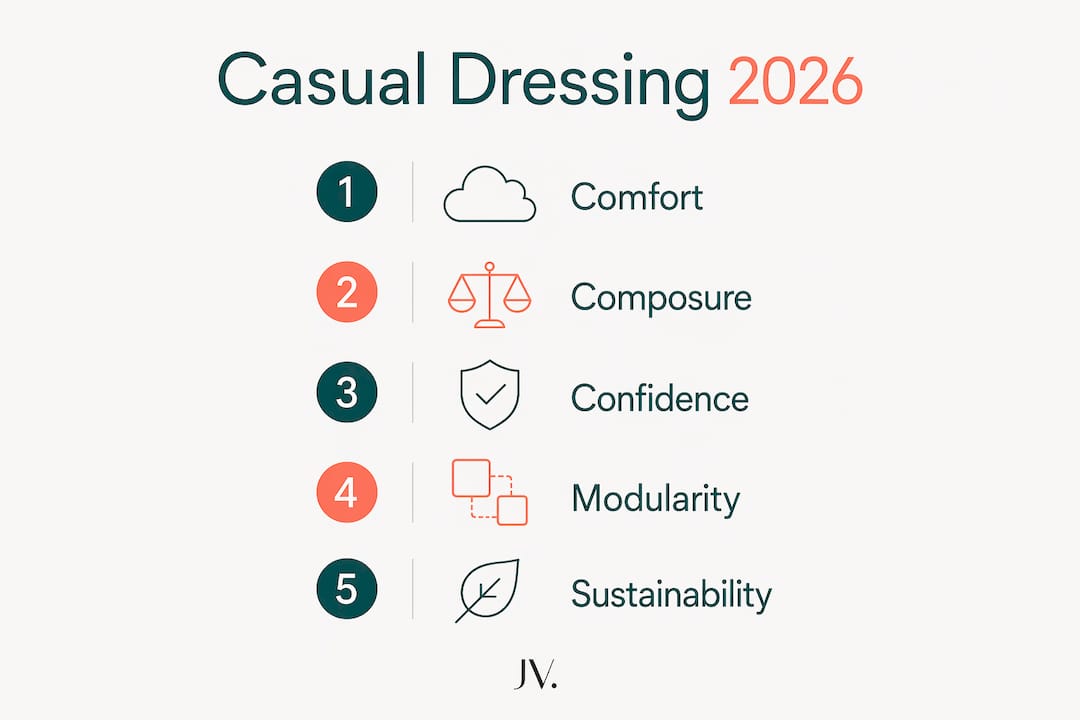
Casual dressing in 2026 is defined by three principles: comfort, composure, and confidence. What fashion insiders now call the “three Cs” of smart casual has replaced the old rulebook entirely, turning casual wear into a personal vibe rather than a prescribed uniform. The shift is visible across every category, from how tailoring is cut to what goes on your feet. Understanding how casual dressing evolved in 2026 means understanding a broader cultural reset, one where getting dressed is less about following codes and more about expressing who you are with minimal effort and maximum impact.
How casual dressing evolved in 2026 through relaxed tailoring
Relaxed tailoring is the single biggest structural change in how casual wear changed over the past few years. Designers across the board now favour unstructured jackets and looser cuts as a direct replacement for the stiff, constructed garments that once defined smart dressing. The result is a silhouette that reads as polished without demanding any sacrifice in comfort.
What makes this shift genuinely interesting is how it has blurred the line between formal and casual garments. A wide-leg trouser that once belonged strictly in an office now pairs effortlessly with a fitted T-shirt and clean trainers. An unstructured blazer worn over a slip dress reads as intentional rather than underdressed. The garment itself has not changed its category so much as its context has expanded.
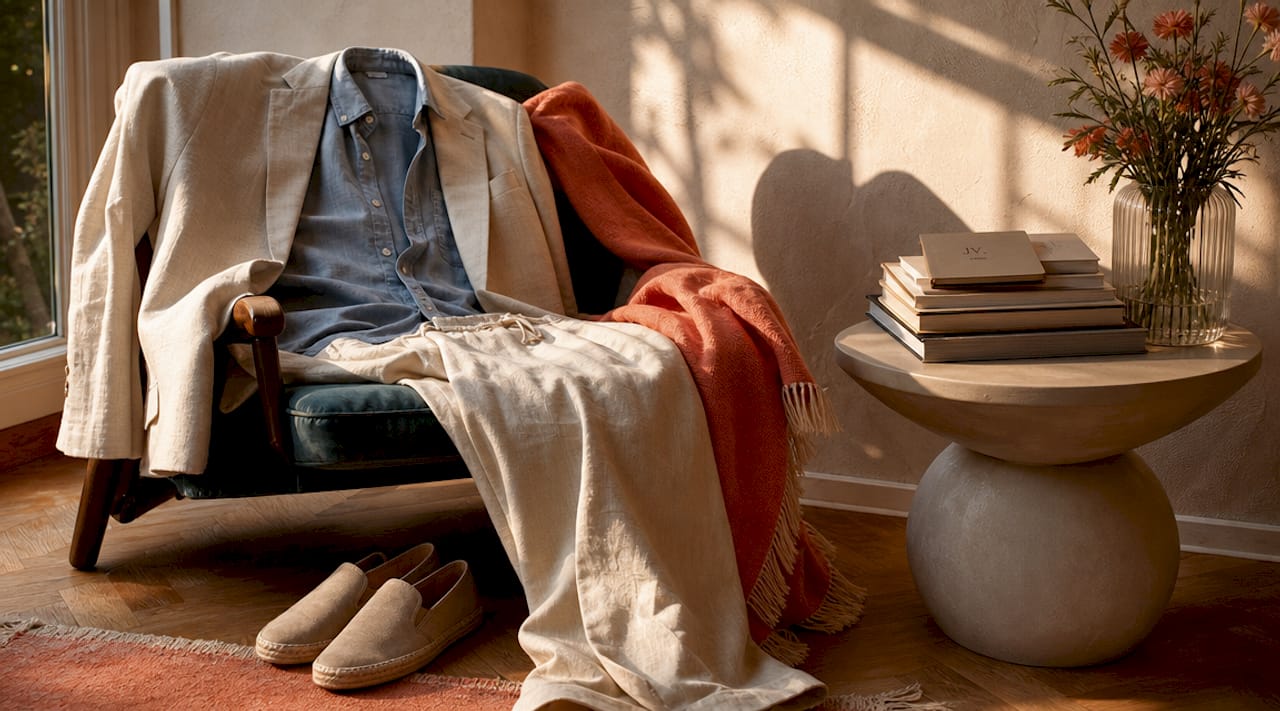
Styling relaxed tailoring well comes down to one principle: mixing casual and dressy pieces with clear intent. One structured element anchors the outfit and prevents it from reading as sloppy. Think tailored shorts with a relaxed linen shirt, or a fluid wide-leg trouser with a simple knit top.
Key garments driving the relaxed tailoring trend:
- Unstructured blazers in linen or cotton blends
- Wide-leg trousers with a clean, uncreased finish
- Oversized shirt-jackets worn open as a layer
- Striped tailored shorts that hold their shape without stiffness
- Fluid midi skirts that move like casualwear but dress like occasionwear
Pro Tip: Pick one piece in your outfit that can slide up and down the formality scale, such as a utility-textured jacket or a belted midi dress. Build everything else around it at a lower register and the outfit balances itself.
How did casual footwear change by 2026?
Footwear is where the evolution of casual style becomes most visible, and the direction is clear. Chunky dad sneakers are giving way to slimmer, second-skin silhouettes that sit close to the foot with minimal bulk. The aesthetic shift is significant because footwear sets the visual weight of an entire outfit.
The practical logic behind this change is straightforward. A slim, low-profile trainer creates a cleaner line from ankle to hem, which makes relaxed tailoring and fluid silhouettes read as more considered. A chunky sole beneath a wide-leg trouser competes for visual attention. A sleek, minimal shoe completes the look without interrupting it.
Beyond trainers, the move toward cleaner footwear extends to flat sandals, woven slingbacks, and simple mules. Options like woven slingback flats sit at the intersection of casual and polished, which is exactly where 2026 casual dressing lives.
Footwear choices that define the 2026 casual aesthetic:
- Slim, low-profile trainers in neutral or tonal colourways
- Woven or leather slingback flats for a dressed-down polish
- Simple toe-ring flat sandals for warm-weather casual dressing
- Clean leather loafers as a bridge between casual and smart
What is modular layering and why does it matter?
Modular layering is the practice of building outfits from pieces that each function independently across multiple settings, so a single outfit can move from a morning meeting to an afternoon errand to an evening out without requiring a full change. Urban and casualwear are merging in direct response to this demand, with designers engineering pieces that transition between work, leisure, and social life.
Consumers now expect what the industry calls emotional longevity from their wardrobes: the ability to wear the same piece repeatedly across different contexts without it feeling repetitive or out of place. This is a meaningful departure from the disposable fashion mindset that dominated the early 2020s. A cardigan that works over a midi dress for brunch, over a blouse for a work call, and tied around the shoulders for an evening walk is not a compromise. It is the point.
| Modular piece | Works for | Key feature |
|---|---|---|
| Oversized cardigan | Work, leisure, travel | Layering versatility, adjustable warmth |
| Belted midi dress | Day events, casual office, evenings | Silhouette control, dresses up or down |
| Linen wide-leg trousers | Meetings, weekend, travel | Breathable, wrinkle-resistant |
| Striped blouse | Smart casual, layering base, standalone | Colour interest without effort |
Functional design features are what make modular layering practical rather than theoretical. Stretch fabrics, breathable weaves, and wrinkle-resistant finishes mean a piece worn at 9am still looks intentional at 7pm. Performance features like stretch and breathability are now treated as wardrobe essentials rather than gym-specific requirements.
Pro Tip: When building a modular wardrobe, buy in tonal families rather than matching sets. Pieces in the same colour register mix naturally without requiring exact coordination, which gives you more combinations from fewer items.
Is athleisure still relevant in 2026?
Athleisure is not a trend in 2026. It is a baseline. Joggers, hoodies, and moisture-wicking fabrics have moved so far beyond the gym that they are now accepted in workplaces, social venues, and travel contexts without comment. The question is no longer whether sportswear belongs in everyday dressing. The question is how to wear it with enough intention to look considered rather than casual by default.
The key distinction is in the detail. A plain hoodie worn with joggers reads as off-duty. The same hoodie, worn with tailored wide-leg trousers and a clean trainer, reads as a deliberate casual outfit. The garment is identical. The styling is everything.
Explore how to style comfortable everyday outfits that incorporate performance-inspired pieces without losing visual sharpness. The goal is to treat breathability and stretch as design criteria, not afterthoughts.
Athleisure pieces that work hardest in a 2026 casual wardrobe:
- Fitted moisture-wicking tops worn under an unstructured blazer
- Joggers in premium fabrics such as ponte or heavy jersey, styled with a structured top
- Hoodies in neutral tones layered under a longline coat or cardigan
- Sports-inspired footwear with slim profiles that complement tailored pieces
What environmental factors are shaping casual dressing?
Climate realities are reshaping what people wear, and not in a purely aesthetic sense. Relaxed officewear is directly tied to reducing reliance on air conditioning, with softer, breathable garments helping wearers stay comfortable in warmer environments without mechanical cooling. This is a practical driver of the casual dressing shift that rarely gets discussed in fashion coverage.
Breathable fabrics such as linen, cotton gauze, and open-weave knits are not just trending because they look good. They are trending because they function better in the conditions people are actually living in. The evolution of casual style in 2026 is partly a rational response to a warmer, more unpredictable climate.
Consumer attitudes toward sustainability are reinforcing this shift. Buyers are choosing fewer, better pieces that work across seasons and settings, which aligns directly with the modular layering approach. A breathable linen dress that works in summer heat and layers into autumn is a more considered purchase than a season-specific piece worn twice and forgotten.
Key takeaways
Casual dressing in 2026 is defined by relaxed tailoring, modular layering, and performance-informed fabrics that work across every setting without sacrificing personal style.
| Point | Details |
|---|---|
| Relaxed tailoring leads | Unstructured cuts and looser silhouettes replace stiff formal garments across casual and smart-casual dressing. |
| Footwear went slimmer | Second-skin, low-profile trainers and clean flat shoes replaced chunky soles as the defining casual shoe. |
| Modular layering is the strategy | Pieces designed to move between work, leisure, and social settings deliver the emotional longevity consumers now expect. |
| Athleisure is a baseline | Performance fabrics and sports-inspired styles are standard in everyday casual wardrobes, not a subcategory. |
| Climate is a design driver | Breathable, adaptable fabrics are chosen for practical comfort in warmer conditions, not just aesthetic preference. |
Why I think the “rules” conversation is the wrong one
The most common mistake I see in how people approach the future of casual dressing is treating it as a set of new rules replacing old ones. It is not. The entire point of how casual wear changed in 2026 is that the framework shifted from rule-following to intention-setting.
What actually works is simpler than any rulebook. You pick one piece that can carry the outfit across contexts, whether that is a belted midi dress or a well-cut cardigan, and you build around it at a lower register. You stop asking “is this too casual?” and start asking “does this look considered?” Those are very different questions, and the second one produces far better outfits.
The brands and designers getting this right are not producing capsule collections with matching sets. They are producing individual pieces with enough design intelligence to function in multiple contexts. That is what versatile casual dressing actually looks like in practice. Your wardrobe does not need more pieces. It needs better ones.
— Mykola
Build your 2026 casual wardrobe with Jvwear
Jvwear’s current collection is built around exactly the pieces that make modular dressing work in practice. The cardigan range covers every layering need, from lightweight open-knit styles for warmer days to structured options that anchor a smart-casual outfit. For a single piece that moves effortlessly between settings, the Gingham Midi Sundress and the Striped Blouse with Puff Sleeves both deliver the casual-meets-considered aesthetic that defines 2026 dressing.
Free UK shipping, a 30-day return policy, and a catalogue built around versatile, confidence-led dressing make Jvwear the practical starting point for building a wardrobe that actually works across your whole life. Browse the full collection at jvwear.com.
FAQ
What defines casual dressing in 2026?
Casual dressing in 2026 is defined by the “three Cs”: confidence, composure, and comfort. It prioritises personal expression over rigid dress codes, with relaxed tailoring and modular pieces replacing prescriptive style rules.
How has casual footwear changed in 2026?
Chunky dad sneakers have given way to slim, second-skin silhouettes with minimal design. Cleaner, lower-profile shoes create a neater visual line that complements the relaxed tailoring and fluid silhouettes central to 2026 casual style.
What is modular layering in fashion?
Modular layering is building outfits from pieces that each function independently across multiple settings, from work to leisure to social occasions. It relies on breathable, stretch-friendly fabrics and versatile silhouettes that maintain their look throughout a full day.
How has athleisure influenced everyday casual wear?
Performance fabrics and sports-inspired styles such as joggers, hoodies, and moisture-wicking tops are now standard in everyday casual wardrobes. Athleisure has moved beyond activewear to become an accepted part of workplace, travel, and social dressing.
Why are breathable fabrics more popular in casual dressing now?
Climate realities and energy concerns have made breathable fabrics like linen and cotton gauze a practical priority, not just an aesthetic one. Relaxed officewear in breathable materials reduces reliance on air conditioning and keeps wearers comfortable across longer, more varied days.