The simplest travel capsule wardrobe works out to 10 to 12 pieces, two pairs of shoes and three accessories, and you can copy it today. Anchor everything around three pieces: a white tee, dark denim and a neutral knit, which together with a few other basics can generate 30 to 40 distinct outfit combinations. Add a fourth anchor, a versatile dress, and you cover daytime, dinner and travel days without touching your suitcase twice.
Pro Tip: Pack one dress that works as loungewear, dinner outfit and layering base. It earns its place three times over, which no single top or trouser ever will.
Key Takeaways
A travel capsule wardrobe built on 10 to 12 anchor pieces, chosen for pairing potential rather than variety, reliably produces 20 to 40 outfits per trip.
| Point | Details |
|---|---|
| Start with anchors | Prioritise a white tee, dark denim and neutral knit before adding anything else. |
| Use the 54321 formula | 5 tops, 4 bottoms, 3 layers, 2 shoes, 1 dress covers most week-long trips. |
| Adjust by season, not structure | Swap fabric and outerwear by climate; keep the same piece counts and colour rule. |
| Choose performance fabrics | Merino and Tencel resist odour and dry fast, useful past day five without laundry. |
| Shop travel-ready anchors | JV London’s cardigans, belted midi dresses, flat sandals and quilted crossbody bags fit the capsule brief directly. |
Table of Contents
- What is a travel capsule wardrobe and why does it work?
- The 54321 packing method explained step by step
- Core capsule staples every woman should pack
- How do you adapt a capsule for different seasons?
- Sample capsules for weekend, week-long and month-long trips
- What packing techniques save the most space?
- What outfit formulas work best while travelling?
- Which fabrics travel best, and how do you care for them?
- What should you prioritise when buying travel anchors?
- A packing lesson worth repeating
- Shop the pieces that build your travel capsule
- Sources
What is a travel capsule wardrobe and why does it work?
A travel capsule wardrobe is a small, deliberately chosen set of clothes where nearly every piece pairs with several others. It’s not about owning fewer clothes for the sake of minimalism. It’s about maximising how many outfits a handful of pieces can produce, so your suitcase does more work with less weight.
The distinction that matters is anchor pieces versus one-off items. An anchor piece, such as a white shirt or tailored trousers, pairs with four or five other things in your case. A one-off item, like a novelty print top, pairs with maybe one. Prioritise anchors first and the maths shifts fast: a tight set of core pieces including dark denim, a crisp white shirt, neutral knitwear and tailored trousers can produce 30 to 40 outfits on its own, before accessories even enter the equation.
The practical payoff shows up at the airport and every night after. Less luggage means no overweight fees and no wrestling a case up a guesthouse staircase. Fewer decisions each morning means you spend that time doing something more interesting than staring at a wardrobe. And a smaller pile of clothes is a smaller laundry pile, which matters more than most packing guides admit once you’re past day five.
The 54321 packing method explained step by step
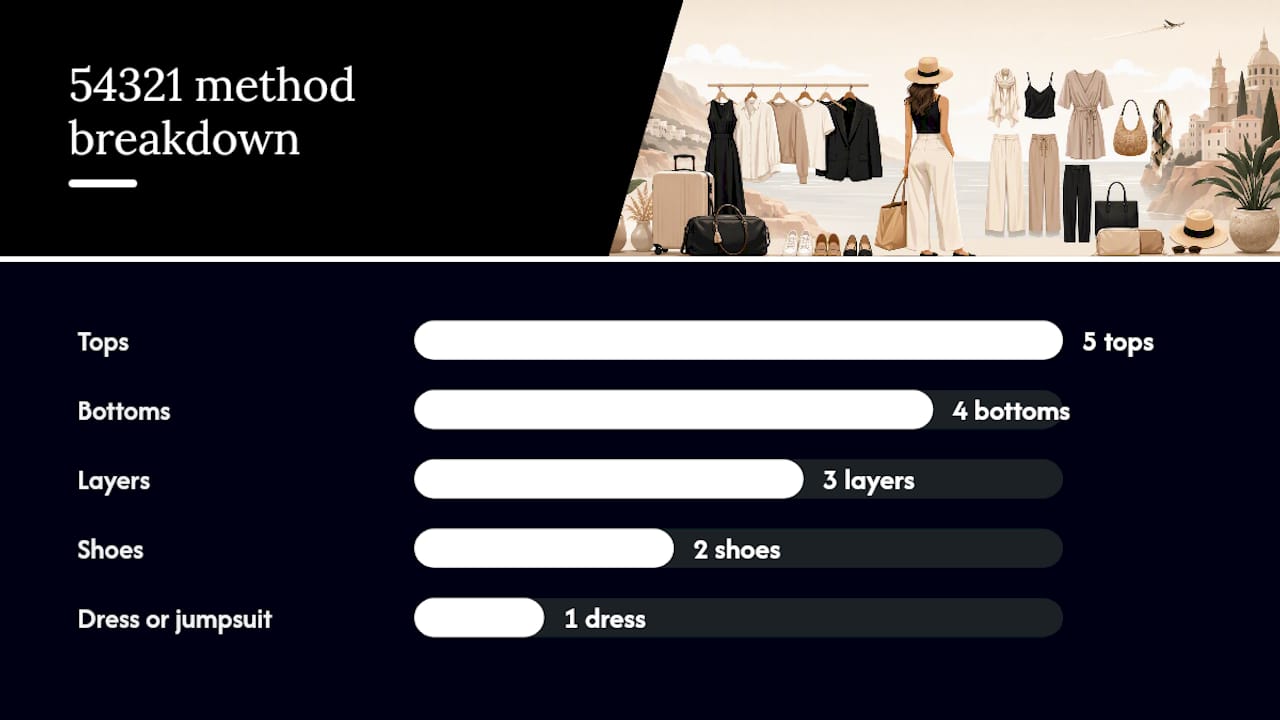
The formula behind most capsule packing lists is the 54321 method: 5 tops, 4 bottoms, 3 layers, 2 pairs of shoes, 1 dress or jumpsuit. It’s not an arbitrary number. Each category is capped at exactly the point where adding one more item stops multiplying outfits and starts just adding weight.
- Five tops covers a working week without repeats, and each should pair with at least three of your bottoms.
- Four bottoms gives you enough variety across smart, casual and in-between days.
- Three layers (cardigan, blazer, light jacket) handle temperature swings and dress things up or down.
- Two shoes means one comfortable walking pair and one that can go from day to evening.
- One dress or jumpsuit is your zero-effort outfit for travel days or dinners.
Not every trip needs the full count. A weekend calls for a slimmed-down version; a month away calls for slightly more, plus a laundry plan.
| Formula | Best for | Core counts |
|---|---|---|
| 10-piece carry-on | 7 to 10 day trips, one-bag travel | 10 items, each pairing with 3+ others |
| 54321 method | Standard week-long trips | 5 tops, 4 bottoms, 3 layers, 2 shoes, 1 dress |
| 3-2-1 minimalist | Weekend or city breaks | 3 tops, 2 bottoms, 1 layer |
| 15-piece four-season | Long-term or multi-climate travel | 15 items across seasons, layered strategically |
The 10-piece carry-on approach proves the principle at its tightest: ten pieces covering a ten-day trip, provided each one pairs with at least three others and you lean on layering rather than variety.
Core capsule staples every woman should pack
Certain pieces earn a permanent place in a travel capsule because they get worn constantly and pair with almost everything else in the case. These are the anchors worth building around before you add anything trend-led or occasion-specific.
- A white tee or shirt — pairs with every bottom you own and layers under a blazer or cardigan without complaint.
- Dark, well-fitted denim — the single most reused bottom in most travel capsules, smart enough for dinner, tough enough for a full day of walking.
- Tailored trousers — the dressier counterpart to denim, useful for flights, meetings and evenings out.
- A neutral knit — jumper or fine-knit cardigan, your temperature buffer on planes, trains and evening terraces.
- A blazer or trench — instantly elevates a basic outfit and doubles as your outerwear on transit days.
- One versatile dress — the piece that solves “what do I wear tonight” with zero thought.
- Comfortable walking shoes — the workhorse of any trip, chosen for miles, not just looks.
- A dressier shoe — flat sandals or a low heel that swaps in the moment you want to look finished.
- A compact bag — small enough for daily use, structured enough to go from sightseeing to dinner.
- One scarf — the cheapest way to change the look of three outfits without adding weight.
JV London’s cardigans work well as that neutral-knit anchor, and a belted midi dress with wide sleeves covers both the “versatile dress” and “day-to-night” categories at once. For footwear, flat sandals with toe ring detail hit the comfortable-but-presentable brief most travel days actually need, while a quilted crossbody bag fills the compact-bag slot without looking like an afterthought.
Before buying anything new, check what you already own. Most women already have around eight of the twelve core pieces a capsule needs, so fill genuine gaps rather than replacing a wardrobe wholesale.
Pro Tip: Stick to two neutrals and one accent colour across the entire capsule. It sounds restrictive, but it’s exactly what turns ten separate items into forty possible outfits instead of ten.
How do you adapt a capsule for different seasons?
The same capsule framework carries across the year; only the fabric and a handful of pieces need to change. Summer calls for linen or Tencel blends, sandals, and a lighter accent colour to lift the palette without abandoning it. Shoulder-season trips (spring and autumn) rely on layering: a light knit under a trench handles a cool morning and a mild afternoon without a full outfit change. Winter substitutes a wool coat for the trench, adds merino base layers under everything, and swaps sandals for a weatherproof boot.
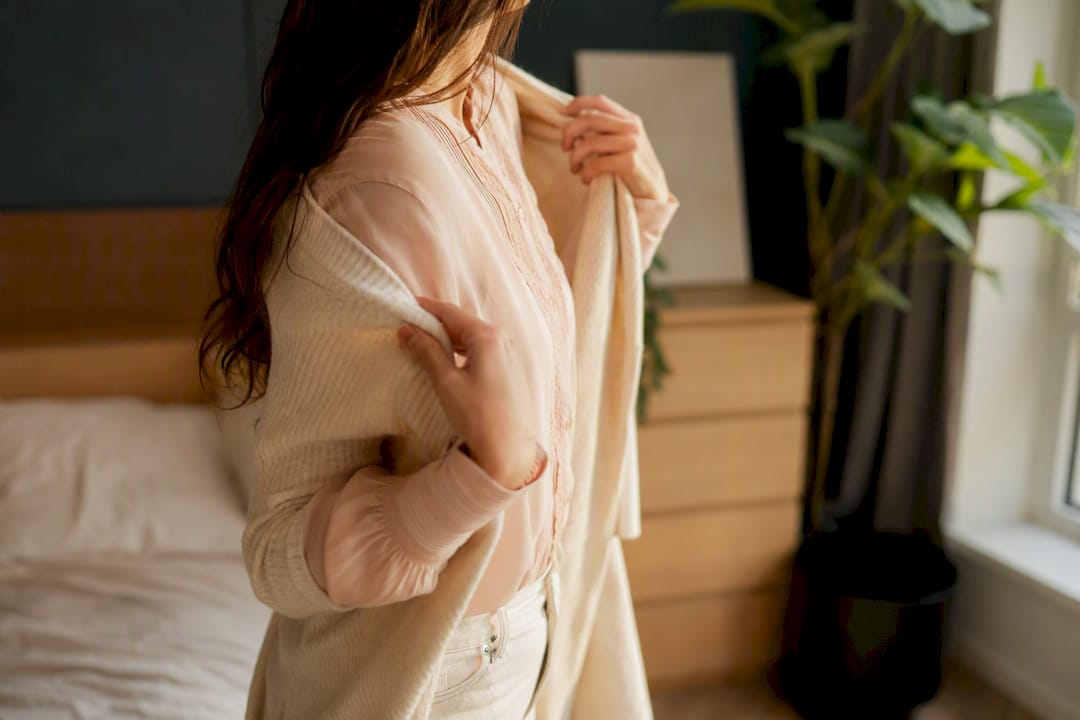
Fabric choice does more work here than most people expect. Merino wool resists odour and dries quickly, which matters enormously when you’re rewearing the same three tops across a ten-day trip with limited laundry access. Ponte knit holds its shape in blazers and trousers even after being balled into a packing cube, which cotton rarely manages.
Colour discipline still applies regardless of season: two neutrals plus one accent is the rule that keeps a sixteen-piece winter capsule mixing as freely as a ten-piece summer one. In genuine heat and humidity, trousers become the weak link. Swap them for a linen skirt or tailored shorts, both of which breathe and wrinkle less than most cotton trousers in 30°C heat.
Sample capsules for weekend, week-long and month-long trips
A weekend trip, a ten-day break and a month away don’t need three different packing philosophies, just three different scales of the same one.
Weekend (2 to 3 days):
- 1 dress, 2 tops, 1 bottom, 1 layer, 2 shoes, 1 bag
- Outfit note: rewear the dress once as loungewear with trainers, once smartened up with the dressier shoe.
Week-long (7 to 10 days):
- 5 tops, 4 bottoms, 3 layers, 2 shoes, 1 dress (the full 54321 set)
- Add one scarf and one statement accessory to stretch repeat outfits
- Plan for one hand-wash session around day five if you’re not near a laundrette
Long-term (two weeks or more, one-bag travel):
- Stick to the 15-piece four-season structure rather than adding volume
- Build in a proper laundry day every 7 to 10 days rather than packing extra
- Add only single-purpose items — swimwear, one formal outfit — as true extras, never as capsule replacements
Past day ten, add laundry days rather than more clothes. One extra top per five additional days is a reasonable buffer; anything more defeats the point of packing a capsule at all.
What packing techniques save the most space?
How you pack matters almost as much as what you pack. Roll knitwear, T-shirts and anything jersey, since rolling keeps soft fabric from creasing and squeezes more into less space. Fold structured pieces, blazers especially, because rolling a blazer just guarantees a crumpled collar on arrival.
Packing cubes earn their reputation: they compress soft items and keep your case organised enough that you’re not unpacking the entire thing to find one top. Wear your bulkiest item, usually a coat or knit dress, on travel days rather than packing it, since outerwear takes up disproportionate case space relative to how often you’ll actually wear it once there.
Freshness matters more than most packing lists admit. A small travel-size laundry detergent sheet and a sink handle emergency washes anywhere. Hang damp items near an open window overnight rather than folding them straight back into the case, which just traps the moisture. Beyond clothing, pack a compact wash kit, a couple of flat travel hangers and a fabric-freshening spray.
Pro Tip: Pack your shoes in shower caps or bags before they go anywhere near your clothes. It sounds fussy until the one time it saves a white top from a sole scuff.
Choosing performance fabrics from the outset pays off here too: merino and Tencel are considered the strongest first-choice fabrics for multi-day travel precisely because they need this kind of light maintenance rather than a full wash cycle.
What outfit formulas work best while travelling?
A capsule only earns its keep if you actually know how to combine it. These formulas turn a small pile of clothes into a week of outfits without any extra thought each morning.
- White tee + dark jeans + blazer = smart-casual day-to-dinner outfit
- Neutral knit + tailored trousers + flats = travel-day comfort with a finished look
- Versatile dress alone + trainers = sightseeing outfit
- Same dress + dressier shoe + statement earrings = dinner outfit, zero repacking needed
- White shirt tucked into trousers + scarf = flight outfit that photographs well
- Knit + denim + trench = shoulder-season layering for unpredictable weather
- Dress + light jacket = rainy-day cover without sacrificing the outfit
- Tee + skirt + sandals = warm-climate daytime look
For rainy or active days, swap flats for trainers and add a packable waterproof layer over any outfit rather than building a separate rain wardrobe. For photos, the simplest trick is repetition with variation: the same dress styled three ways across a trip photographs as three different outfits, not one worn on repeat. JV London’s guide to day-to-night outfit ideas walks through more of these transitions in detail.
Which fabrics travel best, and how do you care for them?
Merino wool resists odour and dries overnight, making it the strongest choice for tops you’ll wear more than once between washes. Tencel behaves similarly and drapes better in warmer climates. Linen breathes beautifully in heat but wrinkles the moment you look at it, so reserve it for relaxed days rather than anything you need to look sharp in immediately. Ponte knit holds structure in trousers and blazers without ironing, and cotton blends sit in the middle: comfortable, but slower to dry than the performance fabrics above.
In transit, hang-dry rather than tumble-dry where you can, and use a handheld steamer or a hot shower’s steam to release travel creases in minutes. For rain or humidity, a light water-repellent layer over your knitwear matters more than any specific fabric choice underneath it.
What should you prioritise when buying travel anchors?
Spend where wear is heaviest and save where it isn’t. Stylists consistently recommend investing in outerwear, a blazer and good shoes, since these carry a capsule across dozens of wears, while basics like plain tees can be bought affordably and replaced often.
Fit matters more when a piece has to work for ten days straight: shoulder seams should sit exactly at the shoulder point, waistbands shouldn’t dig in after a long flight, and wide-leg trousers travel better with a slightly shorter inseam so hems don’t drag through airport floors. JV London’s cardigans, belted midi dresses, flat sandals and quilted crossbody bags are built with exactly this kind of everyday travel wear in mind.
Before buying, run a quick test: hold the piece against two others you already own. If it doesn’t pair with at least two, leave it on the rail.
A packing lesson worth repeating
Every trip I’ve packed for, from a two-day work trip to a month abroad, has run on some version of the same pack-by-number method. What changes is the count, never the logic. The habit that saved me the most suitcase space wasn’t a clever gadget. It was refusing to pack a single item that couldn’t pair with at least three others already in the case. That one rule, applied consistently across dozens of trips, does more for a suitcase than any packing cube ever could.
Shop the pieces that build your travel capsule
Building the capsule is the easy part once you know the formula; finding pieces that actually match it across a full season is where most wardrobes fall short. JV London’s cardigans cover your layering anchor, while the belted midi dress with wide sleeves does double duty as your one versatile dress and dinner outfit in one purchase.
Each piece is designed in neutral, mix-and-match tones specifically so it earns its place across multiple outfits rather than one. Pair a cardigan with the flat sandals with toe ring detail and the quilted crossbody bag and you’ve covered three of your ten anchor slots in a single browsing session. Free UK shipping and 30-day returns mean you can order ahead of a trip with room to swap sizes if something doesn’t fit right. Start with the cardigan collection and build outward from there.
Sources
Briggs & Riley on capsule wardrobes, Vogue’s capsule non-negotiables, Glamour’s travel capsule guide, and the 10-piece carry-on capsule guide.
- How to pack a capsule wardrobe – Briggs & Riley travel source
- The perfect capsule wardrobe built around six non-negotiables | Vogue
- 10-piece carry-on capsule wardrobe for a 10-day trip