Most mornings, the problem isn’t that you have nothing to wear. It’s that you have too much, and none of it seems to go together. Everyday minimalist outfit formulas solve this directly: they give you a small set of repeatable combinations that look considered, suit multiple occasions, and take the guesswork out of getting dressed. This article breaks down the specific formulas, how to choose the right pieces, and how to maintain a wardrobe that works hard every single day.
Table of Contents
- Key criteria for building effective minimalist outfits
- The 3x3 formula: a versatile core wardrobe
- Everyday minimalist outfit formulas: key styles to master
- Comparing outfit formulas: which suits your lifestyle best?
- Putting minimalist outfit formulas into everyday practice
- Rethinking minimalist outfits: quality, flexibility, and confidence over quantity
- Explore versatile minimalist pieces from JV London
- Frequently asked questions
Key Takeaways
| Point | Details |
|---|---|
| Rule of 3 formula | Selecting 3 tops, 3 bottoms, and 3 third pieces simplifies outfit choices and maximises combinations. |
| Proportion and texture | Using contrasting silhouettes and fabric textures adds style personality to minimalist outfits. |
| Lifestyle alignment | Build your wardrobe based on what you wear 80% of the time for practicality and ease. |
| Seasonal review | Refreshing your capsule twice yearly keeps your wardrobe functional and current. |
| Quality over quantity | Invest in well-fitting, durable pieces for long-lasting style and confidence. |
Key criteria for building effective minimalist outfits
Before you start pulling pieces together, it helps to understand what makes a minimalist outfit formula actually work. Not every basic item earns its place, and a wardrobe built on the wrong foundations will fail you just as fast as a cluttered one.
The most important principle is lifestyle alignment. Your wardrobe must work for what you do 80% of the time rather than arbitrary item counts. If you work from home and spend weekends outdoors, a wardrobe built around tailored office wear will leave you frustrated. Start by honestly mapping your week.
Here are the key criteria to keep front of mind when selecting your pieces:
- Neutral colour palette as your base. Think off-white, sand, slate grey, navy, and camel. These tones mix freely and wear across seasons.
- Subtle accent hues. One or two softer accent colours, such as dusty rose or sage, add personality without disrupting cohesion.
- Quality fabric and fit above all else. A well-cut cotton tee in a good weight will outlast and outperform three cheap alternatives every time.
- Proportion awareness. Understanding silhouette and style confidence means you can express personality through shape rather than print or colour.
- Three key categories only. Tops, bottoms, and layering pieces. Every item must slot clearly into one of these categories.
- Versatility as the non-negotiable. If a piece only works in one outfit, it does not belong in a minimalist wardrobe.
Pro Tip: Before buying anything new, ask whether it works with at least three items you already own. If it doesn’t pass that test in the changing room, it won’t pass it at home either.
Reducing your choices does not mean reducing your style. It means becoming more intentional, which is what actually builds confidence when you get dressed.
Having understood the essentials to consider, let’s explore the foundational minimalist outfit formulas that embody these principles.
The 3x3 formula: a versatile core wardrobe
The 3x3 formula is the most practical entry point into minimalist dressing. The concept is straightforward: select three tops, three bottoms, and three “third pieces” (shoes, jackets, or cardigans) that all work together. The maths is genuinely satisfying. The 3-3-3 rule creates over a dozen unique looks from nine items by mixing and matching tops, bottoms, and third pieces.
Here is how to build your 3x3 core:
- Choose three tops. A fitted white tee, a relaxed linen shirt in a neutral, and a ribbed long-sleeve top. Each should sit at a slightly different formality level.
- Choose three bottoms. Straight-leg jeans in a mid-wash, tailored wide-leg trousers in beige, and a midi skirt in a soft neutral. Together, they cover casual, smart-casual, and near-formal occasions.
- Choose three third pieces. A denim jacket, a longline cardigan, and a clean white or cream blazer. These do the heavy lifting in terms of transforming an outfit’s register.
The table below shows how nine items generate a genuinely usable range of combinations:
| Top | Bottom | Third piece | Occasion |
|---|---|---|---|
| White tee | Straight-leg jeans | Denim jacket | Weekend casual |
| White tee | Tailored trousers | White blazer | Smart-casual work |
| Linen shirt | Midi skirt | Longline cardigan | Everyday errands |
| Ribbed long-sleeve | Straight-leg jeans | White blazer | Brunch or travel |
| Linen shirt | Tailored trousers | Denim jacket | Relaxed office |
| Ribbed long-sleeve | Midi skirt | Longline cardigan | Layered autumn look |
You can rotate these items through seasonal wardrobe updates, swapping the denim jacket for a wool coat in winter or the linen shirt for a cotton poplin in summer.
Pro Tip: Instead of relying on colour contrast to add interest, experiment with texture. A chunky-knit cardigan over a smooth satin midi skirt creates depth without introducing a single extra colour.
With the 3x3 formula clarified, let’s look at other essential minimalist outfit formulas tailored to everyday needs.
Everyday minimalist outfit formulas: key styles to master
Beyond the 3x3 system, there are three specific everyday minimalist outfit formulas worth mastering. Each one has a clear structure and a consistent logic.
Formula 1: Fitted bottom + relaxed top + one layering piece. This is arguably the most wearable combination in minimalist dressing. The contrast between a slim-cut trouser or straight jean and a slightly oversized top creates proportion without effort. Add one layer, whether a blazer or a knit, and the outfit becomes polished enough for almost any setting.

Formula 2: Oversized blazer + basic tee + straight-leg jeans + statement shoe. This formula borrows from workwear but lands squarely in everyday territory. The blazer does the styling work, the tee and jeans are near invisible, and a single shoe with character (a chunky loafer, a sleek ankle boot) elevates the whole look. Crucially, this formula works just as well in a job interview as it does on a Saturday in town.
Formula 3: Midi dress + cropped cardigan + minimalist accessories. This is where minimalist dress styles really come into their own. A midi dress is already a complete outfit. The cropped cardigan adds layering without bulk, and keeping accessories pared back (a small bag, simple earrings) maintains the clean aesthetic. This formula is also the easiest to dress up or down.
The key across all three is proportion play:
“Minimalist dressers rely on proportion play, contrasting fitted and oversized pieces, to express individuality without relying on pattern, colour, or accessories.”
- Use fitted and relaxed silhouettes together intentionally, not accidentally.
- Let texture contrasts (knit against silk, denim against linen) do the work that pattern and colour usually handle.
- Resist the urge to add a third accessory once you have chosen two. Restraint is the point.
Having explored key outfit styles, we will now compare these minimalist formulas for situational versatility.
Comparing outfit formulas: which suits your lifestyle best?
Knowing the formulas is one thing. Choosing which one to build your wardrobe around is another. The table below gives you a direct side-by-side view.
| Formula | Ease of mixing | Work-suitable | Casual comfort | UK seasonal flexibility |
|---|---|---|---|---|
| 3x3 core system | Very high (27+ combinations) | Yes, with blazer or trousers | Yes | High (swap layers by season) |
| Fitted bottom + relaxed top + layer | High | Smart-casual | Very high | High (layer adjusts for temperature) |
| Midi dress + cropped cardigan | Medium (dress-led) | Smart-casual to formal | High | Medium (layering extends wear) |
| Oversized blazer + tee + jeans | High | Yes | High | High (coat replaces blazer in winter) |
A few things worth noting from this comparison:
- The 3x3 formula suits those who want maximum flexibility from the fewest decisions. A wardrobe built on a 3x3 core creates roughly 27+ unique combinations, which genuinely eases decision fatigue on busy mornings.
- The dress-centric formula is ideal if you prefer single-piece dressing. It reduces the styling decision to one garment rather than two or three.
- The blazer-and-jeans formula is particularly strong for those who move between professional and social settings in the same day.
- Layering-heavy formulas are especially practical for UK weather, where temperatures can shift dramatically between morning and afternoon. For tips on styling midi dresses across seasons, the layering approach is worth exploring.
Pro Tip: Look at your diary for the next typical week and count how many settings you actually dress for. Most women dress for two or three situations repeatedly, not ten. Build your formula around those.
With clear comparisons made, let’s conclude with recommendations on putting these formulas into everyday practice.
Putting minimalist outfit formulas into everyday practice
Understanding the formulas is easy. Building the habit of using them is where it actually pays off. Here is a step-by-step process for making minimalist dressing a natural part of your routine.
- Audit your current wardrobe. Remove anything that does not fit, is rarely worn, or only works in a single outfit. What remains will reveal your natural style anchors.
- Implement the rule of 3. Choose three tops, three bottoms, and three layering pieces from what you already own. You may find you have more than you need already.
- Rotate seasonally. Store off-season pieces properly rather than keeping them in your main wardrobe. This keeps your visible options tight and relevant.
- Use a waiting period before buying. Leave items in your online basket for 48 hours. If you still want them after that period and they work with at least three existing items, they earn a place. This is one of the most effective sustainable lifestyle habits you can adopt.
- Maintain a neutral colour spine. When in doubt, buy neutrals. Colourful or patterned pieces are much harder to integrate into an existing formula.
- Cohesion over newness. Before refreshing your wardrobe with new pieces, check that what you are adding genuinely fills a gap rather than duplicating what you already own.
Pro Tip: Use accessories, specifically one bag, one pair of earrings, and one shoe style, to refresh your formula outfits rather than buying new clothing. Swapping a tote for a structured bag can shift the same outfit from casual to polished in seconds.
Now that you know how to apply these minimalist outfit formulas daily, consider our unique perspective on minimalist fashion.
Rethinking minimalist outfits: quality, flexibility, and confidence over quantity
Here is something most minimalist fashion advice gets wrong: it treats minimalism as an exercise in restraint, like the fewer items you own, the more virtuous you are. That framing misses the point entirely.
The real value of minimalist dressing is not how little you own. It is how well everything you own works. A woman with 15 pieces that all coordinate, fit beautifully, and suit her actual life will always look more put-together than someone who owns 45 pieces and still can’t find anything to wear. The “timeless” shopping list often fails because it ignores individual lifestyle needs, pushing women towards pieces that look good in theory but never leave the hanger.
“Outfit confidence does not come from owning the right number of pieces. It comes from owning pieces that fit your body, your life, and your aesthetic consistently.”
What actually builds confidence is fit and fabric. A dress that skims rather than clings, a trouser with a flattering rise, a top in a weight that doesn’t go transparent in sunlight. These are the details that make you feel ready, not the number of SKUs in your wardrobe. Understanding how silhouette affects your confidence is far more useful than following any rigid item count.
There is also the problem of “capsule creep,” where well-intentioned minimalists gradually add pieces without removing others, ending up with a capsule wardrobe that is actually just a slightly tidier version of the original cluttered wardrobe. The fix is a strict one-in, one-out rule. Every new purchase triggers an honest assessment of what leaves.
Minimalist style is not a sacrifice. It is an edit. And a good edit always makes things better.
Explore versatile minimalist pieces from JV London
If you are ready to build out your formula wardrobe with pieces that actually do the work, JV London makes it easy. The range is built around the kind of versatile, understated staples that slot straight into the outfit formulas covered here.
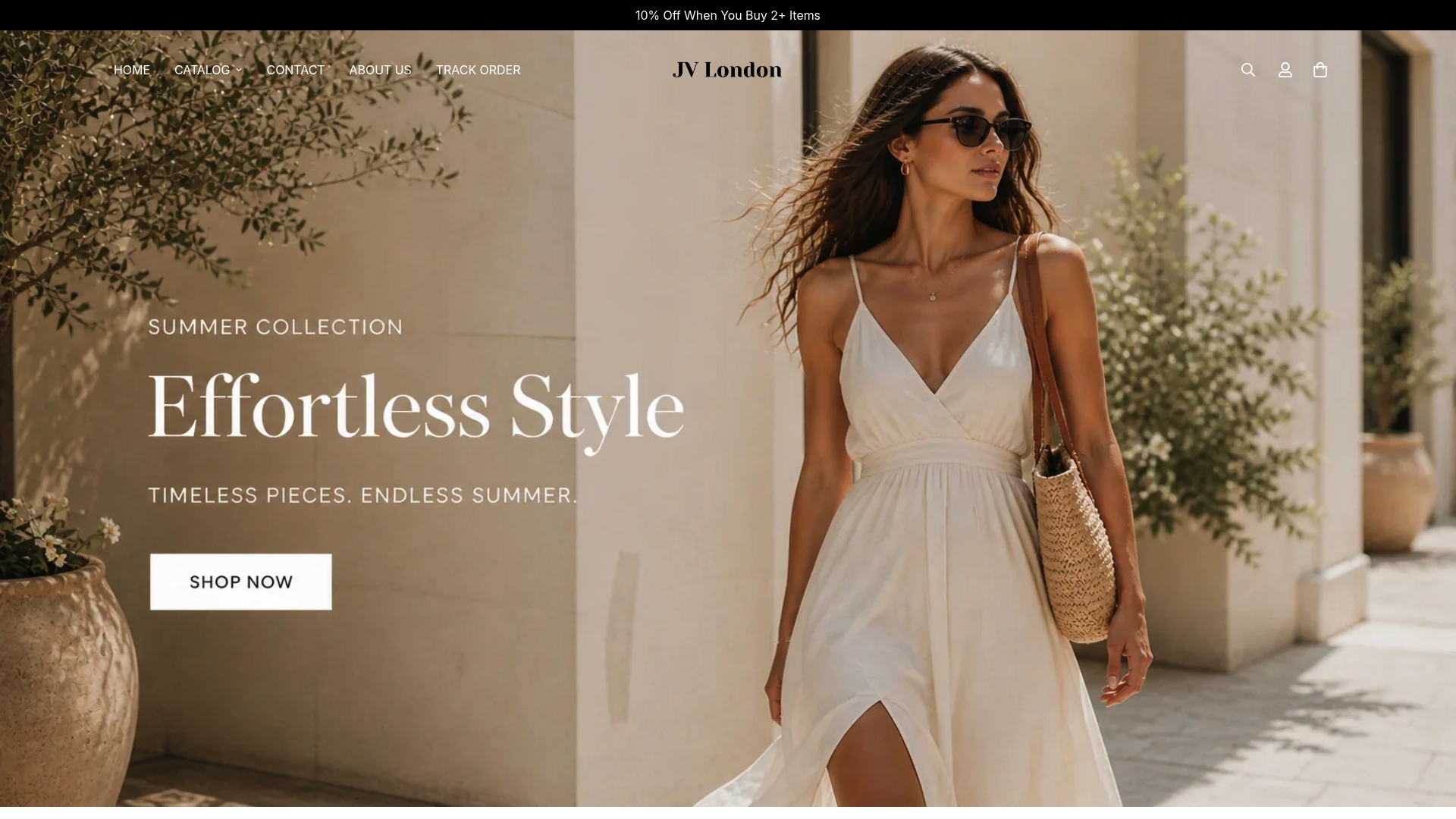
Start with the mini dress collection for pieces that work as standalone outfits or as the base for layered looks. For a ready-made formula, the Greta two-piece set gives you coordinated separates that mix with other pieces in your wardrobe. The Elowen gingham midi sundress is exactly the kind of dress-centric formula piece that pairs effortlessly with a cropped cardigan and flat sandals. Free UK shipping and 30-day returns mean there is no risk in trying. Browse the full JV London collection and build your formula wardrobe today.
Frequently asked questions
What is the rule of 3 in minimalist wardrobes?
The rule of 3 involves owning three tops, three bottoms, and three layering pieces that all coordinate, creating many outfit options and reducing decision fatigue. The 3-3-3 rule maximises mix-and-match potential from just nine items.
How can I avoid my minimalist wardrobe feeling boring?
Add personality through proportion play and texture contrasts rather than patterns or colours, pairing fitted and oversized silhouettes thoughtfully to keep looks fresh. Minimalists express individuality through proportion play and texture contrast rather than relying on print or volume.
How often should I refresh my minimalist capsule wardrobe?
It’s best to review and update your capsule twice a year, replacing worn-out items and adding carefully chosen new pieces to keep your wardrobe fresh and functional. Reviewing your capsule wardrobe seasonally ensures you replace worn items before they drag down your overall looks.
Do shoes count in the capsule wardrobe item limit?
Typically, shoes are not counted within the main capsule wardrobe item limit and are considered versatile accessories that complete many outfits. Shoes are not typically included in the standard capsule total, giving you freedom to build a small but varied shoe selection.
Can minimalist wardrobes be affordable and trendy?
Yes, focusing on versatile quality basics and mixing in trendy accent pieces from affordable brands allows you to build a fashionable, manageable wardrobe on a budget. Prioritising fit and fabric over labels means your money goes further every time.