The role of comfortable fabrics in daily wear is to provide softness, breathability, and adaptability that directly improve how you feel and move throughout the day. Fabric choice is not a minor detail. It shapes your skin health, your posture, your mood, and how long your clothes actually last. Fibres like cotton, linen, and modal have long defined comfortable daily attire, while modern blends incorporating spandex have pushed wearability further than ever. Whether you are building a capsule wardrobe or simply replacing tired basics, understanding what your fabric does for your body is the smartest place to start.
What is the role of comfortable fabrics in daily wear?
Comfortable fabrics are textiles engineered or selected to minimise skin irritation, regulate body temperature, and move with the body rather than against it. In the textile industry, this quality is often described as “wearability,” a term covering breathability, softness, stretch, and moisture management together. For everyday clothing, wearability is the standard that matters most.
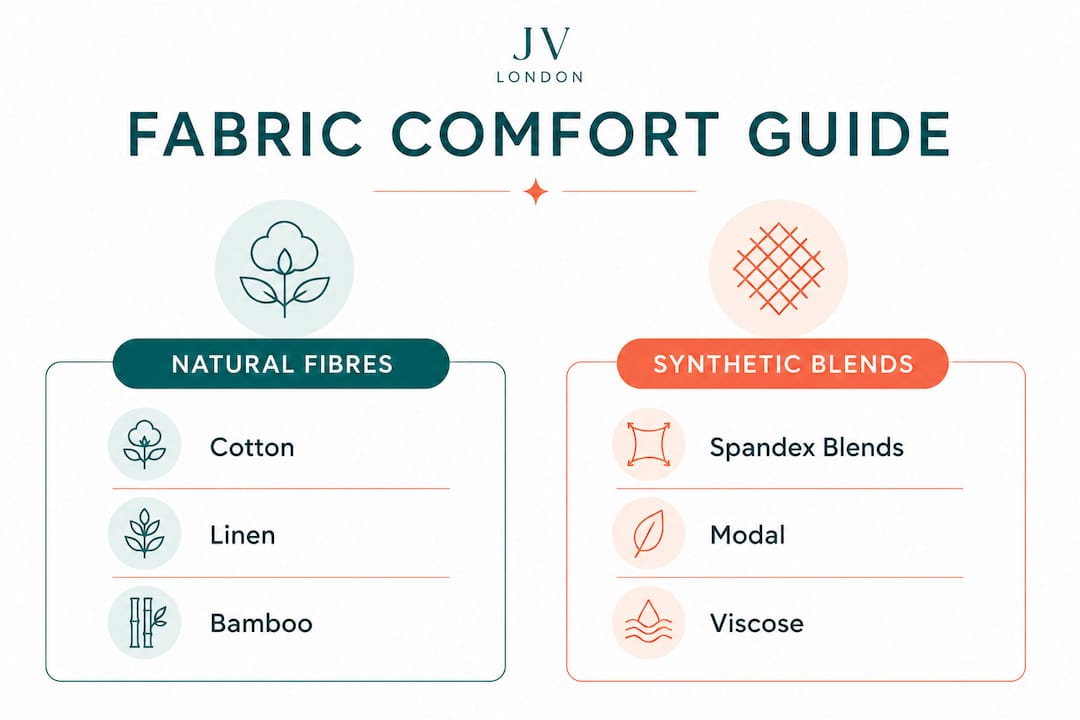
Natural fibres like cotton, linen, silk, and bamboo are the best choices for breathability and reducing irritation, particularly for sensitive skin. Cotton remains the most widely worn natural fibre globally because it absorbs moisture, allows air circulation, and sits gently against the skin. Linen offers similar breathability with an added cooling effect. Modal and bamboo sit in the semi-synthetic category, processed from natural plant sources, and both deliver a silky softness that pure cotton cannot always match.
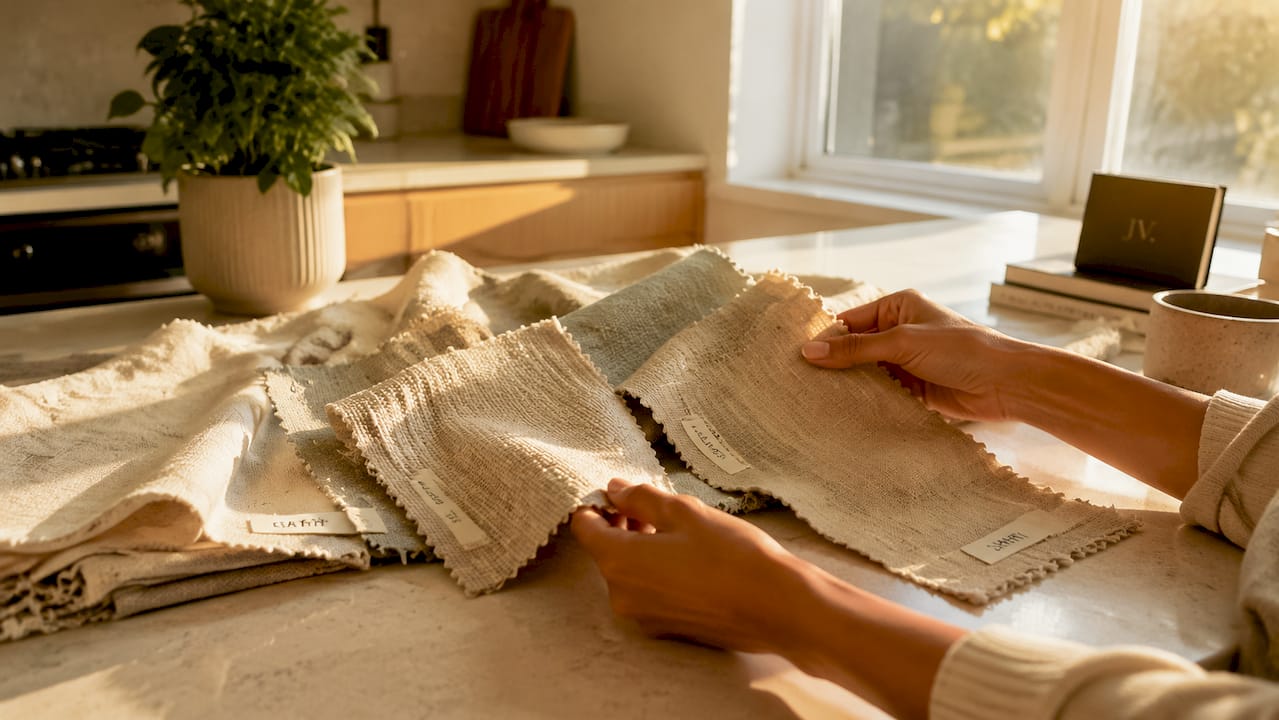
Spandex blends represent the most significant fibre innovation of recent decades. Adding just 2–5% spandex to a cotton or modal base enables stretch of up to 600% with full recovery. That means your clothes return to their original shape after every wear and wash, which is exactly what you need from daily wear pieces.
Which fibres work best for everyday comfort?
Cotton: the reliable foundation
Cotton is the default choice for comfortable daily attire because it is soft, washable, and widely available across every price point. Pima cotton and Egyptian cotton are long-staple varieties, meaning their fibres are longer than standard cotton. Long-staple cotton fibres reduce surface friction and irritation because fewer fibre ends protrude from the fabric surface. The result is a noticeably smoother feel against the skin, which matters when you are wearing something for ten or twelve hours straight.
Linen: the cooling specialist
Linen is the fabric to reach for in warmer months or warmer climates. Linen reduces skin temperature by up to 3°C compared to cotton. That difference is meaningful on a warm summer day, and it explains why linen has been a warm-weather staple for centuries. Linen does wrinkle easily, which some people find off-putting, but the trade-off in temperature regulation is worth it for casual and relaxed styles.
Modal, bamboo, and viscose: the soft alternatives
Modal is a semi-synthetic fibre made from beech tree pulp. It is softer than standard cotton, more resistant to shrinkage, and holds colour well after repeated washing. Bamboo fabric offers similar softness with natural antibacterial properties, making it a strong option for those with reactive or sensitive skin. Viscose drapes beautifully and feels lightweight, though it requires more careful washing than cotton or modal.
- Cotton (Pima or Egyptian): Soft, breathable, and skin-friendly for all-day wear
- Linen: Cooling and moisture-wicking, best for warm seasons
- Modal: Silky, shrink-resistant, and colour-fast through frequent washing
- Bamboo: Antibacterial and ultra-soft, suited to sensitive skin
- Spandex blends: Add stretch and shape retention to any base fibre
Pro Tip: When shopping for everyday basics, look for fabric blends that combine a natural fibre with a small percentage of spandex or elastane. A cotton-spandex or modal-spandex blend gives you the softness of natural fibres with the stretch and recovery that daily wear demands.
How does fabric softness affect style and performance?
Softness in fabric is not just about how something feels in your hand in a shop. It is a technical quality that affects how a garment drapes, how it holds its shape, and how it looks after six months of regular wear. In the textile industry, this quality is called “hand feel,” referring to the tactile experience of a fabric and its overall quality signal.
Fabric softness affects garment drape, pilling resistance, and longevity. Softer fabrics resist pilling more effectively and maintain a polished appearance over time. Pilling occurs when short or broken fibres tangle on the surface, and it is far more common in lower-quality or short-staple fabrics. A soft, well-finished fabric stays looking newer for longer, which matters when you are wearing something two or three times a week.
“Softness is the invisible foundation of everyday style. When a fabric feels right against your skin, you carry yourself differently. That confidence is not incidental. It is built into the textile.” ProTextile, Fabric Hand Feel Explained
Softness is a combination of fibre quality and finishing. Long-staple fibres produce softer, less irritating fabrics. Finishing processes like mercerisation (applied to cotton) and enzyme washing (used on denim and modal) further improve hand feel without compromising durability. When you pick up a garment and it feels immediately pleasant, that is not luck. It is the result of deliberate fibre selection and manufacturing.
Cashmere, silk, and Pima cotton sit at the premium end of the softness spectrum. For everyday wear, modal and bamboo offer comparable softness at a far more practical price point and with much easier care requirements.
Pro Tip: When assessing softness in a shop or online, check the fabric composition label. If a fabric lists “long-staple cotton,” “Pima,” or “modal” as the primary fibre, it will almost always feel softer and last longer than a generic cotton or polyester alternative.
What practical factors should guide your fabric choices?
Breathability and moisture management
Breathability is the fabric’s ability to allow air and moisture to pass through, keeping your skin dry and comfortable. Natural fibres consistently outperform synthetics in breathability, which is why cotton and linen remain the most recommended choices for all-day wear. Polyester traps heat and moisture against the skin, which leads to discomfort and odour over the course of a long day.
Understanding fabric weight (GSM)
GSM stands for grams per square metre and is the standard measure of fabric weight. Mid-weight fabrics around 7 oz/yd² provide better breathability and structure than very light or very heavy materials. Fabrics that are too light cling and become see-through; fabrics that are too heavy feel restrictive and warm. Mid-weight sits in the practical middle ground for most casual wear fabric choices.
Daily wear versus occasion wear
Daily wear fabrics are engineered to withstand frequent washing, movement, and stress without losing shape. Occasion wear fabrics, such as chiffon, silk charmeuse, or heavily embellished textiles, require delicate handling and are not built for repeated machine washing. Choosing the wrong fabric category for your lifestyle leads to faster deterioration and more frustration.
| Fabric | Comfort | Durability | Care Needs |
|---|---|---|---|
| Cotton (standard) | High | High | Machine wash, easy |
| Pima / Egyptian Cotton | Very high | High | Machine wash, gentle cycle |
| Linen | High | Medium | Machine wash, air dry |
| Modal | Very high | High | Machine wash, low heat |
| Bamboo | Very high | Medium | Machine wash, gentle cycle |
| Viscose | High | Low | Hand wash or delicate cycle |
| Cotton-spandex blend | High | Very high | Machine wash, easy |
Pro Tip: Check the care label before buying, not after. If a garment you plan to wear three times a week requires dry cleaning, it will cost you more in upkeep than it did to buy.
How to build a wardrobe around comfortable, stylish fabrics
Comfortable clothing options and stylish clothing are not opposites. The most wearable wardrobes are built on soft, breathable fabrics that also look considered and put-together. The key is choosing pieces where the fabric does the work for you.
For everyday outfit building, a few fabric-led staples cover most occasions:
- Modal or cotton-blend midi dresses: Soft, breathable, and flattering in drape. A midi dress in a cotton-modal blend moves with you all day without creasing badly or losing its shape.
- Linen or cotton blouses: Lightweight and breathable for work-from-home or casual outings. Pair with wide-leg trousers or denim for an effortless look.
- Cotton-spandex cardigans: The stretch component means a cardigan fits properly across the shoulders and does not pull or restrict. Layering pieces in spandex blends are far more comfortable than pure-cotton equivalents.
- Bamboo or modal basics: T-shirts, vest tops, and loungewear in bamboo or modal feel noticeably softer than standard cotton and hold their shape through repeated washing.
Mixing textures is also worth trying. A linen blouse paired with a cotton-spandex skirt gives you contrast in texture while keeping the entire outfit breathable and comfortable. You can read more about styling midi dresses for casual everyday looks to get specific outfit ideas that work with soft fabric blends.
The 2026 trend direction in casual fashion continues to move towards relaxed silhouettes in natural and semi-natural fabrics. Oversized linen shirts, draped modal dresses, and stretch-blend co-ords are all gaining ground because they deliver comfort without sacrificing style. Experimenting with different fabric textures is the fastest way to discover what works for your body and your lifestyle.
Key takeaways
Comfortable fabrics are the foundation of a wardrobe that works every day, and choosing the right fibre type, weight, and blend determines how well your clothes perform, feel, and last.
| Point | Details |
|---|---|
| Natural fibres lead on comfort | Cotton, linen, modal, and bamboo outperform synthetics for breathability and skin comfort. |
| Spandex blends add performance | Adding 2–5% spandex to natural fibres delivers stretch and shape retention for daily wear. |
| Softness signals quality | Long-staple fibres like Pima cotton reduce irritation and resist pilling over time. |
| Fabric weight matters | Mid-weight fabrics around 7 oz/yd² balance structure and breathability for everyday use. |
| Daily wear needs wash resilience | Cotton-modal blends and spandex blends handle frequent washing far better than occasion fabrics. |
Why fabric comfort has become non-negotiable for me
I have spent years paying attention to how fabric choices affect not just comfort but confidence. The shift I have noticed most clearly is this: women who used to compromise on comfort for the sake of style are no longer willing to do that. And they should not have to.
The textile industry has caught up. Spandex blends, modal, and bamboo have made it genuinely possible to wear something that looks polished and feels like a second skin. That was not always the case. A decade ago, “comfortable” often meant shapeless. Now it means well-cut, well-finished, and built from fibres that respect your body.
My honest advice is to stop treating fabric composition as a secondary consideration. Read the label before you fall in love with the cut. A beautiful dress in a scratchy polyester blend will sit unworn in your wardrobe within a month. The same silhouette in a cotton-modal blend will become the piece you reach for every week.
The other thing worth saying: do not underestimate the difference that fabric weight makes. A flimsy fabric in a midi dress will cling, wrinkle, and lose its shape by midday. A mid-weight cotton or modal equivalent will drape properly and look as good at 6pm as it did at 8am. That is not a small thing. That is the difference between a garment you wear with confidence and one you spend the day adjusting.
— Mykola
Discover comfortable daily wear at Jvwear
Jvwear curates pieces specifically for women who want their wardrobe to work as hard as they do. Every piece is chosen with wearability in mind, from breathable fabric blends to cuts that move with you rather than against you.
The Jvwear cardigans collection is a strong starting point if you are building a wardrobe around comfortable layering pieces. For dresses, the Gingham Midi Sundress and the Belted Midi Dress with Wide Sleeves both feature breathable fabric blends designed for all-day wear. The Striped Blouse with Puff Sleeves is a lightweight, soft option for casual or work-from-home days. Free UK shipping and 30-day returns mean you can try pieces at home and keep only what genuinely works for you.
FAQ
What are the best fabrics for everyday wear?
Cotton, linen, modal, and bamboo are the best fabrics for everyday wear. They are breathable, soft against the skin, and handle frequent washing without losing shape.
How does fabric choice affect skin comfort?
Natural fibres reduce irritation and allow moisture to escape, keeping skin dry and comfortable. Synthetic fabrics like polyester trap heat and moisture, which increases discomfort over a long day.
What does GSM mean for clothing comfort?
GSM measures fabric weight in grams per square metre. Mid-weight fabrics around 7 oz/yd² provide the best balance of breathability and structure for daily wear.
Why do spandex blends feel more comfortable?
Spandex blends allow stretch of up to 600% with full recovery, meaning garments move with your body and return to their original shape after wear and washing.
How do i know if a fabric will last with daily washing?
Check the fabric composition. Cotton-modal blends and spandex blends are engineered for wash resilience, while viscose and occasion fabrics like chiffon require more delicate care and deteriorate faster under regular washing.