The fastest way to shift a casual outfit into something smarter is the 3-switch method: change your shoes, update your outer layer, and swap one accessory. Built around a clean bridge base, the whole thing takes under five minutes. JV London, Coliera, and Prism News all point to the same principle: you rarely need a full outfit change. You need three deliberate swaps.
Quick TL;DR:
- Swap 1: Shoes (trainers or flat sandals → loafers, ankle boots, or heeled sandals)
- Swap 2: Outer layer (hoodie or denim jacket → structured blazer or tailored cardigan)
- Swap 3: Accessory (canvas tote → structured bag, add earrings or a belt)
- Bridge base rule: Start with a piece that already reads clean, such as dark jeans, a midi dress, or tailored trousers. Heavily distressed denim or leggings won’t respond to swaps.
Five-minute checklist before you leave:
- Does everything fit properly? Nothing baggy, nothing pulling.
- Are your shoes clean and intentional?
- Have you swapped to a smaller or structured bag?
- Is there one finishing detail — earrings, a belt, a lip colour?
- Quick mirror check: creases, stains, visible labels.
Table of Contents
- How does the formality dial actually work?
- What staples should every UK wardrobe have for quick transitions?
- The 3-switch method: step-by-step swaps that change the look
- Mix-and-match outfit recipes for day-to-night and casual-to-smart looks
- How do you style trainers and jeans so they read smart casual?
- Seasonal layering: how to keep transitions working all year
- What makes an outfit look slimmer or more expensive?
- Shop the quick-transition looks with JV London
- A five-minute checklist to use just before you leave
- Key takeaways
- The case for dressing with less effort, not more
- Jvwear’s quick-transition capsule: free UK shipping, 30-day returns
- Further reading and sources
How does the formality dial actually work?
Most people think dressing up means changing everything. It doesn’t. Think of formality as a dial with ten settings. A Sunday-morning outfit sits at two. A job interview sits at eight. Most real-life situations — a work lunch, after-work drinks, a gallery visit — sit between four and six. Casual to smart outfit transitions are usually just a one or two-notch move, not a full reset.
Outfit stress most often comes from trying to dress for more than one setting without a system. The fix is a bridge base: one anchor piece that sits comfortably at formality level four or five on its own, so your swaps only need to push it one notch further.
Outfit formulas that actually hold up
The 2x2 rule is the simplest: pair one dressy piece with one relaxed piece, then repeat that logic for shoes and accessories. A silk blouse (dressy) with dark jeans (relaxed), finished with loafers (dressy) and a tote (relaxed) — balanced, intentional, done.
The 3-3-3 capsule takes a slightly bigger view: three tops, three bottoms, and three pairs of shoes that all mix together. The maths alone gives you 27 combinations from nine pieces. You don’t need to adopt it rigidly, but the logic is worth borrowing: every piece you own should work with at least two others.
“Smart casual relies on balance — pairing one dressy piece with one or two relaxed staples. Avoid competing signals such as too many dressy elements at once.” — Prism News
Pro Tip: Avoid distressed denim, leggings, or oversized hoodies as your bridge base. They sit too low on the formality dial for swaps to fully rescue them. Dark straight-leg jeans, a midi dress, or tailored trousers give your swaps something to work with.
What staples should every UK wardrobe have for quick transitions?
A smart casual capsule built around blazers, tailored tops, structured bags, and versatile shoes handles most transitions without drama. Here are the pieces that earn their place, and why.
“A neutral, cohesive palette with one or two accent colours maximises mix-and-match potential and reduces visual clutter when elevating casual pieces.” — MixMatch
Fabric matters more than most people realise. Structured crepe, ponte, satin, and fine knit read expensive. Cotton jersey, fleece, and thin polyester read casual regardless of the cut. In the UK, you also need pieces that layer without bulk — a lightweight blazer over a silk blouse beats a chunky cardigan over a vest every time.
| Staple | Why it works | How to smarten it |
|---|---|---|
| Structured blazer | Raises formality of any base instantly | Swap hoodie for blazer; keep underneath simple |
| Tailored trousers | Dressier than jeans, more comfortable than formal wear | Pair with a fine knit or silk blouse |
| Dark straight-leg jeans | The dressiest denim option | Clean hem, no distressing, pair with loafers |
| Silk or smart blouse | Fabric alone reads elevated | Tuck into trousers or a midi skirt |
| Midi dress | One-piece bridge base | Add a blazer and swap shoes for evening |
| Neutral loafers or ankle boots | Signals effort without discomfort | Replace trainers as the first swap |
| Structured bag | Smaller and more polished than a tote | Swap in for a canvas bag in under 60 seconds |
| Slim belt | Reshapes proportions at the waist | Belt a loose dress or wide-leg trousers |
| Minimal jewellery | Finishes without competing | One pair of earrings or a simple necklace |
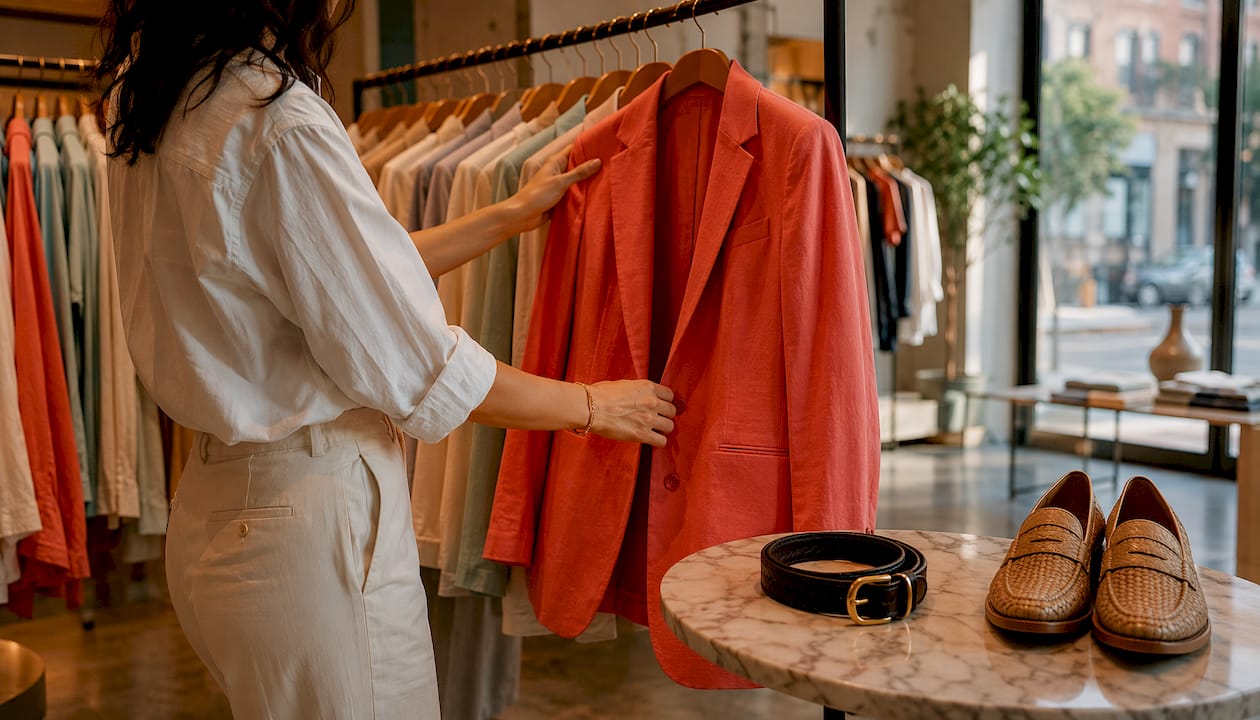
The belt deserves a specific mention. Belting at the natural waist reshapes proportions instantly and converts loose silhouettes into composed, intentional looks — particularly useful with wide-leg trousers and relaxed dresses. It’s one of the fastest single-item upgrades available.
The 3-switch method: step-by-step swaps that change the look
The order matters. Start with shoes because they anchor the formality of the whole outfit. Then address the outer layer, which frames the silhouette. Accessories come last because they refine rather than reset.
-
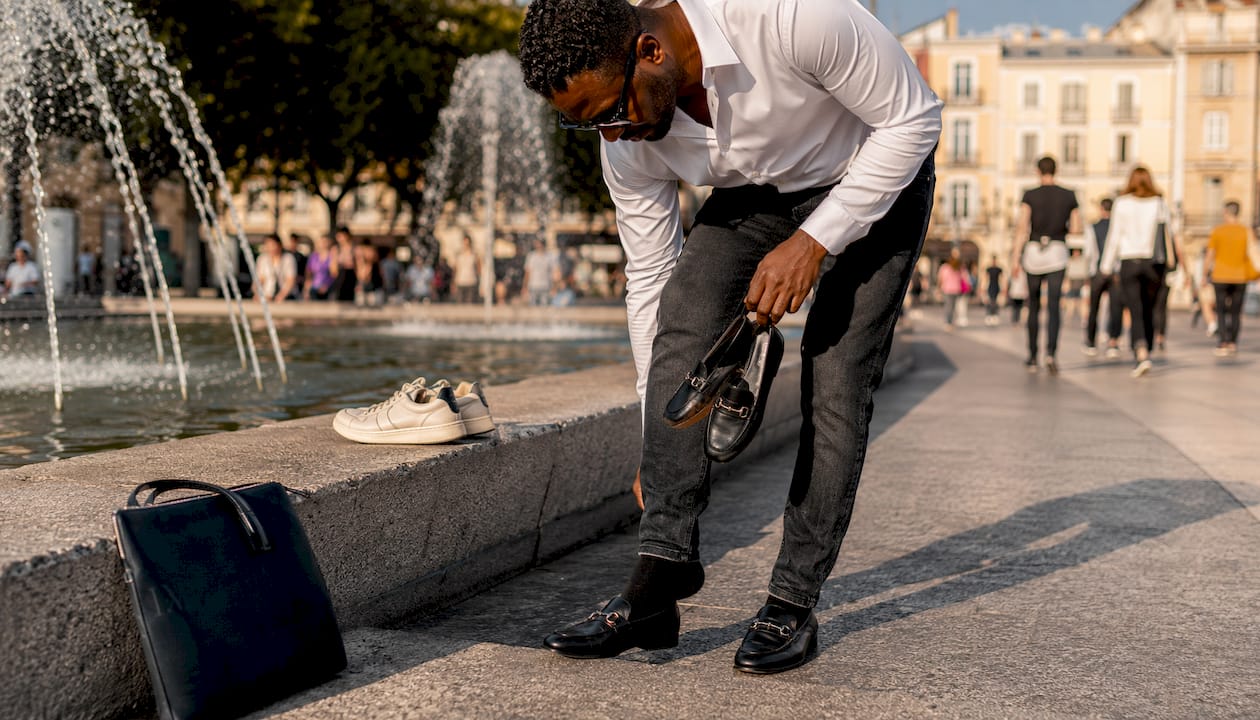
Shoes (30 seconds). Swap trainers or flat casual sandals for loafers, ankle boots, or heeled sandals. Neutral tones and clean finishes work across the most outfits. Keep a spare pair in your bag if you know you’ll be going from errands to dinner. Before: white trainers + midi dress. After: block-heel sandals + same midi dress. The dress went up two notches.
-
Outer layer (90 seconds). Remove the denim jacket or hoodie. Replace with a structured blazer, a tailored cardigan, or a cropped jacket. If you’re short on time, even draping a blazer over your shoulders reads more intentional than leaving it off. Before: denim jacket + dark jeans + blouse. After: blazer + same jeans + same blouse. Suddenly it’s a work-to-drinks outfit.
-
Bag and accessories (60 seconds). Swap sets that include a smaller bag and one change of jewellery are compact, travelable solutions for quickly upgrading a look. Drop your essentials from the canvas tote into a structured crossbody or top-handle bag. Add one pair of earrings or a simple necklace. Before: canvas tote + stud earrings. After: structured shoulder bag + hoop earrings. The outfit reads finished.
-
Grooming (60–90 seconds, optional). A stronger lip colour, a quick brush-through of hair, and one tuck of a blouse into a waistband complete the transition. This step is optional but it’s the difference between “dressed up” and “put together.”
When time is extremely short, prioritise the outer layer or shoes. Both communicate formality quickly and are easy to swap even in a public space.
Mix-and-match outfit recipes for day-to-night and casual-to-smart looks
These recipes cover the most common UK scenarios. Each one has a base, a quick smart swap, and a note on why it works. Day-to-night outfit ideas consistently recommend a blazer, lightweight layering, and one statement accessory as the fastest route to a smarter look.
-
Commute to after-work drinks. Dark jeans + silk blouse + trainers → swap trainers for loafers, add a blazer and structured bag. The blouse does the heavy lifting; the blazer closes the deal.
-
Weekend brunch to gallery. Midi dress + denim jacket + flat sandals → swap jacket for a tailored cardigan, swap sandals for ankle boots. Minimal jewellery added.
-
Errands to dinner. Straight-leg trousers + fine knit + tote → swap tote for a top-handle bag, add earrings and a belt at the waist. No clothing change needed.
-
Casual Friday to client lunch. Smart blouse + wide-leg trousers + loafers → add a blazer, swap to a structured crossbody. Already half-smart; the blazer finishes it.
-
Daytime market to evening bar. Floral midi dress + trainers + denim jacket → swap trainers for wedge sandals, swap jacket for a cropped blazer, add statement earrings.
-
Coffee to work meeting. Fine-knit jumper + tailored trousers + ankle boots → tuck the jumper, add a slim belt, swap to a structured bag. Three minutes, no clothing change.
-
Sunday walk to Sunday lunch. Clean dark jeans + white blouse + loafers → add a blazer, swap canvas tote for a crossbody. Already smart enough; the blazer confirms it.
-
Gym bag day to birthday dinner. Midi skirt + fitted top + trainers → swap trainers for heeled sandals, add a satin blouse or cropped jacket, statement earrings.
-
Casual dress to evening event. Simple knit dress + flat sandals → swap sandals for heels, add a belt at the waist, swap to a small clutch.
-
Workday to theatre. Tailored trousers + silk blouse + loafers → add a structured blazer or evening jacket, swap to a small top-handle bag, add a necklace.
| Base look | Smart swap | Best for |
|---|---|---|
| Dark jeans + blouse + trainers | Loafers + blazer + structured bag | Work drinks, casual dinner |
| Midi dress + denim jacket | Ankle boots + tailored cardigan | Gallery, brunch to evening |
| Wide-leg trousers + knit | Belt + top-handle bag + earrings | Lunch meeting, city errands |
| Floral midi + flat sandals | Wedge sandals + blazer | Bar, birthday dinner |
| Knit dress + flat sandals | Heels + belt + clutch | Theatre, evening event |
How do you style trainers and jeans so they read smart casual?
These two pieces cause more outfit anxiety than almost anything else. The good news: both work in smart casual. The rules are just stricter.
Trainers — dos and don’ts:
- Do choose a clean, minimal silhouette. White leather or neutral low-profile trainers read intentional; chunky athletic trainers read gym.
- Do pair with a structured outer layer. A blazer over a trainer-based outfit signals that the trainers are a deliberate choice, not an oversight.
- Do keep the rest of the outfit elevated. Trainers + dark jeans + silk blouse + blazer works. Trainers + leggings + oversized hoodie does not.
- Don’t wear visibly dirty or worn trainers. Scuffed shoes undercut every other effort.
- Don’t pair with overly formal pieces. Trainers with a full tailored suit tips into costume territory.
Jeans — dos and don’ts:
- Do choose dark wash, straight or slim cut, clean hem. These sit at the dressiest end of the denim spectrum.
- Do pair with a structured top or blazer and proper shoes. Dark jeans + silk blouse + loafers is a legitimate smart casual outfit.
- Don’t wear distressed, faded, or ripped jeans as a bridge base. No amount of swapping rescues heavily distressed denim in a smart context.
- Don’t pair with trainers and a casual top simultaneously. One relaxed element at a time.
A belt, a blazer, or a shoe change can rescue a jeans-based outfit that’s reading too casual. Usually it’s the shoes doing the most work.
Seasonal layering: how to keep transitions working all year
UK weather means layering isn’t optional. The good news is that the same outfit formulas work year-round when you swap the layering pieces.
Winter to spring:
- Base: tailored trousers or dark jeans + silk blouse
- Insulating layer: fine-knit jumper or structured cardigan
- Finishing piece: lightweight trench coat in camel or navy
- Shoes: ankle boots through March, loafers from April
Summer to autumn:
- Base: midi dress or midi skirt + fitted top
- Insulating layer: lightweight blazer or cropped knit jacket
- Finishing piece: a longer cardigan or a structured coat for cooler evenings
- Shoes: transition from flat sandals to ankle boots as temperatures drop
Summer evenings specifically:
- A breathable satin or silk-finish blouse handles the day-to-evening shift without adding warmth.
- Swap flat sandals for wedge sandals or heeled mules. The heel adds formality; the open toe keeps it seasonal.
“Day-to-night outfit examples repeatedly recommend a blazer, lightweight layering, and one statement accessory as the fastest route to a smarter look.” — OutfitTrends
Fabric guidance by season:
- Spring/Summer: Satin, chiffon, linen-blend, breathable crepe. Avoid heavy wool or thick ponte.
- Autumn/Winter: Ponte, fine wool, structured knit, velvet for evenings. Avoid thin jersey as a standalone layer.
The casual wear checklist for UK women covers seasonal essentials in more detail if you’re building out your wardrobe by season.
What makes an outfit look slimmer or more expensive?
These are styling techniques, not body changes. They work on any figure and take seconds to apply.
Silhouette rules:
- Vertical lines and structural tailoring create a streamlined silhouette. A well-fitted blazer or high-waisted tailored trousers are the two fastest ways to achieve this.
- Monochrome dressing — wearing one colour head to toe — lengthens the body visually. It doesn’t need to be black; navy, camel, or ivory work just as well.
- A belt at the natural waist defines proportion instantly. It works on dresses, wide-leg trousers, and relaxed blouses alike.
- Structured fabrics (ponte, crepe, satin) hold their shape and project intentionality. Thin jersey and loose cotton do the opposite.
What signals ‘looks expensive’:
- Clean hems and no visible wear on shoes or bags
- One focal point per outfit, not three competing ones
- Fit that skims without clinging or billowing
- A cohesive colour palette (two neutrals plus one accent, maximum)
Pro Tip: Try “middle-out dressing”: choose your anchor piece first (the blazer, the midi dress, the tailored trousers), then build outward. This keeps proportions balanced and stops the outfit from looking assembled rather than chosen. Visual presentation and perceived quality are closely linked — the same principle applies to how you put an outfit together.
A quick posture note: standing straight with shoulders back adds more perceived polish than any accessory. It’s the one thing that costs nothing and works immediately.
Shop the quick-transition looks with JV London
The pieces below map directly to the outfit recipes above. Each one functions as either a bridge base or a swap piece, and all ship free within the UK with 30-day hassle-free returns.
- Bridge base dress: The Solvra two-piece midi dress set includes a button-front cardigan, which means the layering piece comes built in. Wear the dress alone for daytime; add the cardigan for a smarter finish. Fits recipes 2, 5, and 9.
- Belted midi: The Tindra belted midi dress demonstrates the belting technique directly — the waist definition is already built into the cut. Fits recipes 3 and 9.
- Evening upgrade dress: The Marisol halter mini dress layers under a blazer for a daytime-appropriate look, then stands alone for evening. Fits recipes 8 and 10.
- Structured bag: The Tamsin top-handle bag is the single most versatile swap piece in the 3-switch method. Bamboo detail keeps it interesting without being loud.
- Crossbody option: The Anselma quilted crossbody fits inside a day tote and swaps in for evening in under 60 seconds.
- Sandal upgrade: The Zelaya wedge sandals add height and formality without the discomfort of a stiletto. Fits summer recipes 5 and 8.
- Layering pieces: The cardigans range covers the insulating layer slot across all seasons.
Build your personal swap set from three of these: a structured bag, a pair of smarter shoes, and one bridge dress. That’s the minimum kit for most casual to smart outfit transitions.
A five-minute checklist to use just before you leave
Run through this in front of a full-length mirror. It takes 90 seconds and catches most outfit problems before they become regrets.
Outfit check:
- [ ] Fit: nothing baggy, nothing pulling, hem sitting correctly
- [ ] Shoes: clean, intentional, appropriate for the setting
- [ ] Bag: structured or smaller than a canvas tote for anything smarter than errands
- [ ] One finishing detail: earrings, a belt, or a lip colour — not all three
- [ ] Quick scan: visible creases, stains, loose threads, visible labels
Evening pack list (fits inside a day tote):
- Small structured bag or clutch
- One pair of statement earrings in a small pouch
- Lipstick or tinted balm
- Travel-size perfume
- A hair clip or pin for a quick updo
UK workplace and social settings: Most UK offices and social settings reward one clearly polished element over a fully formal outfit. A blazer over otherwise casual clothes reads as intentional. A full formal suit at a casual drinks event reads as misreading the room. When in doubt, one elevated piece is always the safer call.
Key takeaways
The most effective approach to casual to smart outfit transitions is the 3-switch method: change shoes, update the outer layer, and swap one accessory around a clean bridge base.
| Point | Details |
|---|---|
| The formality dial | Most transitions are one or two notches, not a full wardrobe change. |
| The 3-switch method | Change shoes first, then outer layer, then accessories. Under five minutes total. |
| Start with an elevated base | Distressed denim and leggings won’t respond to swaps. Dark jeans or a midi dress will. |
| Invest in one bridge piece | A structured bag, a blazer, or a midi dress covers most scenarios on its own. |
| Jvwear swap kit | The Tamsin bag, Zelaya wedge sandals, and Solvra midi set form a ready-made transition kit with free UK shipping. |
The case for dressing with less effort, not more
There’s a tendency to treat outfit transitions as a problem of having too little. Not enough clothes, not the right pieces, not enough time. The system in this article argues the opposite: most people already own what they need. The gap is usually one or two bridge pieces and a clear method for using them.
The formality dial is the most useful mental shift here. Once you stop thinking in categories (“casual” vs “smart”) and start thinking in degrees, the whole exercise becomes less stressful. You’re not changing who you are for a different setting. You’re adjusting the signal by one notch.
The 3-switch method works because it’s fast enough to actually use. A system that takes 20 minutes isn’t a system; it’s a second outfit change. Three swaps in under five minutes is something you’ll actually do on a Tuesday evening when plans change at 5pm.
If you want to go further, the minimalist dressing approach is worth exploring. Fewer pieces, more combinations, less decision fatigue. The wardrobe that transitions well is almost always the smaller one.
Jvwear’s quick-transition capsule: free UK shipping, 30-day returns
If you’re ready to build your swap set rather than just plan it, Jvwear has the pieces that map directly to the formulas in this guide.
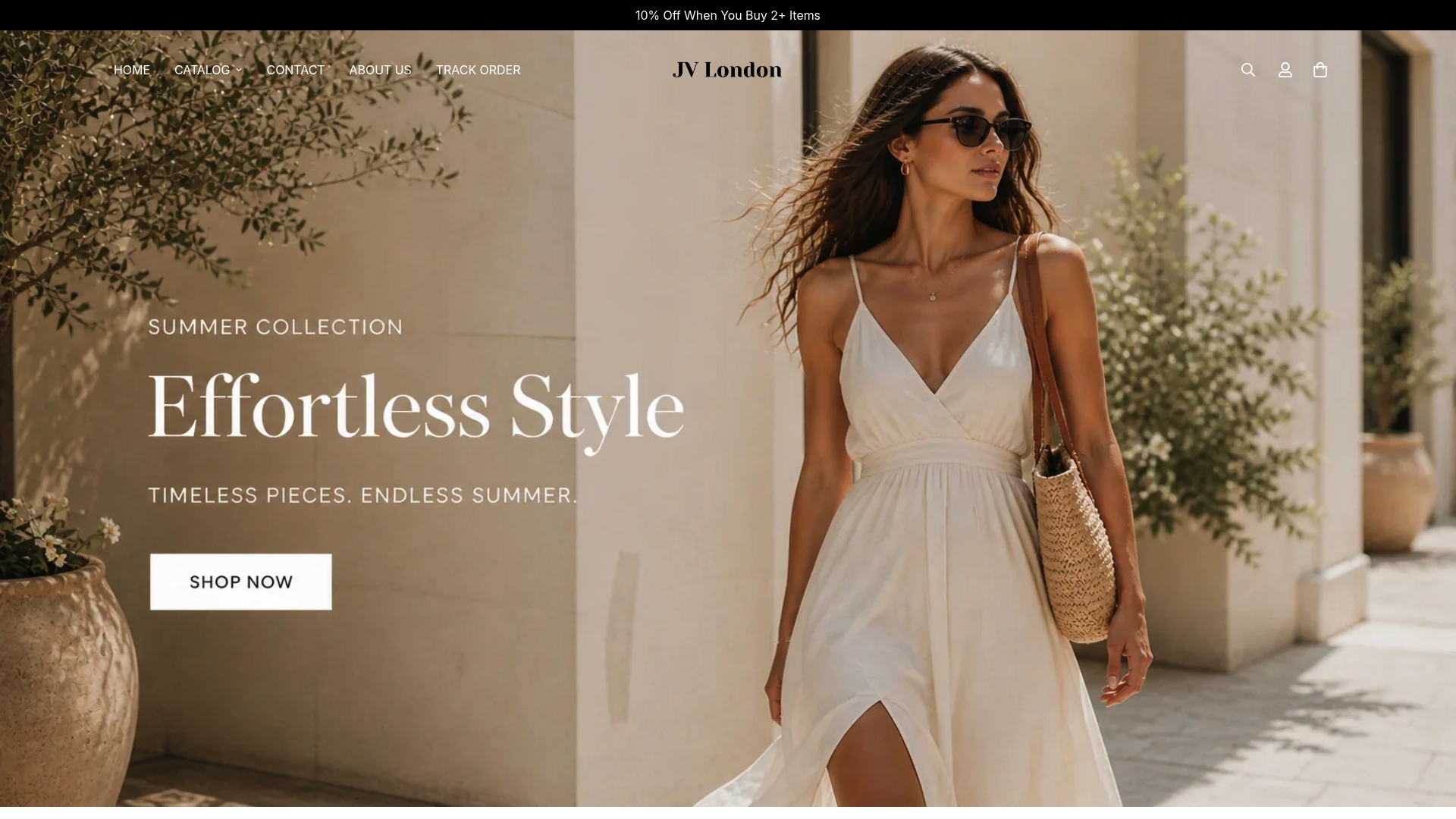
The Solvra two-piece midi dress set is the single most versatile starting point: a bridge base and a layering piece in one purchase. Pair it with the Tamsin top-handle bag and a pair of wedge sandals and you have a complete swap kit for most UK scenarios.
Why shop with Jvwear:
- Free UK shipping on all orders
- 30-day hassle-free returns and easy exchanges
- Versatile, minimalist designs that work across multiple outfit formulas
- Fabric and fit notes on every product page
Stock on capsule pieces moves quickly. Browse the full range and find your bridge pieces at jvwear.com.
Further reading and sources
- Coliera: Build outfits that work across different social settings — The source for the bridge base concept and swap set logic used throughout this guide.
- MixMatch: Smart casual capsule wardrobe — Practical capsule curation advice and colour palette guidance.
- Prism News: How to master smart casual without looking overdressed — Useful for understanding the balance between dressy and relaxed signals.
- Kaviera: One outfit three lives — The source for the 3-switch method and time estimates.
- OutfitTrends: Day to night outfit ideas — Visual examples and layering recommendations for day-to-evening transitions.
- FashionABC: From casual to formal in 3 steps — Practical three-step swap guide with footwear and accessory advice.
- The Salford Magazine: From day to night — UK-relevant day-to-night styling with texture and layering guidance.
- Jvwear: Everyday minimalist outfit formulas — Repeatable outfit formulas and styling notes that complement the 2x2 and 3-switch methods.
- Jvwear: Everyday outfit building blocks — Practical item lists and outfit formulas for a minimalist wardrobe.