Transitional dressing is not about grabbing a cardigan because your weather app says 14°C. Understanding how transitional dressing works means treating your outfit as a system, one where each piece earns its place whether you are wearing all of it or just the base. The UK’s unpredictable spring and autumn seasons make this especially relevant. A morning that starts at 8°C can hit 19°C by lunchtime, and your wardrobe needs to handle that shift without you looking like you raided a lost property bin. This guide breaks down exactly how to make layering feel intentional, polished, and genuinely effortless.
Table of Contents
- Understanding the basics of how transitional dressing works
- Common misconceptions and expert layering tips
- Transitional dressing tailored for UK weather shifts
- Fabric choices and outfit balance for comfort and style
- Building versatile outfits that evolve with you
- Why transitional dressing is more than just weather-proofing your wardrobe
- Explore JV London’s versatile collection for effortless transitional dressing
- Frequently asked questions
Key Takeaways
| Point | Details |
|---|---|
| Intentional layering | Transitional dressing works best with carefully chosen layers that look styled both on and off. |
| Base/mid/outer system | Use breathable base layers, removable mid-layers, and weather-protective outer layers for flexibility. |
| Fabric matters | Choose fabric blends like cotton+wool or linen+silk for breathability and temperature regulation. |
| UK climate adaptation | Build a wardrobe with versatile pieces like trench coats and cardigans to handle UK temperature swings. |
| Accessories elevate | Light scarves and structured bags enhance style and comfort without extra bulk. |
Understanding the basics of how transitional dressing works
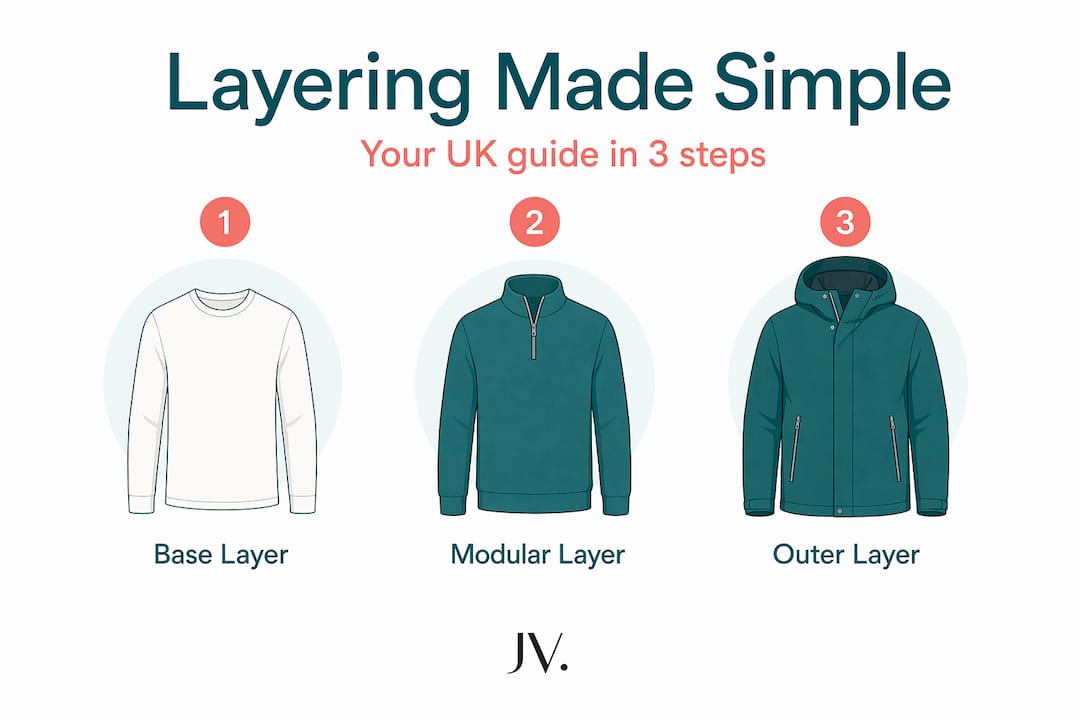
The foundation of transitional dressing is a three-layer system, and once you understand it, getting dressed for unpredictable weather becomes far less stressful. As fashion stylists advise, transitional dressing works best using a base against skin, a mid-layer for style and warmth, and an outer layer for wind or rain. Each layer has a specific job, and when all three do their jobs well, the whole outfit holds together at any temperature.
The base layer sits closest to your skin and should be breathable and fitted. Think a ribbed cotton bodysuit, a slim-fitting long-sleeve top, or a fine linen camisole. This layer needs to look polished on its own because there will be moments during the day when it is all you are wearing. A well-chosen linen top for layering works brilliantly here, offering breathability without sacrificing shape.
The mid-layer adds warmth and visual interest. A fine-gauge knit, a tailored waistcoat, or a lightweight shirt worn open over your base all qualify. The outer layer is your weather shield: a trench coat, a waxed jacket, or a structured blazer depending on the formality of your day. This transitional season dressing guide puts it well: the goal is a system of pieces you can add or remove without your outfit falling apart.
Key principles to keep in mind:
- Two thin layers beat one thick one. Adaptability matters more than warmth alone.
- Fabric composition is not a minor detail. Blends like cotton with wool, or linen with silk, regulate temperature far better than single-fibre fabrics.
- Avoid 100% synthetic fabrics as base layers. They trap heat and moisture, leading to the uncomfortable sweat-chill cycle that makes transitional dressing feel miserable rather than chic.
- Every layer should look intentional when visible. If removing your outer layer reveals a crumpled, ill-fitting mid-layer, the whole system breaks down.
Common misconceptions and expert layering tips
Most people treat layering as a reactive habit: it is cold, so add a jumper; it warms up, so stuff the jumper in a bag. That approach is why layering gets a bad reputation for looking clumsy. True transitional style is about proportion and intentional styling, not just weather adaptation.
The biggest misconception is that layers should be invisible. In reality, visible layering is a deliberate styling technique. A bodysuit peeking above a partially unbuttoned shirt, or a fine knit layered under a slip dress, adds dimension and makes an outfit look considered rather than thrown together. The key is contrast: pair smooth fabrics with textured ones, fitted shapes with relaxed ones.
Another common mistake is choosing layers purely for warmth without thinking about what happens when they come off. If your mid-layer is a shapeless fleece, removing your coat will not flatter you. Instead, try layering with a maxi dress as your base, adding a fitted knit or denim jacket over the top. When the jacket comes off, the dress stands completely on its own.
Practical layering tips that actually work:
- Contrast textures deliberately. Silk under a chunky knit, or a crisp cotton shirt under a soft wool coat, creates visual richness without bulk.
- Tuck in your base layer. A tucked blouse or bodysuit under an open shirt gives the illusion of a more structured, intentional look.
- Use colour strategically. Tonal layering (varying shades of the same colour) looks sophisticated. Contrasting layers work when one piece is neutral.
- Avoid more than three layers in public. Beyond that, you are fighting your silhouette rather than dressing it.
Pro Tip: Before leaving the house, remove one layer and check whether the outfit still works. If it does not, rethink the base or mid-layer rather than adding more on top.
Transitional dressing tailored for UK weather shifts
UK spring and autumn weather operates on its own logic. April, in particular, functions as its own micro-season: mornings that require a coat, afternoons that feel almost summery, and evenings that dip back down without warning. A trench coat as a lightweight outer layer and an oversized blazer as a structured mid-layer are two of the most reliable pieces for navigating these swings.
The concept of modular layering is particularly useful here. Rather than dressing for the coldest or warmest point of the day, you dress for the full range and build in easy adjustment. A tailored trouser set with a sleeveless vest, for instance, gives you a polished base that works at 18°C, while a fine cardigan and trench coat over the top handle the 7°C morning commute. More guidance on this approach is available in this British spring transitional dressing overview.
Temperature-based layering guide for UK conditions:
| Temperature range | Base layer | Mid-layer | Outer layer |
|---|---|---|---|
| 5°C to 9°C | Fitted long-sleeve top | Fine-gauge knit or waistcoat | Trench coat or wool coat |
| 10°C to 14°C | Bodysuit or slim blouse | Open shirt or light cardigan | Oversized blazer |
| 15°C to 18°C | Camisole or sleeveless top | Lightweight shirt or denim jacket | Carry a scarf or light layer |
| 19°C and above | Dress or top worn alone | Optional open overshirt | Sunglasses and a structured bag |
Steps for building a UK transitional capsule wardrobe:
- Start with three versatile base layers in neutral tones: a white bodysuit, a fine black long-sleeve top, and a light-coloured camisole.
- Add two mid-layers with different textures: a fine-gauge knit and a tailored blazer or waistcoat.
- Choose one reliable outer layer that works across a range of temperatures: a classic trench coat is the obvious answer.
- Select two pairs of transitional footwear: leather loafers for drier days and a clean white trainer for casual layering.
- Incorporate one or two dresses that work both alone and layered, giving you flexibility without extra pieces.
Fabric choices and outfit balance for comfort and style
Fabric is where transitional dressing either succeeds or quietly fails. You can have the right silhouette and the right proportions, but if your base layer is 100% polyester, you will feel uncomfortable the moment the temperature shifts, which defeats the entire purpose.
Breathable fabric blends are the practical solution. Cotton blended with wool gives you warmth without the stuffiness of pure wool. Linen blended with silk offers a lightweight drape that regulates temperature naturally. These blends are not just a fabric trivia detail: they are the difference between an outfit that feels good all day and one you are desperate to change by 3pm.

Fit matters as much as fabric. Base layers should be close-fitting, not tight, so they sit neatly under mid-layers without adding bulk. Lightweight linen trousers are a strong transitional choice because they breathe well in warmer spells but layer easily under a longer coat when temperatures drop.
Accessories are often underestimated in transitional dressing:
- A lightweight scarf adds warmth at 10°C but folds into a bag at 17°C without taking up much space.
- A structured handbag gives an outfit visual weight and polish when layers come off.
- Footwear should handle damp conditions without being heavy: leather loafers, clean trainers, or ankle boots with a low heel all work well across UK spring and autumn conditions.
Pro Tip: Think of breathability as a comfort system, not a fabric label. Ask yourself whether each layer allows air to circulate. If the answer is no, the outfit will feel increasingly uncomfortable as the day warms up, regardless of how good it looks.
Building versatile outfits that evolve with you
The real test of transitional dressing is whether your outfit works at 8am and again at 6pm without a full wardrobe change. Transitional dressing succeeds when the base layer looks complete on its own and layers feel functional rather than piled on for the sake of it.
A floral maxi dress is a strong example of a base that works independently. Worn alone, it reads as a complete outfit. Add a fine knit cardigan and a trench coat for the morning, and you have a layered look that removes cleanly as the day warms.
Layering piece functions at a glance:
| Piece | Aesthetic role | Warmth role | When to remove |
|---|---|---|---|
| Trench coat | Polished, classic outer layer | Wind and light rain protection | When indoors or above 17°C |
| Oversized blazer | Structured, fashion-forward | Moderate warmth | Mid-afternoon warm spell |
| Fine-gauge cardigan | Soft, relaxed texture contrast | Light warmth | When temperature exceeds 16°C |
| Lightweight scarf | Colour or texture accent | Neck and shoulder warmth | Fold into bag when not needed |
Steps to transition an outfit from cool morning to warm afternoon:
- Leave the house with all three layers: base, mid-layer, and outer coat.
- Remove the outer coat when you arrive at your destination or when the temperature rises above 15°C.
- Assess whether the mid-layer works on its own. If yes, remove it and carry it. If no, keep it on and adjust accessories instead.
- Use a structured bag to carry removed layers neatly, so the outfit does not look dishevelled.
- Refresh the look with a simple accessory swap: swap a scarf for sunglasses, or add a belt to define the waist of a looser mid-layer.
Why transitional dressing is more than just weather-proofing your wardrobe
Here is the perspective most style guides miss: transitional dressing is not a defensive strategy. It is an offensive one. The women who do it best are not thinking about the weather forecast. They are thinking about how they want to look and feel across a full day, and they are building outfits that hold that intention from morning to evening.
The key misconception is that layering is purely about reacting to weather. True transitional dressing is an art of proportion and intentional style. That reframing changes everything. Instead of asking “will I be warm enough?”, you start asking “does this outfit tell a coherent story at every point in the day?” That is a much more interesting question, and it produces much better outfits.
Transitional dressing done well also reflects a certain confidence. When you remove a layer and the outfit underneath is just as considered as the full look, it signals that you dressed with purpose. It is the fashion equivalent of a well-structured argument: every part holds up on its own, and together they are stronger.
We think the best refined layering sets embody this idea. A two-piece that works as a set but also separates into individual pieces you can layer differently gives you genuine versatility without the mental load of building outfits from scratch every morning. That is the real goal of transitional dressing: not just surviving the weather, but looking like you planned it that way all along.
Explore JV London’s versatile collection for effortless transitional dressing
To put these principles into practice, JV London’s curated range offers exactly the kind of pieces that make transitional dressing feel effortless rather than effortful.

The floral midi dress with a wrap front is a perfect base layer that stands alone on warm days and layers beautifully under a blazer or trench. The gingham midi sundress with pockets offers the same versatility with a more relaxed, summery feel. For accessories, the sculptural handbag with a knotted handle adds structure and polish to any layered look, carrying your removed layers without sacrificing style. JV London offers free UK shipping and hassle-free returns, so building your transitional wardrobe is genuinely low-risk.
Frequently asked questions
What is transitional dressing?
Transitional dressing is the practice of building outfits from layered, versatile pieces that adapt to shifting temperatures, particularly during in-between seasons like UK spring and autumn. It is a system of pieces that can be added or removed as temperature swings throughout the day.
Why should I avoid heavy single layers in transitional dressing?
Heavy single layers are difficult to adjust without disrupting your whole outfit. Two thin layers are preferable because you can remove one without looking underdressed or exposed.
Which fabrics are best for transitional dressing?
Breathable blends like cotton with wool or linen with silk work best because they balance warmth and ventilation. Avoid 100% polyester as it traps moisture and leads to discomfort when temperatures shift.
How can accessories help in transitional dressing?
Accessories like lightweight scarves and structured handbags allow you to shift an outfit’s tone and add practical warmth without changing your entire look, making them essential tools in any transitional wardrobe.