Styling comfortable everyday outfits means choosing fuss-free silhouettes, practical fabrics, and clean lines that keep you looking polished without sacrificing ease. The best casual chic outfits are not about dressing down. They are about dressing smart. Sources like Who What Wear UK and The Quiet Luxe Edit confirm that the most wearable everyday looks share three qualities: minimal fastenings, well-chosen fabrics, and a reliable layering structure. Whether you are building a capsule wardrobe from scratch or refining what you already own, the principles of versatile, relaxed outfit combinations apply across every season and occasion.
What foundational pieces build a comfortable, stylish everyday wardrobe?
The foundation of any great everyday wardrobe is a small set of mix-and-match pieces that work across multiple occasions without requiring much thought. A 5-piece starter set consisting of dark trousers, two neutral tees, a layering piece, and clean shoes can generate over a dozen outfit combinations. That kind of versatility is what separates a wardrobe that works from one that just fills a rail.
Fabric is where comfort is either won or lost. You want pieces that breathe, move with your body, and resist creasing. Cotton basics, slip-on summer dresses that require minimal ironing, and linen separates all deliver on those criteria. The key is avoiding fabrics that feel restrictive after a few hours of wear.
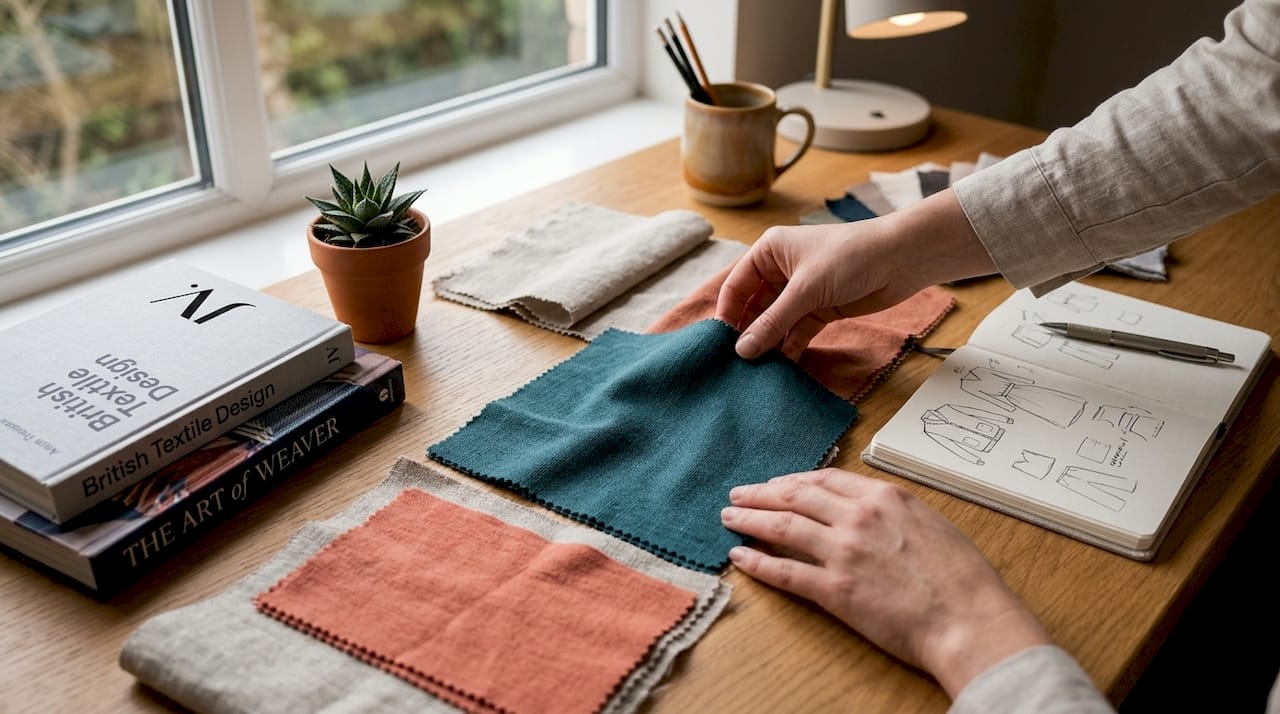
Fit matters more than size. The most common mistake is sizing up to gain comfort, but this often creates a shapeless silhouette that reads as sloppy rather than relaxed. Instead, fit testing at key points such as the waistband, armholes, and rise gives you the comfort you need without losing the clean lines that make an outfit look intentional.
Here are the core pieces to prioritise when building your starter wardrobe:
- Neutral tees in cotton or cotton blend: The backbone of every relaxed outfit combination
- Well-fitted wide-leg or straight-leg trousers: Comfortable at the waist, polished in silhouette
- A slip-on dress in a non-clinging fabric: The single easiest piece for warm-weather daily wear
- A lightweight layering piece: A fine-knit cardigan or oversized shirt adds dimension without bulk
- Clean, simple footwear: Loafers, trainers, or flat mules that shift the look from casual to chic
Pro Tip: When shopping for trousers, sit down in the fitting room. If the waistband digs in or the fabric pulls across the thighs, the fit is wrong regardless of the size label.
How can layering enhance both comfort and style in everyday outfits?
Layering is the single most underused technique in everyday fashion. Done well, it adds visual interest, allows for temperature control throughout the day, and transforms a basic outfit into something that looks considered. The key is following a clear sequence rather than piling on pieces at random.
An effective layering sequence follows a base, interest, structure approach. Your base layer is the comfortable foundation, typically a fitted tee or a slip dress. The interest layer adds texture or colour, think a fine-knit cardigan, a printed shirt worn open, or a knitted vest. The structure layer anchors the whole look, usually a blazer, a trench coat, or an oversized chore jacket.
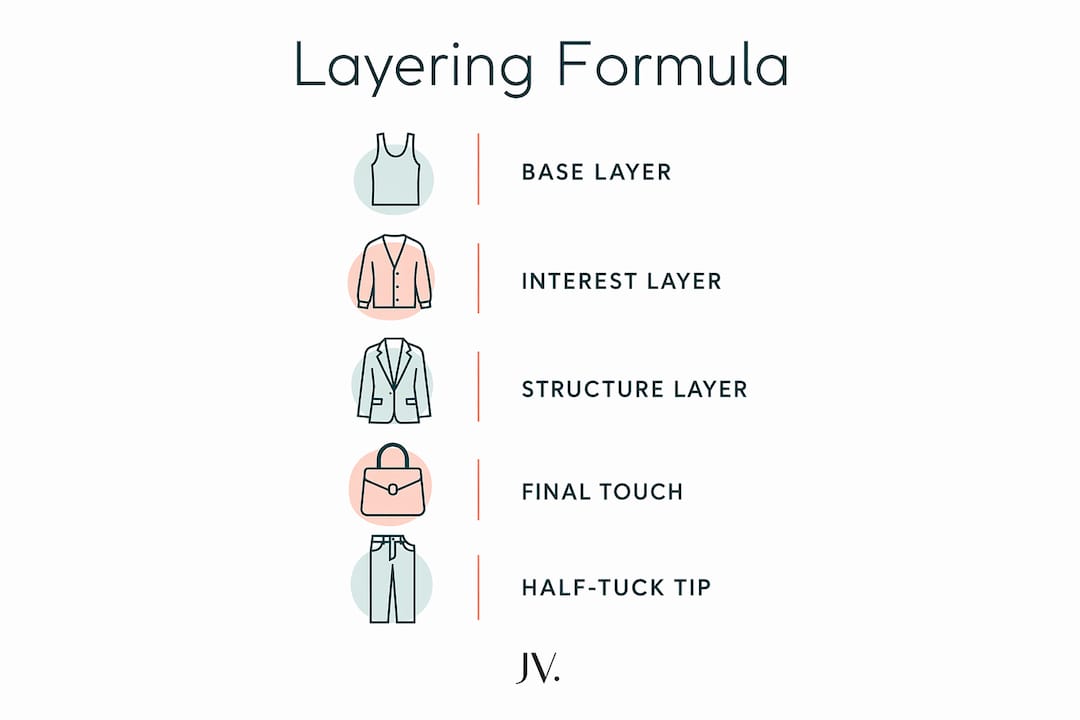
Proportions matter as much as the pieces themselves. Pairing a voluminous interest layer with slim trousers keeps the silhouette balanced. Mixing textures, such as a ribbed knit over a smooth cotton base, creates depth without adding visual noise. Selective tucking of the front of a shirt or tee defines the waist and stops layered looks from reading as shapeless.
A few rules that prevent over-layering:
- Keep the colour palette tight. Two to three tones maximum stops the look from becoming busy.
- Vary fabric weight across layers. A heavy knit over a heavy shirt creates bulk. A light knit over a smooth tee creates dimension.
- One statement layer is enough. If the cardigan is textured, keep the blazer plain.
Pro Tip: The half-tuck is your best friend in layered looks. Tuck in just the front of your base layer to create shape without the formality of a full tuck.
What outfit formulas work for different daily occasions?
Repeatable outfit formulas remove the daily decision fatigue that makes getting dressed feel like a chore. The best formulas are built around one structured or statement piece, with everything else kept comfort-forward. Here are five that cover most daily scenarios:
-
The structured ease uniform. Wide-leg trousers in a neutral tone, a fitted tee, and a tailored blazer. Structured blazers paired with comfortable basics maintain composure without stiffness. Add loafers and a simple tote to complete the look.
-
The tonal column. Matching or closely toned separates from top to bottom create a long, clean line that reads as polished with minimal effort. A camel knit and camel wide-leg trouser, for example, looks intentional and works for both errands and casual work settings.
-
The slip dress formula. A non-clinging midi slip dress worn alone in summer, or layered over a fitted tee and under a denim jacket in cooler months. This single piece adapts across seasons with minimal restyling.
-
The elevated athleisure look. Coordinated sets are the easiest way to look put together when mobility is the priority. A matching ribbed co-ord in a neutral or muted tone, paired with clean trainers and a structured bag, shifts the look from gym to street without effort.
-
The chore jacket formula. A chore jacket or overshirt worn over a simple tee and straight-leg jeans. This is the most versatile formula for transitional weather and works equally well for weekend errands or a casual lunch.
For accessories, the rule is simple. One statement piece, whether that is a structured bag, a bold earring, or a printed scarf, is enough to shift a basic look into fashionable casual wear territory. Footwear should match the energy of the outfit. Flat mules or loafers keep things chic without effort. Chunky trainers add a relaxed, contemporary edge.
Which fabrics best support comfort and style across seasons?
Fabric choice determines how comfortable you actually feel in an outfit, not just how it looks on the hanger. The right fabric breathes, moves, and recovers its shape. The wrong one feels restrictive by midday or requires constant ironing.
| Fabric | Best season | Comfort strengths | Watch out for |
|---|---|---|---|
| Cotton blend | Spring, summer | Breathable, soft, easy care | 100% cotton can be heavy and slow-drying |
| Linen | Summer | Highly breathable, lightweight | Pure linen wrinkles excessively |
| Merino wool | Autumn, winter | Moisture-wicking, odour-resistant, multi-day wear | Can be expensive; check blend percentage |
| Viscose blend | Year-round | Drapes well, soft, minimal ironing | Less durable; check care label |
| Performance fabric | Year-round | Wrinkle-resistant, quick-drying, flexible | Can look too casual in formal settings |
Merino wool blends deserve particular attention. They are lightweight, quick-drying, and odour-resistant, which makes them genuinely practical for multi-day wear between washes. For a young woman building a low-maintenance wardrobe, a merino fine-knit is one of the best investments available.
For warm weather, the priority is breathability and minimal ironing. A viscose or cotton-blend slip dress that does not cling and does not crease is worth more than a pure linen piece that looks beautiful for an hour before wrinkling beyond recovery.
Pro Tip: When buying online, check the fabric composition in the product description before the photos. A dress that is 95% polyester will rarely feel as comfortable as one in a natural or blended fabric, regardless of how it looks on the model.
How to shop and build a wardrobe that balances comfort with casual chic style
Shopping with intention is what separates a wardrobe that genuinely works from one that accumulates pieces you never wear. The capsule wardrobe approach, which focuses on versatile separates and coordinated sets, is the most reliable method for building a comfortable yet stylish collection without overspending.
Before buying anything new, apply a three-question test. Does this piece work with at least three things I already own? Does it require specialist cleaning or constant ironing? Does it fit correctly at the waist, armhole, and rise right now, without alterations? If the answer to any of these is no, the piece is likely to sit unworn.
Here is a practical checklist for building a balanced wardrobe:
- Buy neutrals first. Ivory, camel, grey, navy, and black form the base of every relaxed outfit combination. Colour and print come after.
- Prioritise coordinated sets. A matching top and trouser or skirt set doubles as two separate pieces and always looks intentional.
- Invest in one quality layering piece per season. A well-made cardigan or blazer will work harder than five cheaper alternatives.
- Use seasonal sales strategically. End-of-season sales are the best time to buy quality basics at reduced prices. Avoid buying trend pieces on sale unless they genuinely fit your existing wardrobe.
- Limit accessories to what you actually reach for. Three to five accessories that you wear regularly are more useful than a drawer full of options.
For everyday minimalist outfit formulas, the principle is the same. Fewer, better pieces that work together create more outfit options than a wardrobe full of one-off purchases.
Key takeaways
Styling comfortable everyday outfits requires choosing the right fabrics, mastering a simple layering sequence, and building from a small set of versatile, well-fitted pieces.
| Point | Details |
|---|---|
| Start with a 5-piece foundation | Dark trousers, two neutral tees, a layering piece, and clean shoes create over a dozen combinations. |
| Fit over size | Test waistbands, armholes, and rises rather than sizing up to gain comfort. |
| Layer in three steps | Base, interest layer, and structure layer adds dimension without bulk or confusion. |
| Choose fabric with purpose | Merino blends and viscose offer breathability, wrinkle resistance, and low maintenance across seasons. |
| Shop with a three-question test | Verify versatility, care requirements, and fit before buying any new piece. |
Why I stopped chasing comfort and started dressing with intention
The most common mistake I see young women make is treating comfort and style as opposites. They buy oversized everything, lose the shape of their silhouette, and then wonder why their outfits feel uninspired. The truth is that comfort comes from fit and fabric, not from volume.
The shift that changed everything for me was learning to test fit at specific points rather than reaching for a larger size. A trouser that fits correctly at the rise and waistband feels more comfortable than one that is two sizes too big and bunches at the ankle. The same logic applies to tops. A well-cut tee in a cotton blend feels better at 6pm than a stiff, oversized shirt that looked relaxed at 8am.
Layering was the second revelation. Once I understood the base, interest, structure sequence, getting dressed became genuinely quick. I stopped second-guessing combinations because the formula did the work. A fine-knit vest over a white tee, finished with a trench coat, is an outfit that takes three minutes to put together and looks like it took thirty.
My honest advice is to invest in two or three quality pieces per season rather than filling your wardrobe with cheaper options that wear out quickly. A well-styled midi dress or a linen co-ord set will outlast and outperform five fast-fashion alternatives every time. Simplicity, when it is intentional, is always the most stylish choice.
— Mykola
Build your everyday wardrobe with Jvwear
Jvwear’s collection is built around exactly the kind of pieces this article describes: breathable fabrics, clean silhouettes, and designs that move with you rather than against you.
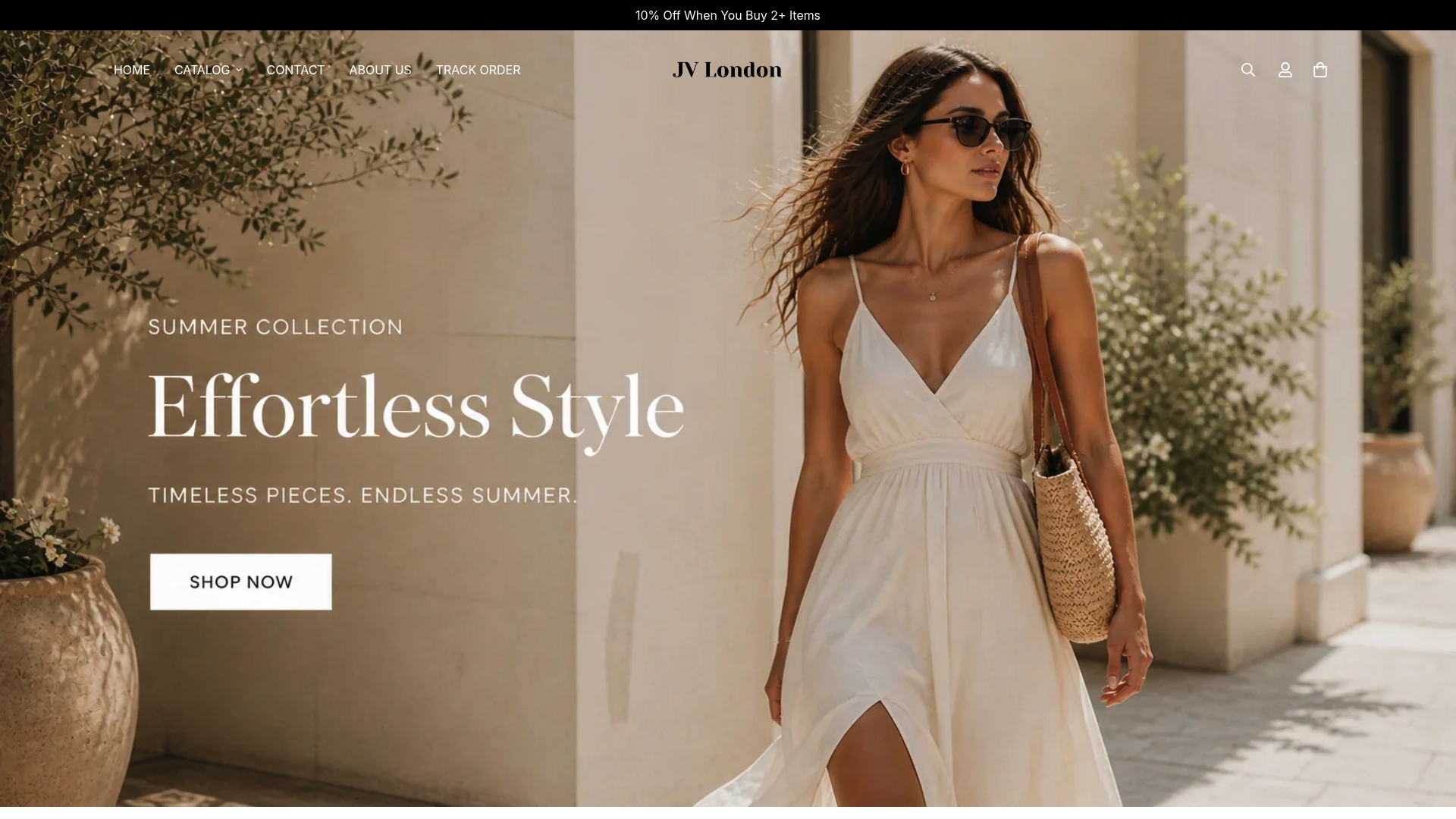
The belted midi dress with wide sleeves is a standout piece for everyday wear, offering structure at the waist with ease everywhere else. For a complete co-ord look, the linen co-ord set with wide-leg trousers delivers breathability and effortless polish in one purchase. Both pieces integrate directly into the outfit formulas covered above and require minimal styling to look intentional. Jvwear offers free UK shipping and hassle-free returns within 30 days, so building your wardrobe is genuinely low-risk.
FAQ
What are the best fabrics for comfortable everyday outfits?
Merino wool blends, viscose, and cotton blends offer the best combination of breathability, wrinkle resistance, and ease of care. Avoid 100% cotton for its weight and slow drying, and pure linen for excessive creasing.
How do I make casual outfits look more polished?
Add one structured piece, such as a blazer or tailored trouser, and keep the rest of the outfit simple. Comfort with structure at key points ensures clothes do not read as overly casual.
How many pieces do I need for a versatile everyday wardrobe?
A 5-piece starter set of dark trousers, two neutral tees, a layering piece, and clean shoes is enough to create over a dozen combinations. Quality and versatility matter more than quantity.
What is the easiest layering formula for everyday outfits?
Start with a comfortable base layer, add one interest layer for texture or colour, then finish with a structured piece to anchor the look. This three-step sequence works across all seasons and occasions.
How do I style comfortable outfits for work without looking too casual?
Pair comfortable basics like a fitted tee or soft blouse with tailored trousers and a structured blazer. The Quiet Luxe Edit confirms that polished comfort in workwear combines structure at key points with ease in cut and fabric.