Day to night outfit ideas are styling formulas that let you move from a casual daytime look to a polished evening ensemble by swapping just a few key pieces. Over 68% of working women now need outfits that cover at least two settings in a single day. That figure alone explains why versatile dressing has become a wardrobe priority rather than a nice-to-have. The good news is that the shift rarely requires a full outfit change. Four rules govern every successful transition: a versatile base, an accessories swap, purposeful layering, and a shoe change.
1. What makes a great day to night outfit base?
The foundation of any successful transition is a piece that reads as polished in both settings. Neutral tones, clean cuts, and wrinkle-resistant fabrics do the heavy lifting. A well-fitted midi skirt, a pair of wide-leg trousers, or a simple knit dress can anchor an entire day-to-evening wardrobe.
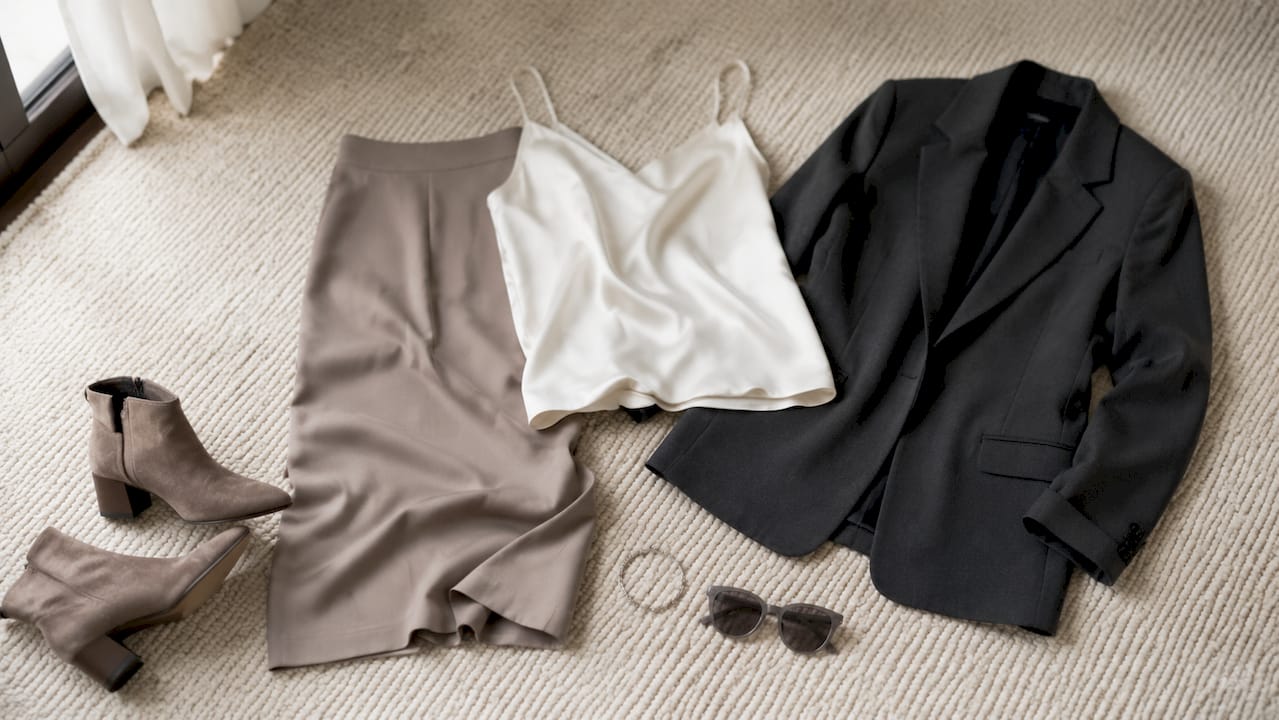
Fabric choice matters more than most women realise. Wrinkle-resistant fabrics maintain their shape from a morning meeting through to a late dinner without looking tired. Silk, ponte, and structured jersey all hold their form well across a full day.
In 2026, trending base layers include silk camisoles, corset-style tops, and wide-leg trousers. Structured corset-style bodysuits have become a go-to base layer precisely because they look intentional at any hour. Pair one with tailored trousers by day and swap the outerwear for evening.
- Tailored wide-leg trousers in black, camel, or navy
- Silk or satin camisoles that work under blazers and alone
- Knit midi dresses in neutral or muted tones
- Structured wrap dresses that hold their shape all day
- Midi slip skirts in bias-cut fabric
Pro Tip: Build your outfit “from the middle out.” Choose one anchor piece that sits at the midpoint of formality, then layer up or strip back around it. A tailored blazer or a structured wrap dress works perfectly in this role.
2. How accessories transform a daytime look into an evening one
Accessories are the fastest lever in transitional fashion. Swapping two or three accessories is enough to shift a look from casual to evening-ready in under two minutes. The key is knowing which swaps carry the most visual weight.
Bags make the biggest single impact. A large leather tote reads as daytime and practical. A compact sculptural clutch bag with a chain strap immediately signals evening. The silhouette change alone reframes the entire outfit.
Jewellery follows closely. Bold earrings, layered necklaces, and stacked rings shift the mood without touching a single garment. A pair of heart drop earrings or oversized hoops can take a simple knit dress from understated to statement.
- Swap a structured tote for a clutch or mini crossbody
- Replace flat sandals or trainers with heeled sandals or ankle boots
- Add a bold lip colour or a smoky eye for instant evening drama
- Layer on a statement necklace or switch to drop earrings
- Spritz a richer, more intense fragrance for the evening shift
Pro Tip: Pack a foldable evening bag and your key jewellery in your work tote every morning. The swap takes thirty seconds and you never arrive underprepared.
3. Layering strategies that work from morning to midnight
Layering is the most underrated tool in day to night dressing. The right outer layer adds formality when you need it and folds away when you do not. A compact blazer or trench coat fits neatly into a tote bag and creates an instant polished look the moment you put it on.
The trick is choosing layers that are easy to remove without disrupting the outfit underneath. A structured blazer over a silk camisole works for the office. Remove the blazer in the evening and the camisole becomes the focal point. The outfit changes register entirely with one simple move.
Lightweight cardigans serve a similar function in more casual settings. A versatile cardigan worn over a slip dress reads as relaxed and put-together by day. Remove it for the evening and the slip dress takes centre stage.
- Structured blazers: add formality instantly, remove for a softer evening look
- Trench coats: polished over any base, fold into a bag with ease
- Lightweight cardigans: casual by day, removed to reveal evening-ready layers beneath
- Camisoles layered under blazers: the blazer does the daytime work, the camisole does the evening work
- Slip dresses over fitted turtlenecks: a winter layering formula that reverses beautifully
4. Six outfit formulas you can wear right now
These six combinations apply the four core rules of transitional dressing to real wardrobe pieces. Each one starts with a daytime configuration and shifts to an evening look with minimal changes.
Outfit 1: The power trouser formula Tailored wide-leg trousers with a silk camisole and a structured blazer work perfectly for the office. For the evening, remove the blazer, add a leather jacket and swap flats for heeled sandals. The trousers carry the formality; the jacket adds edge.
Outfit 2: The midi skirt shift A midi slip skirt with a crewneck sweater reads as smart casual by day. At night, swap the sweater for a cropped jacket, add statement earrings, and the skirt becomes the centrepiece of an evening look. A belted midi dress follows the same logic with even less effort.
Outfit 3: The knit dress upgrade A knit midi dress with white trainers is comfortable and polished enough for daytime. Swap the trainers for knee-high boots, add a bold red lip, and the dress transforms into a confident evening outfit. No garment change required.
Outfit 4: The shirt and skirt reversal A button-down shirt tucked into a pencil skirt with flat shoes is a classic daytime combination. For the evening, untuck the shirt, add stiletto boots, and layer on bold jewellery. The untucked shirt adds a relaxed confidence that reads as intentional rather than casual.
Outfit 5: The jumpsuit pivot A tailored jumpsuit with a belt and flat sandals is a strong daytime choice. Swap the sandals for platform heels, add layered necklaces, and the jumpsuit becomes a standout evening piece. Jumpsuits are one of the most underused transitional garments.
Outfit 6: The leather and lace combination A lace camisole with leather-look trousers already sits at the intersection of day and evening. Add a blazer for the office. Remove it, add statement earrings, and the outfit is evening-ready. This combination requires the fewest changes of any formula.
| Element | Daytime | Evening |
|---|---|---|
| Footwear | Flat sandals, trainers, loafers | Heeled sandals, ankle boots, stilettos |
| Bag | Structured tote, leather shopper | Clutch, mini crossbody, chain bag |
| Outerwear | Blazer, trench coat, cardigan | Leather jacket, removed layer |
| Jewellery | Simple studs, minimal rings | Drop earrings, layered necklaces |
| Makeup | Natural, light base | Bold lip, defined eye |
5. Common mistakes that break a day to night transition
The most common error is choosing pieces that only work in one setting. A heavily sequined top cannot read as daytime. An oversized graphic sweatshirt cannot read as evening. Pieces that suit only one setting force you to carry extra clothes, which defeats the purpose entirely.
Overloading accessories is the second mistake. Adding everything at once creates visual noise rather than a polished evening look. The goal is to swap selective elements, not pile on more. Viewing transitions as swapping rather than adding is the single most useful mindset shift in transitional styling.
Ignoring footwear is the third and most overlooked error. Shoes change the entire posture and proportion of an outfit. Keeping the same flat shoes from morning to a dinner reservation undermines every other change you make.
- Avoid pieces that only suit one setting, such as heavily embellished tops or very casual loungewear
- Do not add layers without removing others; swap, do not stack
- Always plan a footwear change as part of your transition
- Pack your evening accessories before you leave the house, not after you arrive
- Prioritise fabrics that resist creasing so the outfit still looks fresh by evening
Pro Tip: Choose fabrics that resist wrinkles and drape well all day. Ponte, structured jersey, and silk blends hold their shape from 8am to midnight without looking worn.
Key takeaways
The most effective day to night outfit ideas rely on one versatile anchor piece, two or three targeted swaps, and fabrics that hold their shape all day.
| Point | Details |
|---|---|
| Start with an anchor piece | Choose one item that sits at the midpoint of formality and build around it. |
| Swap, do not add | Replace bags, shoes, and jewellery rather than layering everything on at once. |
| Fabric determines longevity | Wrinkle-resistant fabrics like ponte and silk jersey keep the look fresh from morning to evening. |
| Footwear changes everything | Swapping flats for heels or boots shifts the outfit’s entire register instantly. |
| Plan ahead | Pack evening accessories in your daytime bag so the transition takes under two minutes. |
Why I think most women overcomplicate this
The idea that day to night dressing requires a carefully curated wardrobe full of expensive pieces is the biggest myth in fashion. I have seen women spend hours planning outfit changes when the real answer is almost always simpler. Pick one piece you love wearing at night. Then ask yourself what you need to remove from it to make it work by day. That is the entire formula.
Celebrity stylist Allison Bornstein puts it well: building day looks backward from your evening plan is more effective than trying to dress up from casual. Start with the evening version in your head, then strip it back for the daytime context. A silk camisole and wide-leg trousers look polished enough for the office with a blazer. Remove the blazer at 6pm and you are already dressed for dinner.
The other thing I would say is that a capsule wardrobe approach removes decision fatigue entirely. When every piece in your wardrobe works with at least two others across two settings, getting dressed stops being stressful. You stop chasing trends and start building a wardrobe that actually works for your life. That shift in thinking is worth more than any single outfit formula.
— Mykola
Jvwear pieces built for effortless day to night dressing
Jvwear stocks the exact pieces that make transitional dressing simple. The Solvra two-piece midi dress set combines a dress and a button-front cardigan in one purchase, giving you the layering formula ready to go. Wear the set together by day and remove the cardigan for the evening.

For accessories, the Vanya sculptural clutch and the Taryn heart drop earrings are the two swaps that do the most work in the least time. Jvwear also offers free UK shipping and 30-day returns, so you can try pieces at home and keep only what genuinely earns its place in your rotation.
FAQ
What are the best fabrics for day to night outfits?
Ponte, structured jersey, and silk blends are the best choices. They resist wrinkles, hold their shape all day, and look as fresh at 9pm as they did at 9am.
How quickly can you transition an outfit from day to evening?
Swapping two or three accessories, such as your bag, shoes, and jewellery, takes under two minutes and is enough to shift the look entirely.
What is the single most important piece for a day to night wardrobe?
A tailored blazer or structured wrap dress functions as the anchor piece that makes the most transitions possible. It adds formality by day and removes to reveal an evening-ready layer beneath.
Do you need a completely different outfit for evening events?
No. The most effective approach is to start with a versatile base and swap selective elements rather than changing the entire outfit. Most successful transitions involve changing only footwear, bag, and jewellery.
How do you build a capsule wardrobe for day to night dressing?
Choose pieces that each work in at least two settings, prioritise neutral tones and wrinkle-resistant fabrics, and focus on everyday building blocks that combine easily across multiple outfits.