Tonal dressing is one of those styling concepts that looks effortless on a hanger and feels transformative once you try it. But most people misunderstand what is tonal dressing at its core. It is not about wearing the exact same shade from head to toe. It is about harmonious shade variation within one colour family, layering different tones and textures to create something cohesive, polished, and visually interesting. Think a camel coat over oat-coloured trousers paired with a tan knit. Same family, different depths. The result is an outfit that feels deliberately styled without looking like you tried too hard.
Table of Contents
- Key takeaways
- What tonal dressing actually means
- Texture: the secret to depth
- Building a tonal outfit: formulas that work
- Tonal dressing and the minimalist wardrobe
- Tonal dressing examples by colour family
- My honest take on tonal dressing
- Build your tonal wardrobe with Jvwear
- FAQ
Key takeaways
| Point | Details |
|---|---|
| Tonal means variation, not matching | Layer different shades within one colour family rather than wearing one exact hue head to toe. |
| Undertones make or break the look | Keep all pieces within warm, cool, or neutral undertones to maintain genuine harmony. |
| Texture prevents flatness | Mixing fabrics like knit, silk, and denim adds depth and stops tonal outfits looking dull. |
| Depth bands create structure | Use at least two to three tones from light to dark within each outfit for visual balance. |
| Minimalist wardrobes thrive on tonal dressing | Tonal palettes multiply outfit options from fewer pieces and reduce daily decision fatigue. |
What tonal dressing actually means
The industry term you will see used interchangeably with tonal dressing style is “tone-on-tone dressing,” and understanding what separates it from monochrome is genuinely useful. Monochrome means one exact colour repeated across every item. Tonal dressing takes a broader view. It uses multiple shades within one colour palette to add depth and wearability, which is why it tends to look more sophisticated in practice.
A colour family is the full spectrum of a single hue. Blues, for instance, span from pale sky to ink navy and every shade in between. When you dress tonally in blue, you might wear a light periwinkle blouse with indigo trousers and a slate-grey jacket. Each piece reads as distinctly blue, but the variation stops the look from feeling flat or costume-like.
Undertones are where tonal dressing gets genuinely interesting. Every colour carries a warm, cool, or neutral undertone beneath its surface.
- Warm undertones sit in colours with yellow, orange, or red beneath them. Think camel, terracotta, warm olive, and rust.
- Cool undertones live in colours with blue, green, or purple beneath them. Think slate, cool grey, cobalt, and dusty rose.
- Neutral undertones sit comfortably between both, appearing in true whites, soft taupes, and greige.
When you mix a warm-toned olive with a cool-toned brown, the outfit feels slightly off without it being obvious why. Keeping undertones consistent is what separates a truly polished tonal outfit from one that almost works.
Texture: the secret to depth
Here is something most style articles gloss over. Texture is not a finishing touch in tonal dressing. It is the main event. Without it, wearing similar shades can look like a uniform rather than an outfit. Texture variation adds three-dimensional depth and communicates intentionality.
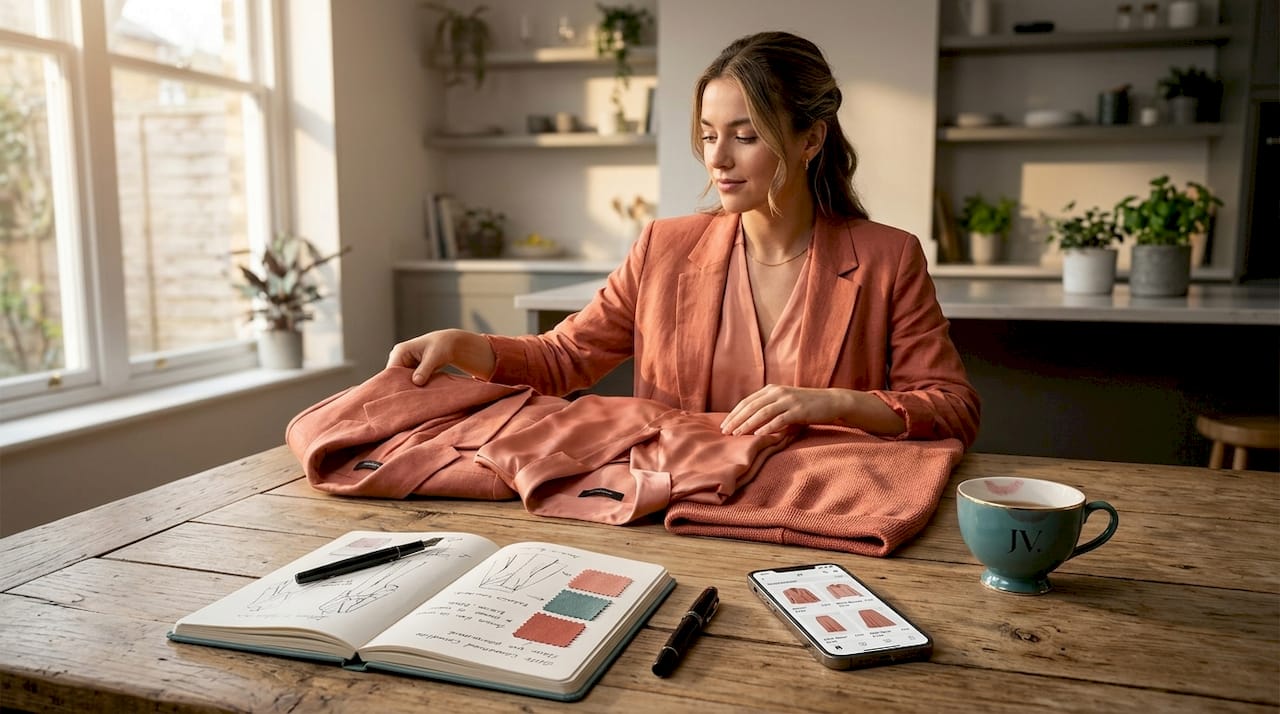
The logic is simple. If every item in your beige outfit is the same weave and weight, the eye has nowhere to travel. Add a chunky-knit jumper against tailored linen trousers, and suddenly there is contrast. The shapes and surfaces create visual movement even though the colour palette stays tight.
Fabric combinations that work particularly well for tonal colour outfits include:
- Knit with silk or satin: The matte warmth of a ribbed knit against the sheen of a satin skirt creates immediate interest within a single palette.
- Denim with lightweight linen: Works brilliantly for warm-toned camel or khaki tonal looks, especially in summer.
- Wool with cotton: A heavier wool layer over a crisp cotton shirt adds structure and contrast within the same tone family.
- Velvet with crepe: For dressier occasions, the richness of velvet against smooth crepe is understated and genuinely elegant.
Fabric finish matters too. A matte tweed blazer over a glossy blouse in the same dusty pink shade reads as a deliberate style choice rather than a near-miss. This is the difference between a tonal outfit looking considered and looking confused.
Pro Tip: When shopping for pieces to build tonal outfits, hold fabrics next to each other in natural light. The undertone and texture relationship becomes immediately obvious, saving you from purchases that look cohesive online but clash in real life.
Building a tonal outfit: formulas that work
Good tonal dressing follows structure. You do not need to reinvent the approach every morning. These practical formulas take the guesswork out of the process.
Step 1: Choose your colour family. Pick one hue to anchor the outfit. Neutrals like beige, camel, and grey are the easiest starting point. Blues and greens offer slightly more room for dramatic tonal contrast.
Step 2: Work in depth bands. Think of your outfit in three zones: light, medium, and dark. Using two to three depth levels prevents flatness and creates visual structure. A practical formula: light top, medium mid-layer, darker bottom. Or flip it for a grounded, relaxed feel.
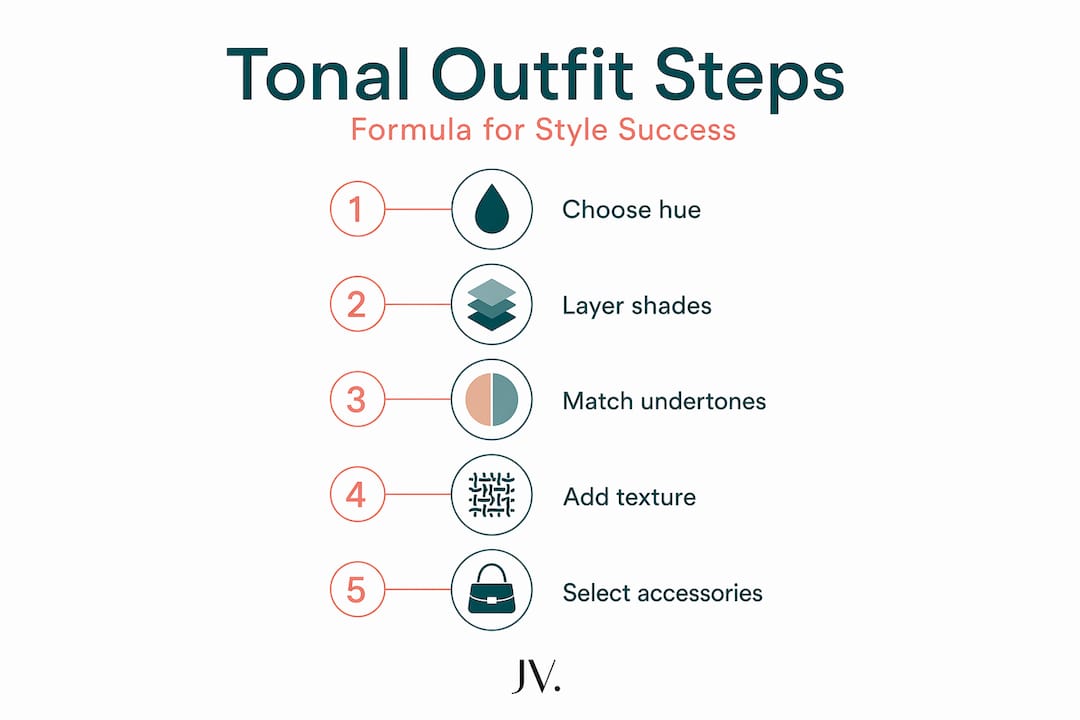
Step 3: Confirm your undertones match. Before committing to pieces, check that each item shares the same undertone direction. Mixing warm and cool undertones within a tonal palette is the single most common reason outfits feel slightly wrong.
Step 4: Introduce texture contrast. Choose pieces that differ in weight or finish. Two knits in similar shades will always read flatter than a knit paired with a woven or structured fabric.
Step 5: Finish with considered accessories. Neutral or metallic accessories work best here. Gold jewellery and warm-toned metallic bags suit warm palettes. Silver and pewter suit cool ones. Avoid introducing a contrasting colour in accessories unless you are deliberately breaking the tonal approach.
Here is a quick comparison of what works versus what to avoid:
| What works | What to avoid |
|---|---|
| Light blouse, medium trousers, dark coat in camel tones | Two identical shades of beige in different fabrics with no depth variation |
| Cool grey outfit with silver jewellery | Mixing warm olive pieces with cool taupe pieces in the same outfit |
| Layering a matte knit over a sheen satin skirt | All-over shiny or all-over matte in the same mid-tone |
| Textured two-piece set with a tonal slip dress underneath | Identical hue, identical fabric, identical weight in every layer |
Pro Tip: The can’t-fail starting point for tonal dressing is a lighter top with a darker tonal bottom. This creates a natural visual anchor without any risk of the outfit looking heavy or top-weighted.
Tonal dressing and the minimalist wardrobe
This is where tonal dressing style truly earns its reputation. If you are building a minimalist capsule wardrobe, tonal thinking is not just a styling trick. It is a wardrobe philosophy.
The benefits of tonal dressing for a smaller, more intentional wardrobe are substantial:
- More outfit combinations from fewer pieces. A handful of pieces in a single colour family can combine in multiple ways because they all work together. A tan knit, camel trousers, and a chocolate-brown coat are three items that form dozens of combinations when rotated with basics.
- Reduced decision fatigue. When your wardrobe is built around two or three colour families, getting dressed becomes genuinely faster. You are not pairing colours. You are simply choosing shades within a palette you already know works.
- A visually elongated silhouette. Similar shades worn top to bottom reduce visual breaks in the body line, making you appear taller and your proportions more streamlined.
- Timeless, season-agnostic style. Tonal dressing works across every season. It simply shifts from heavier fabrics and richer tones in winter to lighter weights and softer shades in warmer months.
Anchoring a minimalist wardrobe with neutral tonal pieces and varying textures is one of the most effective ways to create genuinely elevated looks without needing a large colour repertoire. The variety comes from fabric, not from introducing new hues.
Tonal dressing examples by colour family
Seeing tonal dressing examples in action is the fastest way to internalise the approach. Here are three colour families with practical outfit breakdowns.
Beige and camel tones are the classic starting point. A cream ribbed top, oatmeal wide-leg trousers, and a warm camel coat is the textbook version of this look. Add tan leather loafers and a cognac bag. The depth moves from light to dark across the outfit while every piece reads as a variation of the same warm sand family. This combination works beautifully for tonal dressing for summer when swapped into lighter-weight fabrics like linen and cotton.
Cool blue tones offer a more contemporary feel. Try a pale blue silk blouse with medium-wash straight-leg jeans and a slate-grey blazer. The undertones stay cool throughout, and the depth bands move from light to medium to medium-dark. A silver watch and grey mule heel complete the look without adding a competing colour.
Olive and khaki tones are ideal for casual and smart-casual occasions. A sage ribbed vest over an olive utility overshirt with khaki wide-leg trousers and tan trainers works as a casual everyday minimalist outfit. For a dressier take, swap the vest and overshirt for a warm olive midi dress and add gold earrings.
For seasonally adapting any tonal palette, the principle is simple. Keep the colour family but shift the fabric weight. Wool and corduroy in winter. Linen, cotton, and silk in summer.
My honest take on tonal dressing
I have written about minimalist fashion for long enough to have strong opinions, and here is one of them: tonal dressing is the single most underestimated tool in a modern wardrobe. Not because it looks impressive, though it does. Because it makes getting dressed feel like less of a negotiation.
What I have noticed, working with styling concepts and wardrobes over the years, is that most people who attempt tonal dressing and give up do so because of undertones. They buy pieces that are loosely the same colour and wonder why the outfit feels slightly wrong. It rarely comes down to shade. It almost always comes down to undertone mismatch. A warm camel next to a cool greige creates visual tension that is subtle but real.
The other thing nobody says often enough: you do not need to master this with neutrals first. If you love colour, start with a family you already wear confidently. A rich terracotta tonal outfit in summer is just as effective as a classic beige one, and frankly more fun to build. The principles are identical regardless of the hue.
My advice? Pick one colour family, source three pieces at different depths, and wear them together. That first successful tonal outfit is the one that turns this from a concept into a habit.
— Mykola
Build your tonal wardrobe with Jvwear

If tonal dressing has made you want to refresh your wardrobe with pieces that actually work together, Jvwear’s collection is worth exploring. The Jvwear edit is built around versatile, texture-rich styles in palettes that lend themselves naturally to tonal dressing. The Greta two-piece textured set is a ready-made tonal starting point in warm summer tones, combining a textured shirt and shorts within the same palette. For a dressier direction, the Tindra belted midi dress brings shape and a clean neutral colour profile that layers and accessorises with ease. Browse the full Jvwear tops collection for versatile pieces across neutral and tonal colour families. Free UK shipping and 30-day returns make experimenting with your tonal palette genuinely risk-free.
FAQ
What is tonal dressing?
Tonal dressing means combining different shades and textures within one colour family to create a cohesive, polished outfit. It differs from monochrome dressing by using shade variation rather than a single exact hue.
How do I keep undertones consistent in tonal outfits?
Check whether each piece carries a warm, cool, or neutral undertone before combining them. Mixing warm olive with cool taupe, for instance, creates visual tension even when both pieces appear similarly coloured.
What colours work best for tonal dressing for summer?
Soft beige, sage green, warm khaki, and dusty blue are particularly effective for summer tonal outfits. Swap heavier fabrics for linen, cotton, and light silk to keep the palette fresh in warmer months.
Does tonal dressing work for minimalist wardrobes?
Tonal dressing suits minimalist wardrobes especially well. A small selection of pieces within one or two colour families creates multiple outfit combinations while reducing the number of colours you need to manage.
What accessories suit a tonal outfit?
Neutral or metallic accessories work best. Use gold-toned jewellery and bags for warm palettes, and silver or pewter finishes for cool palettes. Avoid introducing a contrasting accent colour unless you are deliberately stepping away from the tonal approach.