Finding a dress that looks like a million pounds but costs a fraction of that is not as impossible as your inbox full of eye-watering price tags might suggest. Whether you need something for a wedding, a birthday dinner, or a work event, the challenge of sourcing budget-friendly formal dresses that actually flatter you is real. This guide cuts through the noise and gives you a practical system: how to measure correctly, when to rent versus buy, how to shop smarter online, and how to verify you have made a good purchase before the occasion arrives.
Table of Contents
- Key takeaways
- Sizing secrets for buying affordable occasion dresses
- How to find stylish cheap dresses online
- Renting versus buying: what actually saves you money
- Troubleshooting your purchase after delivery
- My honest take on buying occasion dresses on a budget
- Explore affordable occasion dresses at Jvwear
- FAQ
Key takeaways
| Point | Details |
|---|---|
| Measure before you buy | Formalwear sizing differs from everyday clothes, so taking precise measurements prevents costly returns. |
| Size up when in doubt | Ordering the larger size is safer since formal dresses can be taken in affordably but rarely let out. |
| Use customer photos | Reviewer photos on multiple body types give far more useful fit information than product shots alone. |
| Calculate cost per wear | Renting beats buying for one-off events; buying wins when you will wear a dress three or more times. |
| Check returns before paying | A good return policy is as valuable as a low price, especially when buying occasion dresses online. |
Sizing secrets for buying affordable occasion dresses
Before you spend a single penny, get your measurements sorted. This is the step most buyers skip, and it is exactly why they end up with dresses that do not fit.
Formalwear sizing is a different beast from your everyday jeans or jumpers. As formalwear expert Julie DuRocher explains, occasion dress sizing rarely corresponds to your usual street-clothes size and often requires going one or even two sizes larger. That is not a flaw in the system. It is just how structured garments are cut.
How to measure yourself accurately
You need three numbers: your bust, your natural waist, and your hips. Use a soft measuring tape and wear the underwear you plan on wearing with the dress. Stand naturally, do not suck in, and measure around the fullest part of each area. Write the numbers down and keep them to hand every time you shop.
If you are unsure or shopping for a genuinely special occasion, a local tailor can take your measurements in ten minutes for very little cost. It is worth it.
Choosing the right silhouette
A-line dresses are your safest bet when you are buying without trying on. They nip in at the waist and skim the hips and thighs, which means they are flattering across a wide range of body shapes and leave some room for error if your measurements fall between sizes.
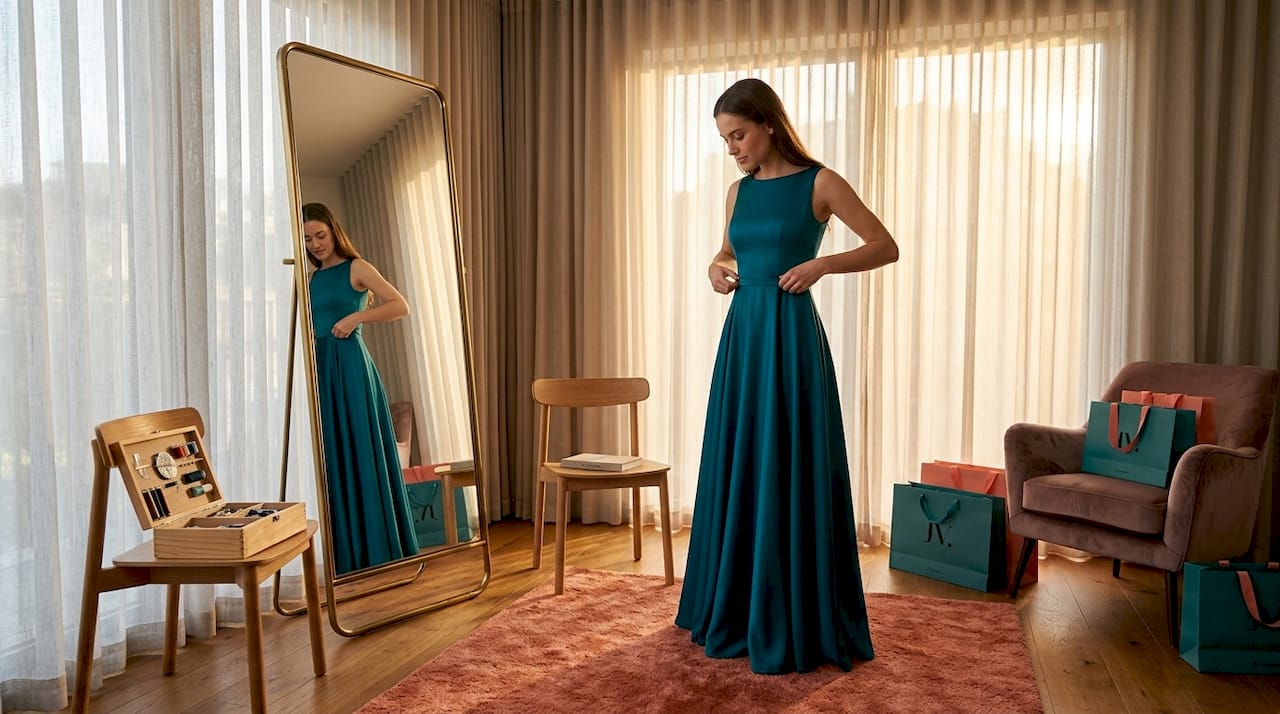
Fabric matters too. Stretch jersey and chiffon are forgiving and move with you, while structured fabrics like brocade or taffeta require much more precise sizing. If you are buying from a brand you have not tried before, a floaty chiffon midi or a stretch-jersey wrap dress gives you far more flexibility than a stiff corset-style gown.
Pro Tip: When your measurements fall between two sizes, order the larger size every single time. Taking a dress in costs very little at a local tailor. Letting one out, if it is even possible, costs significantly more and can alter the look of the garment.
How to find stylish cheap dresses online
Once your measurements are sorted, the actual shopping begins. Here is a step-by-step approach that separates the genuinely good finds from the ones that look great on the model and terrible on arrival.
-
Start with reputable brands for discount occasion wear. Not every affordable brand delivers quality. Look for brands with a clear returns policy, genuine customer reviews, and realistic product photography. Sites that show dresses on a single size-zero model with no further context are a red flag. Brands that show multiple images, list fabric composition, and include a size guide are worth your time. Check out affordable fashion tips specific to 2026 for an updated list of trusted places to start.
-
Use filters properly. Most sites let you filter by price range, size, colour, and occasion. Use them. Do not browse an entire catalogue hoping something will jump out. Set your budget ceiling, select your size, and narrow by occasion type. You will cut the decision time in half.
-
Read the reviews and look at the photos. Customer photos on multiple body types tell you far more about real-world fit than any product description. A reviewer who shares your height and build wearing the dress is worth more than ten five-star text reviews. Look for reviews that mention the sizing, the fabric feel, and how it photographed at the event.
-
Spot fake discounts. Some sites inflate original prices to make a discount look generous. If a dress is permanently “70% off,” that is the real price. Compare the dress against similar styles on other sites to sense-check the value.
-
Time your purchase around sales. End-of-season clearance events, bank holiday sales, and new-arrival launches all bring genuine reductions on cheap event dresses. If your event is more than a month away, it is worth setting a price alert or checking back weekly. Same-day panic purchases almost always cost more.
Pro Tip: Do not overlook midi dress collections when shopping for affordable party dresses. Midi lengths photograph beautifully, suit most occasions from casual garden parties to formal dinners, and tend to be priced lower than full-length gowns.
Renting versus buying: what actually saves you money
The cost-per-wear calculation is the most practical way to decide whether to rent or buy. It works like this: divide the total cost of the dress by the number of times you will wear it. A £200 dress worn four times costs £50 per wear. A £40 dress worn once also costs £40 per wear. Renting, where costs often sit between £20 and £60 for a four-day window, makes financial sense for one-off events where the dress will never leave the wardrobe again.
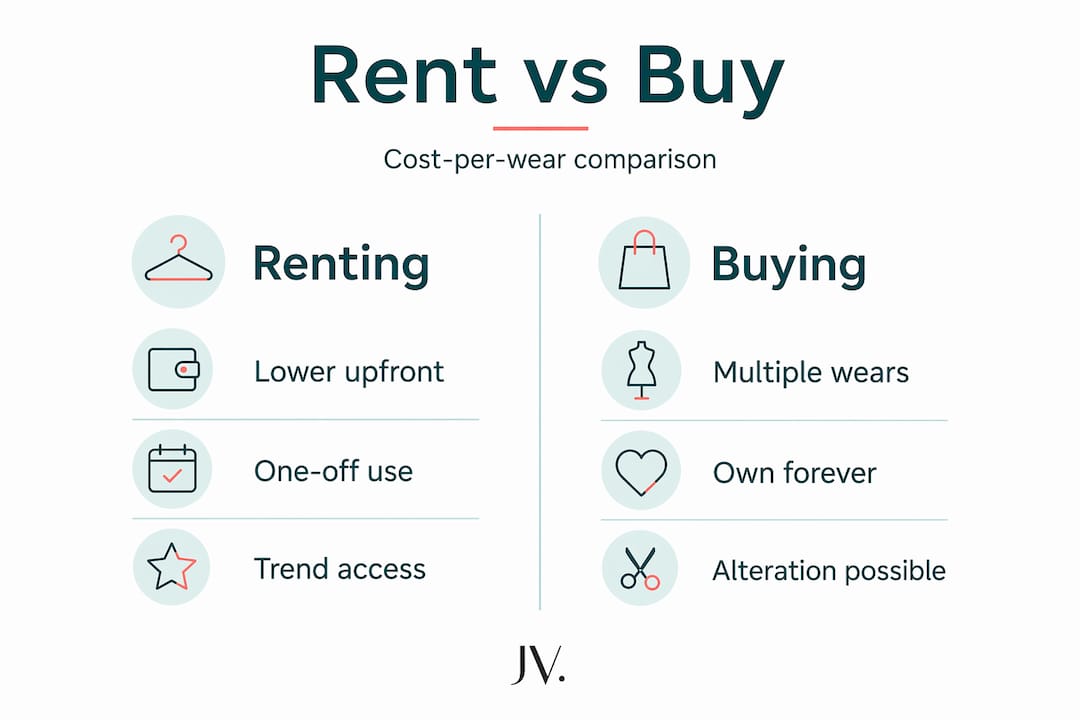
When renting wins
| Scenario | Renting makes sense | Buying makes sense |
|---|---|---|
| One-off event | Yes, lower total cost | No, poor cost per wear |
| Body size fluctuating | Yes, no long-term commitment | No, may not fit later |
| Trend-led style | Yes, wear it once and move on | No, trendy pieces date quickly |
| Versatile staple style | No, you will wear it again | Yes, strong long-term value |
| Multiple events same year | No, buying becomes cheaper | Yes, cost per wear drops fast |
Rental platforms typically charge per day or per four-day period. A dress that retails at £150 might rent for £35. That is a genuine saving if you are wearing it to one wedding and nowhere else.
Buying wins when the dress is a style you will genuinely reach for again: a classic black midi, a wrap dress in a neutral print, or a halter mini that works for both cocktail parties and Christmas dinners.
- Buying is better for versatile styles you can re-wear across different events
- Renting suits one-off occasions, seasonal trends, or sizes you expect to change
- Factor in cleaning costs for rental dresses, as these are sometimes charged separately
- Storage matters too: rented dresses go back, bought ones need hanging space
Pro Tip: If you are hovering between renting and buying, ask yourself honestly: will I wear this to at least three events in the next two years? If the answer is yes, buying is better value. If you pause before answering, rent it.
Troubleshooting your purchase after delivery
The dress arrives. Now what? Do not assume everything is fine just because the packaging looks neat. Here is what to check and do before you remove any tags.
- Try it on immediately and check the fit against your measurements. Even with careful preparation, surprises happen.
- Inspect the fabric and construction. Look at seam finishes, zipper quality, and whether the lining is secure. A low price should not mean poor craftsmanship, but it is worth checking.
- Note your return window the moment the parcel arrives. Many retailers offer 14 to 30-day windows. Affordable occasion dresses from reputable brands often include 30-day returns, which gives you enough time to assess fit and find an alternative if needed.
- Keep the original packaging until you are absolutely certain the dress is a keeper. Some retailers require original tags and packaging for a full refund.
If the fit is slightly off but fixable, a local tailor is often the most cost-efficient solution. Minor alterations — taking in a side seam, shortening a hem — typically cost between £10 and £25 and can transform a near-perfect dress into the right one.
A good return policy is as valuable as a low price. Before completing any purchase, check what happens if the dress does not fit. Restrictive return terms can quickly turn a bargain into an expensive mistake.
One underrated move: think about how you will wear the dress again. A floral midi that debuted at a spring wedding can be styled differently with a leather jacket and ankle boots for an autumn birthday dinner. Versatility adds real value to any budget buy.
For a smooth returns experience if things do not work out, Jvwear’s UK returns guide walks you through the process step by step.
My honest take on buying occasion dresses on a budget
I have made every mistake in this guide at least once. I bought a structured satin dress in my usual size, ignored the advice to go up a size, and spent the morning of the event at an emergency tailor. I have also fallen for a “was £120, now £35” tag that turned out to be a permanent fixture on a dress I could find cheaper elsewhere.
What changed things for me was treating measurements like a non-negotiable step, not an optional extra. Once I started buying by numbers rather than instinct, the hit rate improved dramatically.
The insight that genuinely surprised me was how much customer photos matter. A dress photographed on the model can look completely different on someone with a similar build to mine. Two minutes scrolling through reviewer images has saved me from more than one poor purchase.
My honest opinion on the rent versus buy debate: most women in their twenties and early thirties are better off building a small collection of three or four genuinely versatile pieces they love rather than renting endlessly. A classic halter mini dress in a neutral colour will serve you across more occasions than you expect. But for genuinely one-off events with a strict theme, renting is the rational choice.
The biggest shift in my thinking has been moving away from fast, trend-chasing purchases towards slightly fewer, slightly better choices. Not expensive. Just considered.
— Mykola
Explore affordable occasion dresses at Jvwear
Jvwear’s collection makes it straightforward to find something that works for your next event without overspending. The gingham midi sundress with pockets is a genuine crowd-pleaser: practical, flattering, and styled for everything from garden parties to daytime weddings. For something a little bolder, the floral midi wrap dress offers a forgiving fit across sizes and a silhouette that photographs beautifully. Free UK shipping, straightforward 30-day returns, and a curated range of coordinating accessories mean you can put together a complete event-ready look in one place. Browse the full Jvwear collection and filter by style, length, and price to find your next occasion dress with confidence.
FAQ
What size should I order for a formal dress online?
When your measurements fall between two sizes, order the larger one. Formal dresses can be taken in affordably by a tailor, but letting them out is expensive and sometimes not possible without altering the garment’s appearance.
Is renting or buying cheaper for a one-off event?
Renting is almost always cheaper for a single event. Rental prices typically range from £20 to £60 for a short hire window, making the cost-per-wear significantly lower than buying a dress you will only wear once.
How do I avoid buying a cheap dress that looks cheap?
Check the fabric composition before purchasing and look at customer photos rather than just product images. Fabrics like chiffon and jersey tend to photograph and wear well even at lower price points, while unlined synthetic fabrics rarely flatter.
What is the best way to return an occasion dress that does not fit?
Try the dress on as soon as it arrives, keep all tags and original packaging intact, and check the retailer’s return window. Many reputable brands offer 30-day returns. Jvwear’s returns guide covers the process in detail for UK shoppers.
Can affordable party dresses be worn more than once?
Absolutely. Choosing classic silhouettes in neutral or versatile prints means you can restyle the same dress across multiple events. A wrap midi or halter mini styled with different accessories, shoes, and outerwear reads as an entirely different outfit each time.