The key accessory categories delivering value for women in 2026 include ornate belts, round wire-frame sunglasses, printed scarves, bag charms, and statement jewellery. Who What Wear confirms these as the most-wanted picks for the season, and every one of them shares a quality that matters for your budget: a single piece does the heavy lifting across dozens of outfits.
TL;DR — what to prioritise:
- Ornate belts: One belt transforms a plain dress or oversized blazer into a considered look.
- Round/bubble sunglasses: Classic silhouette, trend-forward in 2026, wearable across seasons.
- Printed scarves: Worn at the neck, tied to a bag, or as a headband — three uses from one piece.
- Bag charms: The lowest-cost way to refresh a bag you already own.
- Statement jewellery: Bold earrings or a chunky necklace read expensive when the rest of the outfit is pared back.
Jvwear (JV London) is a recommended UK starting point for several of these categories, with free UK shipping and 30-day returns making low-risk purchases straightforward.
Pro Tip: Wear one statement accessory with a neutral base outfit — a white tee, straight-leg jeans, or a slip dress — and that single piece works across at least ten different combinations. That is your cost-per-wear calculation done before you even reach the checkout.
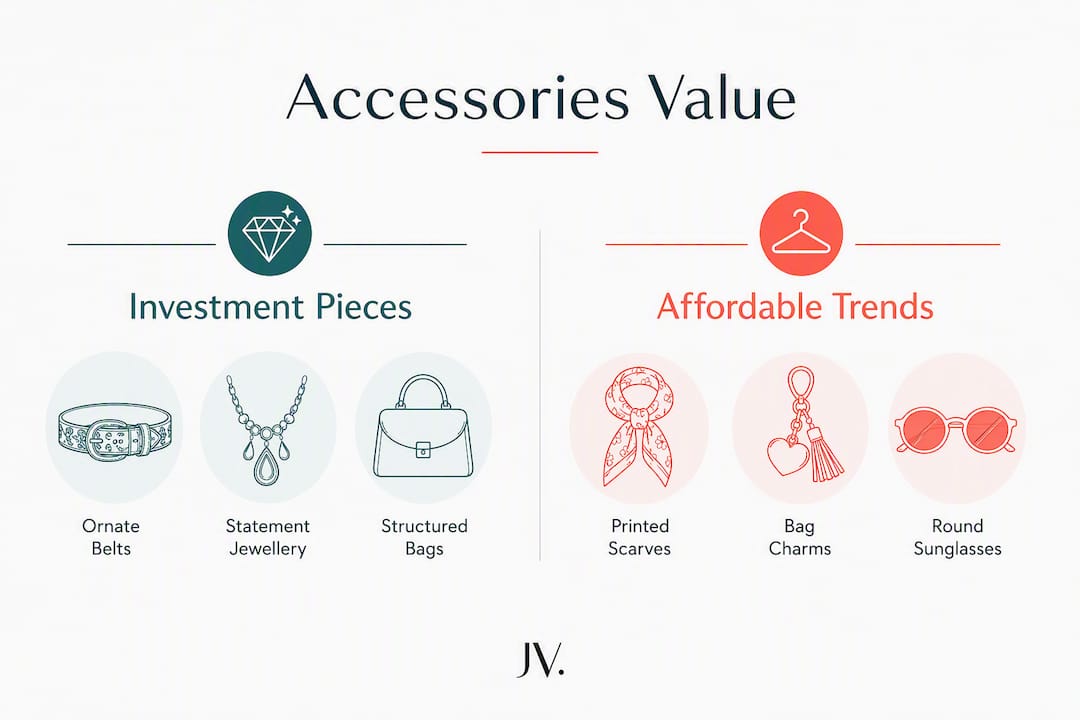
Table of Contents
- What are the best value accessory picks for women in 2026?
- How do you choose accessories that actually deliver value?
- Which materials and textures are worth buying in 2026?
- Where should you shop for value accessories in the UK?
- Are sustainable and ethical choices possible at value price points?
- How do you make accessories last longer?
- Key takeaways
- Why the “buy less, wear it more” rule is the only one that matters
- Jvwear brings the 2026 accessory shortlist to UK shoppers
What are the best value accessory picks for women in 2026?
The 2026 accessory story is about one piece, worn with intention. Editorial consensus frames this season as a move away from maximalism: a single high-impact accessory elevates a pared-back outfit far more effectively than several smaller ones competing for attention. That framing is good news for your wallet.
Ornate belts
A wide, ornate belt with a sculptural buckle is the standout piece of 2026. Runway coverage confirms oversized belt buckles as a dominant signal, and the reason they work so well on a budget is structural: the buckle shape is the trend, not the leather grade. Look for a thick, stiff band (at least 4 cm wide), a weighty metal buckle with visible detailing, and a clean finish on the reverse. On the UK high street, entry-level options start at accessible prices; mid-range pieces with genuine leather or quality PU are available at moderate prices. A belt worn over a belted midi dress or a loose blazer earns its cost across every season.
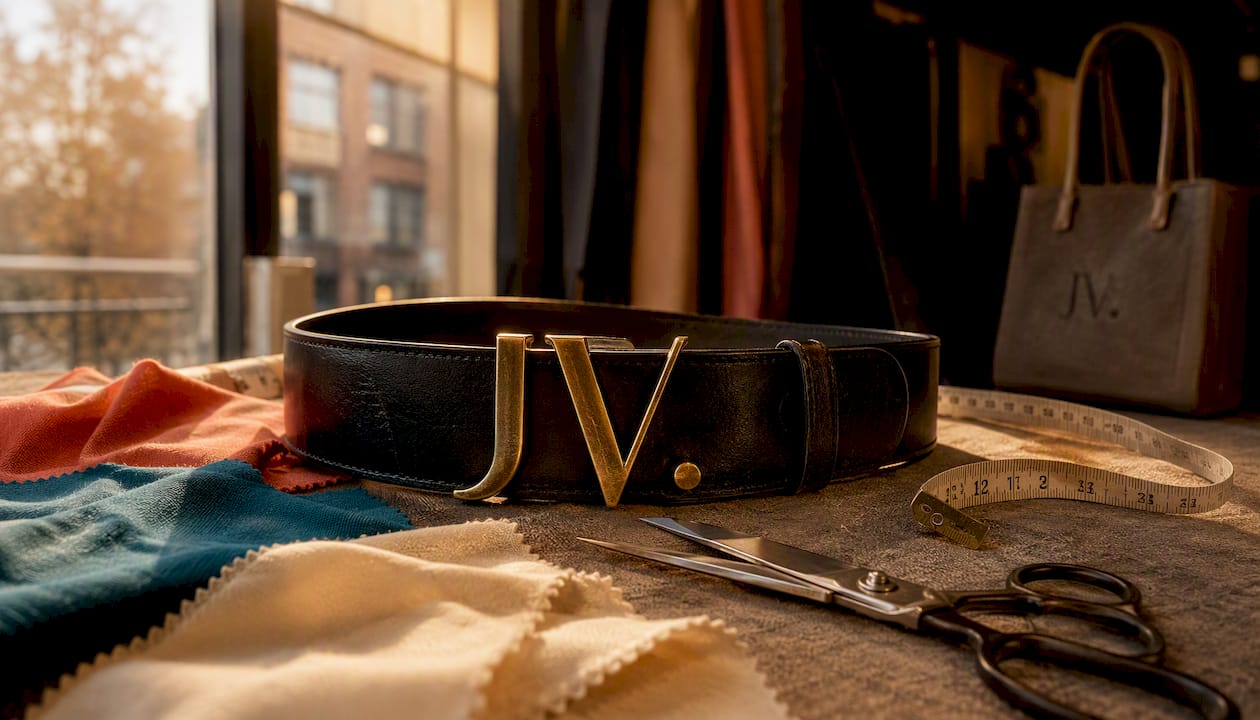
Pro Tip: Buy the belt in a neutral tone (tan, black, or cognac) and the buckle does the trend work regardless of what you wear it with.
Round and bubble sunglasses
Round wire-frame and retro aviator shapes are the sunglass silhouettes gaining the most traction in 2026. The wire frame is the key detail: it keeps the shape feeling current without committing to an extreme. UV400 protection is non-negotiable regardless of price; beyond that, look for metal rather than plastic frames and lenses with no visible distortion. Affordable UK options start at lower price points, with mid-range polarised lens sunglasses available at moderate prices. Because the round shape is a perennial, these earn their cost across multiple summers.
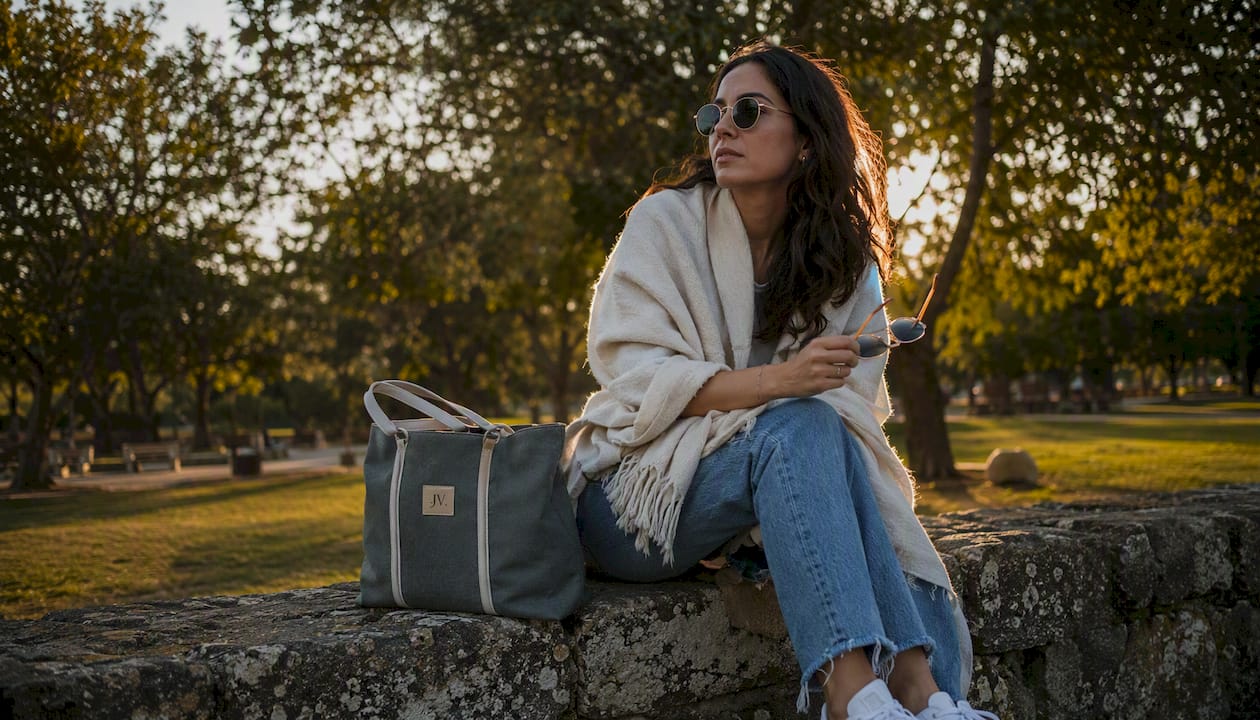
Pro Tip: Try the glasses on in natural light, not shop lighting. Distortion in the lens is invisible under artificial light and only shows outdoors.
Printed scarves
A silk-feel printed scarf is arguably the highest-utility accessory on this list. Worn at the neck, tied to a bag handle, used as a headband, or knotted at the wrist, one scarf generates four distinct looks. PORTER highlights cashmere and silk-blend textures as a cozy-luxe direction for 2026. For value, a polyester-satin weave mimics the drape of silk at a fraction of the cost; the print quality and colour saturation are what separate a good buy from a cheap one. Budget options for scarves vary from economical polyester-satin to higher-end silk-blend materials.
Pro Tip: Tie the scarf to your bag handle when you want the trend without the outfit commitment — it takes ten seconds and refreshes a bag you already own.
Bag charms
Grapevine Fashion notes that playful bag charms, alongside chunkier silhouettes and resin textures, are defining the 2026 accessory palette. Bag charms offer an affordable entry point to accessory refreshment, with resin, beaded, or leather tassel options priced economically. The value case is simple — it makes a bag you already own feel new. Look for a secure clip mechanism (lobster claw or karabiner style) rather than a thin jump ring, which will eventually fail.
Pro Tip: Clip a charm to the zip pull rather than the handle loop for a cleaner look that is less likely to snag.
Statement jewellery
Bold earrings and chunky necklaces are the category where affordable pieces most convincingly read expensive when styled with simple outfits. Vogue’s fall 2026 runway coverage points to reimagined pearls and dramatic ornamental earrings as key signals. For value, stainless-steel base metal with gold or silver plating resists tarnishing far better than unplated costume metal. Statement jewellery, including plated earrings and chunky necklaces, is available at a range of affordable prices.
| Category | Best for | Typical UK price | Material / quality signal | Versatility | Where to buy |
|---|---|---|---|---|---|
| Ornate belt | Smart-casual, occasion | £30–moderate | Stiff band, weighty buckle | All seasons, multiple outfit types | DTC brands, high street |
| Round sunglasses | Everyday, summer | economical–moderate | Metal frame, UV400 lens | Spring–autumn, multiple styles | High street, online |
| Printed scarf | Casual, travel, occasion | economical–moderate | Silk-blend or satin weave | Year-round, four wear styles | DTC brands, boutiques |
| Bag charm | Casual refresh | £5–£20 | Secure lobster-claw clip | Any season, any bag | Marketplaces, boutiques |
| Statement jewellery | Evening, smart-casual | economical–moderate | Stainless-steel plating | Year-round, multiple looks | DTC brands, high street |
Spotting fast-fashion lookalikes is straightforward once you know what to check: thin, lightweight metal that bends easily, lenses with visible colour distortion, and scarves with a stiff, papery hand rather than a fluid drape are all signs of a piece that will not last a season.
How do you choose accessories that actually deliver value?
Before you buy, run five quick checks:
- Set a cost-per-wear target. Divide the price by the number of times you realistically expect to wear it in a year. A £30 belt worn 30 times costs £1 per wear. A £10 charm worn twice costs £5.
- Inspect the materials. Look for stainless-steel base metals, solid clasps, and seam quality on fabric accessories. Thin, lightweight metal and loose stitching are the two fastest indicators of short lifespan.
- Check the seller’s returns and shipping policy. For UK shoppers, a 30-day free returns window is the standard to expect from reputable direct-to-consumer brands. Anything shorter or paid-returns-only increases your risk on a purchase you cannot try in person.
- Read reviews with photos. Written reviews can be incentivised; customer photos in natural light show the real colour, scale, and finish of a piece.
- Plan your care routine before you buy. If you will not hand-wash a silk scarf or store jewellery in a pouch, factor that into the lifespan estimate.
Professional stylists recommend prioritising versatile, quality accents over chasing every trend — the accessories that breathe new life into basic tees and jeans are the ones that earn their cost.
Pro Tip: Buy trend-forward pieces in the smaller, cheaper categories (charms, earrings, scarves) and spend more on neutral base accessories (a quality belt, a classic bag) that will outlast the season.
The checklist above also applies to building a minimalist wardrobe more broadly: fewer, better pieces chosen with the same criteria outperform a drawer full of impulse buys every time.
Which materials and textures are worth buying in 2026?
The standout material direction for 2026 is what PORTER calls cozy-luxe: tactile finishes that feel expensive to the touch. Faux fur trims, fuzzy bag finishes, and cashmere or silk-blend scarves all read luxurious because texture catches light and creates visual depth in a way that flat, smooth surfaces do not. Vogue’s fall 2026 coverage confirms fuzzy purses and tactile statement pieces as runway-validated picks. For jewellery, stainless-steel plating is the material that genuinely earns its value: it resists water, sweat, and daily friction in a way that unplated costume metal simply cannot match.
Materials to favour:
- Stainless-steel base with gold or silver plating (jewellery)
- Silk or silk-blend weave (scarves)
- Faux fur with a dense, even pile (bag trims, hat details)
- Resin and acrylic in bold, saturated colours (charms, earrings)
- Structured PU or genuine leather with visible stitching (belts, bags)
Materials to approach with caution:
- Unplated costume metal (tarnishes quickly, can irritate skin)
- Thin polyester with a papery hand (scarves that lose drape after one wash)
- Sparse faux fur with visible backing (reads cheap immediately)
- Lightweight, bendy metal frames on sunglasses (distort under pressure)
Heuritech’s 2026 trend forecast highlights lace and satin trims as standout clothing directions, which means accessories in complementary soft textures — silk scarves, pearl-finish jewellery, fluid fabric bag charms — will pair naturally with the season’s dominant clothing palette.
Pro Tip: For jewellery, look for the words “stainless steel base” in the product description rather than just “gold-plated.” The base metal determines longevity; the plating is the finish.
Where should you shop for value accessories in the UK?
The UK market for affordable accessories splits into four main channels, each with a different trade-off between price, trust, and convenience.
Direct-to-consumer (DTC) brands like JV London offer the clearest value proposition: you buy directly from the brand, which removes retail mark-up, and reputable DTC brands back purchases with free UK shipping and 30-day returns. Stock is curated rather than exhaustive, which actually helps — fewer choices, better decisions.
High-street retailers offer the advantage of trying before you buy, but price points are often higher than DTC equivalents for the same material quality, and return windows vary by retailer.
Independent boutiques are worth visiting for printed scarves and statement jewellery where the edit is genuinely curated by someone with taste. Prices are mid-to-high, but the pieces are less likely to appear on every other person.
Curated online marketplaces are the best channel for bag charms and resin jewellery, where small independent makers sell directly. Authenticity signals to look for: clear product photos in natural light, stated materials, and a visible reviews section.
| Channel | Typical UK price band | Delivery and returns | Best timing to buy |
|---|---|---|---|
| DTC brand (e.g. JV London) | economical–moderate | Free UK shipping; 30-day returns standard | Mid-season drops, seasonal sales |
| High street | — | Store return or paid post | End-of-season clearance |
| Independent boutique | — | Varies; often store credit only | New-season arrivals |
| Online marketplace | economical–moderate | Seller-dependent; check before buying | Year-round; no fixed sale pattern |
For ethical and sustainability filters, look for brands that state their material sourcing, offer packaging-free or minimal-packaging delivery, and have a clear returns-to-stock (not landfill) policy. A 30-day returns window with free postage is also a sustainability signal: it reduces the likelihood of a buyer keeping something they will not wear.
Are sustainable and ethical choices possible at value price points?
Yes, and the 2026 trend direction actually helps. The move towards one statement piece per outfit, rather than layering multiple accessories, is inherently more sustainable: you buy less, wear each piece more, and replace less frequently. That is the most effective sustainability practice available at any price point.
For materials, faux fur chosen over real fur is an ethical default, and the 2026 cozy-luxe direction makes faux fur a trend-aligned choice rather than a compromise. Stainless-steel-plated jewellery lasts longer than unplated costume metal, which means fewer replacements and less waste. Silk-blend scarves, cared for correctly, outlast fast-fashion polyester alternatives by years.
When shopping in the UK, look for brands that publish their returns policy clearly and state where products are made. A brand that offers free returns and a 30-day window is signalling confidence in its product quality, which correlates with longer-lasting pieces. Buying from minimalist-focused brands that curate rather than flood their catalogue also reduces the temptation to over-buy.
Pairing accessories with fine jewellery styling principles — choosing one piece that anchors the look rather than stacking for volume — extends the life of each item and keeps your wardrobe intentional.
How do you make accessories last longer?
Care is where value is either protected or lost. A £25 pair of statement earrings stored loose in a bag alongside keys will look worn within a month. The same pair stored in a small pouch and kept dry will last years.
Jewellery: Store each piece separately in a soft pouch or compartmentalised box. Remove before swimming, showering, or applying perfume directly to the metal. Wipe with a dry cloth after wearing. Stainless-steel plating is forgiving, but prolonged moisture exposure will eventually affect any finish.
Scarves: Hand-wash silk-blend scarves in cool water with a gentle detergent, or use a mesh laundry bag on a delicate machine cycle. Lay flat to dry rather than hanging, which distorts the shape. Store rolled, not folded, to avoid permanent crease lines.
Belts: Keep leather and PU belts away from direct sunlight when stored, which dries and cracks the material. A light application of leather conditioner once a season maintains suppleness. Hang rather than coil if possible.
Sunglasses: A hard case is not optional — it is the single most effective care tool for any pair of glasses. Clean lenses with a microfibre cloth, not clothing fabric, which scratches coatings over time.
Bag charms: Check the clip mechanism every few weeks. A lobster-claw clip that is starting to stick or release too easily should be replaced before it fails and the charm is lost.
Key takeaways
The single most effective rule for buying accessories in 2026: choose one statement piece per outfit, buy it in a durable finish, and care for it properly — that combination delivers better value than any sale price alone.
| Point | Details |
|---|---|
| One statement piece per outfit | A single high-impact accessory reads more current in 2026 than several smaller pieces competing for attention. |
| Prioritise durable finishes | Stainless-steel-plated jewellery and structured PU or leather belts outlast unplated costume metal and thin synthetic alternatives. |
| Calculate cost-per-wear before buying | Divide the price by realistic annual wears; a £30 belt worn 30 times costs £1 per wear, making it better value than a £10 charm worn twice. |
| Check returns policy before checkout | A 30-day free returns window is the UK standard for reputable DTC brands and reduces purchase risk on items bought online. |
| Jvwear (JV London) | Offers trend-aware accessories and wardrobe staples with free UK shipping and 30-day returns, covering belts, bags, and statement jewellery. |
Why the “buy less, wear it more” rule is the only one that matters
The conventional wisdom on value fashion tends to focus on price: find the cheapest version of a trend and move on. That approach consistently produces a drawer full of pieces worn once and forgotten. The more useful frame, and the one that the 2026 editorial direction actually supports, is curation: one piece, chosen deliberately, worn repeatedly.
What strikes me about this season’s accessory trends is how well they suit a value-first approach. An ornate belt, a round-frame sunglass, a printed scarf — none of these require a significant outlay to read as considered. The trend is in the silhouette and the material finish, not the price tag. A stiff belt with a sculptural buckle reads the same whether it cost £20 or £200, provided the construction holds.
The practical rule worth applying: before buying any accessory, name three specific outfits in your existing wardrobe it will work with. If you cannot name three, it is not a value buy regardless of the price. That test eliminates most impulse purchases and leaves you with pieces that genuinely earn their place. For a wardrobe built around minimalist outfit formulas, the accessories on this shortlist slot in naturally — each one does the work of several.
Jvwear brings the 2026 accessory shortlist to UK shoppers
Jvwear (JV London) covers the categories that matter most for 2026 value dressing: structured bags, statement jewellery, and belted styles that do the trend work without requiring a full wardrobe overhaul. Free UK shipping and 30-day hassle-free returns mean you can order with confidence and return anything that does not work in practice.
Three pieces worth starting with: the Tamsin top-handle bag with bamboo detail (a tactile, trend-aligned bag that pairs with the scarf-on-handle styling tip above); the Astrid crystal hoop earrings in gold finish (statement jewellery at an accessible price point); and the Tindra belted midi dress, which builds the belt trend directly into the outfit so you are buying two looks in one purchase. Browse the full range at jvwear.com and use the cost-per-wear checklist from this article before you add anything to your basket.
Useful sources and further reading
- Who What Wear: The 5 Most-Wanted Accessories Trends for 2026 — The primary editorial source for the 2026 accessory shortlist, covering ornate belts, round sunglasses, clutch bags, and statement earrings.
- Who What Wear: The 5 Biggest Accessories Trends for Fall 2026 — Runway-focused coverage confirming round wire-frame sunglasses and retro aviators as the key sunglass shapes for the season.
- Vogue: The Best Fall 2026 Accessory Trends — Runway signals including fuzzy purses, reimagined pearls, and oversized belt buckles.
- Who What Wear: Best High-Street Accessories for A/W 25 — Practical guidance on how affordable accessories styled with simple outfits can read expensive, with stylist input on versatility.
- Heuritech: Top 10 Spring/Summer 2026 Fashion Trend Forecast — Data-driven forecast covering lace, satin trims, and the clothing palette that informs accessory pairings.
- JV London: Affordable Wardrobe Essentials Women Need in 2026 — JV London’s own editorial on value-led wardrobe building, aligned with the cost-per-wear principles in this article.