Most shoppers assume an online fashion catalogue is just a PDF with pretty pictures. It is not. Understanding how online fashion catalogues work changes the way you shop entirely. Modern catalogues are interactive, data-driven tools that sit at the centre of how fashion brands sell online. They connect product imagery to checkout in seconds, embed size guides, update stock in real time, and increasingly let you see how a garment looks on your own body before you buy. This guide breaks down everything happening behind the scenes.
Table of Contents
- Key takeaways
- How online fashion catalogues work today
- How catalogues shape buying decisions
- Virtual try-on inside fashion catalogues
- Design principles that make catalogues convert
- My honest take on where fashion catalogues are heading
- Explore Jvwear’s catalogue and shop with confidence
- FAQ
Key takeaways
| Point | Details |
|---|---|
| Catalogues are interactive tools | Modern online catalogues use clickable hotspots and embedded media, not just static images. |
| They shorten the path to purchase | Shoppers go from browsing to checkout without leaving the catalogue experience. |
| Virtual try-on is now mainstream | AI-powered fitting tools let you see clothes on your own image in under 20 seconds. |
| Design follows conversion logic | The best catalogues are built backward from the purchase, not forward from visual appeal. |
| Analytics drive continuous updates | Retailers adjust product placement and images mid-campaign using real shopper behaviour data. |
How online fashion catalogues work today
The starting point for most digital catalogues is a product list or an existing PDF brochure. From there, the process diverges sharply from what shoppers might expect. Clickable hotspots are layered directly over product images, routing you to the exact product page on a platform like Shopify or WooCommerce the moment you tap or click. No searching. No typing the product name into a search bar. One click from catalogue image to purchase.
Beyond basic linking, platforms like Issuu allow brands to embed runway videos and styling content directly inside the catalogue. You might be looking at a dress on a spread and find a short video showing how it moves, or a pop-up with a measurement chart. This is the part most shoppers never realise exists until they stumble into it.
Here is a quick comparison of what separates a static PDF from a proper digital catalogue:
| Feature | Static PDF | Digital catalogue |
|---|---|---|
| Clickable product links | No | Yes |
| Embedded video or media | No | Yes |
| Real-time stock and price updates | No | Yes |
| Mobile responsiveness | Limited | Optimised |
| Analytics and engagement tracking | No | Yes |
Pro Tip: When browsing an online fashion catalogue, look for small icons or highlighted areas on product images. These are hotspots. Clicking them takes you directly to the product page, saving you from searching the entire site.
One technical challenge brands face is mapping catalogue assets to the correct destination URLs. Some platforms detect product SKUs automatically. Others require manual setup for every hotspot. When that mapping is wrong, you tap a dress and land on a completely different product. It is a frustrating experience that well-managed catalogues actively prevent through regular audits.
How catalogues shape buying decisions
The most significant thing a well-built online fashion catalogue does is remove friction. Friction is every small barrier between you and completing a purchase: navigating menus, running a site search, comparing two product pages in different tabs. A shoppable catalogue collapses that process.
Consider what changes when you can click a product image directly rather than searching for it. You do not lose your place in the browsing experience. You do not have to remember a product name. Embedding interactive media like size guides and how-to-style clips inside the catalogue reduces the uncertainty that causes shoppers to abandon purchases entirely.
Retailers who understand this go further. They use real-time data to:
- Update prices and stock availability without republishing the entire catalogue
- Swap product images mid-campaign when one garment is outperforming another
- Reposition top-performing items to earlier spreads based on click-through rates
- Adjust catalogue layouts in response to shopper engagement signals collected daily
This last point matters more than most people realise. Specific interaction data, such as which product gets clicked most on a given spread, tells a brand far more than total page views. A dress that sits on page three but generates 40% of all clicks will be moved to page one the following week. That is the catalogue adapting around your behaviour, even if you never noticed.
Understanding the benefits of online catalogues from a shopper’s perspective is simpler: you spend less time hunting for what you saw in a campaign image, and more time deciding whether you actually want it.
Virtual try-on inside fashion catalogues
This is where online fashion catalogue technology becomes genuinely surprising. AI-powered virtual try-on tools are now embedded directly into catalogue and product page experiences. Customers upload a photo and receive a photorealistic composite image of themselves wearing the selected garment in 15 to 20 seconds. No app download. No special hardware.

The technical process behind that 20-second experience involves three distinct stages: body detection, garment segmentation, and diffusion synthesis. The AI identifies your body shape from the uploaded image, isolates the garment from its product shot, and then composites the two with realistic light and shadow. The result looks like a proper photograph, not a cut-and-paste.
For catalogue management at scale, a separate process handles the product side. 2D-to-3D conversion pipelines can transform standard flat-lay or model photos across an entire catalogue into AR-ready versions within hours. One provider processes up to 100 product variants in under two hours, which means a brand can make its full seasonal catalogue try-on compatible without a photoshoot.
Pro Tip: If a catalogue or product page offers a virtual try-on, use it before checking size guides. Seeing fit on your actual body shape resolves most sizing doubts far faster than reading a measurement chart.
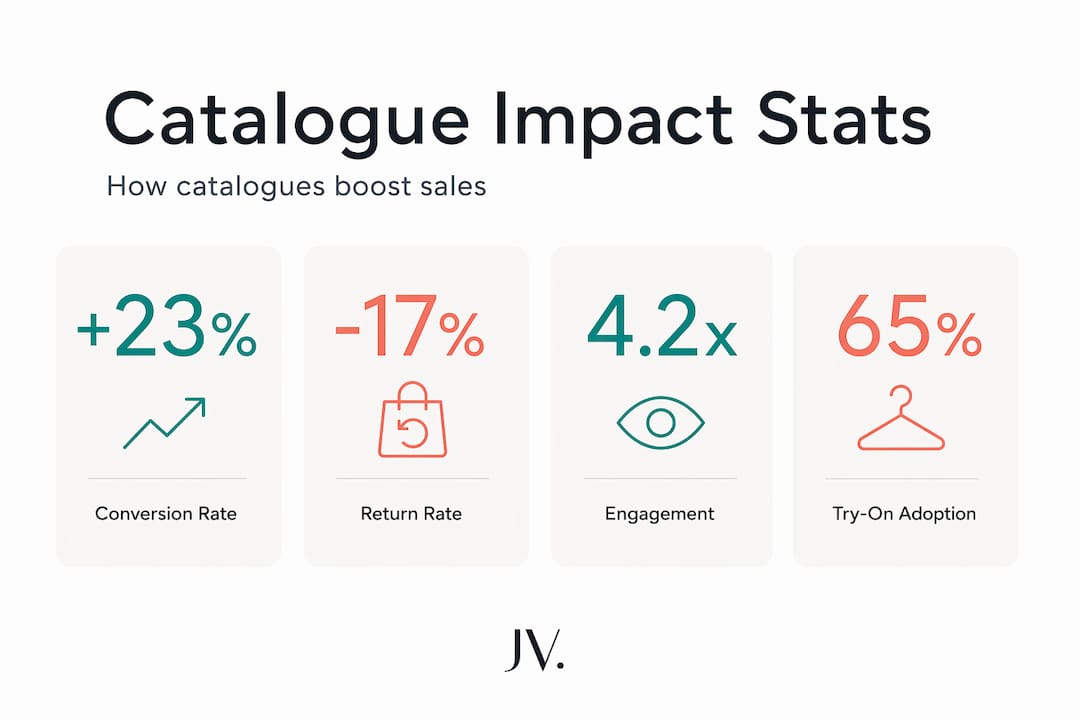
The commercial case for this technology rests on two numbers: conversion rates go up and return rates go down. Virtual try-on adoption accelerates purchase confidence by giving shoppers a near-real fitting experience digitally. Returns driven by “it looked different online” become less frequent when shoppers have seen the garment on their own image before buying. For fashion brands operating on thin margins, that is a meaningful shift. Curious about how AI visuals affect conversion in practice? The impact goes well beyond try-on alone.
Design principles that make catalogues convert
There is a fundamental difference between a beautiful catalogue and a useful one. Many brands default to beautiful, and it costs them sales. The design principle that separates high-converting catalogues from decorative ones is working backward from the purchase.
The process looks like this:
- Define the desired action first. Is the goal to sell a specific dress, grow average order value, or introduce a new collection? Every layout decision follows from here.
- Map the shopper’s path from first click to completed purchase. Identify every step where attention drops or confusion occurs.
- Design each spread to reduce those friction points. That means hotspots in intuitive positions, clear product names, visible prices, and media that answers the most common pre-purchase questions.
- Segment where possible. Segmenting catalogue versions for different shopper types using engagement data significantly improves relevance. A returning customer who buys occasion wear sees a different version than a first-time visitor browsing casualwear.
- Test and adapt. Use click data from the live catalogue to inform the next version. What gets ignored gets removed. What converts gets more space.
“Retailers can swap images, copy, and reposition spreads mid-campaign in response to shopper behaviour, which turns a catalogue from a static brochure into a living sales tool.” — Ecommerce Times
Mobile responsiveness is not optional here. A catalogue that loads slowly or displays product images incorrectly on a phone loses the majority of its potential audience before a single click. Balancing file size with visual fidelity is especially critical for catalogues that include virtual try-on assets, where image quality directly affects user trust.
The difference between a fashion catalogue and a lookbook is also worth understanding. A lookbook sells a mood. A catalogue sells a product. It includes sizes, prices, materials, and item numbers. When these two purposes get confused in the design process, the result is often visually stunning but practically useless for actually completing a purchase.
My honest take on where fashion catalogues are heading
I have watched fashion catalogues transform from PDF downloads emailed to wholesale buyers into the most sophisticated sales tools in retail. What strikes me most is how few shoppers realise what is happening behind the interface when they browse one.
The catalogues doing real commercial work in 2026 are not the prettiest ones. They are the ones built around shopper behaviour data, tested obsessively, and updated faster than any print run could allow. I have seen brands double click-through rates simply by repositioning a hero product from page five to the opening spread, guided entirely by engagement metrics.
Virtual try-on is the development I find most significant for everyday shoppers. Not because the technology is impressive, though it is. But because it genuinely solves a problem that has caused shoppers to hesitate for decades. Seeing a garment on your own body, even digitally, is categorically different from seeing it on a model. It changes what “confidence in a purchase” actually means for online fashion.
My advice: learn to use fashion catalogues actively, not passively. Tap the hotspots. Use the try-on tools. Check what embedded guides are available. The brands that invest in these features are usually the same ones that invest in product quality and customer experience. The catalogue tells you a lot about the brand before you spend a penny.
When you want to build a wardrobe with intention rather than impulse, understanding how seasonal sales connect to catalogue design helps you shop smarter, not just cheaper.
— Mykola
Explore Jvwear’s catalogue and shop with confidence
Jvwear brings together everything this article covers in a browsable, shoppable experience built for modern women’s fashion. The catalogue is organised by category so you move from browsing to buying without hunting through pages of unrelated products.
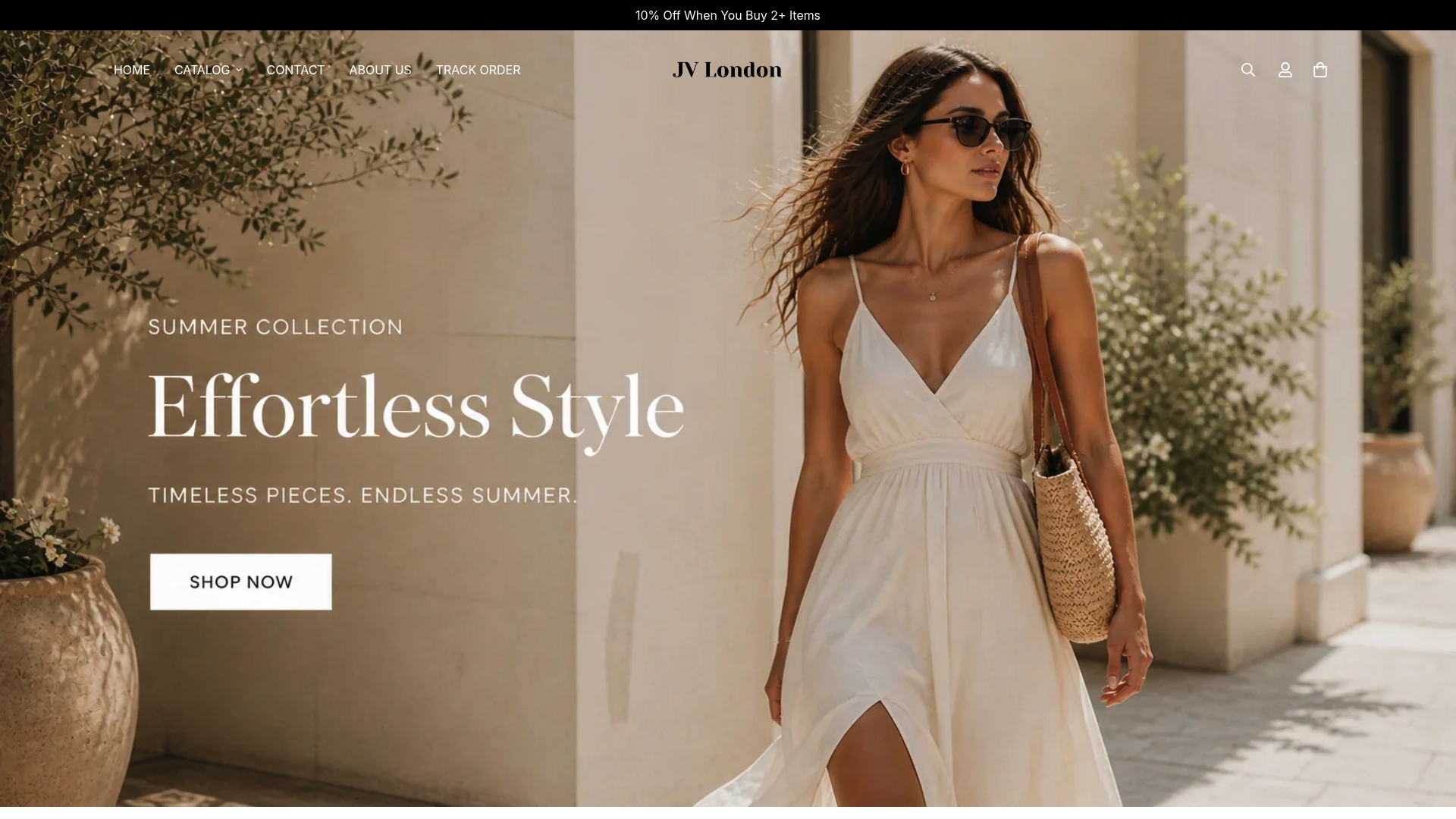
If you want to see how a well-designed fashion catalogue translates into actual product confidence, start with the Elowen gingham midi sundress. Clear product details, accurate sizing information, and a no-fuss returns policy within 30 days mean you can shop with genuine certainty. Prefer a complete outfit solution? The Greta two-piece set shows exactly how a coordinated look appears in catalogue format before it arrives at your door. Free UK shipping applies across the board. Browse the full tops collection to see the catalogue in action.
FAQ
What is an online fashion catalogue?
An online fashion catalogue is a digital, interactive version of a traditional product brochure. Unlike a static PDF, it includes clickable product links, embedded media, and real-time stock updates to take shoppers from browsing directly to purchase.
How do clickable hotspots work in fashion catalogues?
Hotspots are interactive zones layered over product images that link to exact product pages. Tapping or clicking one takes you straight to checkout without needing to search the site.
Do online fashion catalogues include size guides?
Many modern catalogues embed size guides and styling videos directly alongside product images, reducing the guesswork that causes shoppers to abandon purchases or order the wrong size.
What is virtual try-on in a fashion catalogue?
Virtual try-on lets you upload a photo and see a photorealistic image of yourself wearing a garment in 15 to 20 seconds. No app or special equipment is needed, and it works directly within the catalogue or product page.
How do retailers keep online catalogues up to date?
Retailers use engagement data to adjust layouts and product placement mid-campaign, updating prices, stock, and images without republishing the entire catalogue from scratch.