Seasonal sales have a reputation problem. Too many shoppers write them off as a graveyard of unwanted leftovers, odd sizes, and colours nobody wanted in the first place. But that picture is completely wrong, and the women who know it are quietly building enviable wardrobes at a fraction of the cost. The truth is that seasonal sales are a structured, predictable system, and once you understand how they work, you stop scrambling and start shopping with real intention. This guide breaks down the mechanics, the timing, and the mindset shifts that separate a brilliant sale haul from a basket of regrets.
Table of Contents
- Why seasonal sales are a game-changer for wardrobe building
- The mechanics: How seasonal sales actually work
- What drives shopper response to fashion seasonal sales
- Optimising your approach: Smarter seasonal sale shopping
- Behind the scenes: How retailers balance discounts and exclusivity
- A fresh perspective on mastering seasonal sales
- Shop the look: Find your next favourite in the sale
- Frequently asked questions
Key Takeaways
| Point | Details |
|---|---|
| Smart timing matters | Understanding markdown phases lets you shop seasonal sales more strategically and get the best mix of savings and selection. |
| Shop with a plan | Assess your wardrobe gaps and wishlist ahead of the sales for the most fulfilling purchases. |
| Younger shoppers benefit | Women under 35 are especially responsive to smart use of seasonal sales for style and value. |
| Quality beats chasing only discounts | Balancing trend items with investment pieces leads to a versatile, long-lasting wardrobe. |
Why seasonal sales are a game-changer for wardrobe building
Now that we’ve reframed how you view seasonal sales, let’s break down why they’re essential tools for style-conscious women.
Most people think of seasonal sales as a lucky dip. You either stumble across something great or you don’t. But the data tells a different story. Price is the most influential factor for 67% of UK shoppers buying seasonal ranges, with 49% prioritising quality and 36% focusing on availability. That last figure matters enormously for younger shoppers, because women aged 18 to 35 are statistically more responsive to availability signals than older age groups. In plain terms: you’re already wired to act when the right piece appears at the right moment.
This responsiveness is actually a superpower when you channel it correctly. Instead of reacting impulsively to whatever lands in front of you, you can use that instinct to snap up genuinely useful pieces the moment they hit the right price point. Seasonal sales make this possible by creating predictable windows where quality items become accessible.
Here’s what smart wardrobe building through sales actually looks like in practice:
- Buy now, wear later: A structured blazer bought in the summer sale is perfect for September layering. A cosy knit midi dress from the January sale earns its keep all winter.
- Staple upgrades: Sales are ideal for replacing worn-out basics, think quality trousers, classic tops, and versatile dresses, without paying full price.
- Playful statement pieces: Lower risk at sale prices means you can afford to experiment with bold prints or silhouettes you wouldn’t normally commit to.
- Avoiding impulse buys: When you know a sale is coming, you hold off on full-price purchases and wait for the window. This alone saves hundreds of pounds a year.
The key insight is that seasonal sales reward preparation. Women who arrive with a clear sense of their wardrobe gaps and a shortlist of desired pieces consistently leave with better finds than those who browse without direction. Checking out current fashion promotions before a major sale season can also give you a useful benchmark for what discounts to expect.
The mechanics: How seasonal sales actually work

Understanding the value of these sales leads to a crucial question: how are they structured for both retailers and shoppers?
Retailers don’t flip a switch and discount everything at once. Instead, they use a phased markdown system designed to protect profit margins while steadily clearing inventory. Shopify details scheduled markdown phases: initial, secondary, and deeper markdowns for protecting margin and clearing inventory. Each phase serves a specific commercial purpose, and knowing where you are in that cycle changes how you should shop.
Here’s how the phases typically unfold:
- Initial markdown (weeks 6 to 8 of a season): Discounts are modest, usually 20 to 30%. Selection is at its widest. This is the sweet spot for shoppers who want choice and are happy to pay a little more for it.
- Secondary markdown (roughly 4 weeks later): Discounts deepen to 40 to 50%. Some sizes and colours will have sold out, but the remaining stock is genuinely reduced. A good moment for planned purchases you’ve been tracking.
- Deeper markdown (end of season clearance): Discounts can reach 60 to 70% or more. Stock is limited, but the savings are significant. Best for basics where fit and colour are flexible.
| Markdown phase | Typical discount | Best for |
|---|---|---|
| Initial | 20 to 30% | Wide selection, statement pieces |
| Secondary | 40 to 50% | Planned buys, tracked items |
| Deeper clearance | 60 to 70%+ | Basics, flexible sizing |
Crucially, markdowns are triggered by sell-through rates, not just calendar dates. If a dress is flying off the virtual shelves, it won’t be discounted as deeply or as quickly. If something sits, it gets marked down faster. This means popular pieces in popular sizes disappear early, while less mainstream options linger into the deeper phases.
“The best sale shoppers treat the markdown calendar like a financial calendar. They know when to move and when to wait.” This mindset separates reactive bargain-hunters from strategic wardrobe builders.
Pro Tip: If you’ve spotted a sleeveless mini dress or another specific style you love, add it to your wishlist before the sale begins. That way you can track its markdown journey and act the moment it hits your target price, rather than discovering it’s sold out in your size at the clearance stage.
You can also save time by bookmarking your favourite products across platforms so you’re not hunting from scratch when the sale drops.
What drives shopper response to fashion seasonal sales
Once you know how the sales work, it’s vital to understand what shapes your choices as a shopper and why your responses might differ from older generations.
Price is the headline factor, but it’s far from the only one. Younger UK consumers are more likely to be influenced by seasonal availability signals, meaning the sense that something is here now and won’t be later genuinely affects decision-making in ways it simply doesn’t for older shoppers. This is partly cultural and partly psychological: growing up with fast-moving social media feeds has trained younger women to respond to scarcity and novelty.
External events also play a massive role. Retail store performance is linked to timing and macro demand, with the run-up to Christmas and Black Friday being especially pivotal. Interestingly, this doesn’t always mean better deals. During peak commercial moments, retailers know demand is high and may hold back their deepest discounts. The post-Christmas and end-of-summer periods often yield better genuine savings precisely because the commercial pressure is lower.
Here’s a quick comparison of the main factors shaping seasonal sale decisions:
| Factor | Impact on 18 to 35 age group | Impact on 35+ age group |
|---|---|---|
| Price | Very high | Very high |
| Quality | High | Very high |
| Availability and timing | Very high | Moderate |
| Trend status | High | Low to moderate |
| Limited editions and FOMO | High | Low |
Other forces at work include:
- Marketing and personalisation: Targeted emails and social ads create a sense of urgency that can feel like genuine scarcity even when stock is plentiful.
- Limited editions: Capsule sale collections or “exclusive” markdown items tap directly into the desire to own something rare.
- FOMO (fear of missing out): Roughly 42% of shoppers notice that seasonal bargain shopping actively shifts their purchase timing, pulling decisions forward or delaying them depending on what’s expected.
Understanding these pressures means you can work with them rather than being swept along by them. When you feel that spike of urgency, pause and ask: is this genuinely a limited opportunity, or is it clever marketing? The answer shapes whether you act or wait.
Optimising your approach: Smarter seasonal sale shopping
With this knowledge, you can fine-tune your shopping routine. Here’s how to make seasonal sales work hardest for your style goals.
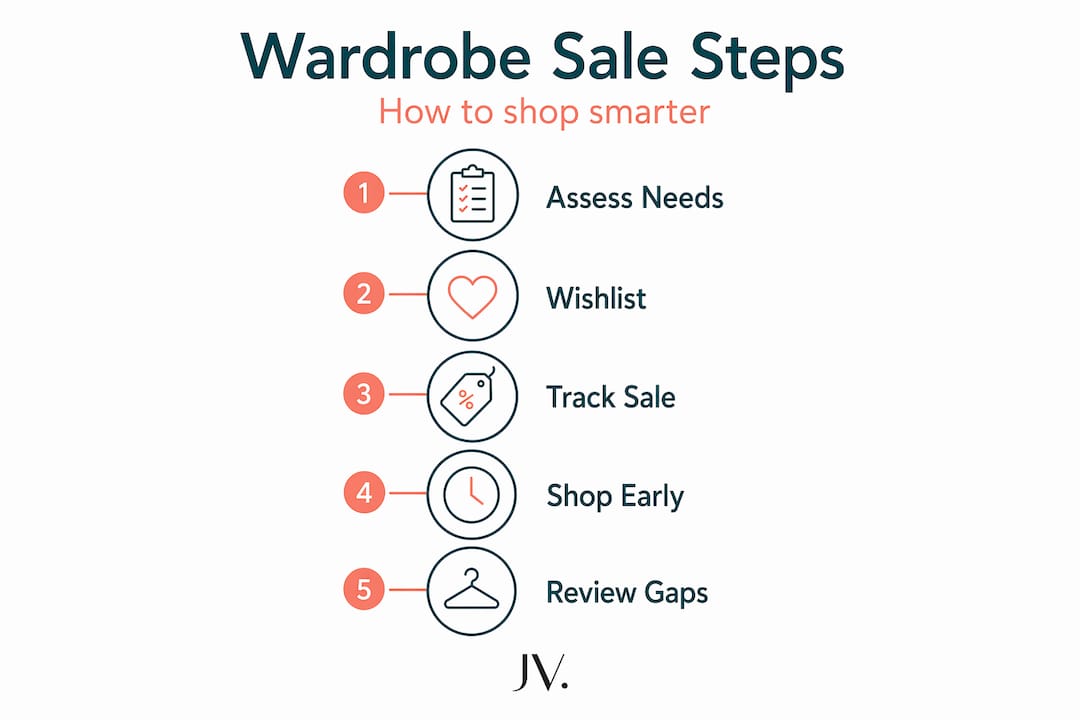
The single biggest mistake most shoppers make is arriving at a sale without a plan. Browsing without direction almost always leads to impulse buys that don’t integrate with the rest of your wardrobe. Before any major sale season, spend 20 minutes doing a wardrobe audit. What are you actually missing? What have you been reaching for and not finding? That list becomes your shopping brief.
Here’s a practical approach to seasonal sale shopping:
- Audit your wardrobe two to three weeks before the sale begins. Note gaps: missing a versatile going-out top? Need a new pair of smart trousers? Write it down.
- Build a wishlist of specific items. Be precise about silhouette, colour, and occasion. Vague intentions lead to vague purchases.
- Know your markdown cycle. Strategic substitution and wardrobe planning work best when you’re not training yourself to delay buying core needs indefinitely. Set a price threshold for each item and act when it’s met.
- Shop early markdowns for key pieces in your size. Don’t gamble on your exact fit still being available at the clearance stage.
- Return for deeper markdowns on flexible items. Basics where colour or size is less critical can wait for the best discount.
Pro Tip: Set calendar reminders for major sale dates: Boxing Day, end-of-summer clearance (typically late August), and Black Friday. Follow your favourite brands on social media and sign up for email newsletters so you’re notified the moment a sale goes live. Being first in the queue for online sales is genuinely advantageous.
Common pitfalls to avoid:
- Waiting too long: Holding off for a deeper discount and losing your size is one of the most common and frustrating sale mistakes.
- Buying only on price: A dress at 70% off is still a waste of money if you never wear it. Fit, versatility, and occasion-appropriateness matter more than the markdown percentage.
- Ignoring quality at the clearance stage: Some clearance items are discounted because they’re genuinely unpopular or poorly made. Inspect carefully before adding to your basket.
Behind the scenes: How retailers balance discounts and exclusivity
Understanding sale strategy from the industry side can help you decode future sales and shop with even more confidence.
Retailers are not simply trying to get rid of everything as fast as possible. Their markdown strategy is a careful balancing act between clearing inventory, protecting brand image, and maintaining healthy profit margins. Markdowns are more justified by inventory lifecycle and clearance needs than blunt discount schedules, and AI tools are adding significant sophistication to this optimisation process.
What this means in practice:
- Not all discounts are equal: A 30% markdown on a current-season hero piece is a genuinely different proposition from a 60% markdown on a style that failed to sell. The former is an opportunity; the latter warrants scrutiny.
- Retailers protect their best inventory: Premium or high-demand pieces are often held back from the deepest markdowns. If you see a coveted style at a modest discount, that may be as good as it gets.
- AI-driven markdown timing: Modern retailers use predictive analytics to decide exactly when and by how much to discount each product. This means markdowns are increasingly precise and less likely to be “left on the table” for savvy shoppers to exploit.
- The sweet spot for shoppers: Look for deals when retailers are actively “turning over” product at the start of a new season, not just at the end of the old one. This transitional window often yields quality pieces at fair discounts before the full clearance frenzy begins.
Understanding the fashion wholesale insights that inform retail pricing can also give you a clearer sense of where genuine value lies versus where a “sale” price is simply the normalised selling price dressed up with a crossed-out original.
“The most valuable thing a shopper can do is understand that a retailer’s discount logic is commercial, not charitable. Your job is to find where those commercial decisions align with your genuine wardrobe needs.”
A fresh perspective on mastering seasonal sales
Here’s something most fashion guides won’t tell you: the women who build the best wardrobes through seasonal sales are rarely the ones chasing the biggest discounts. They’re the ones who show up prepared, move decisively at the right phase, and resist the pull of the clearance pile when it doesn’t serve them.
The conventional wisdom says wait for the deepest discount. But in reality, waiting for 70% off a dress in your size and preferred colour is often a fantasy. By the time the price hits that level, the good stuff is long gone. The real value sits in the initial and secondary markdown phases, where selection is still strong and the discount is already meaningful.
There’s also a mindset shift worth making around versatility. A piece that costs £45 in the sale and works with six other things in your wardrobe is infinitely more valuable than a £12 clearance find that only works with one outfit and goes out of style in three months. Value is not just about price; it’s about cost per wear. Prioritise pieces that layer, mix, and earn their place across multiple seasons.
The hardest lesson? Patience and preparation genuinely beat FOMO every single time. The shoppers who panic-buy at the first sign of a sale, or who clear their baskets at the last minute chasing a deeper discount, consistently end up with wardrobes full of near-misses. The ones who arrive with a list, know their markdown phases, and trust their instincts at the right moment? They’re the ones whose wardrobes look effortlessly curated all year round.
Shop the look: Find your next favourite in the sale
Ready to put these strategies into action? Discover standout style at irresistible prices with these hand-picked wardrobe heroes.
At JV London, we’ve curated a collection of versatile, modern pieces that are perfect for building a wardrobe that works across every occasion. Whether you’re after a floral midi sundress that transitions effortlessly from a summer garden party to a weekend brunch, or a pair of wedge sandals that elevate any outfit without sacrificing comfort, our sale section is full of genuine finds. With free UK shipping and hassle-free returns within 30 days, there’s no risk in exploring. Apply everything you’ve learned here and shop with intention, your dream wardrobe is closer than you think.
Frequently asked questions
When is the best time to shop seasonal sales for fashion?
Shop early markdowns for the best selection and size availability, then return for deeper markdowns towards the end of the sale for the lowest prices. Markdown phases start six to eight weeks into a season, with second markdowns arriving roughly four weeks after that.
What should I prioritise when shopping seasonal fashion sales?
Focus on versatile, timeless pieces first to fill genuine wardrobe gaps, then add statement pieces if your core needs are already met. Pieces with a high cost-per-wear ratio will always deliver more value than a dramatic discount on something you’ll rarely reach for.
Why do retailers have so many markdown phases during sales?
Multiple markdowns help clear inventory efficiently while protecting retailer margins at each stage. Shopify explains that scheduled markdowns are designed to manage inventory flow and maximise margin rather than simply offering the biggest possible discount from the outset.
Do younger women really benefit more from seasonal fashion sales?
Yes, and the data backs it up. Younger UK consumers are more influenced by seasonal availability signals than older groups, meaning the combination of timing, trend relevance, and limited stock creates a stronger incentive to act decisively during sale windows.