Few wardrobe pieces confuse women quite like the wrap dress. You pull it on, tie the belt somewhere around your middle, and somehow the result looks nothing like the version you admired on the rack. Understanding how wrap dresses work styling-wise comes down to a handful of specific decisions, not guesswork. Get the tie placement right, choose accessories with intention, and layer intelligently, and this one style of dress can carry you from a Sunday brunch to a Monday meeting without missing a beat. This guide covers every practical detail you need to make that happen.
Table of Contents
- Key takeaways
- How wrap dresses work: the silhouette secret
- Styling wrap dresses for every occasion
- Choosing the right accessories
- Fit, comfort, and avoiding wardrobe malfunctions
- My honest take on mastering wrap dress styling
- Explore Jvwear’s wrap dress collection
- FAQ
Key takeaways
| Point | Details |
|---|---|
| Tie at the natural waist | Position the tie at your narrowest point, not the hips, to create an hourglass silhouette instantly. |
| Choose one statement element | Pick either bold jewellery or a statement print. Never combine both or the look becomes cluttered. |
| Midi length is the most flexible | A midi wrap dress works for casual and formal settings, changed entirely by footwear choice. |
| Layer fitted, not oversized | Cardigans and blazers that fit close to the body preserve the waist definition the dress creates. |
| Always sit-test the fit | Sit down before purchasing to check for gaping panels, which only appears during movement. |
How wrap dresses work: the silhouette secret
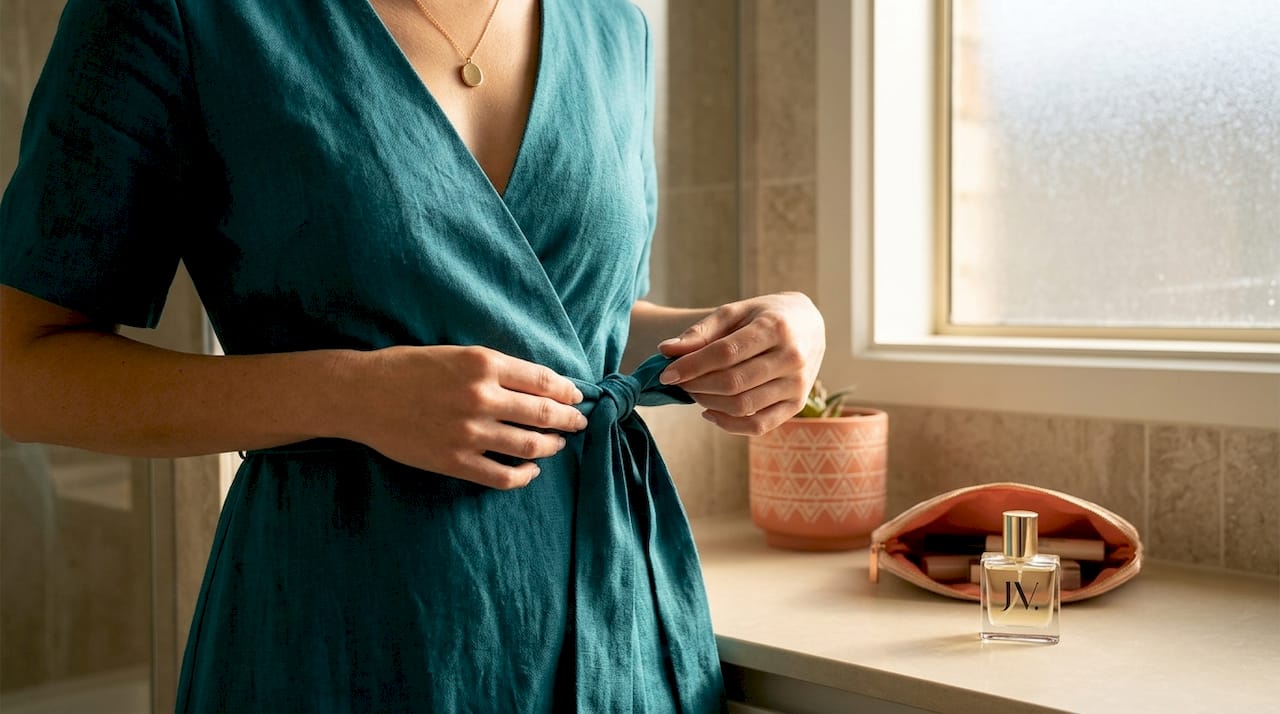
The wrap dress is built around two overlapping fabric panels that cross at the front and tie at the side or back. This construction is what makes the whole thing adjustable, but it is also where most women go wrong. The tie is not decorative. It is structural.
Tie placement at the natural waist is the single most powerful thing you can do to transform how a wrap dress looks on your body. The natural waist sits above your belly button and is the narrowest point of your torso. Most women, by instinct or habit, end up tying the dress at the hip. This drops the visual centre of the body and removes the hourglass effect the dress is designed to create. Sliding the tie up a few centimetres changes everything.
There is another detail worth knowing before you even buy: wrap direction affects fit in ways that are easy to overlook. Some dresses wrap left over right, others the reverse. This changes how the neckline falls on your chest. Try the dress on before purchasing if possible, because the wrong wrap direction for your proportions can result in a neckline that either gapes awkwardly or sits flatter than intended.
Here is what to check when trying on a wrap dress:
- Does the tie reach a point above your hip bones and below your ribcage?
- Is the V-neckline opening sitting symmetrically across your chest?
- Is there any visible pulling or puckering along the hem when you stand naturally?
- Does the fabric cross smoothly without bunching at the tie point?
Pro Tip: If your natural waist is difficult to locate, try placing your hands on your hips and breathing in. The narrowest visible point is where your tie should sit.
The V-neckline that the overlapping panels create is one of the wrap dress’s best assets. It elongates the torso visually and draws the eye upward. This is why wrap dresses tend to suit many different body shapes. The vertical line of the neckline creates length even when you are standing still.
Styling wrap dresses for every occasion
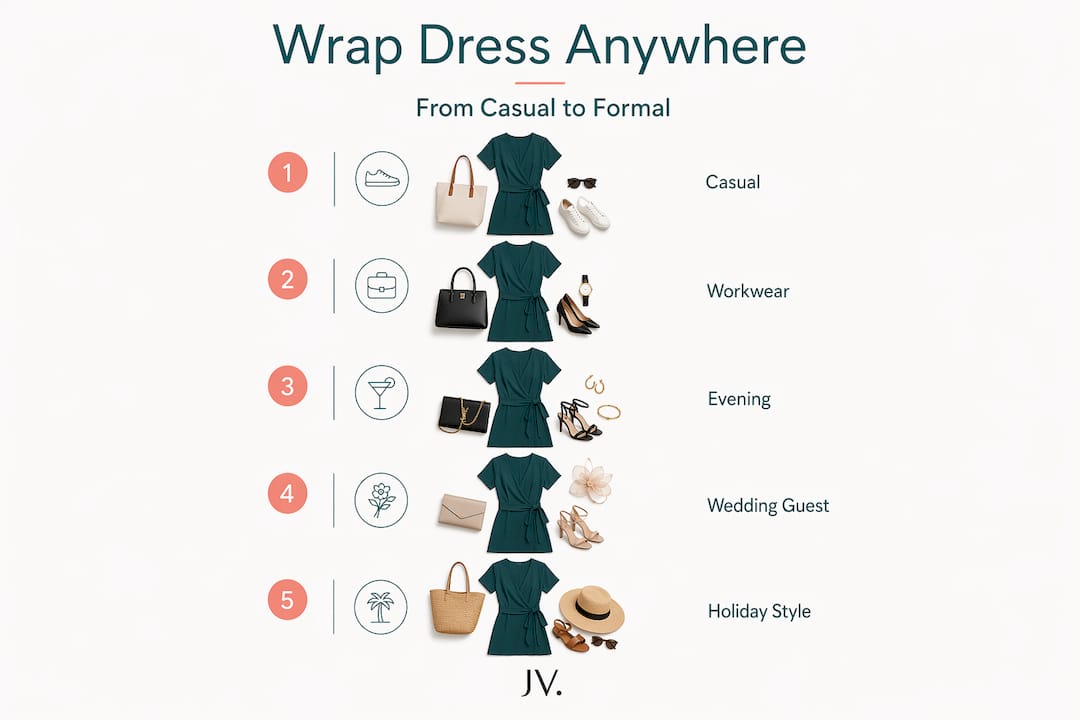
One of the strongest arguments for owning a wrap dress is that the same garment genuinely works across very different settings. The fabric and the footwear do most of the work.
For casual wear, jersey wrap dresses are your best option. Jersey is soft, forgiving, and drapes beautifully without requiring dry cleaning. A floral midi wrap dress with trainers or flat sandals reads as effortlessly relaxed without looking underdressed. Check Jvwear’s floral wrap midi as a starting point for casual print options. For everyday wear, you can also read up on styling midi dresses casually to see how footwear and outerwear changes the tone completely.
For work or formal occasions, the fabric and layering make the difference. Jersey wrap dresses worn under blazers avoid adding bulk while keeping the look polished. A wrap dress in a solid, darker colour with a structured blazer and block-heel court shoes shifts the outfit entirely into professional territory. Avoid anything too sheer or with a deep neckline for office settings.
Here are practical ways to adapt a wrap dress across occasions:
- Casual: Jersey or cotton fabric, flat sandals or white trainers, minimal jewellery, relaxed print.
- Smart casual: Midi length with low heels or ankle boots, a fitted denim jacket, a simple pendant necklace.
- Formal: Satin or chiffon fabric, strappy heels, one statement earring, structured clutch bag.
- Work appropriate: Solid colour or subtle print, blazer layered on top, court shoes or block heels.
Midi length is the most versatile choice across all these settings. A mid-calf length dress avoids the limitations of mini styles while remaining less formal than a full-length maxi. It is the most adaptable length to own.
On layering: oversized cardigans hide the waist, which is the one thing you want the wrap dress to show off. If the weather requires an extra layer, choose fitted knits, cropped jackets, or structured blazers that end at or above the waist tie. The goal is to add warmth without erasing the silhouette.
Choosing the right accessories
The V-neckline of a wrap dress is a focal point. Every accessory decision you make should support that line, not compete with it.
Here is a ranked approach to accessorising wrap dresses:
- Decide on jewellery first. The neckline is already doing visual work. Adding both a statement necklace and large earrings overwhelms the look. Choose either statement earrings or a necklace, not both.
- Match pendant depth to neckline depth. If your neckline is open and low, a pendant that sits at the same depth draws the eye along the vertical line naturally. A short choker fights with a deep V and can look off-balance.
- Consider a secondary belt. The dress comes with a tie, but you can layer a slim, contrasting belt over the top of the tied fabric. This adds visual interest and reinforces the waist point. Keep it thin so it does not overpower the wrap.
- Keep bags in proportion. A clutch or small crossbody bag works best. Large tote bags can pull the shoulder line and break the visual flow of the wrap silhouette.
- Apply the one-statement rule. If your dress has a bold print, keep jewellery minimal and your bag neutral. If your dress is a solid colour, your accessories can do more of the talking.
Pro Tip: A delicate pendant necklace in gold or silver is the most reliable accessory to reach for with a wrap dress. It follows the neckline without competing with it and works for casual and formal occasions equally.
For earring options that complement the V-neckline without overpowering it, Jvwear’s heart drop earrings are a clean, versatile choice. If you prefer a layered necklace approach, their button pendant necklace sits beautifully at the depth of most wrap dress necklines.
Fit, comfort, and avoiding wardrobe malfunctions
No styling guide for wrap dresses is complete without addressing the practical side. The design is brilliant, but a poorly fitting wrap dress can leave you adjusting it all day.
Here is what to check before wearing a wrap dress out:
- Bra choice matters. A balconette bra provides lift and shape that works particularly well with V-necklines. Avoid bras with wide straps that risk showing along the shoulder.
- Layer a camisole for confidence. Wearing a camisole underneath in a matching or neutral colour prevents any gaping between the panels and lets you move freely without adjusting the dress constantly.
- Test the fit sitting down. Sitting reveals gaping that does not appear when standing. Always sit down before you commit to a dress, in the fitting room or at home before going out.
Length and frame considerations also affect comfort:
| Frame type | Recommended length | Footwear consideration |
|---|---|---|
| Petite | Midi landing above mid-calf | Heels or pointed flats lengthen the leg |
| Average height | Any midi length | Most footwear works |
| Taller frames | Full midi or maxi | Flat sandals remain proportionate |
Footwear affects how the dress length reads on your body. A midi dress on a petite frame with flat shoes can look disproportionate, while the same dress with a low heel reads much more balanced. Heeled sandals or court shoes give the leg line extra length and lift the hem slightly, which is often exactly the adjustment a shorter frame needs.
If you are between sizes, size up. A wrap dress that is slightly large can be tied tighter, but a dress that is too small will gap at the neckline and pull across the hips regardless of how you adjust the tie.
My honest take on mastering wrap dress styling
I have styled wrap dresses in probably every wrong way before figuring out what actually works. The tie placement issue is genuinely the most underestimated detail in the entire conversation around how wrap dresses work and styling. People read the instructions, they tie the dress, and they assume the silhouette that results is what the dress does. It is not. Where you tie it is the silhouette.
The other thing I have found is that most over-layering mistakes come from insecurity, not bad taste. Women reach for the oversized cardigan because they are not sure the dress alone is enough. It always is. The wrap silhouette is the design. Covering the waist undoes the entire point of wearing the dress in the first place. If you are cold, go fitted. A cropped knit or a well-cut blazer adds warmth without erasing the shape.
On accessories, the minimal approach genuinely wins. I have seen the difference a single well-placed pendant necklace makes compared to stacking up earrings, necklaces, and bracelets. The V-neckline already draws the eye. Let it.
And finally: sit down before you leave the house. Every single time. That five-second check has saved more outfits than any styling rule I know.
— Mykola
Explore Jvwear’s wrap dress collection
If you are ready to put these styling tips into practice, Jvwear has the pieces to make it straightforward. The collection at Jvwear spans prints, solids, and lengths designed with this kind of versatility in mind.
The Daria floral midi dress is a strong starting point. It combines a classic floral print with a wrap front that sits at a flattering neckline depth, making it easy to style across casual and smart casual occasions. For a look that highlights tie detail from the start, the Tindra belted midi dress builds waist definition into the design without any guesswork. Pair either dress with delicate earrings from the accessories range and you have a complete outfit ready to go. Jvwear offers free UK shipping and 30-day returns, so exploring styles you are unsure about carries no risk.
FAQ
How should I tie a wrap dress for the best shape?
Tie the wrap dress at your natural waist, the narrowest point of your torso, rather than at your hips. This single adjustment creates a more flattering hourglass silhouette instantly.
What shoes work best with a wrap dress?
The shoes depend on the occasion and your height. Heeled sandals or court shoes dress up a midi wrap and add leg length for petite frames, while flat sandals and trainers keep the look casual.
Can wrap dresses cause wardrobe malfunctions?
They can if the fit is wrong. Wearing a camisole underneath prevents panel gaping, and always sitting down to check the fit before going out helps avoid any surprises during the day.
What jewellery goes best with a wrap dress?
Choose either a pendant necklace or statement earrings, not both. A delicate pendant that follows the depth of the V-neckline is the most reliable and versatile option for any occasion.
Are wrap dresses flattering for all body shapes?
Yes, because the adjustable tie and V-neckline work across a range of proportions. Tying at the natural waist and adjusting wrap direction to suit your neckline makes the dress work for most body types.