There is a persistent idea that maxi dresses are either a special-occasion indulgence or a summer-only purchase. Neither is true, and believing either costs you money. Understanding why maxi dresses are economical means looking past the price tag and asking a more useful question: how many times will you actually wear this, and what else does it replace in your wardrobe? The answers are more compelling than most people expect, and they apply whether you are building your first capsule wardrobe or trying to spend less without dressing like you are.
Table of Contents
- Key takeaways
- Why maxi dresses are economical: the instant outfit argument
- Cost-per-wear: the number that actually matters
- Fabric and maintenance: the hidden side of economy
- Styling tips to maximise value without extra spending
- Maxis vs. other dress lengths: a value comparison
- My honest take on maxi dresses as budget heroes
- Build your economical wardrobe with Jvwear
- FAQ
Key takeaways
| Point | Details |
|---|---|
| One dress, many occasions | A single maxi dress functions as a complete outfit, reducing how many separate pieces you need to buy. |
| Cost-per-wear beats sticker price | Divide what you paid by how many times you wear it. Maxis worn repeatedly become extremely cheap per outing. |
| Fabric choice matters | Easy-care, wrinkle-resistant fabrics encourage more frequent wear and extend the dress’s lifespan significantly. |
| Styling load stays low | Maxis pair with the same sandals, trainers, and jacket across multiple occasions, so you avoid extra purchases. |
| Maxis outperform other lengths | Compared to minis and midis, maxi dresses cover the widest occasion range from beach to dinner to travel. |
Why maxi dresses are economical: the instant outfit argument
The single most underrated thing about a maxi dress is that it removes decisions. You put it on and you are dressed. No searching for a top that matches the skirt. No worrying whether your shorts work with heels. A well-chosen maxi dress is, as People describes it, an “instant outfit” that works across settings without requiring outfit changes throughout the day.
That matters economically because every time a maxi covers an occasion that would otherwise require a different garment, you avoid a purchase. Think about a typical summer Saturday. You might wear a maxi to a morning market, keep it on for lunch with friends, add a denim jacket for the evening, and arrive at a rooftop bar looking entirely intentional. A mini dress might have needed swapping out. A skirt-and-top combination might have required both pieces to be replaced for the evening. The maxi did it all.
Here is where the economy compounds:
- A maxi dress replaces the need for a dedicated skirt in warm months
- It covers holidays and beach destinations without packing a separate holiday outfit
- It works as both a casual daytime look and a smart evening outfit with minimal restyling
- It functions as a complete outfit when you travel, reducing luggage and the panic buying that comes with overpacking
Pro Tip: When shopping, ask whether a maxi dress can work with footwear you already own. If the answer is yes for at least three different pairs, it is genuinely versatile enough to justify the purchase.
The key is that maxi dresses act as full outfits rather than components. When you stop buying components and start buying complete looks, your wardrobe becomes leaner and your spending drops.
Cost-per-wear: the number that actually matters
Most people evaluate clothing by its price. Economical shoppers evaluate it by cost-per-wear (CPW). The formula is simple: divide the price you paid by the number of times you wear the item. A £120 dress worn four times costs £30 per wear. A £35 maxi worn forty times costs 87p per wear. The CPW metric rewards frequent use and penalises items that sit in the wardrobe.
Here is how to apply this thinking when buying a maxi dress:
- Estimate realistic wears per year. A genuinely versatile maxi can be worn weekly during warmer months and occasionally with layers in autumn. Twenty to thirty wears per year is not unrealistic.
- Set a target CPW. Anything under £2 per wear is good value. Under £1 is excellent. Under 50p is exceptional.
- Calculate the break-even price. If you plan to wear a dress twenty-five times and want a CPW of £1, you should pay no more than £25.
To make this concrete, here is a comparison:
| Item | Price | Wears per year | Cost-per-wear |
|---|---|---|---|
| Trendy going-out top | £45 | 6 | £7.50 |
| Special occasion midi | £90 | 5 | £18.00 |
| Versatile maxi dress | £35 | 30 | £1.17 |
| Affordable maxi dress | £22 | 25 | £0.88 |
Maxi dresses priced between £20 and £40 are common and genuinely accessible. Multiple roundups from 2026 highlight dresses under £35 that photograph expensively and wear even better. The low upfront cost combined with high frequency of use is what makes the CPW calculation land so favourably.
Pro Tip: Track your wears for one season using a notes app. Most people are shocked to discover how few times they reach for items they thought were workhorses. That data makes future shopping far more disciplined.
Fabric and maintenance: the hidden side of economy
The fabric a maxi dress is made from is not just a comfort question. It is a financial one. Wrinkle-resistant fabrics save you time and the quiet cost of ironing: electricity, your time, and the cognitive load of maintaining a garment before every wear. When a dress needs no ironing, you reach for it more. More wears means lower CPW.
Consider what easy-care fabrics do for your budget:
- They reduce the number of times you send a garment to the dry cleaner, which can cost £8 to £15 per visit
- They handle machine washing without losing shape, meaning the dress survives longer
- They resist pilling and fading, which extends the lifespan from one season to three or four
Fabric durability is what separates an economical maxi from one that looks like a bargain but is not. A cotton-polyester blend or a viscose with good structure will hold its form across repeated washes. A poorly constructed cheap fabric might survive one summer before losing shape, resetting your CPW back to square one. The £36 M&S maxi highlighted by Netmums, made with a cotton-polyamide blend, needs barely any ironing and maintains its structure across multiple wears. That is the standard worth aiming for when considering budget-friendly maxi outfits.
When browsing, prioritise fabrics described as crease-resistant, machine washable at 30 degrees, or quick-drying. These are not marketing terms. They are indicators of real-world economy. You can also explore minimalist dress styles that lean on durable construction for long-term wear.
Styling tips to maximise value without extra spending
The maxi dresses cost benefits are only fully realised when you style them smartly. Buying a dress that requires a specific shapewear piece, a particular heel height, or a bespoke belt is not genuinely economical. You have just created a dependency that costs extra money.
Here is how to style maxis to keep costs low:
- Choose a neutral or classic print. Solid colours and small florals pair with more of what you already own than bold seasonal prints.
- Test it with flat sandals and heels before buying. A maxi that works with both means one dress covers casual and formal occasions without a shoe purchase.
- Layer with what you have. A denim jacket, a linen blazer, or an oversized knit transforms the same maxi into distinctly different looks.
- Use accessories you already own. Swapping a straw bag for a small leather one at the same outfit changes the entire register of the look.
- Avoid backless or cut-out styles if budget is a priority. They often require specialist undergarments that add cost and limit how often you reach for the dress.
Pro Tip: Before purchasing, lay out the shoes and jacket you plan to wear with a maxi. If you cannot find at least two combinations, reconsider. The dress needs to earn its place immediately with what you already have.
One underused tactic is pairing a maxi with a belt from a different outfit. A simple leather belt at the waist of a flowy maxi creates a completely different silhouette at zero extra cost. The styling flexibility of maxis means accessories do real work here, which is why they remain genuinely versatile maxi options for women who want maximum outfits from minimal purchases.
Maxis vs. other dress lengths: a value comparison
Understanding why choose maxi dresses comes into sharper focus when you compare them directly to midi and mini styles. Each length has strengths, but the value and utility calculation differs meaningfully.
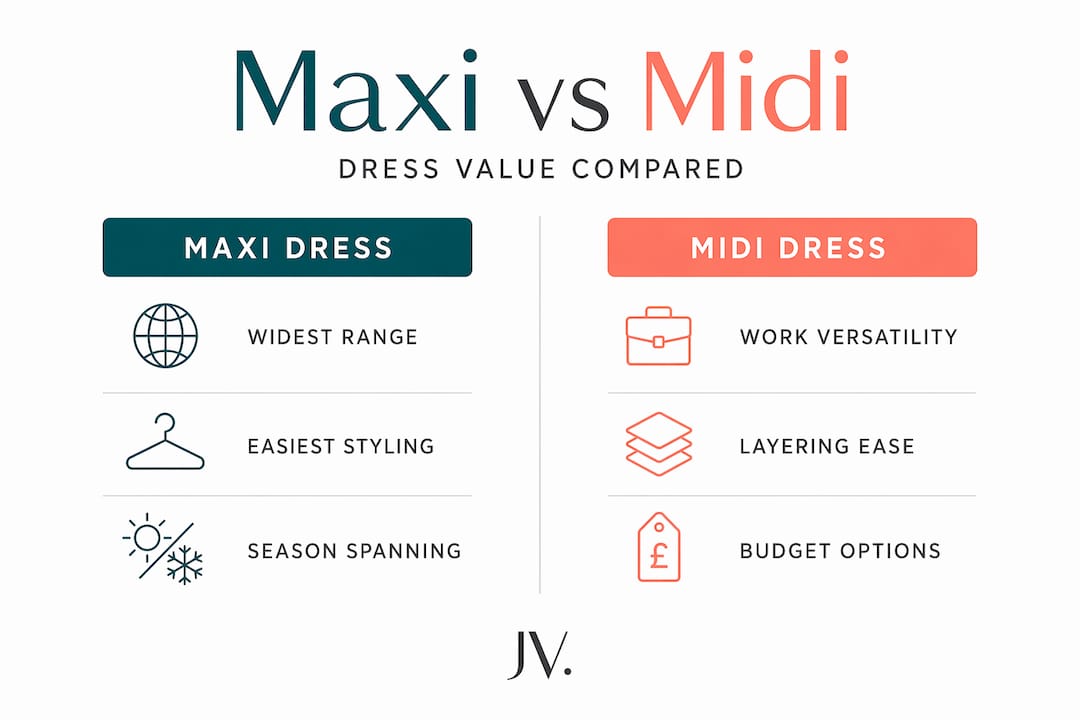
Midi dresses are versatile and work particularly well in professional or transitional settings. They are easier to pair with ankle boots and tights in cooler months. But they rarely work at the beach or for poolside occasions, narrowing their occasion range compared to maxis.
| Dress type | Occasion range | Styling effort | Season span | Budget fit |
|---|---|---|---|---|
| Maxi | Widest: beach to dinner | Low | Spring to autumn | Excellent |
| Midi | Moderate: smart casual to formal | Medium | Year-round with layers | Good |
| Mini | Narrow: casual to bar | Higher | Spring and summer mostly | Moderate |
Mini dresses bring energy and work brilliantly for specific occasions. But they typically require more considered footwear, appropriate undergarments, and have a narrower occasion window. For a budget-conscious wardrobe, that narrowness matters. Every occasion a dress cannot cover is one where you need to buy something else.
The maxi dresses value for money argument rests on their breadth. They are not always the best dress for every situation, but they are the most consistently useful across the widest range of situations. For a woman building a practical, affordable wardrobe, that breadth is where the economy lives.
My honest take on maxi dresses as budget heroes
I have watched a lot of women over-complicate their wardrobes with items they believed were economical because they were cheap. I have done it myself. The truth I keep coming back to is this: economy in fashion is never about what something costs. It is about what it delivers per pound spent.
What I have learnt from styling and shopping is that the single biggest mistake is buying a maxi that only works one way. A dress that needs a specific bag, a specific shoe, or a specific occasion is not a budget-friendly maxi outfit. It is a costume. The maxis that have earned their place in wardrobes I have observed are the ones that get grabbed on Tuesday mornings and Saturday evenings alike.
My strongest advice? Spend slightly more than the absolute minimum on fabric quality. A £40 maxi in a durable blend will outlast three £15 versions. That is not sentiment. That is arithmetic. Cost-per-wear thinking shifts focus from the sticker price to real value, and once you see fashion through that lens, you cannot unsee it. Buy less. Buy better. Let the maxis do the heavy lifting.
— Mykola
Build your economical wardrobe with Jvwear
If you are ready to put this thinking into practice, Jvwear’s collection makes it straightforward. The range covers versatile maxi dresses designed to work across multiple occasions without demanding a complete wardrobe reshuffle around them. Fabrics are chosen with wearability in mind, which means less maintenance and more value from each piece you own.
For those who want to mix lengths in a capsule wardrobe, the Elowen Gingham Midi Sundress offers the same thoughtful construction at a price that keeps your CPW firmly in the economical range. Free UK shipping and 30-day returns mean you can try before committing. Shop the full dresses collection and find pieces that genuinely earn their place in your wardrobe from day one.
FAQ
Why are maxi dresses considered economical?
Maxi dresses are economical because they function as complete outfits across multiple occasions, reducing the need to buy separate garments. Their low upfront cost combined with high frequency of wear results in an excellent cost-per-wear value.
What is cost-per-wear and how does it apply to maxi dresses?
Cost-per-wear divides the price of a garment by the number of times you wear it. Maxi dresses worn regularly, even at affordable prices, can cost under £1 per wear, making them far better value than pricier items worn rarely.
What fabrics make maxi dresses more economical?
Fabrics that resist wrinkles and are machine washable encourage more frequent wear and reduce maintenance costs. Cotton blends and viscose with good structure are reliable choices for budget-friendly maxi outfits that last multiple seasons.
How do maxi dresses compare to midi or mini dresses in terms of value?
Maxis cover the widest occasion range, from beach days to evening meals, with the least additional styling required. This broader utility makes them the most cost-efficient dress length for women building a practical, affordable wardrobe.
Can affordable maxi dresses still offer good quality?
Yes. Many budget-friendly maxi dresses priced under £40 offer durable construction and versatile styling. The key is to prioritise easy-care fabrics and classic cuts that work with shoes and jackets you already own.