A flash sale in fashion is a short, time-limited event that offers steep discounts on clothing and accessories to drive immediate purchases through urgency and scarcity. These events typically last 24–48 hours with discounts of 30–50% off standard prices. Brands use countdown timers, low-stock alerts, and multi-channel marketing to push shoppers aged 18–35 into fast decisions. Understanding how flash sales work in fashion gives you a real advantage: you can grab genuine deals without falling into the impulse-buying traps these events are specifically designed to create.
How do flash sales work in fashion retail?
Flash sales are structured promotional events, not random markdowns. The industry term is “limited-time offer” or “flash promotion,” and brands treat them as precision marketing tools rather than simple clearance events.
The mechanics follow a clear sequence. A retailer selects a specific product range, sets a discount level, caps the available inventory, and launches the sale across multiple channels simultaneously. The goal is to compress as much demand as possible into a narrow window.
Here is how the process typically unfolds:
- Product selection: Brands choose either overstocked lines they need to clear or high-demand hero pieces that attract attention and drive traffic.
- Discount setting: Discounts of 30–50% are standard. Deeper cuts attract more buyers but compress margins significantly.
- Inventory cap: Limiting stock creates genuine scarcity. Retailers also use countdown timers and low-stock alerts to amplify the sense of urgency, which is the primary driver of impulse buying in the 18–35 age group.
- Multi-channel launch: Email, SMS, Instagram, TikTok, and paid ads all fire at once. Email drives the most revenue overall, but SMS delivers the highest conversion rate because of its immediacy. Brands that coordinate both channels outperform those using either alone.
- Order surge management: Roughly half of all orders are placed within the first hour of a flash sale going live. That compression creates both marketing success and operational strain, including server load, stock discrepancies, and fulfilment pressure.
Most fashion brands run 4–6 flash sales per year. That frequency is deliberate. Too few and you miss revenue opportunities. Too many and you train your customers to never pay full price.
Pro Tip: Set a phone alarm for the exact launch time of any flash sale you plan to shop. The first hour is when the best sizes and colourways are available, and the data confirms that most buyers act within that window.

What are the real benefits and risks of flash sales?
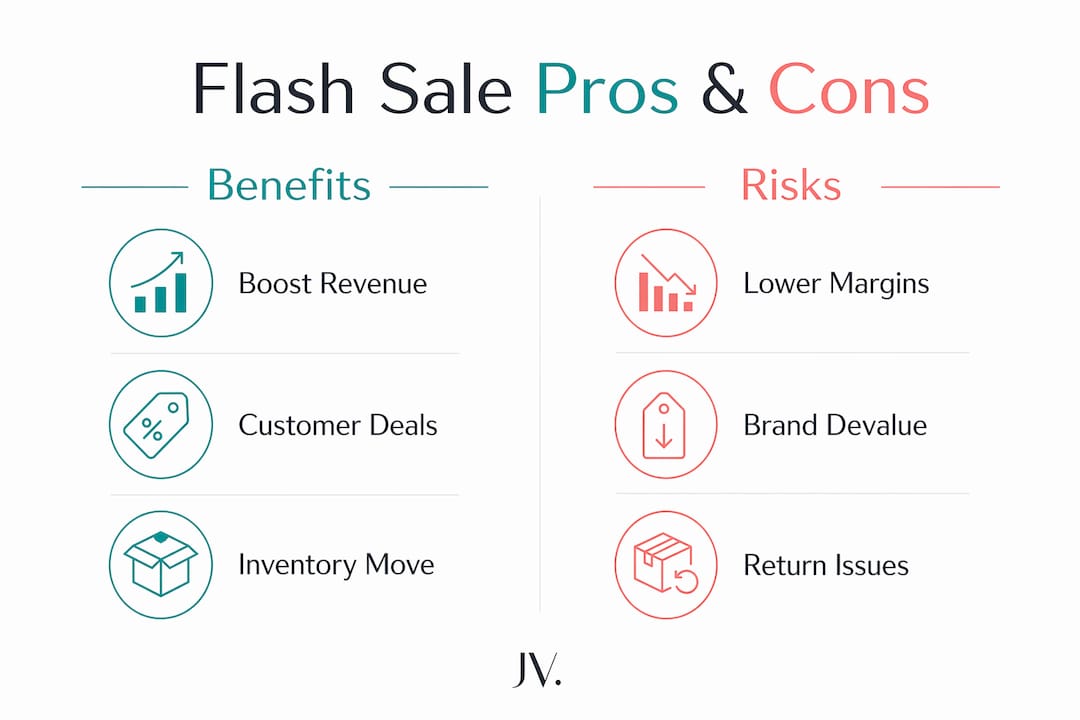
Flash sales create genuine value for both brands and shoppers, but the risks are real on both sides. Understanding the full picture stops you from being caught out.
Benefits for fashion brands
A well-executed flash sale can generate up to 35% of a brand’s total monthly revenue within a 24–48 hour window. That figure alone explains why so many retailers use them. Beyond revenue, flash sales clear slow-moving stock, attract new customers who might not have discovered the brand otherwise, and generate social media activity that extends reach far beyond the sale itself.
Benefits for shoppers
You get access to pieces at prices that are genuinely lower than standard retail. Flash sales on platforms like Jvwear give you the chance to pick up dresses, tops, and accessories at a fraction of their usual cost, provided you shop with a plan.
Risks for brands
“Using flash sales too frequently trains customers to wait for discounts, which erodes full-price sales and weakens brand equity over time.” — Flash sales for fashion brands
Brands that run flash events every few weeks find that their regular-price conversion rates drop. Shoppers learn to hold off. The brand becomes associated with discounting rather than quality, which is a difficult perception to reverse.
Risks for shoppers
The risks for you as a buyer are equally concrete:
- Impulse purchases: The urgency is manufactured. You may buy something you do not actually need or want once the excitement fades.
- False discounts: Some retailers manufacture artificially high “was” prices to make the markdown look deeper than it is. A £60 dress marked down from a fictional £120 is not a 50% saving.
- Restrictive terms: Flash sales often carry “final sale” policies and exclude additional discount codes. If the item does not fit or you change your mind, you may have no recourse.
Read the terms before you buy. That single habit saves more money than any discount.
How are influencers and social commerce reshaping flash sales?
The way shoppers discover and engage with flash sales has shifted significantly. Traditional paid advertising is losing ground to creator-driven content on platforms like TikTok and Xiaohongshu (also known as RedNote or Little Red Book).
Modern flash sales increasingly succeed via influencer-driven social commerce, blending authenticity with urgency in a way that direct advertising cannot replicate. One documented campaign on Xiaohongshu reached 3 million views by leaning on discovery-led content rather than hard-sell tactics. The sale felt like a recommendation from a trusted friend rather than a promotional push.
Micro-influencers are particularly effective in this context. They have smaller but more engaged audiences, and their followers trust their opinions on specific categories like affordable fashion or everyday styling. When a micro-influencer shares a genuine haul from a flash sale, the post carries credibility that a brand’s own account simply cannot manufacture.
User-generated content extends the life of a flash sale beyond its window. Shoppers who post their purchases using branded hashtags create a wave of social proof that builds anticipation for the next event. This community dynamic is now a core part of fashion sale strategies for brands that understand how social commerce works.
Pro Tip: Follow the micro-influencers who cover your favourite brands on TikTok. They often receive early access or exclusive codes for flash events, which means you get advance notice before the general public.
The shift from drop culture to community-led discovery also means that post-sale engagement matters. Brands that respond to haul posts, reshare customer content, and build a sense of belonging between sales retain customers far more effectively than those who go quiet until the next promotion.
How to maximise savings during fashion flash sales
Shopping a flash sale without a plan is how you end up with three tops in the wrong size and a dress you will never wear. These steps keep you in control.
-
Build a pre-sale list. Write down the specific items, sizes, and colours you actually need before the sale opens. Shopping with intention is the single most effective way to avoid impulse buys. If it is not on your list, it does not go in your basket.
-
Verify the original price. Use price-tracking tools or simply search the product name to find its standard retail price before the sale. This confirms whether the discount is genuine or inflated. Retailers who manufacture high “was” prices rely on you not checking.
-
Read the sale terms first. Check whether the event carries a “final sale” policy, excludes returns, or blocks additional discount codes. These restrictions are common and can turn a good deal into a frustrating purchase if you are not prepared.
-
Shop in the first hour. Because roughly half of all orders are placed within the first hour, the best sizes and colourways sell out fast. Set a reminder and be ready at launch time, not an hour later.
-
Use seasonal sale guides. Resources like building your dream wardrobe through planned sale shopping help you think about flash events as part of a broader wardrobe strategy rather than isolated impulse moments.
-
Balance FOMO with facts. The countdown timer is a tool designed to make you feel anxious. Acknowledge that feeling, then ask yourself whether you would buy this item at full price. If the answer is no, the discount is not saving you money. It is costing you money you would not otherwise have spent.
Pro Tip: Create a private wishlist on your favourite fashion sites before a flash sale begins. When the sale goes live, you can go straight to your saved items rather than browsing under pressure.
Key takeaways
Flash sales in fashion are precision marketing events built on urgency, scarcity, and psychology. Shopping them well requires preparation, price verification, and a clear list before the countdown starts.
| Point | Details |
|---|---|
| Sale duration and depth | Flash sales typically last 24–48 hours with discounts of 30–50% off standard prices. |
| First-hour advantage | Around half of all orders are placed in the first hour, so early access secures the best stock. |
| Verify discounts | Check historical prices before buying, as some retailers inflate “was” prices to exaggerate savings. |
| Read the terms | Many flash sales carry “final sale” policies and exclude returns or additional discount codes. |
| Influencer discovery | Micro-influencers on TikTok and Xiaohongshu often share early access and exclusive codes before public launch. |
Why I think most shoppers approach flash sales the wrong way
I have watched flash sales evolve from simple email blasts into sophisticated psychological events, and the most common mistake I see is treating urgency as a signal to act rather than a signal to pause.
The countdown timer is not telling you that the deal is good. It is telling you that time is running out. Those are very different things. The best flash sale shoppers I know do the opposite of what the timer suggests: they slow down, check their list, and confirm the price is genuinely lower than usual before clicking buy.
There is also a tendency to equate excitement with value. A flash sale on a piece you love at a price you have verified is a genuine win. A flash sale on something you half-want because it looks good in a TikTok haul is just a purchase dressed up as a saving.
My honest view is that flash sales are worth engaging with, but only 2–3 times a year on categories where you have a real need. Treat them like savvy online shopping: planned, purposeful, and grounded in what you actually wear. The brands running 4–6 events a year are counting on you to show up unprepared every time. Do not give them that.
— Mykola
Discover Jvwear’s collection before the next sale
If flash sales have you thinking about refreshing your wardrobe, Jvwear offers a curated range of women’s clothing and accessories at prices that do not require a countdown timer to feel worthwhile. From the Gingham Midi Sundress with Pockets to the Belted Midi Dress with Wide Sleeves, the collection covers everyday confidence and occasion dressing in equal measure. Jvwear also stocks a full range of cardigans that pair well with flash sale finds. Free UK shipping and 30-day hassle-free returns mean you can shop without the pressure that flash events create.
FAQ
What is a flash sale in fashion?
A flash sale is a short promotional event, typically lasting 24–48 hours, that offers discounts of 30–50% on selected clothing and accessories to drive immediate purchases through urgency and limited stock.
Why do flash sales end so quickly?
The short duration is deliberate. Brands compress the buying window to trigger FOMO and impulse decisions, which increases conversion rates far beyond what a standard week-long sale achieves.
How can I tell if a flash sale discount is genuine?
Search the product name before the sale opens to find its standard retail price. Some retailers use inflated “was” prices to make discounts appear deeper than they are, so independent price verification is the most reliable check.
Are flash sale purchases returnable?
Not always. Many flash sales carry “final sale” policies that exclude returns or exchanges. Always read the terms and conditions before completing your purchase to avoid being stuck with an item that does not work for you.
How often do fashion brands run flash sales?
Most fashion brands run 4–6 flash sales per year. Running them more frequently risks training customers to wait for discounts rather than buying at full price, which weakens long-term revenue.