Fashion deal stacking means deliberately combining multiple discount layers on a single purchase to reduce the final price as far as possible. According to Uniqodo, the broader term is discount stacking, which covers not just promo codes but every promotional benefit: sale prices, loyalty points, cashback, free delivery thresholds, and gift-with-purchase offers. The fastest sequence to follow is: join the loyalty scheme → wait for a sale → activate cashback → apply a verified promo code (where allowed) → pay with a rewards card.
Here is what that looks like in practice:
- A dress listed at £80 drops to £56 in a mid-season sale.
- A cashback portal adds a further £2.80 back after purchase.
- A rewards credit card returns another £0.56.
- Final effective price: £52.64 — a saving from the original ticket price.
That is the core idea. The sections below show you exactly how to build that stack, which UK programmes to use, and where the traps are.
Table of Contents
- What are the layers of a fashion savings stack?
- How do you stack discounts on a fashion order, step by step?
- Where does stacking work, and what rules block it?
- Common mistakes that cost you money when stacking
- Which UK tools and programmes make fashion stacking easier?
- Worked UK example: how the arithmetic actually plays out
- Legal considerations and consumer rights when stacking deals in the UK
- Key takeaways
- The habit that actually makes stacking pay off
- How Jvwear fits into your stack
- Useful sources and further reading
What are the layers of a fashion savings stack?
Every stack is built from discrete layers, and understanding what each one contributes stops you from accidentally cancelling one out. Discount stacking covers all of these simultaneously on a single order.
Automatic markdowns apply first at the product level, before anything else is calculated. That matters because a percentage promo code is usually applied to the post-markdown subtotal, not the original price, so the code’s pound value is smaller than it looks.
| Layer | What it is | Typical saving | Combinability |
|---|---|---|---|
| Sale/markdown price | Retailer reduces the listed price | 10% | Always applies; starting point for all other layers |
| Loyalty credits/points | Account-linked reward earned on spend | 1–5% back in points | Combines with most other layers |
| Promo/voucher code | Code entered at checkout | Fixed £ or % off | Usually one code per order; check T&Cs |
| Cashback portal | Post-purchase rebate via Rakuten, Quidco, TopCashback | 1–15% back | Applies after checkout; compatible with most discounts |
| Payment card rewards | Points or cashback from your card provider | 1–2% back | Final layer; always combinable |
| Free-delivery threshold | Spend minimum to waive delivery fee | £3–£6 saving | Can be broken by a discount code reducing your subtotal |
| Bundle/gift-with-purchase | Extra item or credit for multi-item orders | Varies | Often excluded from further code discounts |
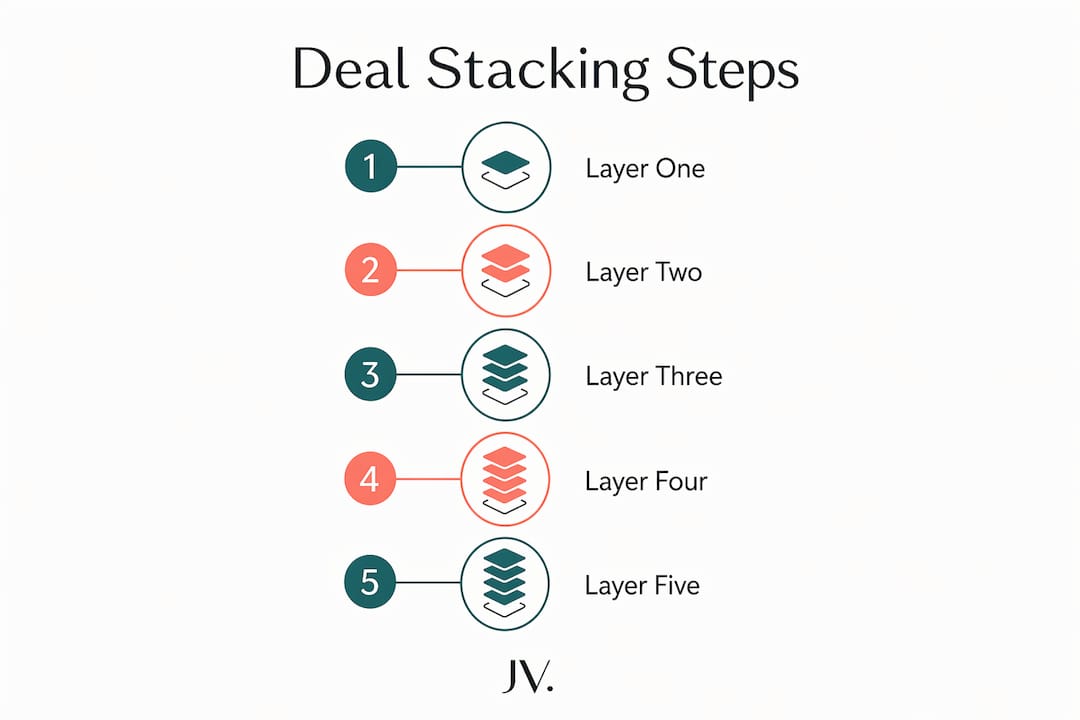
The order matters. Automatic markdowns reduce the base price first. Fixed-value loyalty credits come off next. Percentage codes then apply to whatever subtotal remains. Cashback is calculated post-checkout as a rebate, so it sits entirely outside the merchant’s discount logic and is compatible with almost everything else.
How do you stack discounts on a fashion order, step by step?
The recommended order is: loyalty → sale price → activate cashback portal → promo code or store credit → pay with rewards card. Follow this sequence every time and you will rarely miss a layer.
- Sign in to your loyalty account before you add anything to your basket. Points and credits only track when you are logged in; a guest checkout loses them entirely.
- Confirm the sale price is applied to the item. Check the product page, not just the basket summary, because some markdowns only show once the item is in the cart.
- Click through to the retailer from your cashback portal (Rakuten UK, Quidco, or TopCashback). This click must happen before you reach the checkout, or the cashback will not track. Do not navigate away or open a new tab after clicking through.
- Apply your promo code or store credit. Paste the code into the discount field and verify the new subtotal before proceeding. If the saving is smaller than expected, check whether the item is excluded from the promotion.
- Check your delivery total. If a code has dropped your basket below the free-delivery threshold, compare the saving against the delivery charge. Sometimes removing the code is the better move.
- Pay with a rewards-earning card. This adds the final layer at no extra effort.
Pro Tip: Browser extensions from Rakuten UK and TopCashback can remind you to activate cashback automatically when you land on a participating retailer’s site. Install one and you will never forget to click through again.
For a deeper look at how codes behave at checkout, the guide on discount codes on fashion sites covers the mechanics in detail.

Where does stacking work, and what rules block it?
Most retailers allow combinations that mix automatic markdowns, account credits, and third-party cashback. The sticking point is almost always the promo code field. Many retailers restrict coupon stacking by providing only one code entry per order, so two percentage-off codes cannot be used together, even when both are technically valid.
Retailers design combinability rules deliberately. According to Uniqodo, promotion hierarchies exist to control margin risk: some stacks are intentionally permitted to drive retention, while others are blocked to prevent promotional abuse. Understanding which combinations a retailer encourages helps you spend your time on stacks that will actually work.
Common exclusion types to watch for:
- Single promo-code limits. One field, one code. Choose the code that gives the higher saving after cashback is factored in.
- “Not combinable” clauses. Often applied to welcome discounts, student codes, and app-exclusive offers.
- Clearance and final-sale exclusions. Items already at 50%+ off are frequently excluded from further codes and sometimes from cashback too.
- Category or brand exclusions. A sitewide code may exclude specific brands or product lines; always read the small print.
- First-time-buyer limits. Welcome codes are typically one-use and may not stack with an active sale.
The quickest way to check: read the T&Cs linked from the promotion banner, search the page for “exclud” or “not valid with”, then test the cart with and without the code. Screenshot the totals before you pay, especially if a code fails at checkout and you need to query it with customer services.
Common mistakes that cost you money when stacking
The single most common error is applying a promo code without first activating cashback. Once you enter a code and the cashback portal loses tracking, the rebate is gone. Fix: always click through the portal first, then apply the code.
Other mistakes worth knowing:
- Applying codes in the wrong order. A fixed-value code (e.g. £10 off) applied before a percentage code reduces the base for the percentage calculation. Try both orders in the cart and compare.
- Breaking the free-delivery threshold. A 10% code saving £4 is worthless if it drops you below a £50 free-delivery minimum and adds a £4.99 delivery charge.
- Using unverified third-party codes. Codes from unofficial aggregator sites can trigger fraud flags that void cashback tracking entirely. Stick to verified voucher sources.
- Not logging in before browsing. Loyalty points only accrue on logged-in sessions; a guest checkout loses every point.
- Forgetting to check cashback rates before clicking through. Rates vary by portal and change without notice. Spend thirty seconds comparing Quidco and TopCashback before you click.
Pro Tip: If the best available code only saves 5% and the sale ends in three days, it is often worth waiting. A deeper markdown next week, combined with fresh cashback, will usually beat a marginal stack today. Timing is a layer too.
Which UK tools and programmes make fashion stacking easier?
The table below covers the must-use UK programmes and portals. Each one adds a distinct layer to your stack.
| Programme / Portal | Type | Typical saving | How to activate |
|---|---|---|---|
| Rakuten UK | Cashback portal | 1–15% cashback | Sign up free; click through to retailer from your Rakuten dashboard before shopping |
| Quidco | Cashback portal | 1–10% cashback | Create a free account; click the retailer link from Quidco before checkout |
| TopCashback | Cashback portal | 1–15% cashback | Free membership; click through from TopCashback; browser extension available |
| Nectar (Sainsbury’s partners) | Loyalty points | Points on fashion partner spend | Link Nectar card to partner accounts; scan or enter number at checkout |
| Boots Advantage | Loyalty points | 4 points per £1 spent | Scan Advantage card or enter number; redeemable as cash off future purchases |
| Tesco Clubcard | Loyalty points + Clubcard Prices | Points plus exclusive member prices | Scan or enter Clubcard number; activate Clubcard Prices in-app |
| Morrisons More | Loyalty points | Points on qualifying spend | Scan More card at checkout; points convert to vouchers |
| Blue Light Card | Discount scheme | 5–30% off at partner retailers | Purchase annual membership; verify NHS/emergency services eligibility; show card or enter code |
| Rewards For Forces / Defence Discount Service | Discount scheme | Varies by retailer | Register with service ID; access exclusive codes and partner discounts online |
For cashback portals, the loyalty programme design principles that underpin these schemes explain why stacking loyalty with cashback is so effective: the two systems operate independently and are designed to coexist.
Browser extensions from Rakuten UK and TopCashback will alert you when you land on a participating site, removing the risk of forgetting to activate. For voucher codes, use the retailer’s own newsletter, the brand’s app, or a trusted aggregator rather than random coupon sites.
Worked UK example: how the arithmetic actually plays out
Bottom line first: on a £75 dress, a well-built stack can bring the effective price to around £52.50, a saving of roughly 30%.
Here is the full calculation, applied in the correct order:
| Step | Action | Amount |
|---|---|---|
| Original price | Listed price before any discount | £75 |
| Sale markdown | Retailer mid-season sale applied automatically | £56 |
| Promo code | Newsletter code applied at checkout | £51.25 |
| Free delivery | Basket above threshold; delivery waived | — |
| Cashback (via TopCashback) | Post-purchase rebate credited within 7–14 days | £2.80 back |
| Payment card reward | Card cashback credited on statement | £0.56 back |
| Effective final price | After all rebates are received | £52.64 |
| Total saving | Against original £75 | A significant saving |
The cashback and card reward arrive after the purchase, so your card is charged £51.25 at checkout. The rebates reduce the effective cost once they clear. Keep a note of the expected amounts so you can chase any that do not arrive.
For more on timing your purchase around sale cycles, the guide on how flash sales work in fashion is worth reading before you commit to a stack.
Legal considerations and consumer rights when stacking deals in the UK
Deal stacking is entirely legal in the UK. You are simply using promotional offers as the retailer has made them available. No law prevents combining a loyalty programme, a cashback portal, and a promo code on the same order.
That said, a few consumer rights points are worth knowing. Under the Consumer Rights Act 2015, if a retailer advertises a discount from a “was” price, that original price must have been the genuine selling price for a meaningful period. The Competition and Markets Authority (CMA) has issued guidance on misleading pricing, and the Advertising Standards Authority (ASA) enforces rules on how promotions are presented. If a code is advertised as valid and the retailer refuses to honour it at checkout without good reason, you have grounds to complain to the retailer and, if unresolved, to the ASA or Citizens Advice.
Cashback portals are not financial products regulated by the Financial Conduct Authority (FCA); they are marketing services. If cashback fails to track, raise a claim through the portal’s dispute process within the stated window, usually 30–90 days. Keep screenshots of your click-through confirmation and order confirmation as evidence.
One area to watch: some retailers’ T&Cs state that using an unauthorised third-party code voids cashback or even cancels the order. This is legally enforceable if the terms were clearly displayed before purchase. Stick to codes from the retailer’s own channels or verified partners to avoid this.
This article is general information, not legal or financial advice. For your specific situation, check the retailer’s current T&Cs and consult Citizens Advice or a qualified professional if needed.
Key takeaways
Fashion deal stacking works best as a repeatable five-layer sequence: loyalty, sale price, cashback activation, promo code, and payment card rewards applied in that order every time you shop.
| Point | Details |
|---|---|
| Correct stacking order | Always activate cashback before applying a promo code, or the rebate will not track. |
| One code per checkout | Most retailers allow only one promo code; choose the code that saves most after cashback is included. |
| Free-delivery threshold | A code that drops your basket below the free-delivery minimum can cost more than it saves. |
| Worked example saving | A £75 dress can reach an effective price of £52.64 after sale markdowns, promo codes, cashback, and card rewards, as detailed in the worked example. |
| Jvwear in your stack | Jvwear’s seasonal markdowns, newsletter codes, and free UK shipping are ready-made layers to combine with cashback portals and card rewards. |
The habit that actually makes stacking pay off
Stacking is a repeatable habit, not a lucky find. The shoppers who save the most are not hunting for mythical 70%-off codes; they are running the same five-step sequence on every order, consistently.
The mistake most people make early on is chasing the biggest code rather than protecting the other layers. I have seen it play out like this: a 15% code looks brilliant until you realise it pushed the basket below the free-delivery threshold, the cashback did not track because the code came from an unofficial site, and the loyalty points did not accrue because the checkout was completed as a guest. Four layers lost for one marginal code.
The correction is simple: lock in the layers you can control first (log in, click through the portal, check the delivery total), then decide whether the code adds genuine value on top. Sometimes the right call is to skip the code entirely and let the sale price, cashback, and card reward do the work. A clean three-layer stack beats a broken five-layer one every time.
How Jvwear fits into your stack
Jvwear runs seasonal markdowns across its collections, including dresses, sets, and accessories, and offers free UK shipping on qualifying orders. Those two features are natural starting layers for a stack: the sale price reduces your base cost, and free shipping means a promo code does not need to clear a delivery charge to be worthwhile.
A typical Jvwear stack looks like this: browse the current sale, click through from TopCashback or Quidco before adding to your basket, apply a newsletter welcome code at checkout, and pay with a rewards card. The two-piece midi dress set and the cardigans collection are good places to test the method on a mid-ticket purchase where the maths is easy to follow.
Jvwear’s 30-day hassle-free returns policy also removes the risk of buying during a sale without being certain of the fit. Browse the current collections at jvwear.com and run your first stack today.
Useful sources and further reading
- Uniqodo: What Is Discount Stacking? — authoritative definition of discount stacking and promotion hierarchy rules; use this to verify combinability terminology.
- Rakuten Blog: Stack Cash Back, Coupons and Loyalty Points on Clothing — practical five-step stacking workflow and cashback activation guidance.
- TopCashback UK — sign up and browse current cashback rates for UK fashion retailers.
- Quidco UK — compare cashback rates alongside TopCashback before clicking through.
- Voucherify: Coupon Stacking Explained — clarifies the distinction between coupon stacking and broader discount stacking.
- Jvwear: Types of Online Fashion Promotions — deeper detail on promotion categories and how they interact at checkout.
- Jvwear: How to Get the Best Online Fashion Deals — practical UK shopping tips that pair directly with the stacking method above.
- Citizens Advice — for consumer rights queries if a retailer refuses to honour an advertised promotion.