Clearance sales in fashion are defined as planned, strategic markdowns applied to slow-moving or end-of-season stock, designed to free retail cash flow while giving shoppers access to quality pieces at reduced prices. This is the industry’s standard practice of markdown management, and it sits at the heart of how fashion retailers balance profitability with inventory health. For fashion-conscious women aged 18 to 35, understanding the role of clearance sales in fashion means knowing when a genuine deal is on the table and when a discount is simply theatre. Retailers like StyleMatrix and platforms across the UK use data-driven tools to time and depth-manage these sales, making the process far more calculated than it appears from the shop floor.
How do clearance sales benefit both retailers and shoppers?
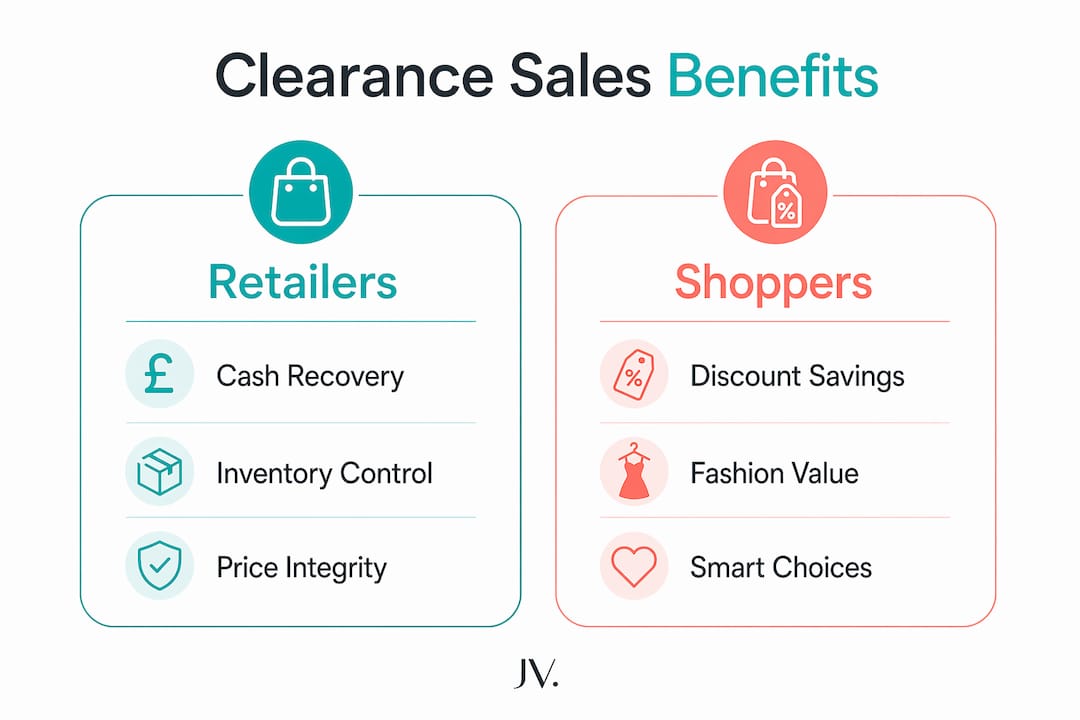
Clearance sales serve a dual purpose that most shoppers never consider. For retailers, the primary benefit is cash recovery. Stock sitting unsold in a warehouse or on a rail is capital locked away, and clearance sales free that cash while reducing the risk of ageing inventory becoming worthless. This is not a sign of failure. It is standard inventory lifecycle management.
For shoppers, the benefits of fashion discounts are equally concrete. Sale events are genuinely a goldmine for fashion lovers seeking to balance style and cost, offering access to previous-season pieces that retain full wearability at a fraction of the original price. A well-timed clearance purchase can add a quality midi dress or a structured bag to your wardrobe for less than the cost of a fast-fashion alternative that will not last the season.

The psychology behind this is well-documented. Fair, clear discount presentation fosters positive shopper attitudes, lowers internal resistance, and encourages spontaneous purchasing. This is grounded in the Theory of Planned Behaviour, which links perceived value and price fairness directly to purchase intent. When a discount feels honest, you buy with confidence rather than suspicion.
Key benefits at a glance:
- Retailers recover cash from aged stock, reduce warehouse costs, and reset for new season buying.
- Shoppers access higher-quality pieces at accessible prices, often from brands they would not otherwise afford.
- Both parties benefit when discount framing is transparent, building trust that supports future full-price purchases.
Pro Tip: Before adding a clearance item to your basket, check the original price history if the retailer displays it. A genuine markdown from a consistent full price signals real value. A price that was “raised then reduced” is a red flag.
What strategies do retailers use to manage clearance sales?
The most effective clearance sales strategies in fashion are built around timing and channel control, not simply slashing prices. Retailers who protect brand value treat clearance as a structured process rather than a panic response.
Timing and discount depth
Sensible clearance timing limits discounts to once or twice a year, with modest early markdowns of around 20% escalating to deeper end-of-season reductions of around 50% only when necessary. This approach protects full-price buying behaviour across the rest of the year. Shoppers who know a brand rarely discounts are far more likely to buy at full price when they see something they want.
Channel segmentation
Heavier discounts applied online or through dedicated clearance outlets protect the pricing integrity of flagship stores. This is channel segmentation in practice. A brand can move aged stock aggressively through its website or a third-party off-price platform while keeping its physical boutique or premium product pages at full price. The result is controlled stock movement without the negative halo effect on brand perception.
Data-driven markdown planning
Technology such as StyleMatrix supports precise, data-driven markdowns by predicting demand and optimising discount depth for specific stock items. Rather than applying a blanket 30% off across a category, a retailer can identify which SKUs are underperforming and apply targeted reductions. This protects margins on items that are still selling well.
| Strategy | Benefit | Risk if ignored |
|---|---|---|
| Timed, infrequent discounts | Protects full-price sales behaviour | Shoppers learn to wait for sales |
| Channel segmentation | Maintains flagship price integrity | Brand dilution across all touchpoints |
| Data-driven markdown depth | Preserves margins on performing stock | Over-discounting healthy inventory |
| Phased liquidation | Prevents panic clearance | Rushed deep cuts destroy profitability |
Pro Tip: When shopping online clearance sections, look for retailers who segment their sale stock clearly. A well-organised clearance page with specific categories and honest original prices is a sign the brand manages its inventory thoughtfully, which usually means better quality finds.
How can consumers maximise the advantages of clearance shopping?
Shopping clearance sales smartly is a skill, and it is one worth developing if you want to build your dream wardrobe without overspending. The difference between a clearance haul you wear for years and a bag of regrets comes down to a few consistent habits.
-
Prioritise versatile, quality pieces over impulse buys. A clearance midi dress in a neutral colour will earn its place in your wardrobe far more reliably than a heavily discounted statement piece you will wear once. Think cost-per-wear, not cost-per-item.
-
Understand the discount framing. Discounts framed as fair and valuable reduce consumer resistance and encourage immediate buying. Use this knowledge in your favour. If a discount feels genuinely fair and the original price is credible, act. If the framing feels manipulative, step back.
-
Watch the timing of sales. End-of-season clearance events, typically January and July in the UK, are when planned markdowns are deepest and most genuine. Mid-season flash sales are often less transparent about what is actually being cleared.
-
Avoid the panic clearance trap. Some retailers use clearance language to shift low-quality stock that was never worth the original price. If the fabric feels poor or the construction is weak, no discount makes it a good purchase. Quality does not improve with a red sticker.
-
Check return policies before you buy. Clearance items sometimes carry restricted return terms. Knowing your rights, particularly when returning online purchases in the UK, protects you from being stuck with something that does not fit or does not suit you.
What are the common pitfalls of clearance sales?
The risks of clearance sales run in both directions. For retailers, the most serious consequence of overusing them is discount dependency. Frequent, deep discounts train customers to wait for sales, which can reduce baseline revenue by up to 50% over 18 months. This is not a theoretical risk. It is a documented pattern in fashion retail that has damaged the long-term profitability of brands that prioritised short-term stock clearance over strategic pricing discipline.
For consumers, the pitfalls are different but equally real:
- Overbuying is the most common trap. The excitement of a discount can override genuine need, filling your wardrobe with pieces that do not work together.
- Low-quality purchases disguised as clearance bargains waste money rather than saving it. A poorly made top at 70% off is still a poor investment.
- Wardrobe incoherence builds up when clearance shopping lacks a plan. Impulse buys from multiple sales rarely combine into a cohesive, wearable collection.
Phased liquidation strategies protect both retailers and shoppers by escalating discounts gradually based on data rather than urgency. When a retailer uses this approach, the clearance stock you encounter is more likely to be genuinely good product that simply did not sell fast enough, not product that was always destined for the bargain bin.
The best clearance sales are not accidents. They are the result of a retailer who planned well, bought carefully, and is now moving quality stock at a fair price. Those are the sales worth your time.
Key takeaways
The role of clearance sales in fashion is to manage inventory strategically while creating genuine value for shoppers who know how to identify and act on real markdowns.
| Point | Details |
|---|---|
| Clearance sales are planned, not reactive | Retailers use data and timing to manage markdowns without damaging brand value. |
| Discount framing shapes your buying decisions | Fair, transparent discounts build trust and encourage confident purchasing. |
| Channel segmentation protects brand integrity | Deeper discounts online or in outlets preserve full-price positioning in flagship stores. |
| Overuse creates discount dependency | Frequent sales train shoppers to wait, reducing full-price revenue significantly over time. |
| Smart shoppers prioritise quality and versatility | Clearance finds earn their place when they are well-made pieces that work across multiple outfits. |
Why I think most people misread clearance sales entirely
Most shoppers treat clearance as a lucky accident, a moment when a retailer slips up and offers something brilliant for less. That framing is wrong, and it costs people money. After years of writing about fashion retail and watching how brands manage their inventory cycles, the pattern is clear. The retailers who run the best clearance events are the ones who planned them months in advance, segmented their stock carefully, and applied smart clearance tactics to protect their margins while still moving product.
What this means for you as a shopper is that the quality of a clearance event tells you a great deal about the quality of the brand running it. A well-organised, honestly priced sale with clear original pricing and a logical selection of items signals a retailer who knows what they are doing. A chaotic, everything-must-go event with inflated “was” prices signals the opposite.
The consumer sophistication around discount fairness is growing, and that is a genuinely positive development. Shoppers who understand markdown management in fashion retail are harder to manipulate and better at finding real value. My advice is to treat clearance shopping the way you would treat any other wardrobe investment. Go in with a list of what you actually need, set a budget, and leave the impulse buys on the rail. The pieces you buy with intention are the ones you will still be wearing in three years.
— Mykola
Refresh your wardrobe with Jvwear’s curated collection
Jvwear brings together the kind of versatile, well-made pieces that make clearance shopping genuinely worthwhile. Whether you are building a capsule wardrobe or adding a standout dress for the season ahead, the Jvwear catalogue is designed for women who want style without compromise on quality or price.

The Tindra belted midi dress and the Daphne floral sundress are two pieces that work across seasons and occasions, exactly the kind of investment that holds its value in your wardrobe long after the sale ends. Jvwear also offers a range of cardigans and layering pieces that complement both new arrivals and clearance finds. With free UK shipping and hassle-free 30-day returns, shopping with Jvwear carries none of the risk that sometimes comes with clearance purchases elsewhere.
FAQ
What is the role of clearance sales in fashion retail?
Clearance sales in fashion serve as inventory management tools that free cash from slow-moving or end-of-season stock. Retailers use planned markdowns to clear aged inventory without disrupting full-price sales on core products.
How do clearance sales affect brand value?
Overusing clearance sales risks brand dilution and discount dependency, which can reduce baseline revenue significantly over time. Retailers protect brand value by limiting sale frequency and applying deeper discounts through separate channels rather than flagship stores.
How can I tell if a clearance discount is genuine?
A genuine clearance discount shows a credible original price that the retailer charged consistently before the sale. Transparent pricing history and a well-organised sale selection are reliable indicators of an honest markdown.
When are the best clearance sales in the UK fashion calendar?
The most significant planned clearance events in UK fashion typically occur in January and July, aligned with end-of-season stock cycles. These periods offer the deepest and most transparent markdowns on previous-season collections.
Is it worth buying fashion items in clearance sales?
Clearance sales offer real value when you prioritise versatile, quality pieces over impulse buys. Focusing on well-made items with broad styling potential, such as midi dresses or classic layering pieces, gives you the best return on a discounted purchase.