Understated elegance is the art of looking polished without trying to prove it. Merriam-Webster defines “understated” as avoiding obvious emphasis or embellishment, and that restraint is precisely what gives the aesthetic its power. Where loud fashion announces itself, understated elegance reveals itself slowly — through the drape of a well-cut trouser, the grain of a leather bag, or the way a room settles into calm rather than competing for attention.
- Simplicity first: fewer pieces, chosen with more care
- Quality over logos: the material and the cut do the talking
- Restraint as confidence: nothing added that does not need to be there
The same logic applies whether you are dressing for a Tuesday meeting or furnishing a living room.
Table of Contents
- What is understated elegance, and what are its core principles?
- How does understated elegance look in clothing and accessories?
- Does understated elegance work beyond clothing?
- Practical dos and don’ts for dressing with understated elegance
- Where should you spend and where can you save?
- What do Shibui, sprezzatura and quiet luxury share?
- A practical shopping checklist for understated pieces
- How do you recognise understated elegance in everyday life?
- Common mistakes when trying to achieve understated elegance
- Key takeaways
- Why restraint never goes out of fashion
- Where to start building your understated wardrobe
- Further reading and reliable sources
What is understated elegance, and what are its core principles?
Understated elegance is a style philosophy built on refinement, simplicity, and restraint — tasteful and sophisticated without being showy. Five principles underpin it.
Simplicity and restraint. The instinct to add more is almost always wrong here. A single well-chosen detail reads more powerfully than three competing ones. Think of a plain white shirt tucked into tailored trousers: nothing to distract, everything to admire.
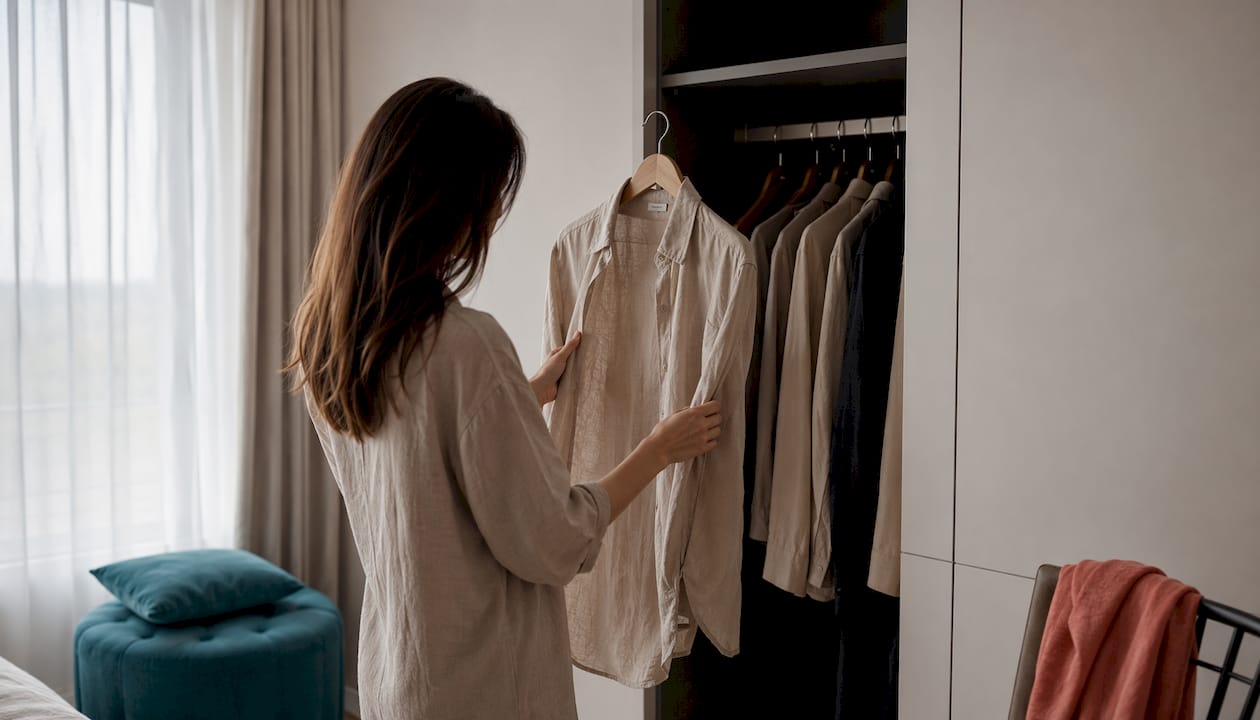
Quality and craft. Logos are a shortcut to recognition; understated elegance skips the shortcut. The focus falls instead on fabric weight, seam finishing, and the way a garment holds its shape after a dozen wears. Vogue’s guidance on quiet luxury consistently points to high-quality materials and impeccable tailoring as the non-negotiables.
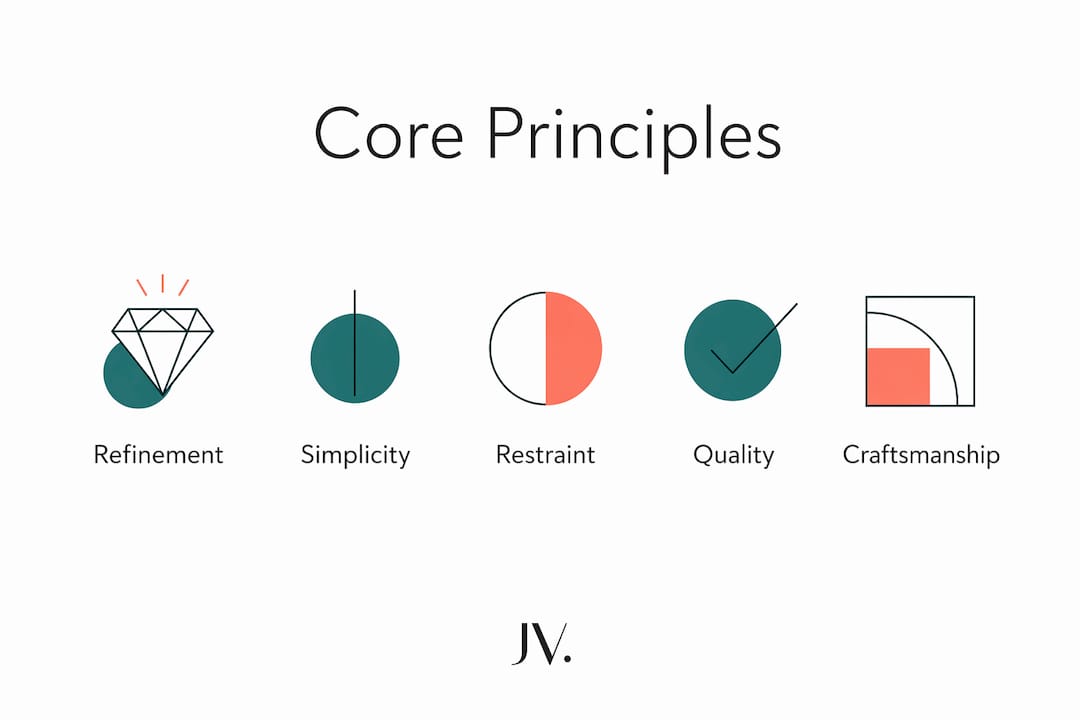
Proportion and balance. A beautifully made piece in the wrong scale undermines everything. Silhouette matters: a midi dress with clean lines reads differently from the same fabric cut into an oversized shape with no structure.
Subtle detail. Texture, tone, and finish reward close attention. A cashmere rib, a matte leather sole, a tonal stitch — these are the details that make someone look twice without knowing exactly why.
“Accessories are as important as the garments. Over-accessorising undermines the whole effect — the look has to work as a complete package.”
Stylist insight via Vogue
That last point matters more than most people expect. Understated elegance is not just about the clothes; it is an attitude of quiet confidence that lets form and material speak rather than labels or showy detail.
How does understated elegance look in clothing and accessories?
Concrete wardrobe examples make the principle easier to apply than any abstract definition.
Wardrobe staples worth building around
A handful of pieces carry the aesthetic reliably: tailored trousers in a neutral, a crisp white or ecru shirt, a simple fine-knit jumper, and a well-cut midi dress in a solid colour. These are not boring choices — they are the foundation that makes everything else work. For minimalist dressing, each piece needs to earn its place by pairing with at least three others in the wardrobe.
Fabrics and finishes that read as refined
The best fabrics for this aesthetic share a few qualities: they drape well, they age gracefully, and they do not rely on surface novelty. Linen, fine wool, quality cotton poplin, and soft full-grain leather all qualify. Avoid anything with an obviously synthetic sheen or a texture that looks different after two washes.
Accessory rules
Keep jewellery restrained: a single fine chain, small stud earrings, or a plain watch. A considered bag in a neutral leather or structured fabric ties an outfit together without competing with it. The everyday elegant jewellery principle applies here — one well-chosen piece beats a stack of trend-driven ones every time.
Dos and don’ts for everyday styling
Do:
- Prioritise fit above everything else; an inexpensive piece in the right fit reads better than an expensive one that does not
- Choose a controlled palette of two or three tones per outfit
- Let one element carry the visual interest (a texture, a cut) and keep everything else neutral
Don’t:
- Layer multiple statement accessories at once
- Wear logo-heavy pieces as the focal point of an outfit
- Choose prints that dominate rather than complement
Pro Tip: Before you leave the house, remove one item. Subtractive styling — intentionally editing down until only the essential, high-quality pieces remain — is the fastest route to a refined look. Vogue’s stylists describe it as the most practical method professionals use.
Does understated elegance work beyond clothing?
The same principles translate directly into interiors and everyday living, often more visibly than in fashion.
Materials carry the weight. Stone, solid wood, linen, and matte plaster surfaces all signal restraint because they rely on inherent character rather than applied decoration. A stone-look tile floor or a timber-panelled wall does not need ornament; the material itself is the statement.
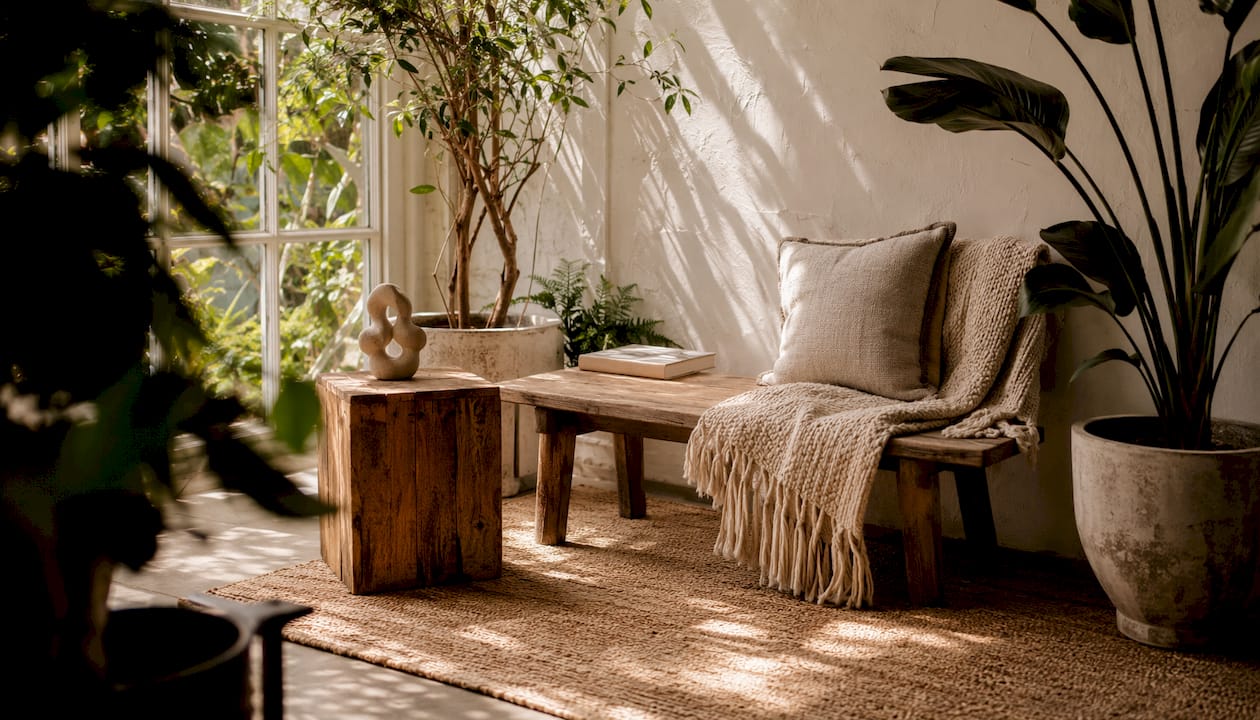
Editing the space is the interior equivalent of subtractive styling. Fewer curated objects with genuine negative space between them reads as considered. A bedside table with one lamp, one book, and one small object is more arresting than the same surface crowded with ten things.
Before and after, in practice:
- Bedside table: remove the charger cables, the half-empty water glass, and the three books you are not currently reading. Keep the lamp and one object with meaning.
- Table setting: swap a busy floral centrepiece for a single stem in a plain vessel. The table immediately reads as more deliberate.
- Shelving: group objects by material or tone rather than by category. Three ceramic pieces in related shades read as a collection; the same three pieces scattered across different shelves read as clutter.
Pro Tip: When choosing between two decorative objects, pick the one with more interesting texture and a quieter colour. Texture adds depth without visual noise — exactly what the aesthetic requires.
The depth-over-decoration principle is the clearest guide: focus on texture, proportion, and natural materials rather than ornamentation, and the space will settle into the right register almost automatically.
Practical dos and don’ts for dressing with understated elegance
This is the checklist version — quick to scan, easy to apply at the wardrobe door.
Do:
- Invest in fit: tailoring and fit are the single biggest lever you have
- Build around a neutral palette — ivory, camel, stone, navy, charcoal — and add one muted accent at most
- Choose quality in the pieces you wear most often; cost-per-wear thinking makes this rational, not extravagant
- Let texture do the work that colour or print might otherwise do (a ribbed knit, a brushed wool, a woven linen)
Don’t:
- Wear more than two visible logos in a single outfit
- Stack bracelets, rings, and necklaces simultaneously unless the effect is genuinely considered
- Choose a print that reads louder than the person wearing it — small-scale or tonal prints are fine; large, high-contrast ones pull focus
- Confuse minimalism with austerity: understated elegance is warm and considered, not cold and empty
A concrete example of the difference: a camel wool coat over a plain navy knit and straight-leg trousers is understated elegance. The same coat worn over a logo-print sweatshirt with chunky trainer-style shoes and three layered chains is not — even though the coat itself is identical.
Where should you spend and where can you save?
Cost-per-wear thinking reframes the question usefully. A £200 coat worn 150 times costs less per wear than a £40 coat worn eight times before it loses its shape.
| Category | Spend more | Save confidently |
|---|---|---|
| Outerwear | Quality wool or cashmere coats hold shape and age well | Lightweight summer jackets in trend colours |
| Tailoring | Trousers, blazers, structured dresses — fit and fabric matter | Casual jersey basics worn infrequently |
| Footwear | Classic leather shoes and ankle boots develop patina | Seasonal sandals, novelty trainers |
| Bags | A structured leather bag in a neutral is a long-term piece | Trend-driven clutches, novelty shapes |
| Jewellery | One or two fine pieces in gold or silver | Fashion jewellery for seasonal trends |
| Knitwear | Merino or cashmere basics | Cotton-blend jumpers for warmer months |
Items that age well — linen, solid wood, quality leather — develop patina over time. A leather bag that softens and darkens with use is not wearing out; it is becoming more itself. Care matters here: cedar shoe trees, proper storage, and occasional conditioning extend the life of investment pieces significantly.
Where to save without compromise: trend-driven items, novelty jewellery, and statement prints that will feel dated in two seasons. Buy these affordably, wear them while they feel right, and replace them without guilt.
What do Shibui, sprezzatura and quiet luxury share?
These three concepts are the philosophical neighbours of understated elegance, and understanding them clarifies what the aesthetic is actually reaching for.
Shibui is a Japanese aesthetic philosophy describing subtle, quiet beauty that reveals itself slowly. It is not about perfection or the latest trends; it is about choosing what endures. Shibui objects do not shout for attention — they invite you closer and reward you for noticing. The beauty grows richer with time and familiarity, which is precisely why quality materials are central to it.
Sprezzatura is an Italian Renaissance concept describing studied nonchalance — the art of making something highly complex appear natural and effortless. In fashion, it is the collar that falls just so without appearing arranged. In architecture, it is the room that feels inevitable despite the precision required to build it. The effort is real; it simply does not show.
“Elegance without performance. At its heart, Shibui is restraint paired with intention.”
Create Design Home on Shibui
Quiet luxury is the contemporary Western expression of these older ideas: high-quality materials, minimal branding, and a palette that signals wealth through restraint rather than display. All three philosophies reward close attention and the ageing of materials. All three treat the observer’s slow discovery as part of the experience. The thread connecting them is confidence — the kind that does not need to announce itself.
A practical shopping checklist for understated pieces
Use this before checkout, whether you are shopping online or in store.
Shopping checklist:
- Does the fit work as it is, or does it need expensive alteration?
- Is the fabric one that will drape and hold its shape after washing?
- Is the finish clean — no loose threads, no puckering at the seams?
- Does the piece work with at least three things already in your wardrobe?
- What is the cost-per-wear over 12 months of regular use?
- Does the retailer offer free returns so you can assess fit at home?
60-second assessment before checkout:
- Look at the fabric composition. Natural fibres or quality blends score higher than 100% polyester for anything you plan to wear often.
- Check the seams in the product images. Clean, flat seams signal better construction.
- Read the returns policy. A 30-day hassle-free return window means you can assess fit properly at home.
- Ask: does this piece work in two or three different outfits, or only one?
- If the answer to step 4 is “only one,” reconsider unless the cost-per-wear still makes sense.
Jvwear’s wardrobe essentials range maps well to this checklist: clean silhouettes, solid colours, and a free UK shipping and 30-day returns policy that lets you test fit before committing. The neutral tones guide on the site is a useful starting point for building a controlled palette.
How do you recognise understated elegance in everyday life?
The visual cues are consistent once you know what to look for.
In clothing, the signals are fit, fabric movement, and the absence of visible branding. A garment that skims the body without clinging, moves with the wearer, and shows no logos reads as understated. The colour palette tends toward neutrals or muted tones; when a stronger colour appears, it is usually a single note rather than a pattern.
In interiors, look for surfaces that have inherent character: grain, texture, or natural variation. A room where every material is smooth and uniform tends to read as sterile rather than elegant. Negative space is another reliable signal — a room that feels considered rather than filled.
In behaviour, understated elegance shows up as ease. The person who is not adjusting their outfit, not seeking confirmation, not explaining their choices. The room that does not need to be introduced. Both share the same quality: they are simply there, and that is enough.
Common mistakes when trying to achieve understated elegance
The most frequent error is confusing restraint with minimalism. Minimalism is about reduction for its own sake; understated elegance is about choosing quality and intention. A room with one beautiful object is understated. A room that is merely empty is not.
Buying cheap neutrals is another trap. A beige polyester blouse is not understated elegance — it is just beige. The neutral palette only works when the fabric and cut are good enough to carry it without decoration.
Over-editing can also backfire. Removing every accessory, every layer, every point of interest leaves an outfit that reads as unfinished rather than refined. The goal is considered, not stripped.
Finally, treating understated elegance as a trend misses the point entirely. Quiet luxury contrasted with logo-driven fashion is a useful frame, but the aesthetic predates the trend cycle and will outlast it. Buying into it as a seasonal look produces exactly the kind of disposable wardrobe the philosophy argues against.
Key takeaways
Understated elegance works because quality, fit, and restraint create a look that reveals itself slowly and outlasts every trend cycle.
| Point | Details |
|---|---|
| Definition | Refinement, simplicity, and restraint — tasteful and sophisticated without being showy |
| Core principle | Quality materials and impeccable fit do the work that logos and ornamentation cannot |
| Subtractive styling | Remove one item before leaving; the edit is usually the improvement |
| Spend vs save | Invest in outerwear, tailoring, and leather goods; save on trend-driven and novelty pieces |
| Jvwear | Jvwear’s clean silhouettes, neutral-toned dresses, and considered basics map directly to the understated wardrobe |
Why restraint never goes out of fashion
There is a reason understated elegance keeps returning, cycle after cycle, while maximalist trends fade. It is not nostalgia and it is not conservatism. It is the simple fact that quality and proportion are harder to fake than a logo, and the people who understand that tend to dress with a confidence that is immediately legible — even when, perhaps especially when, nothing in the outfit is obviously expensive.
The cultural thread running from Shibui through sprezzatura to contemporary quiet luxury is not coincidental. Each philosophy, in its own context, arrived at the same conclusion: the most durable beauty is the kind that does not perform. It simply exists, and it gets better with time. That is a practical argument as much as an aesthetic one. A wardrobe built on fit, fabric, and restraint costs less to maintain, ages more gracefully, and requires fewer replacements than one built on trend and novelty.
The mistake most people make is thinking they need to buy differently. Usually, they need to buy less, and choose better.
Where to start building your understated wardrobe
The clearest entry point into understated elegance is a handful of well-cut pieces in a controlled palette. Jvwear’s range of cardigans offers the kind of versatile layering piece that works across three seasons and pairs with almost everything. A quilted crossbody bag in a neutral is the considered accessory the checklist above calls for. For occasion dressing, the belted midi dress delivers the clean silhouette and proportion that the aesthetic depends on.
All orders come with free UK shipping and a 30-day hassle-free return window, so you can assess fit at home before committing. Browse the full bags collection or go straight to the two-piece midi set for a coordinated starting point that requires no styling effort at all.
Further reading and reliable sources
| Source | Why it is useful | Sections supported |
|---|---|---|
| Cambridge Dictionary: understated | Authoritative lexical definition with usage examples | Definition, core principles |
| Merriam-Webster: understated | Primary dictionary definition and example phrase | BLUF, core principles |
| Dictionary.com: understated | Usage examples including “the understated elegance of the house” | Definition, styling |
| Oxford Learner’s Dictionaries: understated | Confirms “understated elegance” as a standard collocation | Definition |
| Vogue: dos and don’ts of quiet luxury | Stylist guidance on tailoring, accessories, and subtractive styling | Core principles, fashion, dos and don’ts |
| Fawn Allen: quiet luxury for the home | Extends the aesthetic to interiors with material examples | Home and lifestyle |
| Create Design Home: Shibui | Detailed explanation of Shibui philosophy and its visual principles | Cultural roots |
| Wikipedia: Sprezzatura | Clear definition and historical context for the Italian concept | Cultural roots |
| Man for Today: understated elegance | Contrasts quiet luxury with logo-driven fashion; addresses misconceptions | Dos and don’ts, misconceptions |
| Nazmiyal: the art of patina | Explains how quality materials develop character with age | Where to invest, key takeaways |