Smart online fashion shopping in the UK is defined by three non-negotiables: knowing your measurements, understanding your legal rights, and verifying who you are buying from. Platforms like ASOS, Vinted, and Depop have made it easier than ever to fill your wardrobe affordably, but the pitfalls are just as plentiful as the bargains. The UK’s Consumer Contracts Regulations and Section 75 credit card protection give you real power as a shopper. These UK fashion online shopping tips will show you exactly how to use that power, spend less, and return less.
1. Master your measurements before you browse
The single most effective step in any UK fashion buying guide is measuring yourself accurately before you open a single product page. Take your bust, waist, hips, and inside leg with a soft tape measure, then store those numbers somewhere accessible, whether in your phone notes or a pinned spreadsheet.
UK size labels vary significantly across brands. A size 12 at one retailer can fit like a 14 at another, which is why fashion return rates sit between 25 and 40% in the UK. That figure represents a staggering volume of wasted time and postage costs, most of it caused by fit errors that are entirely avoidable.
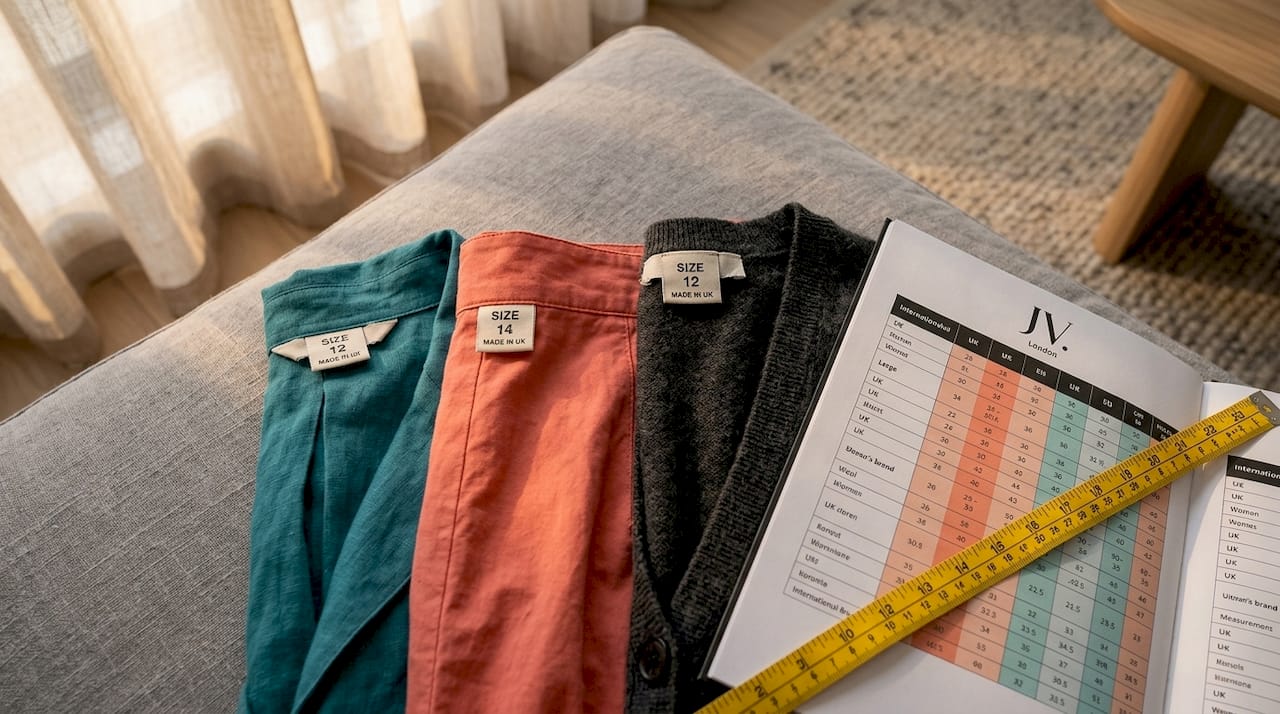
The discipline that actually reduces returns is comparing your personal measurements to each product’s specific size chart, not the generic UK size label. Brands publish individual size guides for a reason. Use them every single time, even for brands you have bought from before, because sizing can shift between collections.
Pro Tip: Some retailers offer fit tools built into the product page. These tools use your measurements and previous purchase history to recommend a size, and they are worth using whenever available.
2. Verify sellers before you pay
Counterfeit goods and outright scams are a genuine risk in UK fashion e-commerce, particularly on marketplace platforms and second-hand apps. Which? UK guidance warns that unusually low prices, new or blank seller profiles, and inconsistent product photos are the clearest red flags to watch for.
When shopping second-hand on platforms like Vinted or Depop, the GOV.UK 2026 guidance advises checking seller history for consistent, positive transactions and using the platform’s built-in payment system rather than transferring money directly. Direct bank transfers remove your buyer protection entirely.
For second-hand designer or branded pieces, request additional photos of labels, stitching, logo placement, and hardware before committing. Authentic items have consistent font weights on labels, clean stitching lines, and correctly spaced logos. If a seller refuses to provide extra photos, treat that refusal as a firm reason to walk away.
- Check the seller’s profile creation date and transaction history
- Look for reviews that mention item condition and accurate descriptions
- Avoid sellers who ask you to communicate or pay outside the platform
- Cross-reference product photos against official brand imagery online
Pro Tip: Pay with a credit card for purchases over £100 made directly through a retailer’s checkout. Section 75 protection gives your card provider joint liability with the retailer, but this protection does not apply when a marketplace or payment intermediary sits between you and the seller.
3. Know your return rights inside out
UK consumer law gives you more protection than most retailers advertise. Under the Consumer Contracts Regulations 2013, you have at least 14 days to cancel an online purchase from the day after you receive it. You must notify the retailer within that window, and you then have a further 14 days to physically return the item.
The Consumer Rights Act 2015 goes further. If goods are faulty or not as described, statutory rights give you up to 30 days to reject the item for a full refund, and up to six months to request a repair or replacement. No retailer’s own return policy can legally override these rights.
Here is what to do the moment an order arrives:
- Photograph the item immediately, including any damage, incorrect sizing labels, or discrepancies from the product listing.
- Keep all original packaging until you are certain you are keeping the item.
- Send your cancellation notice in writing, by email, so you have a timestamped record.
- Obtain proof of postage when returning, and keep it until your refund is confirmed.
Pro Tip: Record your order confirmation number, delivery date, and return tracking number in one place. Managing the cooling-off clock smartly means you never lose a refund because you missed a deadline by a day.
Some retailers have tightened their own return windows to as few as 14 or 28 days. Those policies apply to change-of-mind returns. For faulty or misdescribed goods, your statutory rights apply regardless of what the retailer’s policy states.
4. Spot genuine discounts and ignore misleading ones
A “was £80, now £30” banner is not automatically a bargain. Under ASA rules, promotional pricing claims must be substantiated against a genuine usual selling price, supported by historic evidence of the item actually selling at that higher price. Retailers who inflate a “was” price to make a discount look larger are in breach of advertising standards.
Promotional savings are not only a marketing matter. They are a legal compliance issue, and the ASA has ruled against multiple retailers for misleading Black Friday and sale claims. This means you should treat any dramatic discount with healthy scepticism.
| Discount type | Reliability indicator |
|---|---|
| “Was/now” price | Check how long the item sold at the original price before the sale |
| Percentage off | Verify against the retailer’s own product page history |
| Flash sale | Often genuine but time-limited; compare with competitor pricing |
| Bundle discount | Usually reliable; confirm individual item prices separately |
| Clearance pricing | Generally accurate; end-of-season stock at genuine reductions |
To verify a saving, search the product name on Google Shopping to compare prices across retailers. Browser extensions that track price history can also reveal whether a “sale” price is actually the item’s standard price in disguise.
5. Build a versatile wardrobe with a clear strategy
Buying trendy pieces without a plan leads to a wardrobe full of items that do not work together. The most effective online fashion shopping advice starts before you open any app: define your personal style clearly enough that you can describe it in three words. “Minimal, relaxed, and colourful” is a filter. “Nice clothes” is not.
A practical rule for every purchase is to ask whether you can wear the item in at least three different ways. A structured shopping routine that includes defining your style, checking measurements, reading reviews, and confirming return policies before purchase reduces both returns and impulse regret. This is the difference between a wardrobe that works and a rail of unworn pieces.
- Read customer reviews specifically for comments on fit, fabric weight, and colour accuracy
- Watch product videos where available; they reveal drape and movement that photos cannot
- Check the return policy before adding to basket, not after checkout
- Try items on at home immediately and make a decision within 24 hours rather than leaving them in a bag
Pro Tip: Develop a personal fit-and-policy checklist: measurements checked, size guide consulted, return window confirmed, payment method chosen. Running through this list takes under two minutes and reduces fashion returns significantly over time.
For affordable wardrobe building, explore how to shop affordably online and focus on pieces that serve multiple occasions rather than single-use trend items.
6. Use payment methods that protect you
How you pay is as important as what you pay for. Credit cards offer the strongest protection for UK online shoppers, with Section 75 covering purchases over £100 made directly with a retailer. For smaller purchases, PayPal’s buyer protection covers a broader range of transactions and is widely accepted across UK fashion platforms.
Avoid paying by bank transfer, even if a seller or small retailer requests it. Bank transfers offer no consumer protection, and recovering money from a fraudulent transfer is extremely difficult. Debit cards offer some protection through the Chargeback scheme, but this is a voluntary arrangement rather than a statutory right, making it less reliable than Section 75.
For marketplace purchases where Section 75 does not apply, use the platform’s own payment system. Platforms like Vinted and Depop hold funds in escrow until you confirm receipt, which gives you a meaningful window to raise a dispute if the item does not match the listing.
Key takeaways
Smart online fashion shopping in the UK requires measurement discipline, seller verification, and a clear understanding of your statutory rights before every purchase.
| Point | Details |
|---|---|
| Measure before you browse | Compare personal measurements to each product’s size chart, not the generic UK size label. |
| Verify sellers rigorously | Check seller history, use platform payment systems, and request extra photos for second-hand items. |
| Know your legal rights | The Consumer Contracts Regulations give you 14 days to cancel; the Consumer Rights Act covers faulty goods for up to 30 days. |
| Scrutinise discounts | ASA rules require “was” prices to reflect genuine historic selling prices; verify savings independently. |
| Pay with protection | Use a credit card directly with retailers for purchases over £100 to secure Section 75 coverage. |
Why preparation is the real fashion skill
I have spent years watching people treat online shopping as a spontaneous activity and then wonder why their wardrobes are expensive and unwearable. The truth is that the shoppers who consistently get it right treat each purchase like a small research project. They know their measurements off the top of their head. They check the size guide even for brands they have bought from a dozen times. They read the return policy before they fall in love with a product.
The discount verification piece is something most people still skip entirely. Seeing a “60% off” banner triggers an emotional response, and retailers know it. Taking 90 seconds to check whether that “was” price was ever real is one of the most underrated money-saving habits you can build.
My strongest advice for building a wardrobe you actually wear is to shop from a shortlist of retailers whose sizing you understand and whose return process you trust. That familiarity removes most of the friction and most of the risk. Once you find brands that fit your body and your budget consistently, loyalty pays off far more than chasing every new platform.
— Mykola
Shop with confidence at Jvwear
Jvwear’s JV London collection is built for exactly the kind of shopping this article describes: clear sizing information, free UK shipping, and a 30-day hassle-free return window that sits comfortably within your statutory rights. The range covers everything from the belted midi dress with wide sleeves to the linen co-ord set with wide-leg trousers, both of which tick the “wear it three ways” rule with ease. If you are building a versatile wardrobe with pieces that genuinely earn their place, browse the latest arrivals and apply everything you have just read.
FAQ
How long do I have to return online fashion purchases in the UK?
Under the Consumer Contracts Regulations 2013, you have 14 days from the day after delivery to notify the retailer of your cancellation, then a further 14 days to return the item. For faulty or misdescribed goods, the Consumer Rights Act 2015 gives you up to 30 days for a full refund.
How do I spot a fake or scam seller online?
Look for unusually low prices, newly created profiles with no transaction history, and photos that appear inconsistent or copied from other listings. GOV.UK 2026 guidance advises using platform payment systems rather than direct transfers and requesting additional authenticity photos before purchasing.
Does Section 75 protect all my online fashion purchases?
Section 75 applies to credit card purchases over £100 made directly with a retailer. It does not apply when a marketplace or payment intermediary sits between you and the seller, so always pay through the retailer’s own checkout where possible.
Are sale prices always genuine in UK online fashion?
Not always. ASA rules require retailers to substantiate “was” prices with evidence that the item genuinely sold at that price for a meaningful period. Use price-tracking tools or Google Shopping to verify whether a discount reflects a real reduction before purchasing.
Why do my online fashion orders often fit differently across brands?
UK size labels are not standardised across retailers, so a size 10 or 12 can vary considerably between brands. The most reliable approach is to compare your actual body measurements against each product’s individual size guide rather than relying on your usual label size.