Functional fashion is clothing and accessories designed to combine aesthetic appeal with purposeful features that address real-life human needs. The industry term for this is “functional apparel,” and it covers everything from moisture-wicking fabrics to thermal regulation and mechanical support. Unlike purely decorative dressing, functional fashion solves problems. It keeps you comfortable on a long commute, adapts from a work meeting to an evening out, and lasts far longer than a trend-driven purchase. For fashion enthusiasts aged 18–35 building a wardrobe that works as hard as they do, understanding functional fashion is the clearest starting point.
What does functional fashion mean in terms of design features?
Functional apparel is defined by purpose-driven engineering applied directly to garment construction. That means the fabric, the cut, and the details all serve a specific human need, not just a visual one. A dress with hidden deep pockets, a blazer with wrinkle-resistant fabric, or a top with stretch panels built for movement are all examples of functional fashion explained through their physical design.
The core material features that distinguish functional fashion include:
- Breathable, moisture-wicking fabrics that regulate body temperature during active or urban use
- Four-way stretch textiles that allow full range of movement without distorting the garment’s shape
- Wrinkle-resistant finishes that keep professional pieces looking polished after hours of wear
- Thermal regulation layers that adapt to shifting temperatures throughout the day
Beyond fabric, the design details matter just as much. Hidden deep pockets integrated invisibly into a silhouette, adjustable closures that change fit across different body positions, and reinforced seams that withstand daily use are all hallmarks of the category.
| Feature category | Design element | Practical benefit |
|---|---|---|
| Fabric technology | Moisture-wicking, stretch | Comfort and movement |
| Construction | Reinforced seams, durable stitching | Longevity and repairability |
| Garment details | Hidden pockets, adjustable closures | Versatility and convenience |
| Finish | Wrinkle resistance, weather adaptability | Low-maintenance everyday wear |
Functional fashion is broader than athleisure. It includes professional workwear, commuting pieces, and accessories designed to solve everyday problems while maintaining polish. A shoe built for long city walks, a bag with secure internal organisation, or a midi dress that packs flat without creasing all qualify.
Why is functional fashion gaining popularity right now?
Functional fashion represents a rediscovery of core values: functionality, genuineness, and purpose over purely aesthetic dressing. Consumers are moving away from buying trend-driven pieces that serve one occasion and then sit unworn. The shift is towards fewer, better items that adapt across contexts.
Several lifestyle factors are driving this change:
- Hybrid working means one outfit must work for a video call, a commute, and a lunch meeting
- Urban living demands clothing that handles walking, public transport, and varied weather
- Active social lives require pieces that transition from daytime errands to evening plans
- Budget awareness pushes shoppers to calculate cost-per-wear rather than upfront price
Modern consumers act as editors, selecting versatile, multi-situation items rather than high volumes of single-use pieces. This is a direct rejection of fast fashion’s model, which prioritises seasonal novelty over durability. Functional fashion prioritises longevity, with reinforced seams and durable fabrics designed for repair and extended use. That contrast is significant: a well-made functional piece worn 200 times costs far less per wear than a trend item worn twice.
Pro Tip: When building a functional wardrobe, choose neutral tones and clean lines first. These pieces layer and combine more easily, giving you more outfit combinations from fewer garments. Read more about functional fashion trends and how they are shaping modern style.
How does functional fashion promote inclusivity and adaptive design?
Functional fashion includes adaptive wear that meets the needs of people with disabilities. This is one of the most significant and underreported aspects of the movement. Adaptive design focuses on clothing that accommodates real-life physical experiences rather than forcing the wearer to adapt to a standard garment.
The design strategies that make adaptive wear functional include:
- Magnetic closures replacing buttons or zips that require fine motor control
- Side zippers allowing dressing while seated or with limited mobility
- Adjustable hems and waistbands that accommodate different body positions throughout the day
- Open-back or wrap designs that simplify dressing without assistance
True functionality embeds accessibility into the design philosophy from the start, rather than treating it as an afterthought. The goal is to reduce daily friction and enhance independence without compromising style. For a deeper look at how adaptive clothing alternatives are evolving within this space, the conversation around inclusive design is worth following closely.
Adaptive fashion challenges standardisation in production, requiring rethinking patterns, access points, and sizing. This demands collaboration with disabled communities during the design process, not after. The result is clothing that lasts longer, fits better, and serves a wider range of people. That is not a niche concern. It is the direction the entire industry is moving.
Pro Tip: When shopping for functional pieces, look for adjustable elements such as drawstring waists, wrap ties, or elasticated panels. These features serve everyone, not just those with specific physical needs, and they extend the wearable life of a garment significantly.
How to wear functional fashion in your everyday wardrobe
Functional garments often feature modularity and hidden functionality, allowing a single item to adapt to multiple environments. A midi dress with an adjustable tie waist, for example, reads as polished in a meeting and relaxed at dinner. The key is choosing pieces where the functional detail is invisible unless you need it.
“Functionality and creativity are not opposing forces. Modern functional fashion represents innovative tailoring and material use, combining expressiveness with wearability rather than choosing between them.” Fashion industry perspective on design philosophy
Practical styling approaches for incorporating functional fashion include:
- Start with your commute. Choose a dress or trouser that moves freely, resists creasing, and works with flat sandals or low heels. A belted midi dress with wide sleeves, for instance, offers both comfort and a polished silhouette across a full working day.
- Layer with purpose. A cardigan or lightweight jacket adds thermal regulation without adding bulk. Choose one with pockets to carry essentials hands-free.
- Choose accessories that work. A crossbody bag keeps your hands free on a commute. A structured clutch transitions to evening. Both serve a function beyond decoration.
- Think in outfits, not items. A two-piece set that mixes and matches gives you three or four outfit combinations from two garments. That is the functional wardrobe principle in practice.
Consumers increasingly look for cost-per-wear and multi-occasion utility when selecting pieces. Travel adaptability is another growing priority: garments that pack flat, resist creasing, and work across climates reduce the need for a separate travel wardrobe entirely. For practical guidance on building this kind of wardrobe without overspending, the guide to affordable wardrobe essentials covers the key pieces worth investing in.
Key takeaways
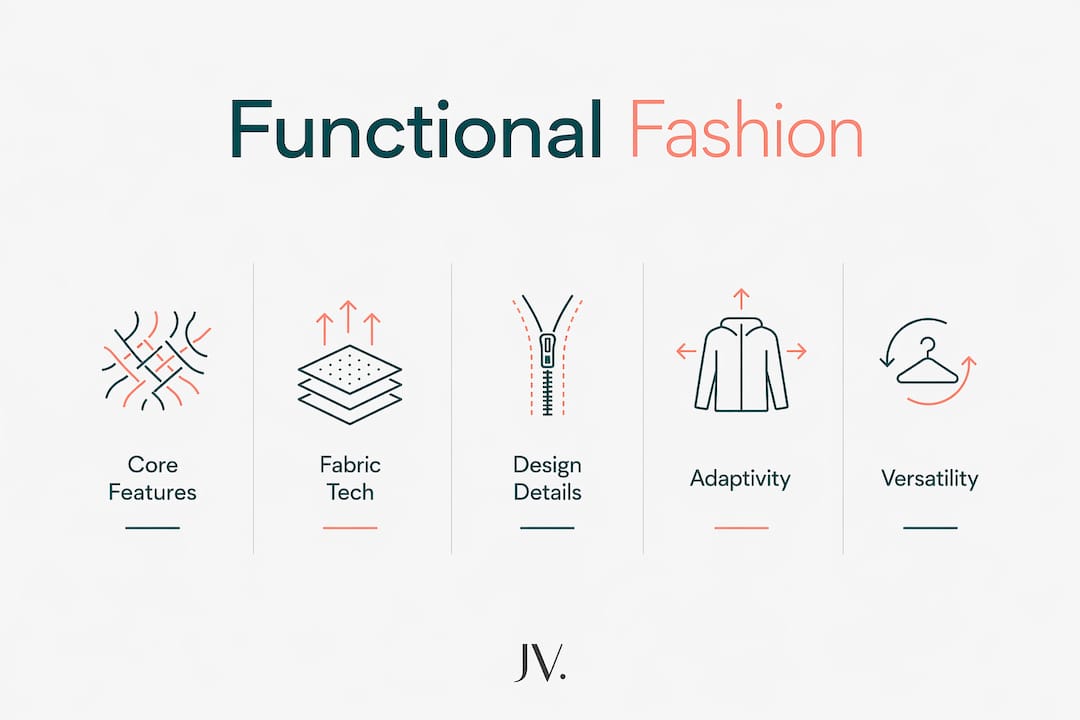
Functional fashion is clothing engineered to solve real-life problems through purposeful design, durable materials, and adaptable construction, without sacrificing style.
| Point | Details |
|---|---|
| Core definition | Functional fashion combines aesthetic appeal with purpose-driven features like stretch fabrics, moisture management, and hidden pockets. |
| Distinction from fast fashion | Functional pieces prioritise durability and repairability, making them longer-lasting and better value per wear. |
| Inclusivity matters | Adaptive design features such as magnetic closures and side zippers make functional fashion accessible to a wider range of wearers. |
| Styling principle | Choose modular, versatile pieces that transition across occasions without requiring a full outfit change. |
| Consumer shift | Modern shoppers act as editors, selecting fewer, better items with multi-occasion utility rather than trend-driven volume. |
Functional fashion is a choice, not a compromise
I have spent years watching the fashion conversation swing between extremes: pure aesthetics on one side, pure utility on the other. The most interesting thing happening right now is that the divide is closing, and it is closing from the consumer side, not the designer side.
What strikes me most is how the functional fashion movement reframes what “good taste” actually means. For a long time, caring about pockets or wrinkle resistance felt like admitting defeat, as if practicality was the enemy of style. That idea is collapsing. The most considered wardrobes I see belong to people who ask “does this work for my life?” before they ask “does this look good?” The answer to both questions is usually the same piece.
The future of this movement sits in two places: wearable technology integration and deeper inclusivity. Neither is fully realised yet. Garments with embedded temperature regulation or health monitoring are still niche. Adaptive design still reaches too small a proportion of the market. But the direction is clear, and the brands paying attention now will define what functional fashion looks like in five years.
My honest view is this: functional fashion is not a trend. It is a correction. The industry overshot into disposability and pure spectacle, and consumers are pulling it back towards purpose. That is a good thing for wardrobes, for budgets, and for the planet.
— Mykola
Jvwear and the functional fashion wardrobe
Jvwear’s collections at JV London are built around the principles that define functional fashion: versatility, comfort, and pieces that earn their place in a real wardrobe.
The cardigans range is a strong starting point. A well-chosen cardigan adds thermal regulation, layering flexibility, and a polished finish to almost any outfit. For a complete functional set, the two-piece midi dress set with a button-front cardigan delivers exactly the kind of modular, multi-occasion dressing that functional fashion is built on. Pair either with a quilted crossbody bag for hands-free practicality that does not compromise on style. Free UK shipping and 30-day returns mean you can shop with confidence.
FAQ
What is the definition of functional fashion?
Functional fashion is clothing and accessories designed with purpose-driven features such as moisture management, stretch fabrics, hidden pockets, and wrinkle resistance, while maintaining aesthetic appeal. It prioritises real-life wearability over purely decorative design.
Is functional fashion the same as athleisure?
No. Functional fashion is broader than athleisure and includes professional workwear, commuting pieces, and accessories engineered to solve everyday problems. Athleisure is one subcategory within the wider functional apparel movement.
Is functional fashion sustainable?
Functional fashion supports sustainability by prioritising durability, repairability, and longevity over seasonal disposability. Reinforced seams, durable fabrics, and versatile designs reduce the frequency of replacement purchases, which lowers overall consumption.
What are examples of functional fashion pieces?
Examples include wrinkle-resistant blazers, dresses with hidden deep pockets, moisture-wicking tops, adjustable-waist trousers, crossbody bags with secure closures, and shoes designed for long-distance walking without sacrificing style.
How does adaptive design fit into functional fashion?
Adaptive design is a key segment of functional fashion, focusing on clothing that accommodates diverse physical needs through features like magnetic closures, side zippers, and adjustable hems. These design choices reduce daily friction and enhance independence for a wider range of wearers.