Tracking online fashion discount codes is the practice of monitoring, verifying, and applying promotional vouchers to reduce the price you pay for clothing online. Done well, it turns sporadic savings into a reliable habit. Fast fashion retailers carry 60–70% gross margins, which means they can afford to discount heavily without losing money. That margin is your opportunity. Brands like Jvwear regularly run promotions on dresses, sets, and accessories, making it worth knowing exactly when and how to catch those offers before they expire.
How to track online fashion discount codes with the right tools
The most reliable way to find fashion promo codes is to combine browser extensions with community-verified platforms. These two approaches cover different gaps. Extensions work automatically at checkout, while community platforms let you search for codes before you even add items to your basket.

Browser extensions that find codes automatically
Browser extensions like Capital One Shopping, SimplyCodes, and RetailMeNot scan retailer pages in real time and apply verified codes at checkout without any manual searching. RetailMeNot has paid shoppers £85 million in cashback, which shows the scale of savings these tools generate across millions of transactions. The key advantage is automation. You shop normally, and the extension tests every available code in seconds. That removes the frustration of copying and pasting dead codes one by one.
Community-verified platforms work differently. Shoppers submit codes they have used successfully, and the platform displays a success rate and expiry date alongside each one. This crowd-sourced validation means you spend less time on codes that stopped working last week.
| Feature | Browser extensions | Community platforms |
|---|---|---|
| Auto-apply at checkout | Yes | No |
| Real-time code verification | Yes | Partial |
| Community success ratings | No | Yes |
| Price drop alerts | Some | Rare |
| Works before checkout | No | Yes |
Pro Tip: Before relying on any code, check the platform’s “last used” date. A code flagged as used within the past 48 hours has a far higher chance of working than one last tested three months ago.
When do the best fashion discounts actually appear?
Fashion retail follows a predictable markdown cycle, and knowing it lets you time purchases for maximum savings. The first markdown triggers after 8–12 weeks of full-price selling, typically cutting prices by 10–25%. A second markdown follows later in the season, dropping prices by 30–40%. Final clearance pushes discounts to 50–60% or beyond.
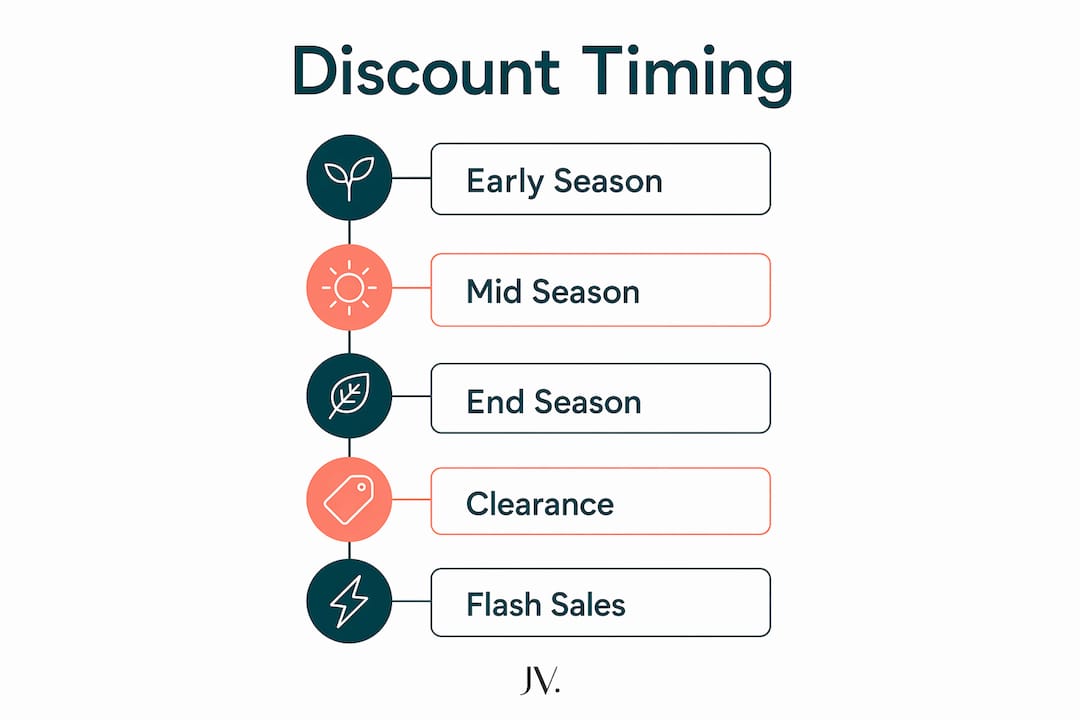
The risk of waiting for final clearance is real. Stock thins out fast at that stage, and popular sizes and colours disappear first. Waiting for the deepest cut often means missing the item entirely. The sweet spot for most shoppers is the second markdown, where savings are substantial but selection is still good.
Understanding what counts as a genuinely good deal also matters. 50% or more off is a strong deal on fast fashion, while 30% or more is considered good for higher-end or premium pieces. Discounts beyond 70% on fast fashion can signal liquidation stock or quality concerns, so treat those with caution.
Key timing strategies to keep in mind:
- End of season: january and july bring the deepest clearance discounts in UK fashion retail.
- Mid-season sales: look for 10–25% off codes roughly 8–10 weeks after a new collection launches.
- Payday weekends: many retailers drop short-term promo codes around the last Friday of the month.
- Sign-up offers: first-order discount codes are almost always available for new subscribers and are worth using on a planned purchase rather than an impulse buy.
- Flash sales: these typically last 24–48 hours and are announced via email newsletters or social media, so subscribing to brand updates pays off.
Pro Tip: Use a price history tool such as CamelCamelCamel (for Amazon) or a browser extension with built-in price tracking to confirm whether a “sale” price is genuinely lower than the item’s recent average. Retailers sometimes inflate the original price before applying a discount.
Step-by-step method to apply discount codes for maximum savings
A clear process removes guesswork and stops you from missing savings at checkout. Follow these steps every time you shop for online clothing deals.
-
Identify the item and note the full price. Write down or screenshot the original price before any sale is applied. This gives you a baseline to judge whether a code actually improves the deal.
-
Search for active codes before opening your basket. Visit a community-verified platform and search the retailer’s name. Filter by most recently used to avoid wasting time on expired vouchers.
-
Install a browser extension as a backup. If no community codes are available, an extension like SimplyCodes or Capital One Shopping will scan for codes automatically when you reach the checkout page.
-
Check for identity-based discounts. Student, military, and first-responder discounts typically offer around 15% off and stack independently of seasonal sales. These are verified through platforms like SheerID and do not require a promo code at checkout.
-
Apply discounts in the correct order. Apply percentage-off coupons first, then threshold discounts, and cashback last. Applying cashback before a percentage-off coupon reduces the base amount the coupon works on, which lowers your total saving.
-
Add loyalty perks before confirming. Loyalty programmes offer consistent benefits like free shipping, birthday discounts, and early sale access. These often deliver better long-term value than one-off promo codes, so activate any points or perks before you pay.
-
Confirm the final price before submitting payment. Check that every discount has applied correctly. Some codes have minimum spend thresholds or category exclusions that only become visible at the final checkout screen.
Common mistakes that cost you money when using fashion vouchers
The biggest error shoppers make is trusting headline discount figures without checking the detail. “Up to X% off” is a marketing tactic applied to the single most discounted item in a range, not the whole collection. The dress you want may be 10% off while the headline shouts 70%. Always check the actual discount on the specific product you intend to buy.
Other frequent mistakes include:
- Using expired codes without checking. A code that worked last month may have a hard expiry date. Always verify the “last used” timestamp on community platforms before attempting it.
- Ignoring shipping and returns costs. A £10 discount means nothing if the retailer charges £8 for delivery and does not offer free returns. Factor total cost into every comparison.
- Stacking discounts in the wrong order. Applying cashback before a percentage-off coupon reduces the base price the coupon calculates from, which shrinks your saving. The correct discount stacking order is percentage coupons first, then cashback.
- Mistiming purchases. Buying at the first markdown when a second is imminent, or waiting so long for clearance that your size sells out, both cost you. Use the markdown cycle knowledge from the previous section to time your purchase deliberately.
- Falling for fake codes. Some websites publish invented codes to generate traffic. If a code appears on a site with no user ratings, no timestamps, and no success percentage, skip it.
Retail experts advise shoppers to calculate the effective discount on the specific item they want rather than comparing headline percentages between stores. That single habit eliminates most of the confusion around fashion discount vouchers.
Key takeaways
Tracking fashion discount codes works best when you combine automated tools, correct stacking order, and an understanding of the markdown cycle to buy at the right moment.
| Point | Details |
|---|---|
| Use tools together | Pair browser extensions with community platforms to cover both automatic and manual code finding. |
| Know the markdown cycle | The second markdown (30–40% off) offers the best balance of savings and stock availability. |
| Stack discounts correctly | Apply percentage-off coupons before cashback to maximise the total reduction at checkout. |
| Check actual product discounts | “Up to X% off” applies to select items only; always verify the discount on your chosen product. |
| Factor in total cost | Include delivery and return costs when comparing deals across different retailers. |
Why patience and process beat luck when chasing cheap online fashion offers
I have watched shoppers spend more time hunting for discount codes than the codes actually save them. The behaviour is understandable. There is a genuine thrill in finding a working voucher, but without a process it becomes a time sink rather than a money-saving habit.
What I have found actually works is treating discount tracking like a short checklist rather than a treasure hunt. You install one good browser extension, bookmark one reliable community platform, and subscribe to email lists from the brands you buy from regularly. That setup takes twenty minutes once and then runs on autopilot. The extension handles checkout automatically, the email list delivers seasonal codes directly to you, and the community platform fills the gaps.
The harder lesson is knowing when not to wait. I have seen shoppers delay a purchase for weeks hoping for a deeper discount, only to find their size gone at final clearance. The markdown ladder in apparel moves in steps, and each step removes stock. If you need the item and the second markdown has landed, buy it. The difference between 40% and 55% off is rarely worth the risk of losing the piece entirely.
Loyalty programmes are the most underrated tool in this space. Free shipping alone, compounded across a year of purchases, often outperforms the occasional promo code. Build your discount strategy around consistent perks first, then layer codes on top. That combination, applied through the savvy shopping tips mindset, is what separates shoppers who save reliably from those who save occasionally.
— Mykola
Fresh fashion at Jvwear, with discounts worth tracking
Jvwear stocks a curated range of women’s clothing and accessories designed for everyday wear, from midi and maxi dresses to sets, tops, and shoes. The catalogue is built for shoppers who want current styles without paying full price every time.
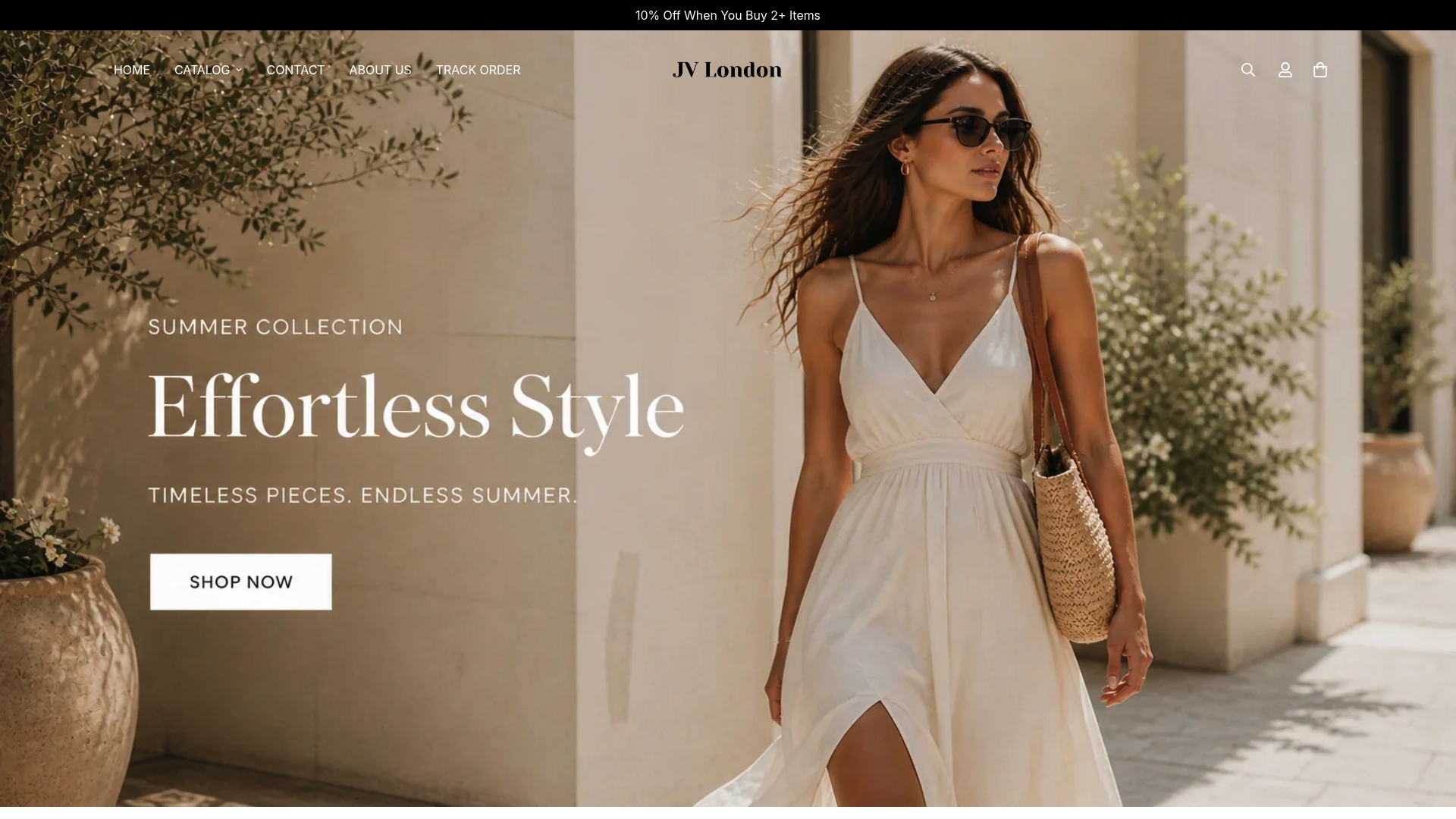
Jvwear runs regular promotions across its collections, including discounts on bulk purchases and free UK shipping. The cardigans collection is a strong starting point if you are building a versatile wardrobe on a budget, with pieces that work across multiple outfits. For a complete look, the two-piece midi dress set combines style and value in a single purchase. Sign up to the Jvwear newsletter to receive discount codes directly and be among the first to know when new promotions go live.
FAQ
What does it mean to track fashion discount codes?
Tracking fashion discount codes means actively monitoring verified promotional vouchers across browser extensions, community platforms, and brand newsletters to apply savings at checkout. The goal is to catch active codes before they expire.
How do online fashion discounts work?
Retailers apply markdowns in stages across a season, starting at 10–25% off mid-season and reaching 50–60% or more at final clearance. Promo codes can be applied on top of sale prices, depending on the retailer’s terms.
What is the correct order to stack fashion discounts?
Apply percentage-off coupons first, then threshold discounts, and cashback last. This order ensures each discount calculates from the highest possible base price, giving you the largest total saving.
Are “up to X% off” claims reliable?
No. “Up to X% off” applies to the most heavily discounted item in a range, not every product. Always check the actual discount on the specific item you want before assuming the headline figure applies.
When is the best time to use seasonal fashion coupon codes?
The second markdown, typically 30–40% off and occurring late in the season, offers the best balance of genuine savings and available stock. january and july are the strongest months for clearance discounts in UK fashion retail.