Fit is the single most important factor in minimalist fashion, determining whether a simple garment looks effortless or forgettable. Where maximalist dressing relies on colour, print, and embellishment to create interest, minimalism strips all of that away. What remains is the relationship between fabric and body. Get that relationship right, and a plain white shirt becomes a statement. Get it wrong, and even the most expensive piece looks cheap. This guide explains why fit matters so profoundly in a pared-back wardrobe, and how to use it as your primary style tool.
Why the role of fit in minimalist fashion is non-negotiable
Fit is the invisible architecture of style. It influences how others perceive you more than colour or branding ever could, yet most people treat it as an afterthought. In minimalist dressing, that oversight is costly. When a garment has no decorative detail to distract the eye, the silhouette carries everything.
Fit acts as a non-verbal language in fashion. Sharp tailoring signals precision and control. An oversized silhouette communicates ease or deliberate experimentation. Both are valid choices, but they must be intentional. Wearing something oversized because it was the only size available is not the same as choosing a relaxed silhouette with purpose.
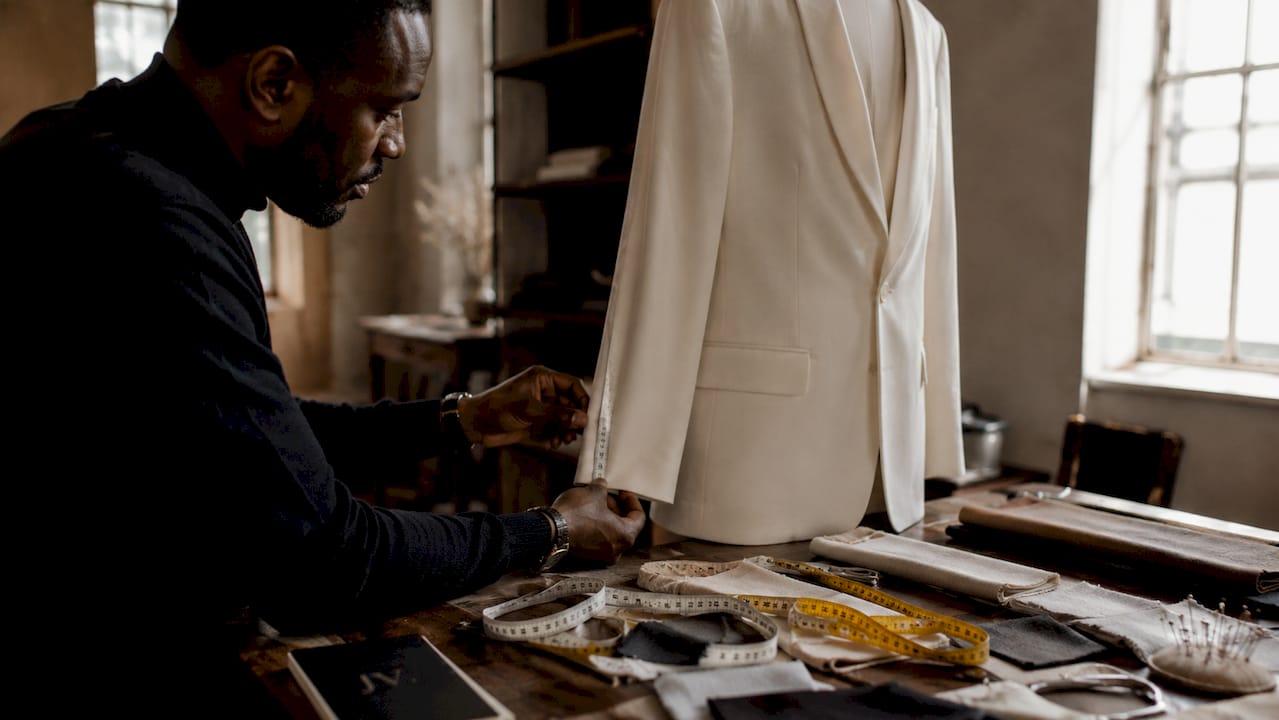
The precision required in minimalism is unforgiving. Small fit details, such as a 3 centimetre difference in trouser length or a shoulder seam sitting 1 centimetre off, separate an effortlessly chic look from a basic or messy one. That margin is tiny. Its visual impact is not. This is why understanding how fit affects minimalist style is the first step towards building a wardrobe that actually works.
Clothing fit involves adaptation to the body, allowing ease of movement, minimal wrinkles, and psychological comfort. These three qualities are the foundation of satisfaction in a minimalist wardrobe. When a garment fits well, you stop thinking about it. That freedom is exactly what minimalism promises.
How fit shapes silhouette and confidence in minimalist outfits
Tailored minimalist pieces do more than look good. Tailored pieces convey posture enhancement and clear proportion, which aligns directly with minimalism’s philosophy of simplicity and clarity. A well-fitted blazer, for example, pulls the shoulders back and creates a clean vertical line from collar to hem. That effect costs nothing extra once the fit is correct.
The psychological dimension matters just as much as the visual one. When clothes fit the body correctly, wearers report greater confidence and ease. That confidence changes posture, which in turn changes how the garment drapes. Fit and confidence reinforce each other in a loop that no amount of expensive fabric can replicate.
Consider how fit affects minimalist style across three common garment types:
- Structured blazer: Shoulder seams must sit exactly at the shoulder point. A seam that drops even slightly creates a slumped appearance. The body of the blazer should skim the torso without pulling.
- Wide-leg trousers: The waistband must sit flat without gaping. The break at the hem should be deliberate, either a clean half-break or a full stack, never accidental.
- Fitted midi dress: The bust, waist, and hip points must align with the body’s natural curves. A dress that pulls across the bust or bags at the waist undermines the entire silhouette.
Pro Tip: Before buying any minimalist piece, check the shoulder fit first. Shoulders are the most expensive alteration a tailor can make. Everything else is relatively straightforward to fix.
Professional tailoring is more accessible than most people assume. Minor alterations typically cost between £15 and £40 and can boost the perceived value of a garment by 200–300%. That return on investment makes tailoring one of the most cost-effective tools in a minimalist wardrobe. A £30 dress that fits perfectly reads as far more expensive than a £150 dress that does not.
Common fit challenges in minimalist wardrobes and how to fix them
The most common mistake in minimalist dressing is buying a garment that fits in one dimension but fails in another, then hoping tailoring will resolve it. Tailoring has real limits. If the base pattern structure of a garment is wrong, particularly at the shoulder or armscye (the armhole), corrections become prohibitively expensive. The garment effectively needs to be rebuilt.
The practical solution is to buy pieces that fit your fundamental dimensions off the rack, then use tailoring for minor refinements. Here is a reliable sequence for evaluating fit before purchase:
- Check the shoulders first. The seam must sit at the natural shoulder point. This is the one dimension that cannot be altered cheaply.
- Assess the chest or bust. There should be no pulling, gaping, or excess fabric. Slight looseness here is fixable; significant tightness usually is not.
- Evaluate the waist. A tailor can take in or let out a waist with relative ease. This is one of the most cost-effective alterations available.
- Look at the hem length. Hemming is the simplest and least expensive alteration. Do not let an otherwise perfect garment go unworn because the hem sits 5 centimetres too long.
- Check sleeve length. Sleeves can be shortened easily. Lengthening is only possible if there is sufficient seam allowance, so check before buying.
Pro Tip: When shopping online, sizing inconsistencies across brands make fit unpredictable. Understanding why sizes vary between brands helps you interpret size guides more accurately and reduces the need for returns.
Improper fit disrupts minimalist harmony in a specific way. Because there is no pattern or embellishment to draw the eye away from structural problems, every wrinkle, pull, and gap is visible. A poorly fitted minimalist outfit does not just look wrong. It looks unfinished, which is the opposite of what minimalism intends.
How to choose minimalist pieces with fit in mind
Selecting garments for a minimalist wardrobe requires a different evaluation process than general shopping. The goal is not just to find something that fits today. The goal is to find pieces that work across multiple contexts, seasons, and combinations. Minimalists prioritise fit and quality over quantity, because these factors ensure longevity and versatility.
Start with proportion. Proportion is the relationship between the garment’s volume and your body’s natural lines. A cropped top pairs with high-waisted trousers because the proportions balance each other. A boxy shirt works over slim trousers for the same reason. When proportion is off, the outfit reads as unresolved, regardless of how neutral the colours are.
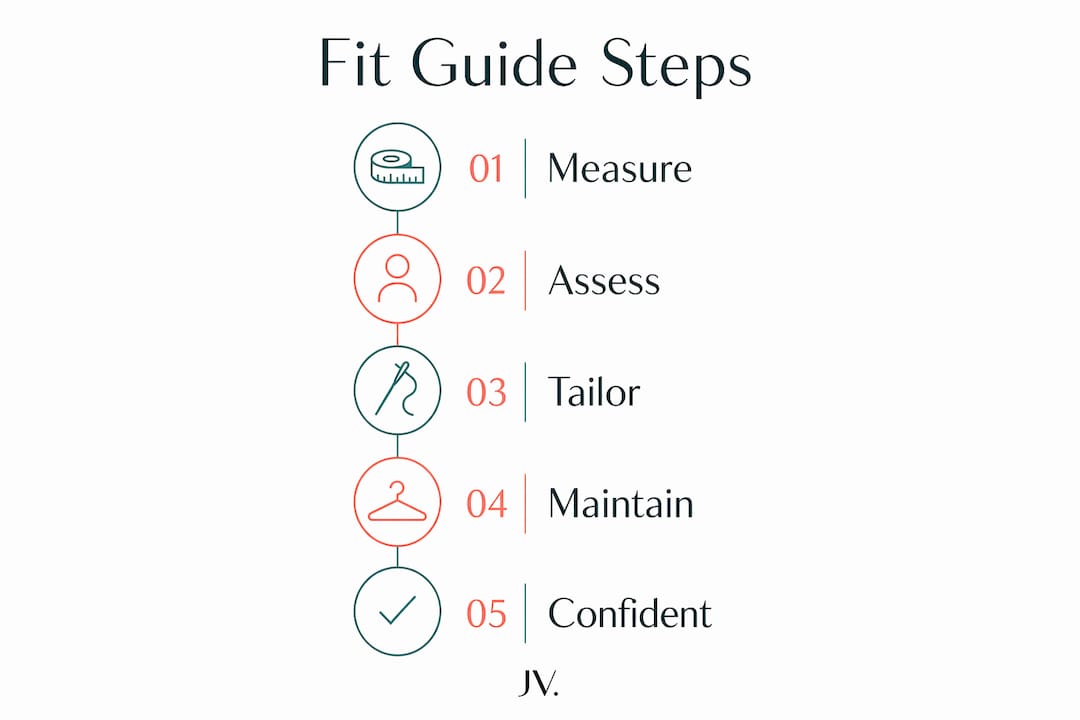
Texture contrast is the second consideration. Minimalist outfits benefit from texture contrast, but only when the base fit is correct. A ribbed knit paired with a smooth satin skirt creates visual interest without colour or print. That contrast only reads as intentional when both garments fit well. If either piece is pulling or bagging, the texture detail disappears into the noise of a bad fit.
When evaluating a new piece, ask three questions:
- Does this fit my shoulders, chest, and waist without alteration, or with only minor tailoring?
- Does this coordinate with at least three items already in my wardrobe?
- Will this still work in two years, or is it tied to a specific trend?
Staple minimalist items with strong fit characteristics include the classic white shirt, the structured blazer, the straight-leg or wide-leg trouser, and the fitted midi dress. Each of these works across multiple occasions and styling combinations. You can explore versatile minimalist dress styles that demonstrate how a single well-fitted piece can carry an entire outfit. The everyday outfit building blocks approach reinforces this: fewer pieces, better fit, more combinations.
Fabric choice also affects how fit reads. Structured fabrics like cotton poplin, ponte, and wool crepe hold their shape and show fit clearly. Drapey fabrics like viscose and silk are more forgiving but require precise fit at the shoulders and bust to avoid looking shapeless. Understanding how colour, fabric, and fit interact helps you make smarter purchasing decisions from the start.
Practical tips to preserve fit and garment longevity
A well-fitted garment only stays that way with proper care. Fabric care directly affects garment structure, and structure directly affects fit. These are not separate concerns.
- Wash at lower temperatures. Heat causes fibres to contract, which shortens hems, tightens waistbands, and distorts shoulder seams. Most minimalist staples in cotton, wool, or viscose benefit from a cold or 30°C wash.
- Air dry where possible. Tumble drying accelerates fabric breakdown and causes shrinkage. Hanging garments to dry also helps them retain their natural shape.
- Store knitwear folded, not hung. Hanging knits causes them to stretch at the shoulders and distort the overall silhouette. Fold and stack them to preserve their original proportions.
- Schedule minor tailoring touch-ups seasonally. A waistband that has stretched slightly, or a hem that has dropped, can be corrected quickly and cheaply. Leaving these issues unaddressed compounds them over time.
- Know when to replace rather than repair. When a garment has lost its structural integrity, meaning the fabric has thinned, the seams have weakened, or the shape no longer responds to tailoring, it is time to replace it. Minimalism is not about keeping things indefinitely. It is about keeping things that work.
Layering in cooler months introduces a specific fit challenge. Adding a layer underneath a fitted blazer or structured coat changes the garment’s proportions. Buy outerwear with layering in mind, allowing slightly more room in the shoulders and chest to accommodate a mid-layer without distorting the silhouette.
Key takeaways
Fit is the primary driver of minimalist style, and every garment decision should begin with how well it fits the body’s fundamental dimensions.
| Point | Details |
|---|---|
| Fit before everything else | Check shoulders and bust before any other dimension, as these are the costliest to alter. |
| Tailoring is cost-effective | Minor alterations costing £15–£40 can increase a garment’s perceived value by 200–300%. |
| Proportion creates cohesion | Balance volume across top and bottom to keep minimalist outfits looking resolved. |
| Fabric care preserves fit | Washing at low temperatures and air drying protects garment structure over time. |
| Buy for versatility | Each new piece should coordinate with at least three existing items in your wardrobe. |
Fit is the one thing I stopped compromising on
I spent years buying clothes that were almost right. Almost the right length, almost the right shoulder width, almost the right waist. I told myself the fabric was beautiful or the price was too good to pass up. The result was a wardrobe full of pieces I never quite reached for.
The shift happened when I started treating fit as a non-negotiable rather than a nice-to-have. Not a single garment enters my wardrobe now unless the shoulders sit correctly. Everything else I can address with a tailor for less than the cost of a decent lunch. That discipline sounds restrictive. In practice, it is the opposite. Every piece I own works with every other piece, because they all share the same quality of fit.
The mistake I see most often is people buying minimalist pieces that are technically the right size but wrong for their specific proportions. A size 12 in one brand is not the same as a size 12 in another. Fit is not about the label. It is about how the garment interacts with your particular body. Once you accept that, shopping becomes much simpler and much more satisfying.
Minimalism is often sold as a philosophy about having less. I think that misses the point. It is a philosophy about having exactly what works. Fit is how you define “works.”
— Mykola
Jvwear’s minimalist pieces, built around fit
Jvwear’s collection is designed around the principle that a well-fitted piece does more work than ten poorly fitted ones.
The cardigan range at Jvwear offers structured layering pieces cut to sit correctly at the shoulder and drape cleanly through the body, making them ideal for building minimalist outfits across seasons. For a complete look that removes the guesswork from proportion, the two-piece midi dress set pairs a fitted midi dress with a button-front cardigan, both cut to work together as a cohesive unit. Free UK shipping and 30-day hassle-free returns mean you can assess fit at home without pressure.
FAQ
Does fit really matter more than colour in minimalist fashion?
Fit matters more than colour in minimalist fashion because there is no print or embellishment to redirect the eye. A poorly fitted garment in a perfect neutral still reads as unresolved.
What is the most important fit dimension to check when buying minimalist pieces?
The shoulder seam is the most critical dimension to check. It is the most expensive alteration a tailor can make, so buying pieces that fit correctly at the shoulder from the start saves significant cost.
How much does tailoring typically cost for minimalist wardrobe adjustments?
Minor alterations such as hemming or waist suppression typically cost between £15 and £40. These small investments can increase a garment’s perceived value by 200–300%.
Can oversized fits work in a minimalist wardrobe?
Oversized fits work in minimalist dressing when chosen deliberately for proportion and balance. An oversized shirt paired with slim trousers creates intentional contrast. Oversized pieces that simply do not fit undermine the clean lines minimalism requires.
How do I maintain garment fit over time?
Wash at low temperatures, air dry where possible, and schedule minor tailoring touch-ups each season. Storing knitwear folded rather than hung also preserves shoulder shape and overall silhouette.