Most sizing problems come from comparing your body to a label rather than to the garment itself. Measure a well-fitting item you already own, compare those dimensions to the brand’s garment measurements, and you will sidestep the majority of fit failures before checkout.
The three root causes of online clothing sizing common errors are: a mismatch between body measurements and garment dimensions, vanity sizing and inconsistent brand grading, and fabric behaviour that changes how a labelled size actually wears. Fix all three and returns drop sharply.
Immediate actions you can take right now:
- Lay a favourite top or dress flat and measure its width at the bust, waist, and hips. These are your reference half-measurements.
- On any product page, scroll past the S/M/L chart to find the garment measurements table. Compare half-widths directly.
- Check the model’s height and the size she is wearing. If the brand does not list this, treat the fit as unknown.
- Favour retailers with free UK returns and a clear 30-day window, so a size experiment costs you nothing.
What this article covers: the ten most frequent sizing errors with one-line fixes, a step-by-step measuring method, how to read a size chart properly, fabric and construction factors, a product-page audit checklist, returns strategy, technology tools brands use, and a professional checklist for e-commerce teams.
Pro Tip: According to Miolook, measuring a garment that already fits reduces unsuccessful purchases more reliably than self-measurement alone, because it removes posture and tape-tension variables from the equation.
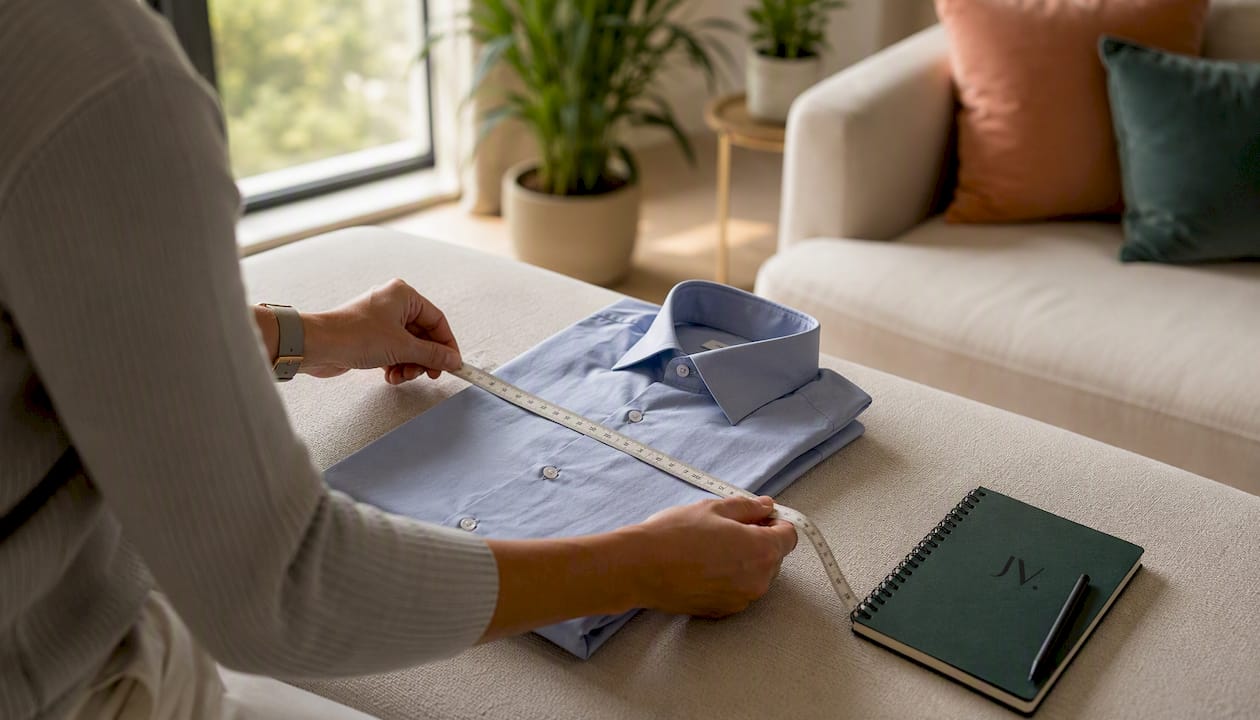
Table of Contents
- 1. You trust the size label instead of the measurements
- 2. You measure your body instead of a garment
- 3. You measure at the wrong body points
- 4. You ignore the garment’s critical area
- 5. You skip the size chart and rely on brand familiarity
- 6. You confuse regional size conversions
- 7. You misread stretch and fabric behaviour
- 8. You use model photos without checking the model’s height and size
- 9. You misinterpret fit descriptions
- 10. You overlook customer reviews as a sizing tool
- How to measure correctly so your clothes fit first time
- How to read a size chart without being misled
- Why the same labelled size fits differently across garments
- What to check on a product page before you add to cart
- Returns and buying strategies that cut fit risk
- Technology brands use for sizing: what it actually delivers
- A practical checklist for brands and e-commerce teams
- The evidence behind these recommendations
- Key takeaways
- The sizing problem brands keep ignoring
- Shop with confidence at Jvwear
- Further reading and authoritative sources
1. You trust the size label instead of the measurements
The label says 12. You are a 12. The dress arrives and the shoulders are misaligned. This is the single most common online sizing mistake, and it happens because size labels carry no standardised meaning across brands. There is no universal sizing standard, so the same numeric size can vary significantly in bust measurement between major brands.
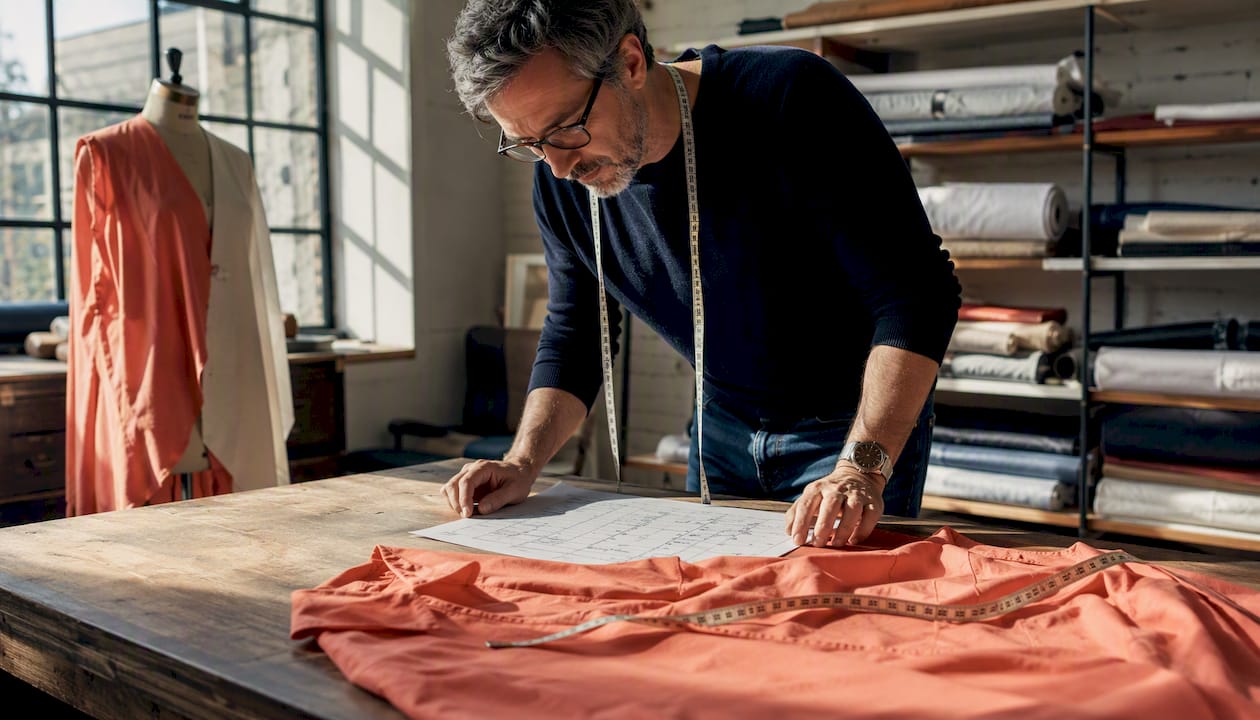
Fix: Ignore the label until you have compared garment measurements to your reference half-measurements.
2. You measure your body instead of a garment
Self-measurement sounds logical, but it introduces errors at every step: tape tension, posture, breathing, and the angle of the tape all shift the number. Measuring a garment that fits on a flat surface removes all of those variables and gives you a consistent half-width you can compare directly to the brand’s chart.
Fix: Lay a well-fitting item flat, measure across the bust at the widest point, and double it for the full circumference. Use that number, not your taped body measurement.
Pro Tip: Measure the half-width of three garments you love and average them. That average is your most reliable sizing anchor for that garment type.
3. You measure at the wrong body points
Even when shoppers do measure their bodies, they often measure at the wrong place. The natural waist sits roughly 2–3cm above the navel, not at the hip. Measuring at the hip instead of the waist, or across the fullest part of the bust rather than straight across, produces numbers that do not match what the brand’s chart expects.
Fix: For the waist, find the narrowest point of your torso. For the bust, measure straight across the fullest point with the tape parallel to the floor. For hips, measure at the fullest point, usually 20–23cm below the natural waist.
4. You ignore the garment’s critical area
Every garment has one area where fit cannot be fudged. For structured tops and jackets, it is the shoulder seam. For trousers, it is the rise. For fitted dresses, it is often the bust. Shoppers frequently size to their largest measurement and end up with a garment that fits one area but pulls or gaps everywhere else.
Fix: Identify the critical area for the garment type before you order. Size to that area first; a tailor can adjust the waist or hem far more easily than a shoulder seam or a crotch seam.
5. You skip the size chart and rely on brand familiarity
“I always buy a medium from this brand” is a reasonable shortcut until the brand updates its grading, sources from a new factory, or launches a new line with different block patterns. Vanity sizing compounds this: brands periodically relabel sizes to make customers feel smaller, which means your “usual size” drifts over time without your measurements changing.
Fix: Check the current size chart on every order, even from a brand you know well. Grading changes happen quietly.
6. You confuse regional size conversions
A UK 12 is a US 8, an EU 40, and an Italian 44. Online marketplaces that source from multiple countries sometimes list sizes in the origin country’s system without converting them. Ordering a “12” from a European brand using EU sizing will leave you two sizes off.
Fix: Always check which regional system the chart uses. If the listing shows EU or US sizes, convert before ordering, not after the parcel arrives.
7. You misread stretch and fabric behaviour
A jersey dress with 5% elastane and a woven linen dress labelled the same size will fit completely differently. The jersey stretches to accommodate; the linen does not. Shoppers who order both at their “usual size” will find the linen too tight and the jersey potentially too loose. Fabric composition is a decisive factor for fit: knit and stretch fabrics allow more error, rigid woven items demand precise sizing.
Fix: Check the fabric composition on the product page. If elastane content is below roughly 3%, treat it as a non-stretch item and size to your exact measurements. For linen and viscose, which can relax with wear, consider sizing to your true measurement or one size down depending on the cut.
8. You use model photos without checking the model’s height and size
A midi dress photographed on a 5’10" model will hit the knee on a 5’4" shopper. Without knowing the model’s height and the size she is wearing, the photo tells you almost nothing about how the garment will land on your body. Many women do not match the standard mannequin height used for standard-line sizing, so the proportions shown on product pages are often unrepresentative.
Fix: Find the model’s height and size in the product description or size notes. If the brand does not list this information, use the garment length measurement and your own torso length to calculate where the hem will fall.
9. You misinterpret fit descriptions
“Relaxed fit,” “oversized,” “true to size,” and “runs small” are not standardised terms. One brand’s “relaxed” is another brand’s “boxy.” Shoppers who take these descriptions at face value without cross-referencing garment measurements end up with garments that are either far too large or unexpectedly tight.
Fix: Treat fit descriptions as a directional signal, not a sizing instruction. Always verify against garment measurements and customer reviews from shoppers who have listed their own measurements.
10. You overlook customer reviews as a sizing tool
Reviews that say “fits well” are nearly useless for sizing. Reviews that say “I am 5’6”, 74kg, usually a UK 12, and I ordered a 12 which fits perfectly at the bust but is slightly long" are gold. Most shoppers scan star ratings rather than reading for measurement context, which means they miss the most reliable fit data on the page.
Fix: Filter reviews by “fit” or “sizing” keywords where the platform allows it. Prioritise reviews from shoppers who share their height, weight, or measurements. Repeated comments about the same fit issue (e.g., “narrow shoulders,” “short rise”) are a reliable signal.
How to measure correctly so your clothes fit first time
The fastest route to a good fit is measuring a garment you already love rather than measuring your body. When that is not possible, follow this sequence.
What you need: a soft tape measure, a flat surface, and a pen and paper (or your phone’s notes app).
Measuring a reference garment (preferred method)
- Lay the garment completely flat on a table, smoothing out any folds.
- Measure the bust/chest width straight across from underarm seam to underarm seam. Double this number for the full circumference.
- Measure the waist width at the narrowest point of the garment. Double it.
- Measure the hip width at the fullest point. Double it.
- Measure the shoulder width from shoulder seam to shoulder seam across the back.
- Measure the total length from the highest point of the shoulder to the hem.
- For trousers: measure the inseam from the crotch seam to the hem, and the rise from the crotch seam to the top of the waistband.
These half-measurements are what you compare directly to the brand’s garment measurements table, not to the body measurement column on a size chart.
Measuring your body (when no reference garment is available)
- Wear close-fitting underwear or nothing.
- Stand straight but relaxed, feet together.
- Bust: tape straight across the fullest point, parallel to the floor. Do not pull tight; the tape should sit flat without compressing.
- Natural waist: find the narrowest point of your torso, usually 2–3cm above the navel. Exhale normally before reading.
- Hips: measure at the fullest point, roughly 20–23cm below the natural waist.
- Shoulder width: measure from the bony tip of one shoulder to the other across the back.
- Inseam: stand with feet slightly apart; measure from the crotch to the floor.
Pre-checkout checklist:
- Half-bust measurement noted
- Half-waist measurement noted
- Half-hip measurement noted
- Shoulder width noted
- Garment length or inseam noted
- Compared to brand’s garment measurements (not just body chart)
- Fabric composition checked
- Model height and size confirmed
Pro Tip: Always take measurements twice and use the larger reading. Tape that is even slightly loose gives a more accurate wearable measurement than tape pulled taut. For UK online shopping, where returns can take several days, getting the measurement right first time saves real time and effort.
How to read a size chart without being misled
A size chart is a guide, not a guarantee. The numbers on a chart reflect the brand’s intended body measurements for that size, but the garment itself may be cut with more or less ease than those numbers suggest. Adding garment measurements and fit descriptions to a product page improves shopper confidence and reduces returns more than a generic S/M/L chart alone.
Key terms you need to understand:
- Ease allowance: the difference between your body measurement and the finished garment measurement. A fitted dress might have 2–4cm of ease at the bust; a relaxed blazer might have 10–15cm. The chart usually shows body measurements, not finished garment dimensions.
- Grading: the process of scaling a pattern up or down between sizes. Grading is not uniform across brands, so the jump from a size 10 to a size 12 at the hip may be 4cm with one brand and 6cm with another.
- Finished garment measurements: the actual dimensions of the sewn item. These are what you should compare to your reference half-measurements. Not all brands publish them, but those that do give you far more reliable sizing information.
- Regional conversions: UK, EU, US, and Italian sizing systems all use different numbers for the same body dimensions. Always confirm which system the chart uses.
Practical rules for sizing up or down:
- Size up when the garment is woven (no stretch) and your measurement falls between two sizes.
- Size down when the garment has significant stretch (5%+ elastane) and you prefer a close fit.
- Size to the critical area (bust for tops, hips for trousers) and accept that other areas may need minor tailoring.
- When two sizes straddle your measurement, read the fit description and reviews before deciding.
Pro Tip: Compare the brand’s garment measurements to the half-widths of a trusted item from your wardrobe. If the brand does not publish garment measurements, static size charts are helpful but insufficient — treat the sizing as higher risk and check the returns policy before ordering.
Why the same labelled size fits differently across garments
Fabric and pattern construction decide fit more than the size label. Two dresses labelled UK 12 from different brands can differ by several centimetres in actual wearable space, even when the brand charts show identical body measurements.
Fabric composition and behaviour:
- Stretch fabrics (jersey, ribbed knit, fabrics with elastane) accommodate a range of body measurements. A garment with 5% or more elastane will stretch to fit and then recover, giving you more margin for error.
- Rigid wovens (cotton poplin, denim without stretch, structured linen) have no give. A 1cm discrepancy at the shoulder or bust will show immediately as pulling or gaping.
- Drape fabrics (viscose, silk, satin) sit close to the body and reveal shape. They do not stretch, but they flow rather than constrict, so fit errors read differently than in a structured woven.
- Linen and viscose can relax with wear and washing, sometimes gaining 1–2cm in width over time. For these fabrics, sizing to your true measurement or slightly smaller is often the better call.
Pattern and construction details that change fit:
- A set-in sleeve requires precise shoulder width; a dropped shoulder is far more forgiving.
- High-rise trousers need accurate waist and rise measurements; mid-rise styles give more flexibility.
- Darting at the bust or waist creates shape in a woven garment; without darts, a fitted silhouette relies entirely on the cut matching your proportions.
- Boning or structure in a bodice means the garment holds its shape regardless of your posture, which can be either helpful or restrictive depending on your measurements.
Shopper checklist for the product page:
- Fabric composition listed (check elastane percentage)
- Fabric weight or description noted (lightweight, structured, drapey)
- Fit description present (fitted, relaxed, oversized)
- Care instructions checked for shrinkage risk (especially cotton and linen)
Pro Tip: For fabrics that relax with wear such as linen and viscose, order at your true size or one size down if the cut is relaxed. If the cut is fitted, order true to size and expect the fabric to ease slightly after the first few wears.
What to check on a product page before you add to cart
The product page is where most fit decisions are made or missed. Run this audit in 60–90 seconds before every order.
Check these in order:
- Garment measurements table. Look for a separate table showing finished garment dimensions (bust, waist, hip, length), not just the body measurement chart. If the brand only shows S/M/L with no measurements, that is a risk flag.
- Model height and size. The model’s height and the size she is wearing should be listed in the product description or size notes. Without this, the photos are decorative rather than informative.
- Fit description. Does the listing say “true to size,” “runs small,” “oversized”? Cross-reference this with reviews rather than taking it at face value.
- Customer reviews with measurements. Filter for reviews that include the reviewer’s height, weight, or usual size. Look for repeated comments about the same fit issue.
- Multiple photos and any video. Check for front, back, and side angles. Side-on shots reveal sleeve drop, shoulder fit, and how the garment sits at the waist. Video shows drape and movement.
- Fabric composition. Confirm elastane percentage and fabric type before committing.
- Care and shrinkage notes. Cotton and linen can shrink on first wash. If the garment is already close to your maximum measurement, factor in shrinkage.
- Returns policy. Free returns within a clear window make a size experiment low-risk. Paid returns change the calculation entirely.
Using reviews effectively:
- Search for reviewers who share your height and build, not just your usual size number.
- Repeated mentions of “runs narrow in the shoulders” or “short in the body” are more reliable than a single outlier comment.
- Reviews that mention washing and wear are particularly useful for fabric behaviour.
Shops that add model dimensions and garment-level measurements to product pages see higher shopper confidence and better conversion than those relying on lettered size charts alone. If a brand does not provide this information, that absence tells you something about the fit risk you are taking.
Returns and buying strategies that cut fit risk
The most reliable low-risk strategy is: measure first, compare to garment measurements, then choose a retailer with free returns and a clear policy window. Everything else is secondary.
Buying tactics that reduce fit risk:
- Order two sizes only when returns are free. If you are between sizes, ordering both and returning one is sensible when the retailer covers return postage. When returns are paid, the cost of a wrong size compounds quickly.
- Choose forgiving cuts first. Wrap styles, elasticated waists, and relaxed silhouettes accommodate a wider range of measurements than structured, fitted pieces. For an uncertain brand, start with a forgiving style.
- Favour stretch for uncertain areas. If your hips are your most variable measurement, a garment with elastane in the hip area gives you more margin than a rigid woven.
- Buy from brands that publish garment measurements. This is the single most reliable predictor of a good fit experience. Practical shopper steps — checking product measurements, reviewing model details and reading fit reviews — are the most reliable way to reduce returns.
- Read the returns policy before you order, not after. Know the window, whether returns are free, and whether the item needs to be unworn with tags attached.
The cost of returns beyond postage:
Returns carry a time cost (repackaging, dropping off, waiting for a refund) and an environmental cost. Fast fashion returns generate significant carbon emissions in transit and often result in garments that cannot be resold. Buying more carefully the first time is better for your wardrobe and for the environment.
Risk-reduction checklist at checkout:
- Garment measurements compared to reference item
- Fabric composition checked
- Model height and size confirmed
- Fit description cross-referenced with reviews
- Returns policy confirmed (free, window length, condition requirements)
- Critical area sized correctly
Technology brands use for sizing: what it actually delivers
Technology helps, but its usefulness depends entirely on the quality of the underlying data. A size recommender built on body measurements alone will give you a better answer than a size chart, but a tool built on garment-level construction data will give you a significantly better answer than either.
The main tool categories:
| Tool type | How it works | Accuracy gain | Friction for shopper | Best use case |
|---|---|---|---|---|
| Garment measurement tables | Brand publishes finished dimensions per size | High (when data is accurate) | None | All garment types |
| Question-based fit finders | 3–5 questions about body shape and preferences | Medium-high | Low | Broad catalogue fit |
| AI body measurement (photo/scan) | Shopper uploads photos; tool estimates measurements | Medium | High (upload required) | Precise fit for tailored items |
| Virtual try-on (AR overlay) | Garment overlaid on shopper’s image | Low-medium for fit; higher for style | Medium-high | Style visualisation |
| Size advisor (brand-specific) | Combines purchase history and returns data | High (when data is rich) | Low (returning customers) | Repeat shoppers |
Question-based fit finders tend to have higher adoption and meaningful return reductions compared to high-friction photo upload tools. A well-designed questionnaire that asks about height, weight, body shape preference, and fit style can route most shoppers to the right size without requiring a body scan.
What shoppers should know about these tools:
- Photo and body-scan tools require you to share body images with a third party. Check the brand’s privacy policy before uploading.
- Virtual try-on is more useful for visualising colour and silhouette than for judging precise fit. Do not rely on it alone for a structured or fitted garment.
- Size advisors built on a brand’s own returns data are often the most accurate, but only for shoppers who have ordered from that brand before.
- Recommendation tools reduce returns meaningfully only when the underlying data reflects garment construction and real pattern behaviour. Vendor claims of large returns reductions rest on the quality of that garment data, not the tool itself.
Pro Tip: When a brand offers a size recommender, use it as a second opinion rather than a first answer. Run your own garment-measurement comparison first, then see if the tool agrees. If they diverge, trust your measurement.
A practical checklist for brands and e-commerce teams
The most impactful improvements are inexpensive and fast to implement. Publishing garment measurements, showing model metrics, and capturing structured fit reviews costs almost nothing and reduces returns more reliably than most technology investments.
High-impact, low-effort actions:
- Publish finished garment measurements for every size, not just the size the model is wearing. Include bust, waist, hip, shoulder width, and length as a minimum.
- List model height, weight, and size worn on every product page. This single addition lets shoppers self-calibrate without any technology.
- Write specific fit descriptions per garment: “cut narrow in the shoulder,” “generous at the hip,” “true to size at the waist.” Generic “true to size” labels are nearly useless.
- Prompt structured fit reviews. Ask reviewers to include their height, usual size, and the size they ordered. This turns your review section into a sizing resource.
- Add a simple question-based fit tool for your catalogue. Three to five questions about height, weight, and fit preference are enough to route most shoppers correctly.
- Invest in pattern-level data behind any recommendation tool. A tool that knows the garment’s ease allowance and construction will outperform one that only knows body measurements.
Standards and grading consistency:
- Use a consistent grading increment across your range (e.g., 4cm per size at the bust). Inconsistent grading between product lines is one of the leading causes of shopper confusion.
- Fit your samples on a range of fit models, not just one standard size. A garment that fits a size 10 fit model well may have significant issues at size 16 if the grading is not checked.
- Update size charts whenever a block pattern or supplier changes. Outdated charts are a direct cause of returns.
| Action | Effort | Impact on returns |
|---|---|---|
| Publish garment measurements | Low | High |
| List model height and size | Low | High |
| Specific fit descriptions | Low | Medium-high |
| Structured fit review prompts | Low | Medium |
| Question-based fit tool | Medium | Medium-high |
| Pattern-level recommendation data | High | High |
The evidence behind these recommendations
The core finding is straightforward: measuring a garment that already fits reduces unsuccessful purchases more reliably than self-measurement, because it removes the variables of posture, tape tension, and breathing from the equation.
| Finding | Source | Implication |
|---|---|---|
| Same numeric size varies by up to 12cm in bust across major brands | Sixfit.ai | Size labels alone are unreliable; garment measurements are necessary |
| Garment measurements and fit descriptions outperform generic S/M/L charts | Sizebay | Brands should publish finished dimensions per size |
| Question-based fit finders have higher adoption than photo-upload tools | Sixfit.ai | Low-friction tools drive more shopper engagement |
| Model dimensions and garment measurements increase shopper confidence | Tu Nuevo Look | Product page signals directly affect conversion |
| Fabric composition (stretch vs woven) is decisive for fit accuracy | Miolook | Shoppers must check elastane percentage before ordering |
Methodology note: The recommendations in this article draw on industry guides from sizing technology providers, practical how-to resources for shoppers, and professional pattern-making principles. Where vendor data is cited, it reflects the vendor’s own published findings; independent verification of specific return-reduction percentages is not always possible, and figures should be treated as directional rather than precise.
Pro Tip: For brand professionals: the highest-return investment is publishing garment measurements before investing in any technology tool. Recommendation tools only cut returns meaningfully when the underlying garment data is accurate. Start with the data, then layer the tool on top.
For shoppers dealing with lingerie and intimate sizing, the same measurement-first principle applies. Common lingerie sizing mistakes follow the same pattern as outerwear errors: relying on a label rather than measuring the band and cup against a garment you know fits.
Key takeaways
Measuring a garment that already fits, then comparing its half-widths to the brand’s garment measurements, is the single most reliable method for avoiding online clothing sizing errors.
| Point | Details |
|---|---|
| Measure the garment, not just your body | Lay a well-fitting item flat and compare half-widths to the brand’s garment measurements table. |
| Size labels are not standardised | The same numeric size can vary by up to 12cm in bust measurement across major brands. |
| Fabric composition changes fit | Items with under 3% elastane require precise sizing; stretch fabrics give more margin for error. |
| Check the product page in order | Garment measurements, model height and size, fit description, then reviews with measurements. |
| Jvwear publishes garment measurements | Jvwear lists garment dimensions, model metrics, and offers free UK returns within 30 days on its product pages. |
The sizing problem brands keep ignoring
The conventional wisdom says shoppers need better tools: body scanners, AI recommenders, virtual try-on. The actual problem is simpler and less glamorous. Most fit failures happen because brands do not publish the finished dimensions of their garments. A shopper who knows the bust width of a dress to the centimetre does not need an algorithm. She needs a tape measure and a number to compare it to.
The technology industry has built an elaborate solution to a problem that a single column in a size chart would largely solve. Question-based fit tools are genuinely useful, and they work precisely because they ask about the garment’s construction as well as the shopper’s body. But the underlying data they rely on is the same garment-level measurement data that brands could simply publish for free.
What shoppers consistently underestimate is how much of the fit problem sits on the brand side, not the shopper side. A shopper who measures carefully and compares to garment dimensions will still get a poor fit if the brand’s grading is inconsistent or the size chart reflects body measurements rather than finished garment dimensions. The measurement discipline matters, but it only works when the brand provides accurate data to compare against.
The practical implication: when a brand does not publish garment measurements, treat that as a meaningful signal about fit risk. It is not necessarily a sign of a bad product, but it is a sign that you are making a less informed purchase. Factor that into your decision, particularly for structured or fitted pieces where a centimetre matters.
Shop with confidence at Jvwear
Getting sizing right is easier when the brand does the work upfront. At Jvwear, product pages include garment measurements, model height and size, and specific fit notes so you can compare directly before ordering. Free UK shipping and hassle-free returns within 30 days mean that if a size does not work, the fix costs you nothing.
If you want to put the measuring method from this article into practice, the Solvra two-piece midi dress set is a good starting point: it lists garment dimensions per size and the model’s height and size worn, so you can run a direct comparison before checkout. For a simpler test, the Eden casual summer dress shows how garment length and model reference work together to help you judge where the hem will fall on your frame. Browse the full collection at jvwear.com and use the returns policy as your safety net while you calibrate to the brand’s sizing.
This article is informational. Brand links are included for convenience and as practical examples of the sizing principles discussed, not as an exhaustive endorsement of any specific product.
Further reading and authoritative sources
These are the primary sources used to build this article, with a note on what each offers.
Most useful for shoppers:
- How to Determine Your Clothing Size When Shopping Online — Miolook: practical step-by-step measuring guidance and the case for garment-first measurement. Best starting point for any shopper new to the method.
- How to Find Your Right Size When Shopping for Clothes Online — YourSizer: covers the full shopper workflow from measuring to reading reviews, with clear steps for each stage.
- I Always Order the Wrong Clothes Size Online — Tellar: a UK-focused guide to diagnosing and fixing recurring sizing errors, written for shoppers who have already experienced the problem.
- How Accurate Are Brand Size Charts? — Tellar: a technical breakdown of why size charts vary between brands, covering vanity sizing, outdated body metrics, and fabric behaviour.
- How to choose the right lingerie size when shopping online — Lingerie Seduction: clear measurement guidance for underwear and intimates that complements the garment-measurement approach for tops and dresses.
Most useful for brand professionals and e-commerce teams:
- Why size charts fail: vanity sizing, inconsistent brands and what reduces returns — Sixfit.ai: explains the root causes of size chart failure and compares fit tool categories by adoption and impact. Essential reading for anyone building a sizing strategy.
- The problem with traditional size charts and what to do about it — Sizebay: makes the case for garment measurements and fit descriptions over generic charts, with practical guidance for implementation.
- Women’s online clothing store guide: shop smart — Tu Nuevo Look: covers model reference information and garment measurements as high-impact, low-effort changes retailers can make to improve conversion.
- Complete Sizing Guide to Buying Clothing Online — Tolstoy: a broad overview of the sizing problem with practical guidance for both shoppers and brands.