Effortless style means looking polished and at ease without appearing to have tried hard, and Collins Dictionary defines the root word as something “done easily and well” — which is precisely the signal a well-dressed person sends. The quick recipe: own five to eight versatile staples that genuinely fit your body, have at least one piece tailored to your measurements, and finish every outfit with one deliberate grooming or accessory choice. That is it. Jvwear’s approach to modern, minimalist dressing is built on exactly this logic, and the rest of this guide unpacks each step.
Table of Contents
- What does effortless style actually mean?
- What are the core elements that create the effortless look?
- How do you build a wardrobe that dresses you effortlessly?
- What outfit formulas actually work day to day?
- How should you shop and care for pieces to keep the look working?
- Key takeaways
- The part nobody talks about
- Start building your effortless wardrobe with Jvwear
- Useful sources
What does effortless style actually mean?
The phrase gets thrown around constantly, but its meaning is specific. Effortless style is the appearance of ease produced by deliberate, front-loaded choices. You spend the effort building the wardrobe; the wardrobe then does the work for you each morning.
Vogue’s analysis of the myth of effortless style makes the point plainly: what reads as nonchalance is almost always the result of deliberate curation, editing, and repeated practice. The person who looks like they “just threw something on” has usually spent months refining exactly which pieces work together. Admitting that, as Vogue argues, is part of democratising good taste.
Effortless casual is a related but narrower idea. Casual dressing is primarily comfort-led. Effortless dressing pairs comfort with proportion and restraint, as The Guardian’s styling guide notes. A baggy hoodie and joggers is casual. A well-cut linen trouser with a fitted white tee and clean trainers is effortless casual. The difference is intent.
Effortless chic goes a step further. Seoul National University researchers describe it academically as “refined, gracious dressing where skillfulness hides physical or mental effort” and note it can combine high and low pieces while remaining genderless and price-agnostic. The signal depends on coherent choices, not price tags. That distinction matters for anyone who assumes effortless style requires a large budget.
What it is not: laziness, minimalism by default, or a genetic gift. Minimalism is an aesthetic. Effortless style is a result. You can achieve it in a floral midi dress as readily as in a plain white shirt.
The cultural roots of the idea
The concept draws on sociological fashion history, which links effortless dressing to movements like quiet luxury and Parisian sprezzatura — the Italian art of making skill look natural. These movements share one principle: the labour is real, but it is hidden. Understanding that history is useful because it explains why the look feels timeless rather than trend-dependent. You can read more about how Parisian wardrobe codes translate into everyday dressing.
What are the core elements that create the effortless look?
Six building blocks do most of the work. Get these right and the outfit reads as polished without any single piece screaming for attention.
- A restrained palette. Two or three colours that work together. Minimalism in modern style consistently points to neutral or tonal dressing as the fastest route to a coherent look.
- Tailoring and small alterations. A hem, a sleeve shortening, a waist nip. Prism News notes these small adjustments often deliver the largest visible improvement for a modest cost.
| Element | What it does | Quick how-to |
|---|---|---|
| Fit | Signals intention and polish | Try one size up and one size down before buying |
| Proportion | Creates visual balance | Pair one relaxed piece with one fitted piece |
| Palette | Reduces visual noise | Stick to two or three colours per outfit |
| Fabric weight | Affects drape and ease | Choose natural fibres where possible |
| Tailoring | Removes the “off-the-rack” look | Budget £10–£25 per alteration at a local tailor |
| Accessory restraint | Keeps the eye moving freely | Choose one statement piece; remove one item before leaving |
| Grooming | Completes the signal | Clean shoes and pressed fabric take five minutes |
How do you build a wardrobe that dresses you effortlessly?
The process is sequential, not simultaneous. Trying to overhaul everything at once produces a chaotic wardrobe and wasted money.
Step 1: Audit what you own. Pull everything out. Keep only pieces that fit well right now, not pieces you plan to alter “someday.” Anything that requires a specific other item to work goes into a separate pile for review.
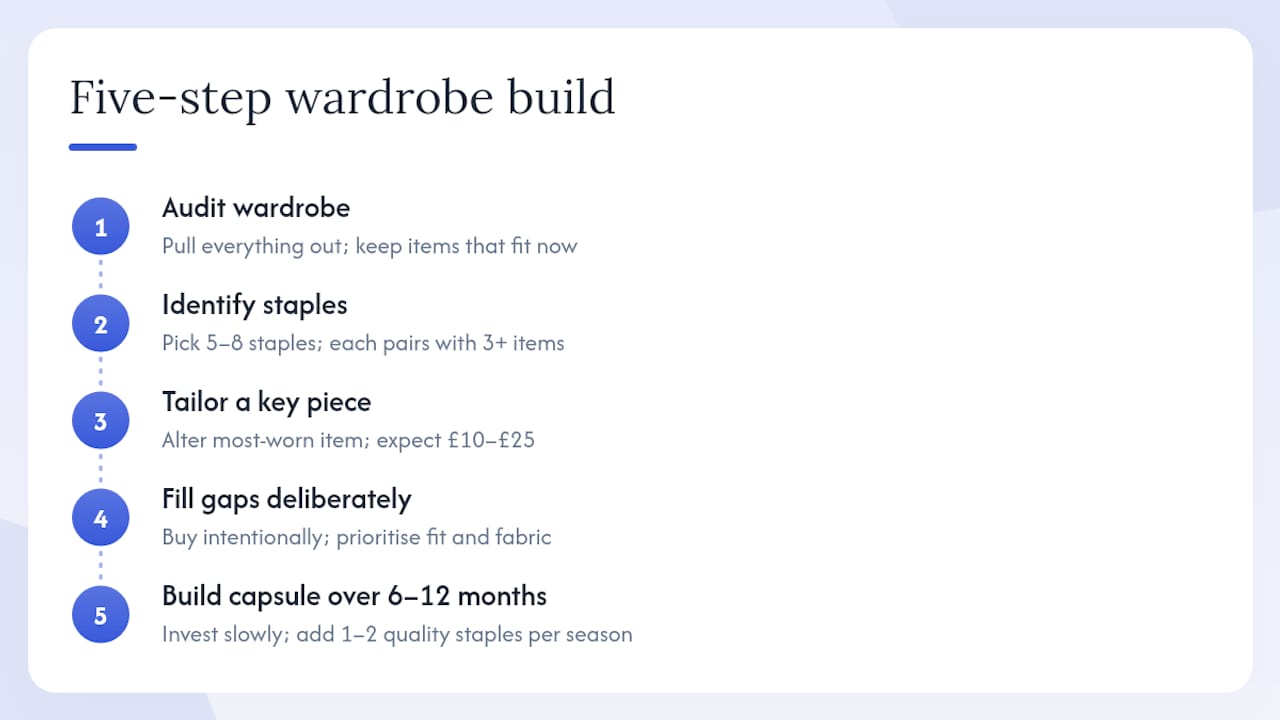
Step 2: Identify your five to eight staples. These are the pieces you reach for automatically: a well-cut trouser, a fitted top in a neutral, a versatile dress, a layer (cardigan or blazer), and clean footwear. The everyday outfit building blocks guide covers this in detail. Each staple should work with at least three other items in your wardrobe.
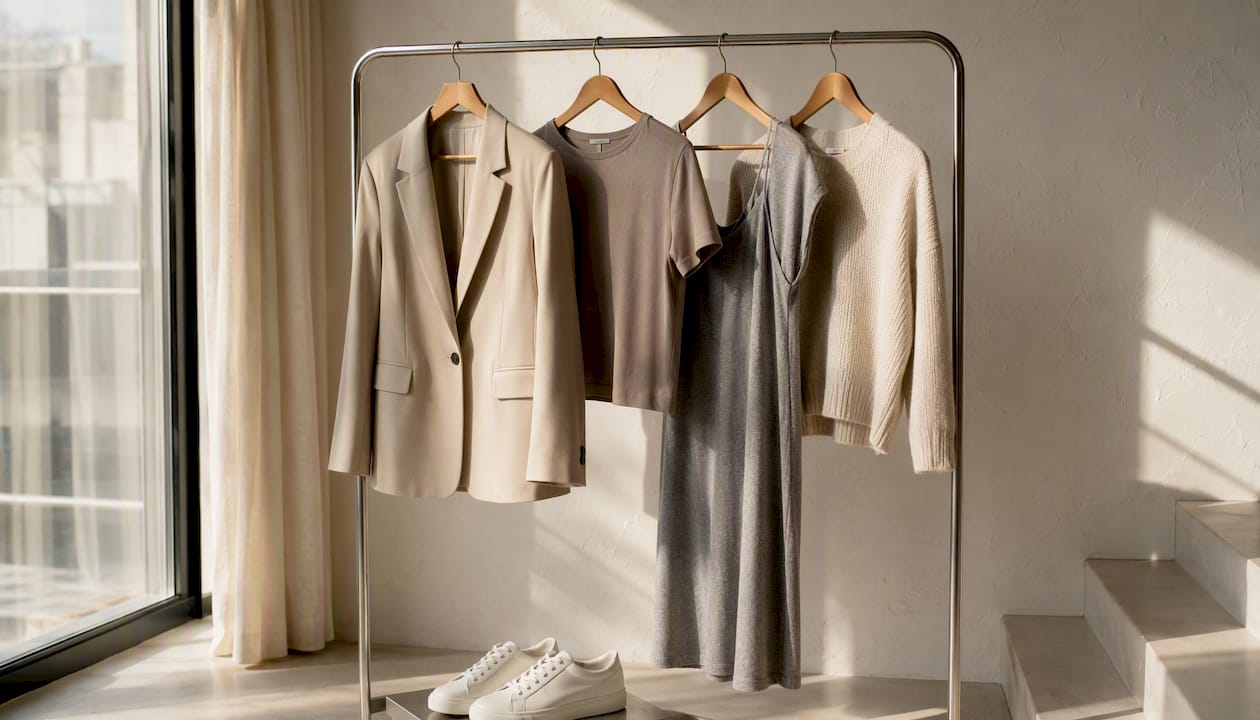
Step 3: Tailor at least one piece immediately. Pick the item you wear most and have it adjusted. This single action changes how the whole outfit reads. Most UK high streets have a local alterations service; expect to pay £10–£25 for a hem or sleeve adjustment.
Step 4: Fill gaps deliberately. Once you know what is missing, buy with intent rather than impulse. Prioritise fit and fabric over price.
Step 5: Build a capsule over six to twelve months. A capsule wardrobe is not a fixed number of items; it is a set of pieces that all work together. Short-term (within three months): fix fit on existing pieces and remove anything that does not belong. Medium-term (six to twelve months): invest in one or two quality staples per season, replacing fast-fashion items that wear out quickly.
The transformation is not dramatic. Someone who starts with a wardrobe of thirty mismatched items and spends three months editing, tailoring two pieces, and adding one well-chosen dress ends up with a wardrobe that functions better than one with sixty items and no coherent logic. The affordable wardrobe essentials guide is a useful starting point for identifying what to add first.
What outfit formulas actually work day to day?
These formulas are designed for UK weather and occasions. Each uses three to five pieces and can be assembled in under five minutes once the wardrobe is in place.
- Evening: A simple halter mini dress or a belted midi dress + one statement shoe + nothing else. Resist the urge to add a bag, a belt, and earrings simultaneously.
Seasonal notes: In autumn and winter, layering is the skill. A fine-knit underneath a blazer underneath a coat reads as intentional. In summer, mixing urban and relaxed pieces in breathable fabrics keeps the look from collapsing into pure casualness. Linen, cotton voile, and soft jersey are your allies.
How should you shop and care for pieces to keep the look working?
Shopping with the effortless framework in mind changes what you look for. The UK fashion shopping tips guide covers the practical mechanics; here is the style logic behind them.
Shopping checklist:
- Try the piece in your usual size and one size up. Effortless dressing often benefits from a slightly relaxed fit, but not a shapeless one.
- Check the fabric content label. Natural fibres and quality blends drape better and age better than pure synthetics.
- Ask: does this work with at least three things I already own? If not, it is a costume, not a staple.
- Prioritise neutral or tonal colours for staples; save prints and colour for one or two accent pieces.
- Use retailers with clear returns policies. Free UK shipping and 30-day returns (as Jvwear offers) mean you can order two sizes and return the one that does not fit, which removes the guesswork from online buying.
Care checklist:
- Hang or fold immediately after wearing. Creases are the enemy of effortless.
- Steam rather than iron where possible; it is faster and gentler on fabric.
- Wash delicates on a cold, gentle cycle and air-dry flat to preserve shape.
- Keep a small sewing kit for loose buttons and minor repairs. A missing button on an otherwise good coat is a visible signal of neglect.
- Rotate shoes to let them recover between wears, and clean them after every outing.
The Guardian’s editors put it simply: invest in a well-fitting T-shirt, make sure trousers hit the ankle correctly, and keep shoes unscuffed. Those three rules alone cover most of the maintenance work.
Key takeaways
Effortless style is a learnable skill built on fit, restraint, and front-loaded effort — not luck, budget, or a particular body type.
| Point | Details |
|---|---|
| Definition | Effortless style is the appearance of ease produced by deliberate, pre-made wardrobe choices. |
| Effort is front-loaded | Spend time building a small set of well-fitting staples; daily dressing then becomes quick and reliable. |
| Fit and tailoring first | One tailoring adjustment often does more for an outfit’s polish than buying an entirely new piece. |
| Restraint is the rule | One focal accessory, a two-to-three colour palette, and one relaxed piece balanced by one fitted piece. |
| Jvwear as a starting point | Jvwear’s minimalist dresses, sets, and accessories are designed as ready-to-wear effortless staples for everyday and occasion dressing. |
The part nobody talks about
There is a quiet dishonesty in the way effortless style gets discussed — in magazines, on social media, and even in guides like this one. The phrase implies a kind of natural grace that some people simply have and others do not. That framing is not just wrong; it is actively unhelpful.
Style is a skill. Skills are learned. The person whose outfits consistently look right has usually spent years editing, making mistakes, and paying attention to what works. They have built systems: a small wardrobe of pieces that all connect, a grooming routine that takes minutes because it is automatic, a habit of removing one thing before leaving the house. None of that is innate.
What I find genuinely interesting about the academic research from Seoul National University is the observation that effortless chic is price-agnostic. The signal comes from coherence, not cost. That means the barrier to entry is lower than most people assume — but it also means there is no shortcut. You cannot buy your way to effortless. You have to edit your way there.
The other thing worth saying: admitting that you think about what you wear is not vain. It is honest. The cultural pressure to appear as though you never tried is, as Vogue has argued, a kind of performance in itself. Dropping that performance and simply getting good at dressing is both more practical and more interesting.
Start building your effortless wardrobe with Jvwear
The fastest way to begin is to pick three to five staple pieces that already do the work for you: a dress with a clean silhouette, a versatile layer, and a pair of shoes that go with everything.
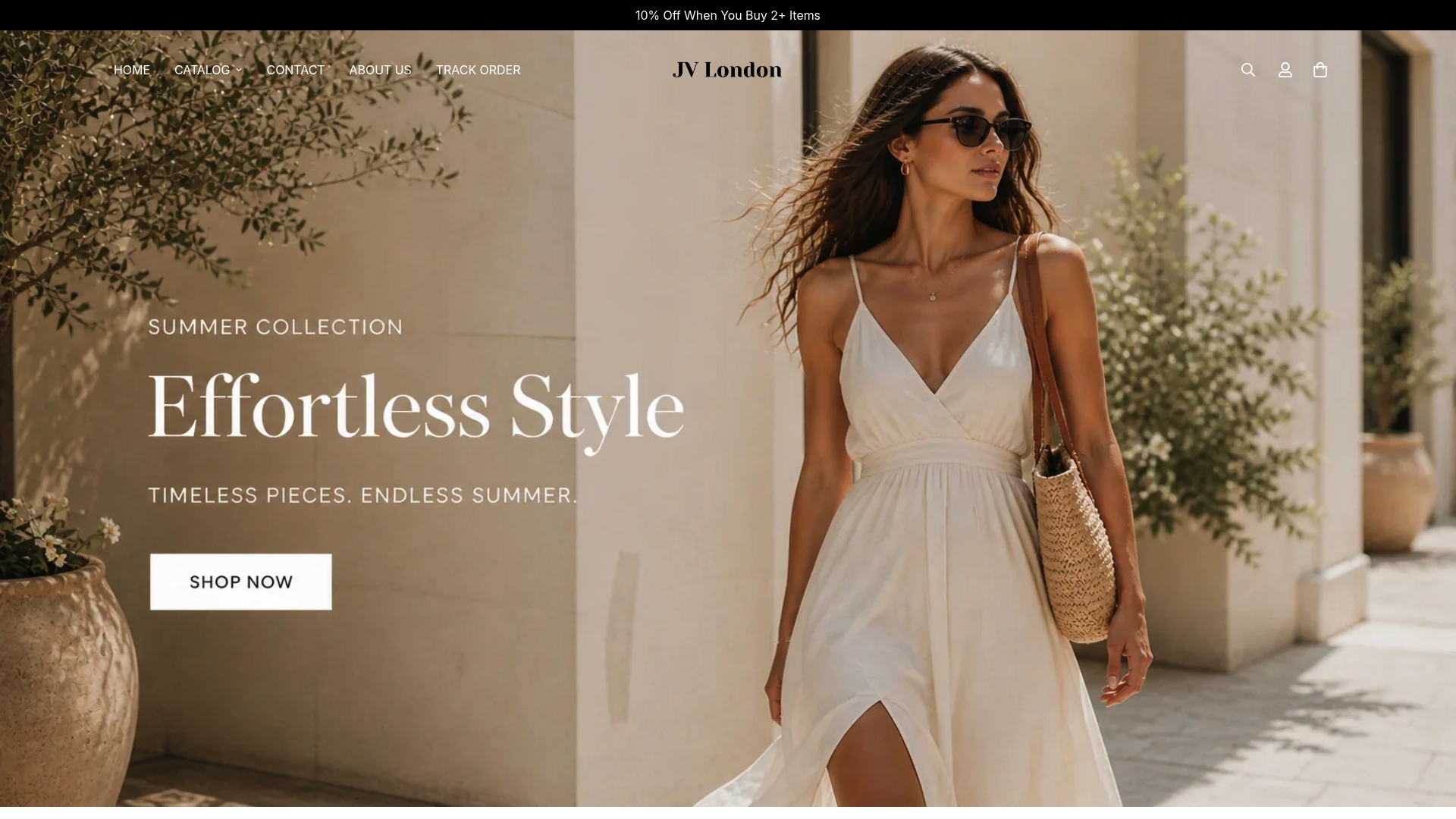
Jvwear’s range of cardigans and minimalist dresses is built around exactly this logic: pieces with simple lines, wearable lengths, and fabrics that drape rather than fight the body. The two-piece midi dress set is a ready-made effortless formula in a single purchase. Free UK shipping and 30-day returns mean you can order, try, and return anything that does not fit without cost or friction. Browse the full range at jvwear.com and start with one piece you will actually reach for.
Useful sources
- The secret to looking effortlessly stylish? A little work and a few simple rules | The Guardian
- The myth of effortless style | Vogue
- A study on effortless chic in modern fashion — Seoul National University
- What guys get wrong about effortless style | FashionBeans
- The secret to effortless style is more thought, not less | Prism News
- Collins Dictionary — effortless style
- JSTOR — relevant fashion sociology article