Pick a heavier winter fabric, a covered silhouette (long sleeves, three-quarter sleeves, or a tailored suit), and finish with a proper coat or cape rather than a throwaway shrug. Shoes and tights aren’t an afterthought here; they decide whether the outfit actually survives the day. For ready-made options in these exact shapes, Occasion pieces, available online, are built with this brief in mind.
TL;DR:
- Choose heavy-winter fabrics like velvet, crepe, or brocade, and coordinate outerwear with dress length to ensure a polished appearance in outdoor photos.
- Opt for jewel tones, deep neutrals, or dark florals that photograph well in winter lighting, avoiding light fabrics and summer shades in heavy textures.
- Coordinate coat and shoe styles carefully with outfit formality, using longline coats for midi or maxi dresses and block heels for outdoor terrain.
- Test full outfits, including tights, shoes, and shapewear, at home before the event to ensure comfort, fit, and proper layering for warmth.
- Prioritize buying or renting versatile pieces like coats and shoes that match your dress’s formality and length, rather than treating outerwear as an afterthought.
Table of Contents
- Seven outfit formulas that work for winter weddings
- Fabrics, colours and textures that read winter-appropriate
- Cover-ups and outerwear that complement occasionwear
- Shoes, hosiery and footwear tactics for winter conditions
- Where to buy, rent and what to budget for
- What to test before the wedding day
- How to layer for warmth without losing the silhouette
- Hair and makeup for a winter wedding guest look
- Why fabric decides more than colour ever will
- Get the look from JV London
- Sources
Seven outfit formulas that work for winter weddings
Editors at Glamour UK built their winter wedding guidance around outfit formulas rather than single dresses, and it’s the right instinct. A formula travels: swap the main piece for your size and budget, keep the logic, and you’ll dress correctly for a marquee in Yorkshire or a hotel ballroom in Edinburgh.
- Velvet midi + tailored coat + block heel. Works for cocktail and semi-formal codes. Velvet’s weight means it doesn’t crease on grass or gravel the way satin can.
- Long-sleeve satin midi + faux-fur stole + pointed courts. Suits black tie and evening receptions. The sheen photographs well under low venue lighting.
- Wool or crepe trouser suit + silk cami + ankle boot. A strong daytime or semi-formal option, and genuinely warmer than most dresses.
- Tonal knit dress + longline cardigan + opaque tights. Best for barns, farms, and rustic venues where formality is lower but the temperature isn’t.
- Sequin top + wide-leg trouser + tailored blazer. Cocktail-appropriate, and the blazer stops sequins from tipping into “too much” for daytime.
- Jacquard or brocade wrap dress + belt + heeled boot. Semi-formal, flattering, and forgiving of a big lunch.
- Two-piece midi set + matching cardigan + court shoe. Reads as a dress but separates for comfort, useful for long ceremonies followed by dancing.
For dress-code fit: black tie wants satin, velvet, or sequins with a full-length coat; cocktail and semi-formal give you room for knits and jacquard; daytime weddings favour trouser suits and midi lengths over anything backless. On surface: swap heels for a block heel or boot if the reception is on grass or a farm courtyard, and swap a full long sleeve for a high neck with a shawl if you run warm indoors. Marie Claire’s stylists make the same point differently: check the dress code, the weather, and the venue before you buy anything, because those three facts decide almost every other choice.
Fabrics, colours and textures that read winter-appropriate
Fabric comes before colour. A jersey dress in emerald green still looks like a summer piece dressed up; the same shade in a heavier crepe or velvet reads as winter occasionwear the moment you put it on, according to guidance from Who What Wear.
- Velvet: the single most reliable winter fabric, forgiving of body shape and warm enough to skip extra layers underneath.
- Heavier satins and duchess satin: structured enough to hold a silhouette and catch light well in evening photos.
- Crepe: drapes cleanly, doesn’t crease on long car journeys, works for both trousers and dresses.
- Jacquard and brocade: built-in texture means you don’t need extra embellishment to look festive.
- Structured knits: the most practical option for daytime or countryside weddings, especially in a fine merino or ribbed wool blend.
On colour, jewel tones (emerald, sapphire, burgundy) and deep neutrals photograph well in low winter light and don’t compete with a bride’s palette, a point Glamour UK makes repeatedly in its seasonal guest edits. Dark florals work for daytime or semi-formal codes. Black is acceptable at most winter weddings now, provided you lift it with metallic jewellery, a bold lip, or a textured fabric rather than a flat jersey that reads as mourning wear. Sequins and embellishment are best kept to one zone: a sequin top under a plain blazer, or a beaded bodice with a simple skirt, rather than sequins head to toe for anything short of black tie.
Cover-ups and outerwear that complement occasionwear
Your coat is half the outfit in arrival photos, so length matters more than most guests assume. A coat that stops well above your dress hem breaks the line and looks unfinished in every group shot taken outside the venue.
- Match coat length to dress length: a longline wool coat for midi and maxi dresses, a cropped style only if your dress is knee-length or shorter.
- Choose a velvet cape for black tie and evening events; it layers over almost any silhouette without adding bulk.
- A faux-fur stole works when you need something you can carry rather than check into a cloakroom.
- A tailored blazer doubles as both your layer and part of the outfit for suit or co-ord looks.
- Check with the couple or venue about outdoor portions of the day. A John Lewis & Partners styling note flags this directly: outdoor confetti throws or garden drinks reception change what coat you actually need.
- Add gloves and a matching shawl if you’re removing your coat for the ceremony but staying outside beforehand.
Most venues offer a cloakroom, so plan for a coat you’re happy to hand over rather than one you’ll want to keep on all evening.
Shoes, hosiery and footwear tactics for winter conditions
Closed-toe heels are the safest default. Heeled ankle boots suit rustic or outdoor venues; block heels handle grass, gravel, and cobbles far better than a stiletto ever will; dress boots work under midi and maxi lengths for daytime weddings.
- Opaque tights for daytime and colder venues; sheer or tonal tights for evening black tie.
- Always try the full outfit with the exact tights and shoes you’ll wear, not a stand-in pair.
- Pack a flat backup shoe for dancing, especially on marquee flooring.
- On grass or gravel, a block heel or wedge beats a stiletto every time.
Pro Tip: Layering hosiery or shapewear under a fitted dress changes how the hem sits and how the fabric drapes, so Spanx’s own bridal shapewear guidance recommends testing the complete outfit, tights and shoes included, at least once before the day.
Where to buy, rent and what to budget for
Renting suits a one-off, high-impact piece: a heavily embellished gown or a statement colour you’d never wear twice. Who What Wear notes that designer rental makes financial sense specifically for pieces with heavy beading or embroidery, since those cost the most to buy outright and the least to justify for a single afternoon. Buying makes more sense for versatile pieces: a velvet midi, a trouser suit, a good coat, all of which will resurface at other winter events.
- Renting: best for one occasion, high-cost fabrics, or a colour you won’t repeat.
- Buying: better value for versatile pieces you’ll wear again, and you avoid rental sizing gambles.
- High-street and e-commerce: fastest turnaround, widest size range, easiest returns.
- Timing: shop six to eight weeks out for winter wedding season, since velvet and satin styles sell through quickly once the first frost hits.
Budgets vary widely, but a complete outfit (dress, coat, shoes) typically costs more in winter than summer simply because coats and boots add to the total. Several e-commerce platforms offer free UK shipping and 30-day returns windows, allowing you to order multiple sizes or colourways and send back whichever doesn’t work.
What to test before the wedding day
Do a full dress rehearsal at home: wear the tights, shoes, and shapewear you actually plan to wear, not substitutes, since Spanx’s shapewear guidance confirms these change how a hem sits. Check your coat covers the dress hem, sit and dance in the outfit, and if you’re wearing a jumpsuit, test the bathroom logistics before you’re stood in a marquee queue. A 30-day returns policy makes this rehearsal low-risk if something doesn’t work.
I once adapted a satin slip dress for a barn wedding in January by adding thick tights, ankle boots, and a wool coat two sizes larger than I’d normally buy, and it was the coat that saved the whole look.
How to layer for warmth without losing the silhouette
Layering for a winter wedding works best when you think in three zones: base, mid, and outer, rather than piling on whatever’s warm.
Your base layer sits against the skin and should be thin: a fine thermal camisole or slip under a dress does more for warmth than a bulky jumper ever will, and it won’t show through fitted fabric. The mid layer is where most guests go wrong. A cardigan, blazer, or shawl in a matching or tonal colour keeps the silhouette intact, while a contrasting chunky knit thrown over a fitted dress usually breaks the line and looks like an afterthought. Keep this layer close to the colour family of your outfit and it reads as styled rather than bolted on.
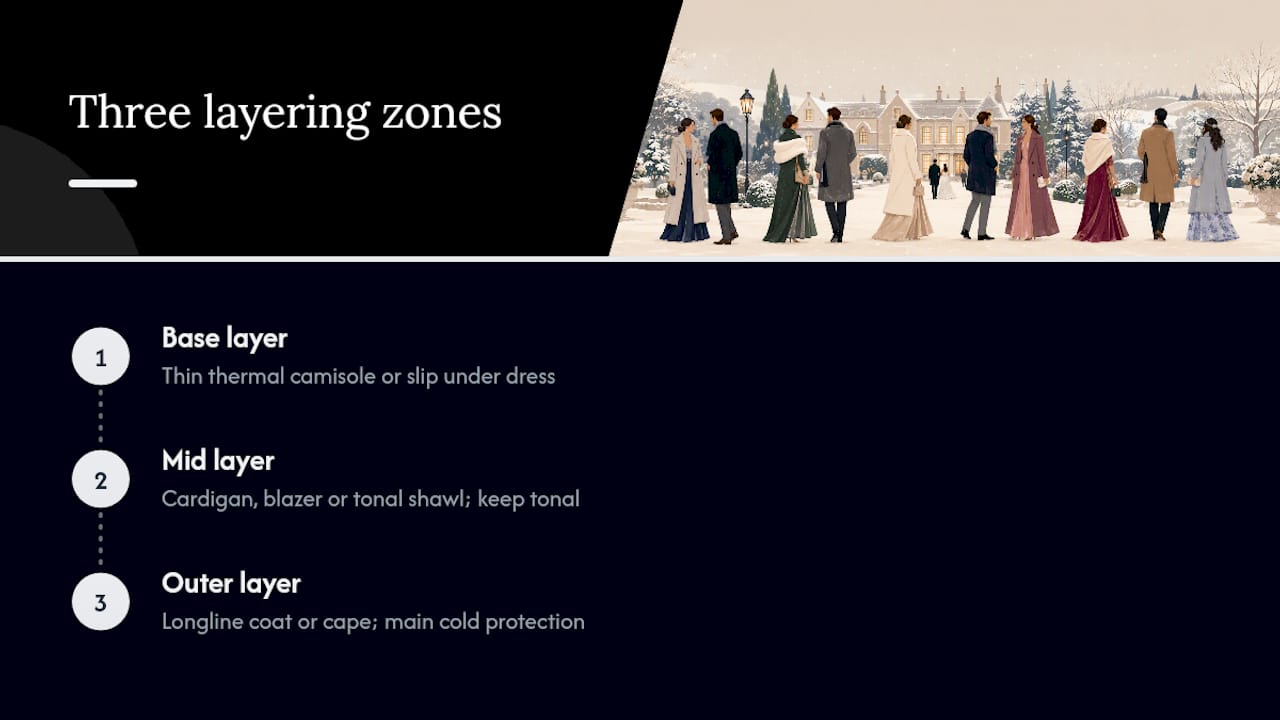
The outer layer is your coat or cape, and it’s the one piece doing the heavy lifting against actual cold, so don’t compromise on it for the sake of a smaller bag or an easier commute to the venue. A longline coat over a fitted midi keeps the proportions clean; a cropped jacket over the same dress just looks unfinished.
Accessories complete the thermal picture more than most guests realise. Fine leather or suede gloves add warmth without bulk, a cashmere or wool scarf in a neutral tone works with almost any coat, and a hat is worth considering for daytime countryside weddings where you’ll spend time outside for photos or a drinks reception. Statement earrings or a single strong bracelet finish the look once the coat comes off, since layering tends to hide necklaces anyway.
Hair and makeup for a winter wedding guest look
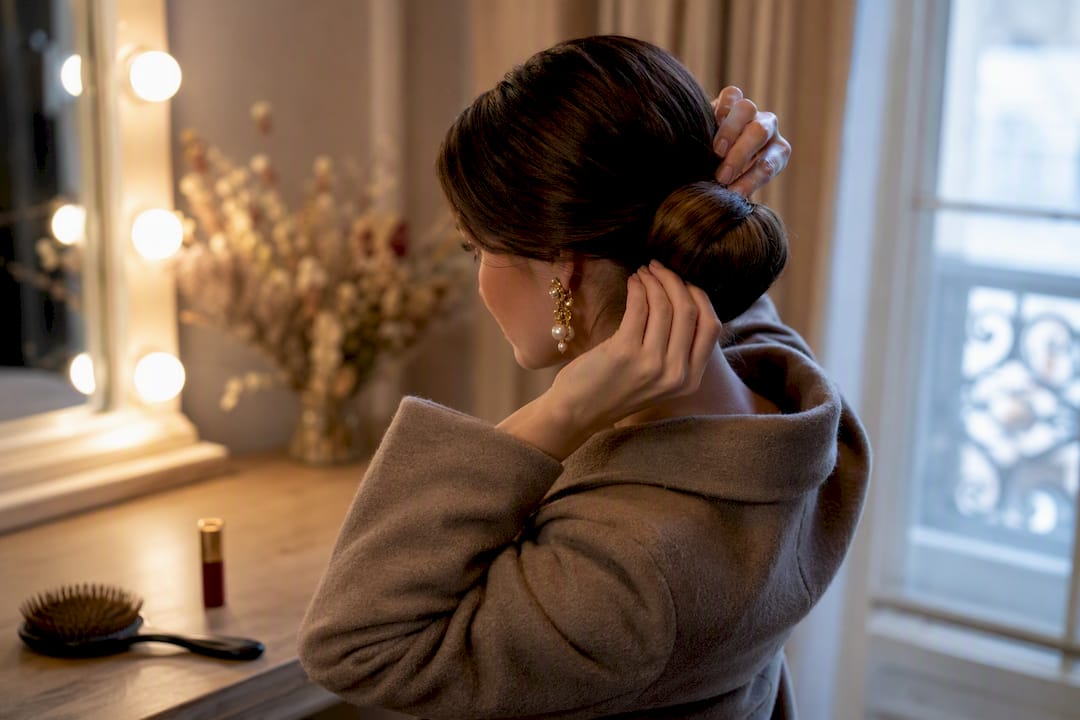
Hair and makeup should hold up against wind, indoor heating, and hours of dancing, which rules out anything too delicate. A low bun or sleek chignon survives hat hair and coat collars better than loose waves, and it also shows off statement earrings if you’ve chosen a covered neckline. If you prefer hair down, a soft blow-dry with a strong-hold spray outlasts loose curls that tend to drop in cold, damp air.
Makeup for winter weddings leans richer than summer versions: a deeper lip in berry or burgundy suits the jewel-tone palette most guests wear, and cream blush holds up better than powder against central heating that dries out skin. Waterproof mascara and a setting spray are worth using regardless of whether you expect tears, since venues swing between freezing entrances and overheated reception rooms within minutes. Skip heavy shimmer on the eyes if you’re already wearing satin or sequins; one focal point (either the fabric or the makeup) reads as considered, while both together can tip into too much for a daytime dress code.
Why fabric decides more than colour ever will
Most winter wedding guidance leads with colour: wear jewel tones, avoid white, consider a dark floral. That’s not wrong, but it puts the emphasis in the wrong place. Fabric is the decision that actually determines whether an outfit works, because a heavier material in almost any colour will read as appropriate, while a light fabric in the “correct” winter shade still looks out of season the second you stand next to a roaring fireplace or a snow-dusted marquee entrance.
The conventional advice also underplays outerwear, treating the coat as an accessory rather than part of the outfit itself. It isn’t. Arrival photos happen in coats. Ceremony seating happens in coats. If yours doesn’t match the length or formality of what’s underneath, the whole look reads as unfinished no matter how good the dress is.
If there’s one thing to prioritise first, it’s this: buy the coat and the shoes with the same care you’d give the dress, not as an afterthought once the “real” outfit is sorted. Some brands focus on building capsule pieces meant to be worn together rather than styled as one-off statement dresses, reflecting this logic.
— Mykola
Get the look from JV London
Some brands build occasion pieces specifically in the fabrics this guide recommends, like velvet, satin, and structured knits, often with offers such as free shipping and returns policies allowing you to test sizing and pairings at home.

For formula three, the velvet midi dress with satin skirt covers the winter fabric brief in one piece, pairing easily with a longline coat and block heel. If you’d rather work with separates, the two-piece midi dress set gives you the tonal, covered-silhouette look from formula seven without hunting for a matching cardigan elsewhere. Cold venue, warm reception room? Add one of the cardigans as a mid layer you can remove once the dancing starts. Whichever formula suits your wedding, check sizing against your existing coat before you order, and use the 30-day window to send back anything that doesn’t sit right against it.
Sources
- Who What Wear — 13 Chic Dresses Perfect for Winter Wedding-Guest Season
- Marie Claire — What to Wear to a Winter Wedding: The Best Guest Dresses
- Glamour UK — What to wear to a winter wedding if you want to be the most stylish guest
- Spanx — Winter bridal shapewear guide