Buying coordinated clothing sets gives you a ready-made, flattering outfit in a single purchase, cuts morning decision time, and stretches your cost-per-wear further than most individual pieces ever will. The top and bottom are cut to work together, so the proportions are already sorted. You get the polish of a considered outfit without the effort of building one from scratch.
The core benefits, briefly:
- Time saved: one decision instead of five every morning
- Flattering proportions: pieces designed to balance each other’s silhouette
- Versatility: each piece works alone with your existing wardrobe
- Travel-friendly: compact packing, fewer outfit decisions on the road
- Value per wear: one purchase that functions as multiple outfits
The sections below cover each benefit in detail, show you how to style one set into several looks, and include a practical buying checklist so you choose sets that actually earn their place in your wardrobe.
Key takeaways
Buying coordinated clothing sets is one of the most cost-effective and time-efficient wardrobe decisions you can make, delivering multiple outfits, flattering proportions, and genuine versatility from a single purchase.
| Point | Details |
|---|---|
| Sets save time daily | One purchase removes the need to build an outfit from scratch each morning. |
| Each piece multiplies outfit count | Wearing top and bottom separately adds several distinct looks to your rotation. |
| Cost-per-wear drops significantly | A £65 set worn across 35 outfit combinations costs under £2 per wear. |
| Fabric and fit checks matter | Always verify measurements, fabric composition, and return policy before buying. |
| Jvwear sets suit capsule wardrobes | Jvwear’s two-piece sets include measurements and free UK returns for confident online buying. |
Table of Contents
- The real benefits of buying clothing sets, explained
- How to get multiple outfits from a single set
- What to check before you buy a clothing set
- Cost-per-wear, longevity, and making sets work harder
- Jvwear sets that show these benefits in practice
- The environmental case for buying coordinated sets
- Why sets belong in a modern wardrobe
- Jvwear sets: easy outfits with free UK shipping and 30-day returns
- Sources
The real benefits of buying clothing sets, explained
Matching sets reduce styling work, raise the perceived value of a purchase and allow each piece to be worn independently, which means a single buy can deliver multiple looks across different occasions. Here is what that looks like in practice.
1. You save time and reduce decision fatigue
The average morning outfit decision involves more mental energy than most people realise. A set removes that entirely: the outfit is already built. A matching set gives you a full outfit at once and lets you split pieces later to multiply looks, which is particularly useful on busy weekday mornings or when packing for a trip.
Occasion example: A linen co-ord worn as a set for a Saturday lunch, then the trousers paired with a white tee for a Sunday market run.
2. Coordinated sets offer genuinely flattering proportions
When a top and bottom are designed together, the cut accounts for how they interact. The waist placement, hem length, and shoulder width are calibrated as a unit. Buying separates and hoping they balance is a gamble; a well-designed set removes that variable entirely.
Occasion example: A midi skirt and fitted top set where the skirt’s high waist and the top’s cropped length create a longer-leg illusion that neither piece achieves alone.
3. Each piece multiplies your outfit count
This is where sets earn their keep beyond the obvious. The top pairs with jeans, the skirt pairs with a plain knit, and suddenly one purchase has added three or four outfits to your rotation. Editorial and boutique commentary confirms that sets can be marketed as both a full outfit and as separable pieces, increasing the perceived value for the buyer.
Occasion example: The shirt from a textured co-ord worn open over a slip dress for an evening out.
4. Sets deliver strong cost-per-wear value
Cost-per-wear is simply the purchase price divided by the number of times you wear a piece. A set worn multiple times costs relatively little per wear. Wear each piece separately and that number drops further. Buying two unrelated pieces at £30 each that only work together gives you the same spend but far fewer outfit combinations.
Investing in higher-quality clothes tends to save money over time because durable garments last longer and reduce the need for repeat purchases. A well-made set in a quality fabric will outlast three fast-fashion alternatives.
5. Sets are genuinely travel-friendly
Stylists recommend matching sets for travel because they pack easily, provide comfortable yet polished outfits and reduce pre-travel outfit decisions. Two pieces that work as a set and as separates can cover four or five days of outfits in a carry-on. That is not an exaggeration: wear the set on the flight, split the pieces across the next two days, then reunite them for a dinner out.
Occasion example: A button-shirt-and-shorts co-ord worn together on arrival, then the shirt as a beach cover-up and the shorts with a vest for sightseeing.
6. Sets support a capsule wardrobe approach
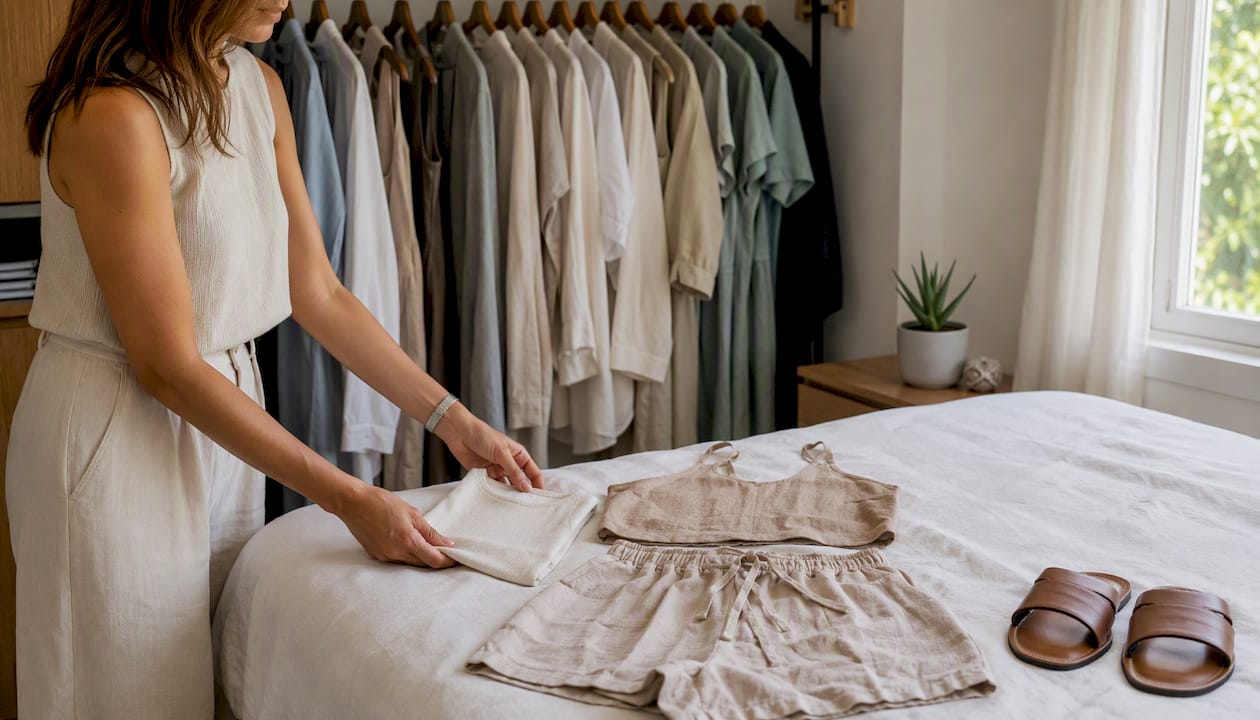
A capsule wardrobe works on the principle that fewer, more versatile pieces create more outfit options than a cluttered rail of singles. Sets slot into this perfectly. Each set adds two pieces that work independently, so three sets can theoretically generate a dozen distinct looks when rotated with a handful of basics.
7. Coordinated looks carry a social and psychological benefit
Coordinated outfits can strengthen group identity and boost participants’ confidence. At an individual level, wearing a considered, matched look tends to project confidence and intentionality, even when the effort behind it was minimal. Research into the social psychology of coordinated dressing suggests that mirroring and visual cohesion increase a sense of belonging and self-assurance.
Occasion example: Arriving at a wedding or event in a co-ord that reads as deliberate and polished, without having spent an hour assembling it.
Pro Tip: Stylists advise choosing a set that echoes your existing wardrobe’s colour palette. A set in a tone you already wear will get used far more than one bought for a single occasion.
How to get multiple outfits from a single set
The full-set look is the starting point, not the limit. Here is a practical sequence for stretching one set across a week of outfits.
Wear the set as intended first. This gives you the polished, coordinated look the designer intended and is usually the strongest outfit in the rotation. Wear it for the occasion that warrants the most impact: a dinner, a work presentation, a weekend event.
Then split the pieces. The top becomes a standalone with straight-leg jeans or tailored trousers. The skirt or shorts pair with a plain white shirt, a fitted knit, or a lightweight layer. Each combination reads as a completely different outfit.
Shift formality with footwear and accessories. The same co-ord worn with flat sandals reads as casual daywear; swap to heeled mules or ankle boots and it becomes evening-ready. A structured bag elevates; a canvas tote relaxes. These swaps cost nothing and extend the set’s range significantly.
Outfit swaps to copy:
- Set top + wide-leg jeans + trainers = weekend casual
- Set skirt/shorts + tucked-in white tee + sandals = summer day look
- Set top + tailored trousers + heels = smart casual evening
- Full set + blazer + loafers = polished work outfit
- Set bottom + fitted knit + ankle boots = autumn transition look
- Full set + denim jacket + trainers = relaxed travel outfit
- Set top worn open over a slip dress = layered evening look
- Set skirt + ribbed vest + wedge sandals = holiday resort wear
For travel specifically, the “wear one, pack one” rule works well: wear the full set on the journey, pack the individual pieces to mix with one or two basics already in your bag. A small number of pieces can cover several days without repeating an outfit combination.
What to check before you buy a clothing set
The benefits of coordinated clothing only materialise if the set actually fits well and holds up over time. Most buying mistakes come down to skipping a few basic checks.
Fit across both pieces. The top and bottom may not share the same size logic. Check whether the waist sits where you want it, whether the top length works with the bottom’s rise, and whether the shoulder seam sits correctly. Many sets are designed for a specific silhouette, so reading the product description carefully matters.
Fabric and care. For the UK climate, a fabric that layers well and washes without pilling is worth prioritising. Linen, cotton, and quality jersey all perform well across seasons. Avoid sets where the two pieces are clearly different fabric weights — they will not hang together as intended and the heavier piece will age faster.
Sizing and measurements. Always check the brand’s size chart against your own measurements rather than defaulting to your usual size. If one piece runs small, it is often worth sizing up and having it altered rather than compromising the fit of both. Jvwear’s product pages include measurements and returns information to help with this decision.
Return policy. A clear, free returns policy is a strong trust signal for online purchases. It means the brand is confident in its sizing information and product quality.
Red flags to avoid:
- Mismatched fabric weights between the top and bottom
- Inconsistent colour between pieces (dye lot variation in product photos)
- No detailed measurements or only a generic size guide
- No model height listed alongside the product images
- Fabric composition not stated (makes care and longevity impossible to assess)
Pro Tip: Read reviews that mention the reviewer’s height and measurements alongside their size choice. This gives you a far more accurate fit picture than the size chart alone, particularly for two-piece sets where fit across both pieces matters.
For broader online shopping guidance, Jvwear’s UK fashion shopping tips cover sizing, returns, and what to look for in product photography.
Cost-per-wear, longevity, and making sets work harder
The economics of buying a set are straightforward once you run the numbers. Take a set priced at £65. If you wear it as a complete outfit 15 times and each piece separately another 10 times each, you have generated 35 wears from one purchase. That brings the cost-per-wear to under £2. A single dress at the same price worn 15 times costs over £4 per wear.
The variable that changes this calculation most is quality. A set that pills after three washes, fades after two, or loses its shape after a season will never reach those wear counts. Higher-quality garments last longer and reduce the need for repeat purchases, which is both a financial and an environmental argument for buying better.
Practical steps to extend the life of a set:
- Wash on a cool, gentle cycle and turn pieces inside out to protect the fabric surface
- Store knit sets folded rather than hung to prevent stretching
- Air dry rather than tumble dry wherever possible
- Repair small pulls or loose threads immediately rather than letting them worsen
- Consider pairing sets with coordinating innerwear to protect delicate fabrics from friction and extend their wearable life
For secondhand options, pre-loved sets in good condition often appear on platforms like Vinted and Depop. Buying a quality set secondhand combines the cost-per-wear advantage with a lower environmental footprint. When buying pre-loved, check the fabric composition and look for photos of both pieces together to confirm the colour match is still consistent.
Jvwear sets that show these benefits in practice
The following Jvwear products illustrate the benefits covered above, each in a slightly different way.
-
Solvra Two-Piece Midi Dress Set: A midi dress paired with a button-front cardigan. The cardigan works as a standalone layer over other outfits, making this a strong capsule wardrobe addition. Ideal for work, smart casual events, or travel days when you want to look put-together without effort.
-
Kinsley Lace Two-Piece Set: A long-sleeve lace shirt and shorts combination that reads as evening-ready as a set, but the shirt works equally well over a slip dress or with tailored trousers. Strong mix-and-match potential.
-
Hadley Cotton Co-ord Set: Cotton fabric makes this a practical choice for the UK’s variable climate. The long-sleeve shirt layers well under a coat in cooler months and stands alone in warmer weather. A good example of a set that earns its cost-per-wear through year-round use.
-
Lucia Knit Two-Piece Midi Set: The contrast trim detail means each piece reads as intentional even when worn separately. Dress it up with heels for an evening out or wear the knit top with jeans for a relaxed weekend look.
Each product page on Jvwear includes measurements, fabric details, and returns information, which are the trust signals worth checking before committing to a size.
The environmental case for buying coordinated sets
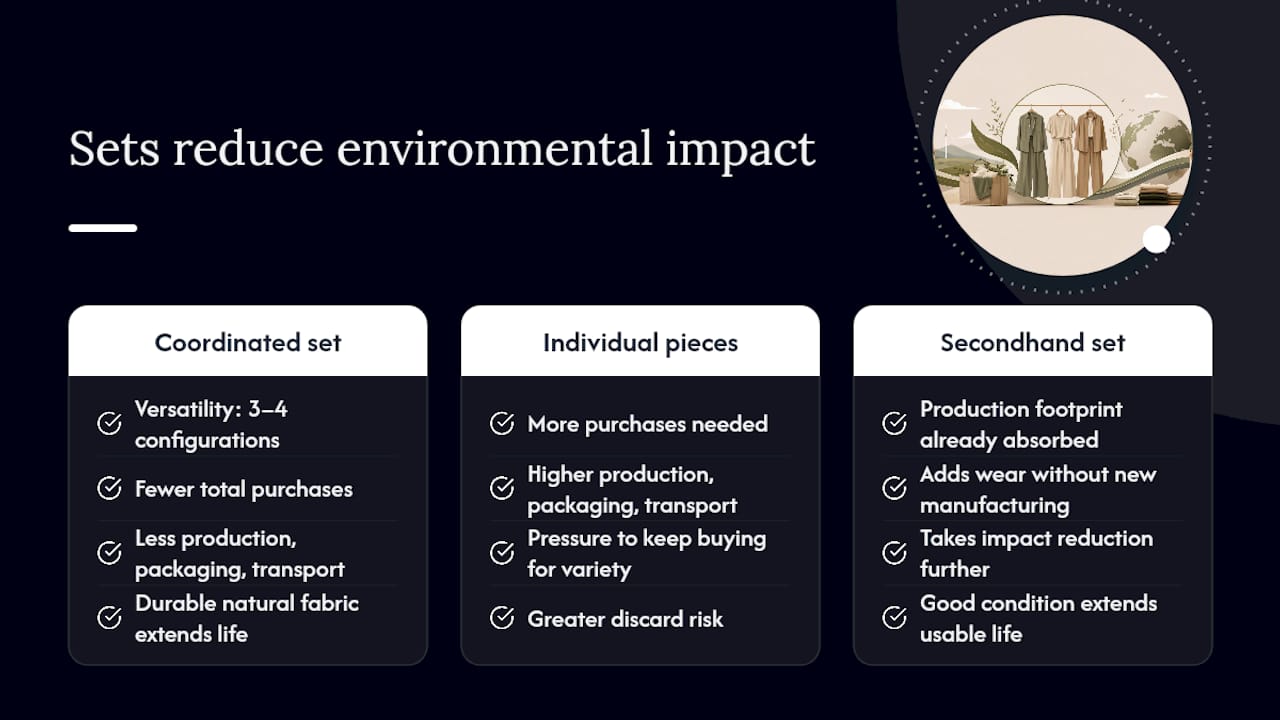
The sustainability argument for sets is not just about buying less. It is about buying smarter. A coordinated set that you wear in three or four configurations generates significantly fewer total purchases than buying individual pieces to cover the same outfit count. Fewer purchases means less production demand, less packaging, and less transport.
The fashion industry’s environmental impact is well documented, and the shift towards buying fewer, more versatile pieces is one of the most practical responses available to individual shoppers. Sets support this directly: two pieces that function as four or five outfits reduce the pressure to keep buying to maintain variety.
Fabric choice matters here too. Natural fibres like cotton and linen are more biodegradable than synthetic alternatives and tend to age more gracefully, which extends the useful life of the garment. A set made from a durable natural fabric that you wear for three years has a fraction of the environmental cost of three cheaper sets replaced annually.
Buying secondhand sets, as mentioned earlier, takes this further. A pre-loved set in good condition has already absorbed its production footprint. Giving it a second life adds wear count without adding to demand for new manufacturing.
The capsule wardrobe model, which sets support naturally, also reduces the volume of clothing that ends up in landfill. When every piece in your wardrobe works with several others, you are less likely to discard items because they feel redundant or hard to style.
Why sets belong in a modern wardrobe
The conventional wisdom on building a wardrobe tends to focus on individual statement pieces: the perfect blazer, the ideal jeans, the versatile dress. Sets rarely feature in that conversation, which is a gap worth addressing.
A well-chosen set does something a single statement piece cannot: it gives you a complete, considered outfit that also functions as two separate wardrobe contributors. The styling work is done before you open your wardrobe. The proportions are already resolved. The colour story is coherent.
What people underestimate about coordinated sets is how much mental load they remove over time. The morning decision fatigue that accumulates across a week of outfit-building is real, and a wardrobe that includes two or three strong sets reduces it meaningfully. This is not about dressing without thought; it is about reserving that thought for the moments when it actually matters.
The mix-and-match potential is also consistently underused. Most buyers wear the set as intended and stop there. The better approach is to treat the set as two pieces from the moment you buy it, mentally filing each piece against the rest of your wardrobe before the purchase rather than after.
For a capsule approach, starting with one or two sets in neutral or versatile tones and building outward from there is a more effective strategy than buying sets in bold prints that only work as a unit.
Jvwear sets: easy outfits with free UK shipping and 30-day returns
If the case for sets has landed, the practical next step is straightforward. Jvwear’s two-piece sets are designed for exactly the kind of versatile, everyday-to-occasion dressing this article covers: pieces that work together and apart, in fabrics suited to the UK climate, with the sizing information and product photography you need to buy with confidence.
Free UK shipping and 30-day hassle-free returns mean the risk of trying a new set is low. If the fit is not right, returning it is straightforward. Browse the full range, including cardigans and layering pieces, to find combinations that slot into your existing wardrobe. Check the measurements on each product page, read the reviews for fit notes, and start with one set in a tone you already wear.
Sources
- Why Matching Sets Are Popular in Women’s Apparel
- What Makes Women’s Matching Sets a Smart Closet Choice Today - MarketGuest
- Fashion experts say matching sets are becoming the new travel uniform — here’s what makes a good one
- Matching family outfits — Claire Mac