Sale pricing in fashion is defined as the deliberate use of discounted prices to influence consumer behaviour, manage inventory, and shape brand perception. The role of sale pricing in fashion extends far beyond clearing old stock. It is a calculated tool that fashion retailers use to drive purchases, attract new shoppers, and position their brand in a competitive market. 82% of fashion e-commerce shoppers make at least one unplanned purchase during a sale event. That figure alone tells you how much power a well-timed discount holds over your wardrobe decisions.
How does sale pricing influence impulse buying in fashion?
Discount pricing in fashion works on your psychology before it works on your wallet. When you see a price reduction, your brain registers a gain, not just a saving. This is the foundation of impulse buying in retail, and fashion brands know it well.

Discount offers carry the highest correlation with impulse buying behaviour, measured at a correlation coefficient of r = 0.78. Flash sales follow closely at r = 0.74, and free shipping at r = 0.69. These numbers show that the type of promotion matters as much as the discount itself.
The psychological mechanism behind this is explained by the Theory of Planned Behaviour. Discount framing shapes impulse buying through four key attitudes: perceived value, price fairness, promotion attractiveness, and savings satisfaction. When a discount feels fair and the saving feels real, you are far more likely to buy without planning to.
Combining promotions amplifies this effect significantly. When free shipping stacks on top of a percentage discount, 91% of shoppers make an unplanned purchase. That is nearly every shopper in the room. Brands use this deliberately during seasonal events and flash sale periods to maximise basket size.
“The most powerful sale is not the deepest discount. It is the one framed so that the shopper feels she is winning, not just spending.”
Key emotional triggers that fashion sale pricing activates include:
- Savings satisfaction: the pleasure of paying less than the original price
- Scarcity signals: limited time or limited stock creates urgency
- Perceived value uplift: a higher original price makes the discounted price feel like a better product
- Social proof: seeing others buy during a sale reinforces the decision
Pro Tip: Before adding a sale item to your basket, ask whether you would buy it at full price. If the answer is no, the discount is doing the work, not the product.
What are the main pricing strategies in fashion?
Fashion pricing is built on several recognised models, and sale pricing sits within each of them differently. Understanding these models helps you read a discount more clearly.
Keystone pricing is the industry standard: a brand multiplies its cost of goods by 2 to 2.5 for wholesale, then the retailer doubles the wholesale price for retail. A garment costing £10 to produce reaches a £50 retail price through this method. Sale pricing then cuts into that retail margin, which is why brands are careful about how deep they go.
| Pricing model | How it works | Where sale pricing fits |
|---|---|---|
| Cost-plus pricing | Adds a fixed margin to production cost | Sales reduce the margin directly |
| Keystone pricing | Doubles cost at each channel stage | Sales cut into the retail markup layer |
| Value-based pricing | Sets price by perceived customer value | Sales must not undercut the perceived value |
| Psychological pricing | Uses price points like £19.99 to influence perception | Sale prices use the same anchoring technique |
Sophisticated fashion brands price to an operating line, not just gross margin. This means accounting for wholesale versus direct-to-consumer channel differences. A deep discount on a direct-to-consumer platform can undermine wholesale partners and confuse the brand’s price positioning across channels.
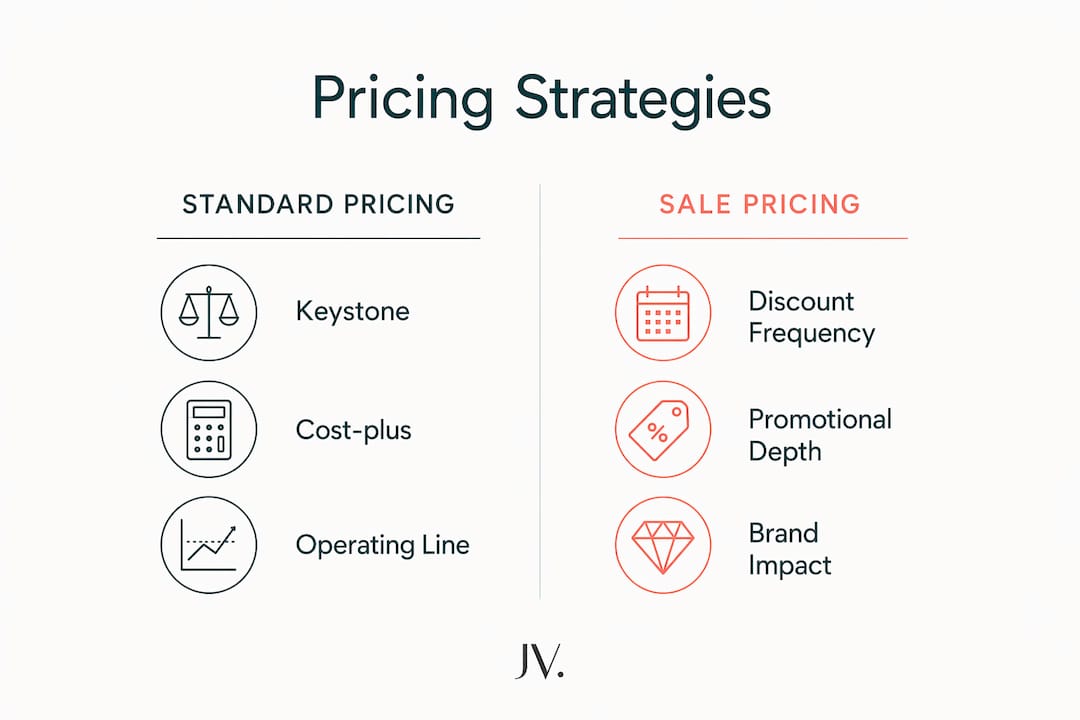
The risk of over-discounting is real. Excessive or high-frequency discounting weakens consumers’ perception of apparel quality and damages brand reputation over time. A brand that is always on sale trains its shoppers to never pay full price.
Pro Tip: When you spot a brand running near-constant promotions, treat its “original” price as the real sale price. The discount is baked into the business model, not a genuine saving.
How does sale pricing affect brand perception and customer loyalty?
Sale pricing and brand trust are directly connected. The frequency, depth, and timing of discounts all send signals to shoppers about what a brand is worth.
Dynamic price changes confuse shoppers and train them to wait for the next sale rather than buy at full price. This erodes the feeling of investment in a brand. Stable prices with planned, structured markdowns build more loyalty than unpredictable discounting.
Full-price sell-through has dropped from 70–75% to around 50% across fashion retail. Half of all inventory now sells at a reduced price. That shift means markdowns are no longer a seasonal clean-up exercise. They are a core part of how fashion retail operates.
Timing matters enormously. Delaying markdowns leads to deeper discounts later, which erodes margins further. Styles that are 20% below their sales plan by week four of a season rarely recover by season end. Early, shallow markdowns of 10–25% protect margin and keep traffic moving.
Here is how structured promotional policies compare to random discounting in terms of customer loyalty:
- Planned seasonal sales signal reliability. Shoppers know when to expect them and plan accordingly.
- Loyalty reward tiers create a sense of earned privilege, which builds emotional attachment to the brand.
- Random flash discounts generate short-term traffic but reduce the perceived value of the full-price product.
- Clearance events are accepted as necessary, but clearance sale frequency signals poor inventory management if they happen too often.
- Scarcity-based promotions maintain prestige by limiting access rather than lowering the price floor.
Structured promotional policies like loyalty rewards explain 97.8% of variation in customer satisfaction models. That is a striking figure. It means that how a brand structures its promotions matters far more than the size of the discount.
Minimalist brands that maintain selective discounting protect their identity. Perceived value ceilings allow brands to charge 4–6 times production costs for premium items through storytelling, provenance, and scarcity. Overreliance on discounting dismantles that ceiling piece by piece.
How can you shop sale-priced fashion to build a minimalist wardrobe?
Shopping sales well is a skill. The goal is to buy pieces that serve your wardrobe long after the sale ends, not just items that felt like a bargain in the moment.
Start by evaluating the discount framing. A 50% reduction from an inflated original price is not the same as a genuine markdown from a stable retail price. Check whether the item has been at that “original” price for more than a few weeks. True markdowns follow a predictable retail cycle, typically beginning 10–25% off and deepening over time.
Watch for seasonal sale timing to plan your purchases. End-of-season sales in january and july offer the deepest genuine reductions on current-season stock. Mid-season sales tend to be shallower but cover a wider range of styles.
Use sales to fill gaps in a capsule wardrobe rather than to accumulate volume. A capsule wardrobe built on sale items works when each piece is versatile, wearable across multiple outfits, and aligned with your existing colour palette.
Key principles for sale shopping with a minimalist mindset:
- Buy for the gap, not the price. Identify what your wardrobe is missing before the sale starts.
- Prioritise fabric and fit over discount depth. A poorly fitting garment at 70% off is still a waste.
- Stick to a neutral or tonal palette. Sale pieces in your core colours integrate immediately.
- Limit trend-led purchases. Trend items have a short wardrobe lifespan. Reserve them for lower price points.
- Check return policies before buying. Jvwear offers hassle-free returns within 30 days, which removes the risk from online sale purchases.
Pro Tip: Set a sale budget before you browse. Decide the maximum you will spend in total, then allocate it to specific wardrobe gaps. This turns impulse-prone browsing into purposeful shopping.
Key takeaways
Sale pricing in fashion is a deliberate strategy that shapes both consumer behaviour and brand value through timing, framing, and discount depth.
| Point | Details |
|---|---|
| Impulse buying is by design | 82% of shoppers make unplanned purchases during sales, rising to 91% when promotions combine. |
| Keystone pricing sets the baseline | Brands multiply production costs by 4–5x at retail, giving room for markdowns without immediate loss. |
| Timing protects margin | Early shallow markdowns of 10–25% recover more margin than deep late discounts. |
| Frequent discounting erodes brand trust | Dynamic pricing and random sales train shoppers to wait, weakening full-price loyalty. |
| Structured policies outperform discounts alone | Loyalty rewards and tiered offers explain 97.8% of variation in customer satisfaction models. |
Sale pricing, brand value, and what I have actually observed
The conversation around sale pricing in fashion tends to focus on the shopper’s gain. What gets less attention is the long-term cost to the brand, and by extension, to you as a shopper who cares about quality.
I have watched brands that once felt aspirational become indistinguishable from discount retailers because they could not resist the short-term revenue from constant promotions. The product did not change. The perception did. Once a brand trains you to expect 40% off, the full price feels like an insult rather than a fair exchange.
What I find more interesting is the brands that hold their price discipline. They run one or two structured sales per year, keep their markdowns shallow and time-limited, and invest the margin they protect into better fabric, better fit, and better storytelling. Those are the brands whose sale pieces actually hold their value in your wardrobe.
My honest view is that the best sale is the one you planned for. If you know a brand runs an end-of-season event in july, you can wait for it without impulse-buying at full price in june. That patience is worth more than any discount framing technique a retailer can deploy.
The future of fashion sale pricing will likely move further towards personalised offers and loyalty-gated discounts rather than blanket site-wide reductions. That shift rewards consistent shoppers and protects brand value at the same time. As a shopper, the brands worth following are the ones already moving in that direction.
— Mykola
Jvwear’s curated pieces worth knowing about
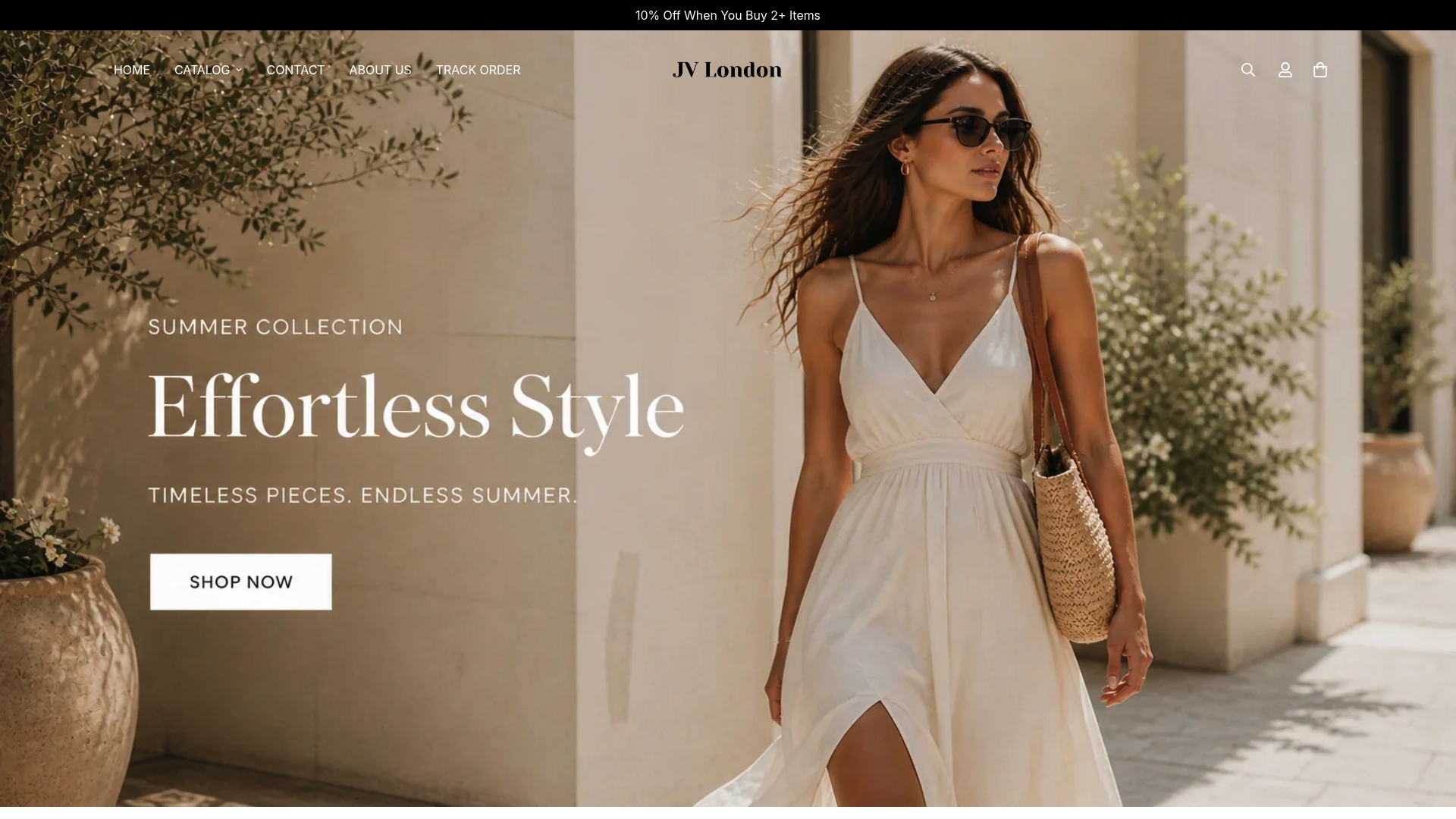
Jvwear’s catalogue is built around the kind of versatile, well-priced pieces that make sale shopping genuinely worthwhile. The cardigans collection is a strong example: layering staples that work across seasons and integrate into a minimalist wardrobe without effort. The two-piece midi dress set pairs a button-front cardigan with a midi dress, giving you two wearable pieces in one purchase at a price that reflects genuine value. Free UK shipping and 30-day returns mean you can shop with confidence, not just with optimism.
FAQ
What is the role of sale pricing in fashion retail?
Sale pricing in fashion is a deliberate tactic used to drive purchases, manage inventory, and influence brand perception. It operates through discount framing, timing, and promotion structure rather than simple price reduction.
Why do fashion sales trigger impulse buying?
Discount framing activates perceived value, price fairness, and savings satisfaction, which are psychological drivers that lower purchase resistance. Research shows discount offers carry a correlation coefficient of r = 0.78 with impulse buying behaviour.
How does frequent discounting affect a fashion brand’s image?
Excessive or high-frequency discounting weakens consumers’ perception of product quality and trains shoppers to wait for sales rather than buy at full price, which damages long-term brand equity.
What is keystone pricing in fashion?
Keystone pricing is the industry-standard method of multiplying the cost of goods by 2 to 2.5 for wholesale and doubling again for retail. It sets the price floor from which markdowns are calculated.
How can I use fashion sales to build a minimalist wardrobe?
Focus on wardrobe gaps rather than discount size, prioritise versatile pieces in your core colour palette, and shop end-of-season sales in january and july for the deepest genuine markdowns on current stock.