The midi length has a reputation problem. Some people write it off as unflattering, too long for petites, too conservative for younger wearers, or just awkward. That reputation is entirely undeserved. Understanding why midi length is flattering comes down to knowing how hemlines interact with proportion, height, and silhouette. When you get that pairing right, the midi is arguably the most versatile and confidence-boosting length in any wardrobe. This guide breaks down exactly how to wear it in a way that works for your body.
Table of Contents
- Key takeaways
- Why midi length is flattering: proportions explained
- How your height shapes the ideal midi hem
- Midi lengths by body shape
- Styling tips: footwear, fabric, and cut
- Versatility: the real reason midis belong in your wardrobe
- My honest take on the midi debate
- Find your perfect midi at Jvwear
- FAQ
Key takeaways
| Point | Details |
|---|---|
| Midi placement affects proportion | Small shifts in hemline placement change how balanced your silhouette looks from head to toe. |
| Height determines the best hem | Petites suit just-below-knee hems, while taller figures carry ankle-grazing lengths effortlessly. |
| Body shape guides the cut | A-line and pleated midis add curves; wrap and fitted styles highlight the waist. |
| Footwear changes everything | Heels elongate the leg under a midi; pointed-toe flats extend the line on flat days. |
| Midis work for any occasion | One midi dress can move from office to evening with a change of shoes and accessories. |
Why midi length is flattering: proportions explained
The midi sits anywhere from just below the knee to ankle-grazing, and that range matters far more than most people realise. A hem that lands two inches lower or higher can shift how your entire body reads visually.
| Midi placement | Where it falls | Visual effect |
|---|---|---|
| Just below knee | 1-3 inches below knee | Lengthens leg line, suits petites well |
| Mid-calf | Middle of the calf muscle | Most universally balanced placement |
| Ankle-grazing | 1-3 inches above ankle | Adds drama, best on average to tall frames |
The mid-calf length is the most universally flattering placement because it balances proportions without visually cutting the leg. That sweet spot avoids the two most common midi mistakes: hemming too close to the widest part of the calf, or going so long that the leg disappears entirely.
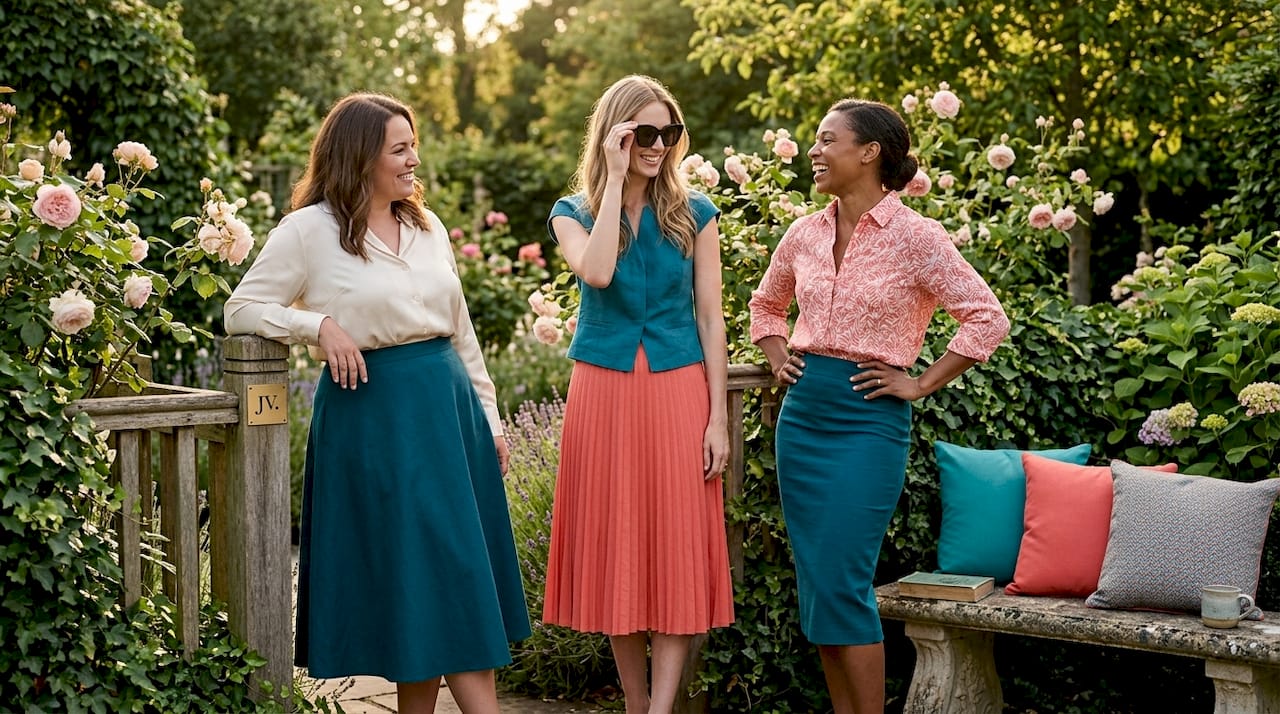
Silhouette also plays a significant role. An A-line midi flares gently from the waist and creates an hourglass impression on almost any body. A pencil midi skims the body and elongates vertically. A pleated midi adds movement and softness. Each cut interacts with the hemline differently, which is why two dresses at the same length can feel completely different on the same person.
The fabric weight sharpens this further. Fabric and cut together determine how the midi length actually flatters the wearer by affecting silhouette and movement. Structured fabrics create defined, polished shapes. Flowy fabrics like chiffon or satin add ease and softness, which can either skim or drape depending on the cut.
How your height shapes the ideal midi hem
Height is the single biggest factor in choosing where your midi should fall. Getting this wrong is what gives the length its unflattering reputation. Getting it right makes the midi look as though it was made for you.
Petites (5’3" or shorter) are best suited to hemlines just below the knee or at the upper mid-calf. An ankle-grazing length on a shorter frame can visually compress the leg line and make the entire silhouette feel heavy. The fix is not to avoid midi altogether. It is to choose the right placement within the midi range and pair it with smart styling.
Height-based midi styling tips:
- Petite frames: Choose hems that land just below the knee or at the upper calf. Avoid ankle-length styles unless you are wearing a significant heel.
- Average height (5’4" to 5’7"): You have the most flexibility. Mid-calf is your sweet spot, but you can experiment across the full midi range with ease.
- Tall frames (5’8" and above): Ankle-grazing and lower mid-calf lengths look particularly elegant. You can also wear wide-leg or voluminous midi silhouettes without feeling overwhelmed.
- All heights: Vertical details like centre-front seams, button plackets, or vertical prints draw the eye up and elongate the leg line regardless of where the hem falls.
- Petites in particular: Professional stylists recommend buying petite-specific sizes or getting a midi tailored to achieve a flattering fall and avoid an awkward hem.
Pro Tip: If you are petite and want to wear a longer midi, choose a monochromatic outfit. Keeping your top and skirt in the same colour family creates an unbroken vertical line that reads as height.
The midi is often misunderstood for petites, but incorporating vertical styling details creates an elongated silhouette that flatters smaller frames. The length is not the obstacle. The styling approach is.
Midi lengths by body shape
Every body shape has a midi strategy that works with its natural proportions rather than against them.
-
Pear-shaped bodies: The midi is genuinely excellent for pear shapes. A mid-calf A-line midi skirt skims over the hips and thighs and draws the eye down evenly, balancing wider hips with a defined waist. Avoid very clingy fabrics around the hip area unless that is the look you are going for.
-
Apple-shaped bodies: High-waist midi skirts define the waist and draw the eye upward, away from the midsection. Styles that skim rather than cling across the stomach create a smooth, flattering silhouette. Pair with a fitted but not tight top to keep proportions balanced.
-
Rectangle bodies: A rectangle frame benefits from volume and waist definition. Pleated or A-line midi skirts add curves and give the silhouette a more defined shape. Look for midi dresses with ruching, wrap fronts, or cinched waists to create the impression of curves.
-
Hourglass bodies: Fitted midi styles like wrap dresses or bodycon midis naturally highlight the waist and follow the natural curve of the body. You do not need to add volume. You just need to let the length do its job of creating elegance without over-exposure.
-
Inverted triangle bodies: Choose midi skirts with volume at the hem, like tiered or pleated styles, to balance broader shoulders. A-line cuts work brilliantly here because they add width where the body naturally tapers.
The benefits of midi skirts extend across every body type precisely because the length itself is neutral. It is the cut, waist placement, and fabric that you adapt to your shape.
Styling tips: footwear, fabric, and cut
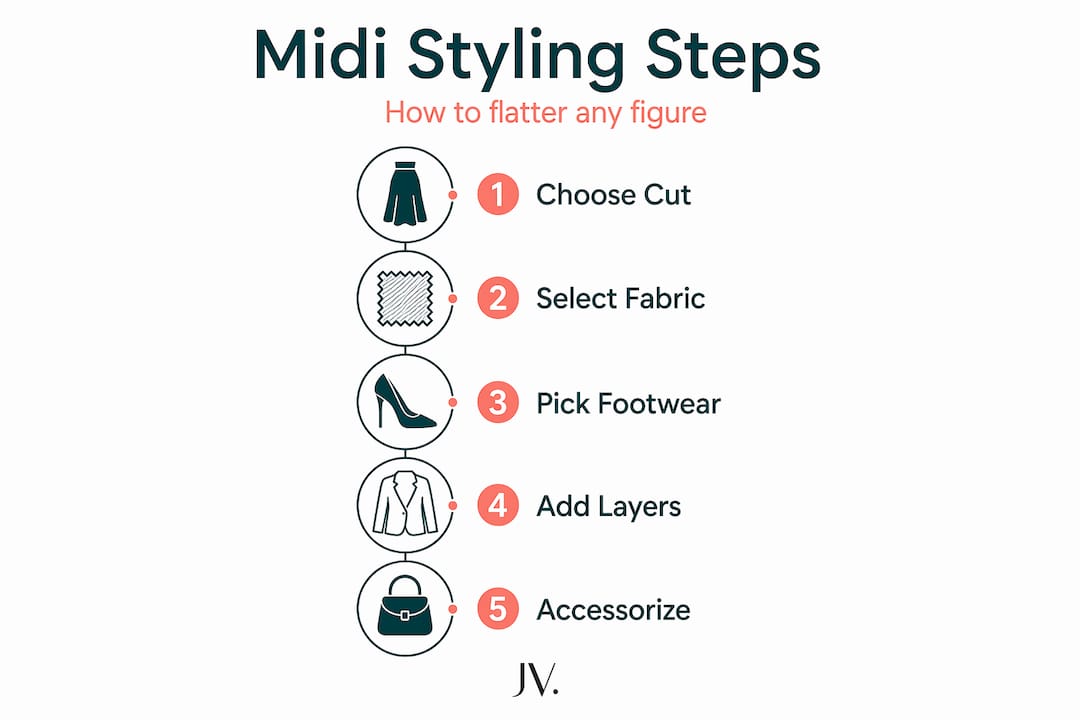
Getting the proportions of a midi right is one thing. Styling it to genuinely flatter is the next step. A few deliberate choices make the difference between looking polished and looking lost in fabric.
- Heels: Even small block heels effectively lengthen the silhouette under a midi. For petite wearers, heels are particularly important. A kitten heel, block heel, or strappy sandal all work without the discomfort of a stiletto.
- Pointed-toe flats: If you prefer flats, the pointed toe extends the visual line of the leg in a way that a round or square toe does not. This is a small detail that makes a noticeable difference with a midi hem.
- Flowy fabrics: Chiffon, satin, and georgette move with the body and drape beautifully. They work best in A-line or wrap cuts and give a soft, feminine look that suits both casual and dressier occasions.
- Structured fabrics: Cotton poplin, linen, and thick crepe hold their shape and create a more tailored silhouette. These fabrics are excellent for pencil or pleated midi skirts where clean lines matter.
- Prints: If you are wearing a large print, keep the rest of the outfit minimal. Busy prints on a midi can overwhelm the frame if the styling is equally loud. A bold floral midi with simple accessories and a clean shoe is far more powerful than competing elements.
Pro Tip: Fabric weight affects the hem fall significantly. Lighter fabrics can ride up or cling unpredictably, so consider a half-slip underneath for a smoother silhouette and better drape.
For everyday midi dress styling, thinking about the full outfit ecosystem matters. The shoes, the bag, the top or jacket you layer over it all shape whether the midi feels put-together or accidental.
Versatility: the real reason midis belong in your wardrobe
If the flattering proportions are not enough to convince you, the sheer range of occasions a midi can cover should be. The same midi dress can be styled in at least 35 different ways for various occasions simply by changing layers, footwear, and accessories.
That is not an exaggeration. It is one of the reasons midi dresses are a cornerstone piece in 2026 wardrobes for their ability to move from professional to casual with simple swaps.
| Styling element | Casual | Office | Evening |
|---|---|---|---|
| Footwear | Trainers or sandals | Block heels or loafers | Strappy heels |
| Top/outerwear | Cropped denim jacket | Fitted blazer | Silk camisole or none |
| Bag | Tote or backpack | Structured shoulder bag | Clutch or mini bag |
| Accessories | Minimal, relaxed | Simple earrings, watch | Statement jewellery |
Midi lengths also offer more practical ease than maxi lengths, which is why they suit an active lifestyle far better. You can walk, cycle, shop, and commute without managing excess fabric. That combination of elegance and practicality is exactly what makes the midi such a durable wardrobe investment.
My honest take on the midi debate
I have heard every reason people give for avoiding midis. Too frumpy. Too long. Not right for my height. In my experience, almost every one of these objections disappears the moment someone tries the right midi in the right cut for their proportions.
What I have found is that the real barrier is not the length. It is uncertainty. When someone does not know what hem placement or silhouette suits them, the midi can feel like a gamble. But once you understand the logic behind why certain placements work with your height and shape, the midi stops feeling like a risk and starts feeling like a default.
My personal view is that the midi length is the most elegant and practical option for everyday dressing. It offers coverage without heaviness, style without effort, and proportion without restriction. I think the idea that midis shorten legs is a myth that comes from unstyled examples. A well-chosen midi with the right footwear actually elongates the silhouette more effectively than a mini in many cases, because it creates a longer, unbroken vertical line.
The rule I would offer above all others is this: stop following rules and start experimenting. Try a hem that feels slightly outside your comfort zone. Pair it with a shoe you would not normally reach for. The midi rewards curiosity.
— Mykola
Find your perfect midi at Jvwear
Jvwear’s midi collection is built around exactly the principles covered above. Flattering cuts, thoughtful proportions, and fabrics that drape and move well. The Daphne floral midi sundress is a standout piece featuring a lace-up detail that cinches the waist and a hem that sits at an ideal mid-calf length for most heights. If you prefer a wrap-front style, the Cressida floral wrap midi is designed to flatter a wide range of body types through adjustable fit and elegant drape. For something with more structure, the Amelia corset bodice midi pairs a defined waist with an A-line skirt for a silhouette that works beautifully on hourglass, pear, and rectangle figures alike. Jvwear offers free UK shipping and 30-day returns, so finding your midi match is completely risk-free.
FAQ
Why do midi lengths flatter so many body types?
The midi hemline covers the widest part of the thigh on most body types and creates a long, unbroken vertical line that reads as elegant and proportional. The range of cuts available within the midi category means there is a silhouette suited to almost every figure.
What is the most flattering midi length for petites?
Petites suit hemlines just below the knee or at the upper mid-calf. Pairing this with heels or pointed-toe shoes and monochromatic styling creates a longer, more elongated silhouette.
Can you wear a midi dress casually without looking overdressed?
Yes. Swap heels for trainers or flat sandals, add a denim jacket, and carry a relaxed bag. The same midi dress can read as completely casual or polished depending on how you style it.
What shoes work best with a midi skirt?
Block heels, kitten heels, strappy sandals, and pointed-toe flats all work well with midi lengths. Heels elongate the leg line most effectively, while pointed-toe flats create visual length without added height.
Is the midi dress trend still relevant in 2026?
Absolutely. Stylists consistently cite midis as a staple for their ability to move between professional and casual settings with ease, and the versatility of midi dresses ensures they remain a reliable, trend-forward choice year after year.