Fashion value is defined as the total worth a garment delivers across its lifespan, accounting for quality, durability, ethical production, emotional connection, and cost relative to use. It is not simply about price. Understanding what does fashion value mean reshapes how you shop, what you keep, and how confidently you wear it. The industry term for this broader assessment is “perceived value,” but fashion value goes further by folding in sustainability frameworks, Life Cycle Assessments, and personal meaning. Consumers aged 18–35 are driving this shift, moving away from impulse trend purchases towards deliberate, lasting choices.
What does fashion value mean beyond the price tag?
Fashion value is a multi-dimensional concept, and price is only one layer. Industry frameworks now use Life Cycle Assessments and social impact evaluations to measure a garment’s true worth. That means the £30 dress you wear twice and discard scores far lower on value than the £80 dress you reach for every other week.
The five core dimensions of fashion value are durability, ethical production, emotional connection, cost-per-wear, and environmental footprint. Each one contributes to the overall picture differently. A piece can score well on price and poorly on ethics, which still makes it a low-value purchase by this broader standard.
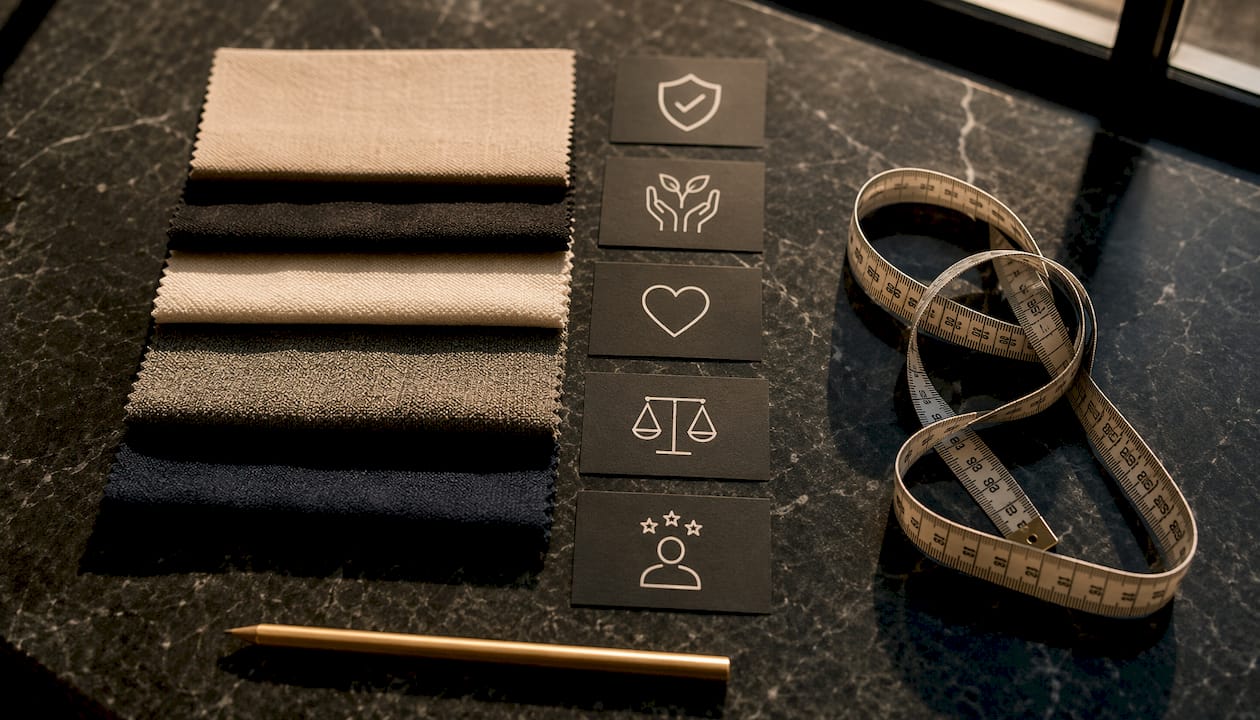
Cost-per-wear analysis is the most practical metric for everyday shoppers. You divide the purchase price by the number of times you wear the item. A £120 coat worn 60 times costs £2 per wear. A £40 top worn four times costs £10 per wear. The coat is the better value by a significant margin.
Emotional connection is a dimension that rarely gets discussed, but it matters. Pieces you genuinely love get worn more, cared for better, and kept longer. That emotional durability translates directly into higher value scores across every other dimension.
| Dimension | What it measures |
|---|---|
| Durability | Material quality and resistance to wear over time |
| Ethical production | Fair labour practices and supply chain transparency |
| Emotional connection | Personal meaning and likelihood of repeated wear |
| Cost-per-wear | Purchase price divided by total number of wears |
| Environmental footprint | Carbon impact, water use, and end-of-life circularity |
How are consumer priorities around fashion value shifting?
66% of shoppers now prioritise value for money over trendiness, according to the Informa 2026 Fashion Consumer Outlook. That figure represents a fundamental change in how people relate to clothing, not just a temporary response to economic pressure.
The same research shows that 92% plan to adjust their shopping habits due to economic pressures, favouring durability and quality over trend cycles. This is not frugality. It is a deliberate recalibration of what clothing is for.
The capsule wardrobe concept sits at the centre of this shift. Shoppers are building smaller, higher-utility wardrobes built around versatile staples rather than seasonal hauls. The logic is simple: ten pieces you wear constantly outperform thirty pieces you rotate once.
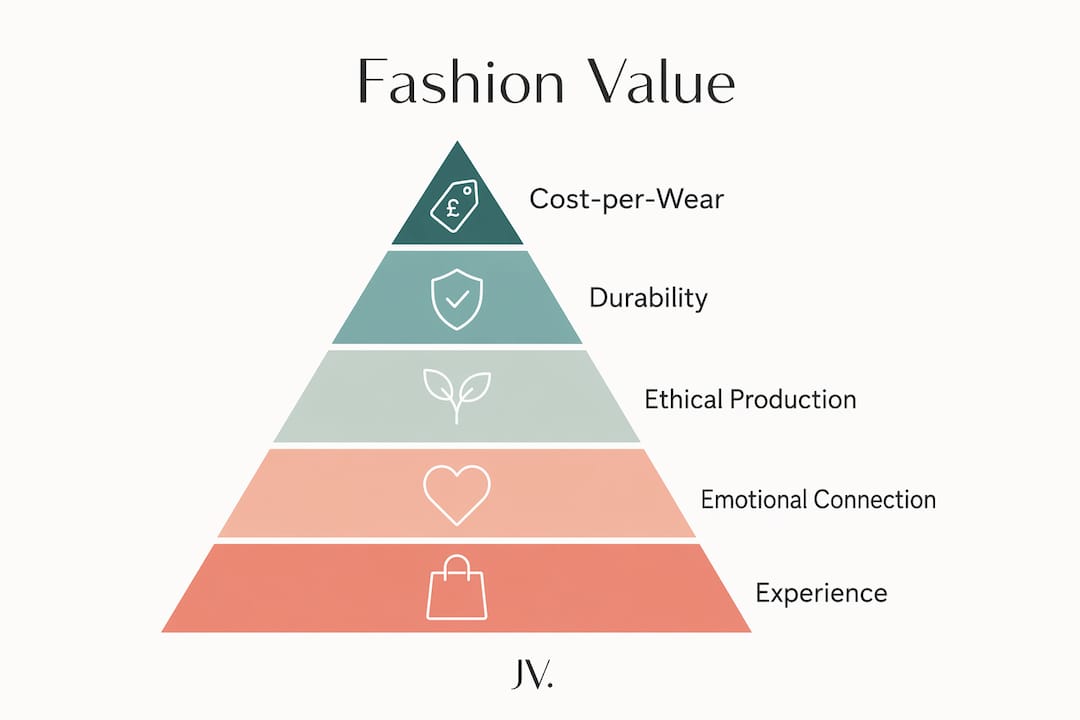
Value is also shifting from transactional ownership to relational engagement, where consumers measure worth by how meaningful and durable clothing is over time. A garment’s story, its maker, and its longevity all factor into that equation. This is why meaningful over trendy fashion is gaining ground with younger shoppers who want their wardrobe to reflect their values.
Resale value is another emerging consideration. Consumers increasingly treat quality garments as semi-liquid assets, factoring in potential resale when they buy. A well-made midi dress from a trusted brand holds its resale value far better than a fast-fashion equivalent.
Key signals of this consumer shift include:
- Prioritising fabric quality and construction over seasonal trend alignment
- Choosing versatile pieces that work across multiple occasions
- Researching brand ethics and supply chain transparency before purchasing
- Calculating cost-per-wear before committing to a purchase
- Considering resale platforms as part of the garment’s overall value lifecycle
Pro Tip: Before buying any garment, ask yourself: “Will I wear this at least 30 times?” If the answer is uncertain, the piece likely does not meet your personal value threshold.
What are the biggest misconceptions about fashion value?
The most persistent myth is that fashion value means buying cheap. Value fashion is smart spending that balances trend awareness and consistent quality at accessible prices. Cheap and valuable are not the same thing, and confusing them leads to wardrobes full of unworn clothes.
The opposite myth is equally damaging: that high price signals high value. A luxury price tag does not guarantee durability, ethical production, or emotional resonance. Plenty of expensive garments score poorly on cost-per-wear because they are too precious or too trend-specific to wear regularly.
Common misconceptions worth rejecting:
- Value equals low price. A £15 top that falls apart after three washes has negative value.
- Premium brands always deliver value. Brand prestige and garment quality are separate things.
- Trend-led pieces are worth the investment. Highly trend-specific items have a short useful life, which drives cost-per-wear up sharply.
- Sustainable fashion is always expensive. Many accessible brands now build ethical production into their pricing without charging luxury rates.
Retailers that deliver genuine value do so through transparent pricing, accessibility, and demonstrating care for the customer, not just through low prices. When a brand shows you how a garment is made, what it costs to produce, and why it is priced as it is, that transparency itself is a value signal.
Pro Tip: When assessing a brand’s value credentials, check for clear returns policies, fabric composition details, and honest sizing information. These small signals indicate a brand that respects your purchase decision.
How can you apply fashion value to your own shopping decisions?
Applying the concept of fashion value starts with asking better questions before you buy. The significance of fashion value becomes real the moment it changes a purchase decision. You stop asking “Is this affordable?” and start asking “Is this worth it?”
A practical framework for assessing garments before purchase:
- Check the fabric composition. Natural fibres like cotton, linen, and wool generally last longer and age better than synthetic blends.
- Calculate the cost-per-wear. Estimate how many times you will realistically wear the piece in the next 12 months. Divide the price by that number.
- Assess versatility. Can this piece work across at least three different outfit combinations? Versatile pieces deliver more value per wear.
- Research the brand’s ethics. Look for supply chain transparency, fair labour commitments, and clear environmental policies.
- Consider resale potential. Classic cuts and quality construction hold resale value. Highly trend-specific pieces rarely do.
- Ask about your emotional response. Do you love this piece, or are you just attracted to the price or the trend? Genuine enthusiasm predicts higher wear frequency.
The cost-per-wear formula is the single most useful tool for building a value-conscious wardrobe. It reframes every purchase as an investment rather than an impulse. Pairing this with a curated approach to affordable wardrobe essentials means you build a wardrobe that works harder with fewer pieces.
Timeless staples anchor a value-driven wardrobe. Midi dresses, well-cut trousers, quality knitwear, and versatile sets all score consistently well on durability, versatility, and emotional longevity. Trend elements can sit alongside these anchors without dominating the wardrobe or the budget.
Key takeaways
Fashion value is best assessed through a multi-criteria framework covering cost-per-wear, durability, ethics, emotional connection, and environmental impact, not price alone.
| Point | Details |
|---|---|
| Fashion value is multi-dimensional | It covers durability, ethics, emotional connection, cost-per-wear, and environmental footprint. |
| Cost-per-wear is the core metric | Divide the purchase price by expected wears to reveal true value beyond the ticket price. |
| Consumer priorities have shifted | 66% of shoppers now prioritise value over trendiness, favouring quality and longevity. |
| Cheap does not equal valuable | Low price and high value are separate things; smart spending balances quality, utility, and access. |
| Resale potential matters | Quality garments hold resale value, making them semi-liquid assets worth factoring into purchase decisions. |
Why I stopped chasing trends and started buying for value
I spent years buying into seasonal trends, convincing myself that a new piece would complete my wardrobe. It never did. The wardrobe grew, the satisfaction shrank, and the cost-per-wear on most of those purchases was quietly embarrassing.
The shift happened when I started treating my wardrobe like a curated collection rather than a running total. I began asking whether a piece would still feel right in three years. That single question eliminated most impulse purchases immediately.
What surprised me most was how much more confident I felt in a smaller, better-chosen wardrobe. Fewer decisions, stronger outfits, and a genuine connection to each piece. The smart shopping approach is not about spending less. It is about spending with intention.
Sustainability became part of this naturally. When you buy less and choose better, your environmental footprint shrinks without any additional effort. The two goals are not in tension. They reinforce each other.
My honest advice: start with one category. Audit your dresses, or your knitwear, and identify which pieces you actually reach for. The pattern will tell you exactly what your personal fashion value criteria are. Then shop to that standard.
— Mykola
Quality and style worth every wear at Jvwear
Jvwear’s collection is built around the principles that make fashion genuinely valuable: versatile cuts, quality construction, and pieces designed to work across seasons rather than expire with them.
The cardigans collection is a strong starting point for value-conscious shoppers. Knitwear anchors a capsule wardrobe and scores consistently well on cost-per-wear, versatility, and emotional longevity. For those building around dresses, the two-piece midi dress set combines trend-aware styling with the kind of versatility that justifies repeated wear. Free UK shipping and a 30-day returns policy mean the purchase decision carries no unnecessary risk.
FAQ
What does fashion value mean in simple terms?
Fashion value is the total worth a garment delivers across its lifespan, including quality, durability, ethical production, and personal meaning, not just its price.
How do I calculate cost-per-wear?
Divide the purchase price by the number of times you expect to wear the item. A £60 dress worn 30 times costs £2 per wear, which represents strong fashion value.
Is sustainable fashion always more expensive?
Sustainable fashion is not always more expensive. Many accessible brands now build ethical production into standard pricing, and the higher cost-per-wear efficiency of quality pieces often offsets any price premium.
Why do 66% of shoppers now prioritise value over trends?
Economic pressures and a cultural shift towards conscious consumption have driven this change. Shoppers increasingly favour durability and quality because they deliver better long-term returns on their clothing spend.
What makes a garment a good fashion value investment?
A garment delivers strong fashion value when it scores well on durability, versatility, ethical production, and emotional connection, and when its cost-per-wear calculation justifies the purchase price.