Discount codes are defined as alphanumeric strings that shoppers enter at checkout to receive a price reduction, free shipping, or another financial benefit. On fashion sites, their role extends far beyond a simple saving. 64% of shoppers say discount codes speed up their purchasing decisions, which means promotional codes now function as purchase validation tools, not just incentives. Coupons have evolved into fundamental purchase validation mechanisms in e-commerce, making them central to closing sales. Understanding the role of discount codes on fashion sites helps you shop with more confidence and spend more wisely.
What types of discount codes do fashion retailers use?
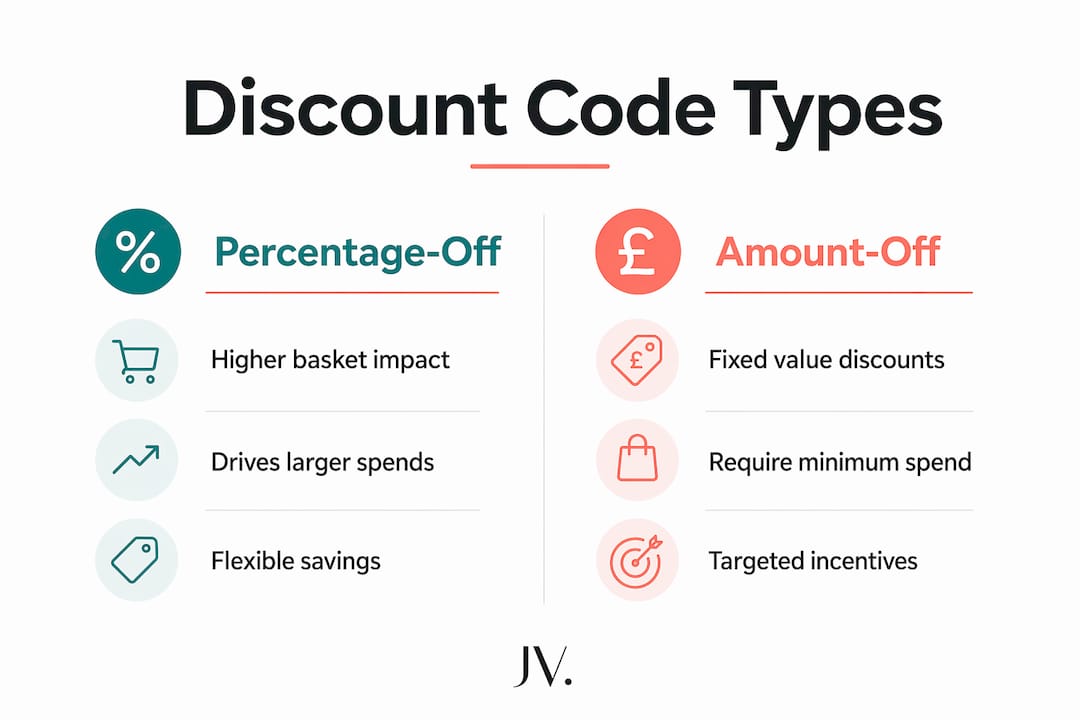
Fashion retailers use two primary discount structures: percentage-off and amount-off. The difference in shopper behaviour between the two is significant. Percentage-off codes yield 42% higher average order values than amount-off codes. That gap exists because a percentage saving feels proportional to the basket size, which encourages shoppers to add more items.

Amount-off codes, such as £10 off, perform differently depending on how they are structured. When a minimum spend threshold is attached, amount-off codes achieve 2.6x higher average order value than those without a threshold. The minimum spend mechanic pushes shoppers to fill their basket past a trigger point, which benefits both the retailer and the shopper who wants to unlock the saving.
The distinction between generic and personalised codes matters just as much as the discount type. Unique personalised codes increase average order value by 39% compared to generic codes. Personalised codes feel exclusive, which raises perceived value and reduces the likelihood of code sharing.
Here is a quick breakdown of how common discount types align with different shopping goals:
- Percentage-off codes suit large basket purchases, such as a full outfit refresh, because the saving scales with spend.
- Fixed amount-off codes with minimum spend work well when you are close to a threshold and want to unlock a specific saving.
- Free shipping codes remove a friction point that frequently causes cart abandonment, particularly on lower-value orders.
- Personalised codes sent by email reward loyalty and tend to carry better terms than publicly available generic codes.
Pro Tip: When you receive a personalised code by email, check whether it has an expiry date and a minimum spend requirement before you start shopping. Knowing the terms upfront helps you build a basket that maximises the saving.
How do discount codes shape shopper psychology?
Discount codes activate several psychological triggers that go well beyond the arithmetic of saving money. The most powerful is urgency. Limited-time discounts during specific seasons create a scarcity effect that increases perceived value and drives faster decisions. When a code expires at midnight, the decision window closes, and shoppers act rather than defer.
The second trigger is validation. Applying a code at checkout confirms that you are paying a fair price. This matters because fashion pricing is often opaque. A shopper who finds a working code feels informed and in control, which reduces post-purchase doubt and increases satisfaction.
Exclusivity is the third trigger, and it is the most underestimated. Personalised codes sent to specific segments make shoppers feel recognised. That feeling of being selected increases engagement and, as the data shows, raises average order value meaningfully.
“The visible presence of a discount code entry box at checkout causes 27% of shoppers to abandon their carts to search for a code externally, often losing the sale entirely. Hiding the box behind a low-friction link retains conversions while still accommodating shoppers who have a code.”
The checkout box finding is counterintuitive. The presence of a discount field, even when you have no code, creates anxiety that you are missing a saving. That anxiety is strong enough to pull shoppers away from a completed basket. Fashion retailers who understand this hide the field behind a collapsible link rather than displaying it prominently. As a shopper, if you see a collapsed “Do you have a discount code?” link, you are on a site that has thought carefully about its checkout experience.
You can read more about how time-sensitive promotions work and how they interact with discount codes to create urgency.
What risks do fashion brands face from discount codes?
Discount codes carry real risks when used without a clear strategy. The most damaging outcome is brand commoditisation. Frequent indiscriminate discounting erodes brand value and reference price, training customers to wait for sales and reducing full-price purchases. A permanent “20% off everything” banner is not a promotion. It is a price cut that permanently resets shopper expectations.
Margin erosion is the second risk. A 20% discount on a fashion item with a 50% gross margin does not halve the profit. It eliminates a much larger proportion of it once fulfilment, returns, and marketing costs are factored in. Retailers who do not model the break-even point for each promotion often run campaigns that generate revenue but destroy profit.
The third risk is code leakage. Generic codes shared publicly can be used by shoppers who were never the intended audience, diluting the targeting benefit and inflating redemption costs.
High-performing fashion brands avoid these risks by following a disciplined approach:
- Restrict codes to defined audiences. Only 4% of codes are restricted, yet restricted codes show a 50–68% lift in average order value compared to unrestricted codes. Restriction pays.
- Set clear expiry dates. Time-limited codes prevent the reference price erosion that comes from permanent discounting.
- Model the margin before launching. Calculate the minimum order value needed to break even on the discount before publishing any code.
- Use unique codes for high-value segments. Personalised codes cannot be shared, which protects targeting integrity and reduces leakage.
- Avoid stacking discounts without a cap. Allowing multiple codes to combine can result in orders that cost the retailer money to fulfil.
Pro Tip: As a shopper, a brand that rarely discounts and runs short seasonal sales is usually protecting its quality positioning. Those limited windows are worth tracking because the codes tend to be genuine, not permanent fixtures dressed up as promotions.
How can shoppers use discount codes to maximise savings?
Getting the most from fashion site promotional codes requires a small amount of planning. Codes found at the right moment, applied to the right basket, can deliver savings that compound across a season.
- Sign up for email lists before you need to buy. Personalised codes are distributed primarily by email. Subscribing to a brand’s list before a planned purchase gives you access to codes that are not publicly available. The best online fashion deals in 2026 consistently come through direct brand communications rather than third-party aggregator sites.
- Check minimum spend requirements before building your basket. If a code requires a £50 minimum and your basket is at £42, adding one more item unlocks the saving. Knowing the threshold before you browse prevents you from missing it by a small margin.
- Time your purchases around seasonal windows. Retailers concentrate their best codes around specific periods. Planning purchases around these windows, rather than buying at full price in between, is the single most effective saving strategy available.
- Use personalised codes over generic ones when both are available. Personalised codes consistently carry better terms and higher average order value benefits. If you have received a unique code by email, use it before reaching for a generic code found on a coupon site.
- Read the exclusions. Most codes exclude sale items, new arrivals, or specific categories. Checking exclusions before checkout saves the frustration of a code failing at the final step.
You can find a detailed guide on tracking discount codes across fashion sites to build a consistent saving habit throughout the year.
Key takeaways
Discount codes on fashion sites are purchase validation tools that directly raise average order values, accelerate decisions, and shape brand perception when used with clear targeting and timing.
| Point | Details |
|---|---|
| Percentage-off codes drive higher spend | Percentage-off codes yield 42% higher average order values than fixed amount-off codes. |
| Minimum spend thresholds multiply basket size | Amount-off codes with a minimum spend achieve 2.6x higher average order value than those without. |
| Personalised codes outperform generic ones | Unique codes increase average order value by 39% over generic codes and cannot be shared externally. |
| Checkout box visibility causes cart abandonment | A visible discount field prompts 27% of shoppers to leave the checkout to search for a code. |
| Indiscriminate discounting erodes brand value | Permanent discounts reset price expectations and reduce full-price sales over time. |
Discount codes as marketing levers, not afterthoughts
I have watched fashion brands treat discount codes as a panic button for slow weeks. That approach consistently backfires. Once you train a customer to expect 20% off, full price feels like a penalty, not the norm.
The brands I have seen get this right treat codes as configurable marketing levers, matching the discount type to a specific business objective. Acquisition campaigns use generous percentage-off codes to lower the barrier for first-time buyers. Re-engagement campaigns use personalised codes with expiry dates to bring lapsed customers back without broadcasting the offer to everyone. Loyalty programmes use restricted codes to reward high-value shoppers without leaking margin to the general public.
The shift I find most significant is the move towards AI-driven personalisation. Brands are beginning to issue codes that vary in value based on a shopper’s purchase history, browsing behaviour, and predicted lifetime value. A shopper who buys twice a year gets a different offer from one who buys monthly. That level of segmentation was impractical five years ago. It is becoming standard practice now.
For shoppers, the practical implication is clear. The most valuable codes are the ones sent directly to you, not the ones posted on aggregator sites. Protecting your inbox relationship with brands you trust is worth more than hunting for generic codes on third-party platforms.
— Mykola
Jvwear’s curated collections and current discount offers
Jvwear brings together modern, versatile women’s clothing and accessories designed for everyday wear, with promotional codes that make building a complete wardrobe genuinely affordable.
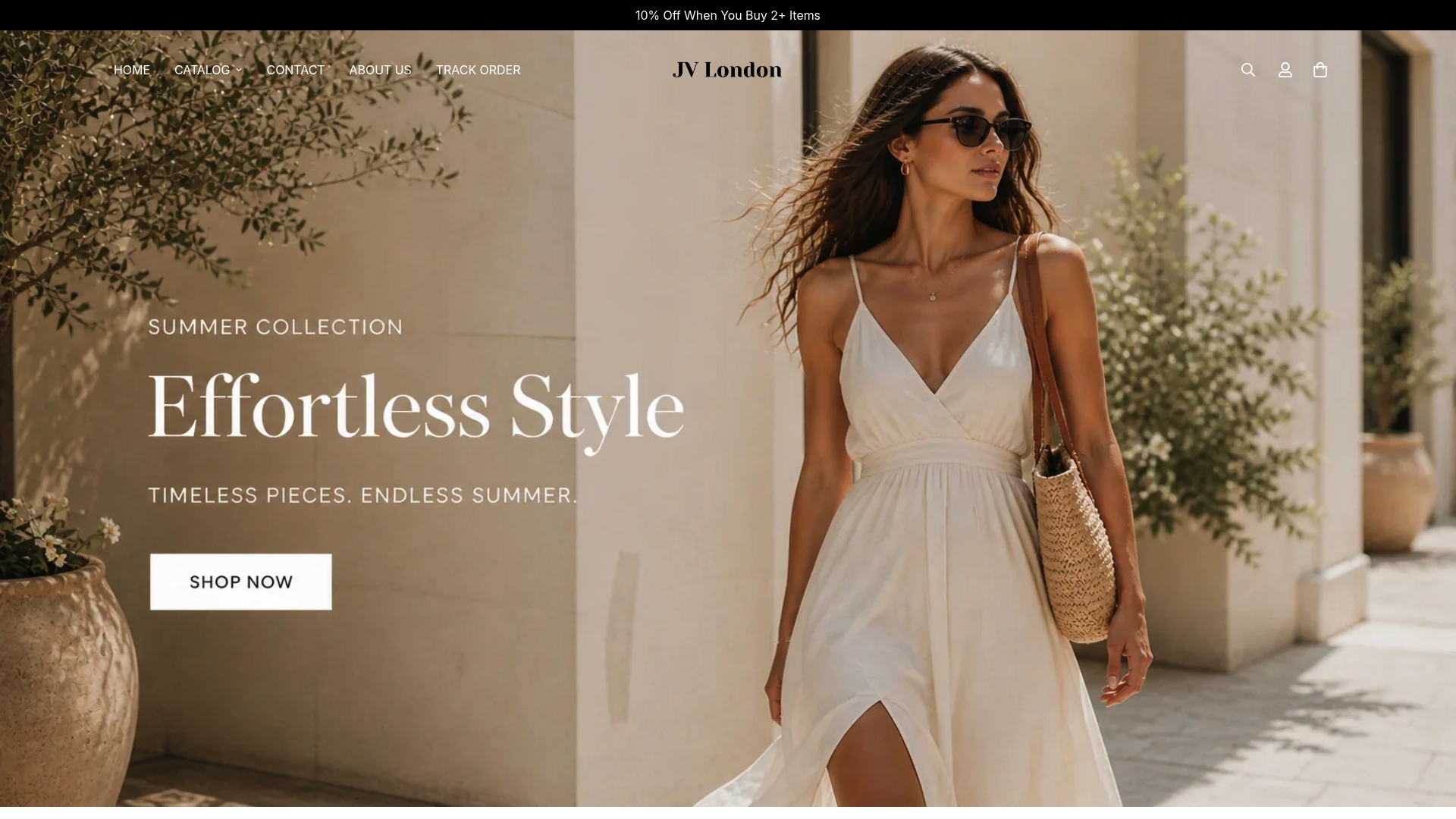
The cardigan collection at Jvwear covers everything from lightweight layering pieces to structured styles that work across seasons. The two-piece midi dress set is one of the site’s most popular picks, combining a button-front cardigan with a coordinated midi dress for a complete look in one purchase. Jvwear offers free UK shipping and a 30-day hassle-free returns policy, so applying a discount code at checkout carries no risk. Sign up to the Jvwear email list to receive personalised codes before your next purchase.
FAQ
What is the role of discount codes on fashion sites?
Discount codes on fashion sites serve as purchase validation tools that accelerate buying decisions and increase average order values. Research shows 64% of shoppers say codes speed up their purchasing decisions.
Do percentage-off or amount-off codes save shoppers more money?
Percentage-off codes typically deliver higher savings on larger baskets, while amount-off codes with minimum spend thresholds are more effective for mid-range purchases. Percentage-off codes produce 42% higher average order values than fixed amount-off codes.
Why do some discount codes stop working at checkout?
Codes fail at checkout when they have expired, when the basket does not meet a minimum spend requirement, or when the items selected fall under exclusion categories such as sale items or new arrivals.
Are personalised discount codes better than generic ones?
Personalised codes consistently outperform generic codes, increasing average order value by 39%. They also cannot be shared publicly, which means the terms tend to be more favourable than codes distributed on coupon aggregator sites.
How can shoppers find the best discount codes for clothing?
Subscribing directly to a brand’s email list is the most reliable method. You can also follow a structured approach to finding fashion promotions across different retailer types throughout the year.