Outfit repeating works when the pieces you rewear do three jobs, not one, and when you deliberately shift the outline and the focal point each time you put them back on. That’s the whole method. Do these three things and nobody clocks the repeat:
- Choose multi-role pieces. A shirt that works buttoned, open, or tied is three outfits in one hanger.
- Change the outline. Tuck it, belt it, layer it. Same garment, different silhouette.
- Move the spotlight. New shoes, a different bag, a swapped necklace, and the eye reads “new outfit” even when it isn’t.
This is the practical, non-negotiable version of a strategy that JV London’s Mykola has written about at length, and it lines up with what publications from Cosmopolitan to menswear-turned-general-styling site Jack Cooper have been arguing for years.
Key Takeaways
Outfit repeating works when multi-function pieces, a changed outline, and a rotated focal point combine to make the same clothes read as new each time.
| Point | Details |
|---|---|
| Choose multi-role pieces | A shirt, dress, or trouser that does three jobs makes repeating effortless and cost-effective. |
| Use a repeatable formula | Base + layer + accent, or column + frame, removes daily decision fatigue. |
| Swap one slot, not zero | Changing shoes, a bag, or a layer between wears prevents the repeat from being noticed. |
| Fabric choice enables repeating | Cotton blends, ponte, and merino resist creasing and odour better than delicate fabrics. |
| Build with JV London staples | Cardigans and multi-way dresses from JV London form the backbone of a repeatable wardrobe. |
Table of Contents
- Why repeating outfits actually makes sense
- What outfit formulas make repetition invisible?
- How do you style the same clothes to look different?
- How often can you repeat an outfit at work or in photos?
- Care and maintenance that make repeating look intentional
- Staple pieces JV London recommends for repeatable dressing
- What most advice on outfit repeating gets wrong
- Build your repeatable wardrobe with JV London
- Frequently asked questions
- Sources
Why repeating outfits actually makes sense
Cost-per-wear is the maths that changes how you shop. A £120 dress worn four times costs £30 a wear; worn twenty times, it costs £6. Repeating isn’t cutting corners, it’s stretching value out of pieces you already paid for, and it’s the logic behind every “buy fewer, better things” argument in fashion right now.
There’s also a mental cost most people never tally: decision fatigue. A wardrobe built around a handful of trusted combinations means fewer 7am stand-offs with your wardrobe door.
Socially, the ground has shifted too. Cosmopolitan UK has reported on the self-consciousness many people still feel about being seen in the same outfit twice, even though repeating supports both sustainability and household budgets. The irony is that most people don’t register repeats at all unless you’re posting daily outfit photos to the same feed.
- Lower cost-per-wear on your best pieces
- Faster mornings, fewer decisions
- Easier packing for travel or short trips
- Genuinely less noticed than you assume
What outfit formulas make repetition invisible?
Two formulas do most of the heavy lifting, and once you’ve internalised them you can build outfits almost on autopilot.
Base + layer + accent. Pick a neutral base (a slip dress, straight trousers, a plain top), add one layer that changes shape (a blazer, a cardigan, a denim jacket), then finish with one accent that carries all the personality (a bold bag, statement earrings, a bright shoe). Swap only the accent and the same base reads as three different outfits across a week.
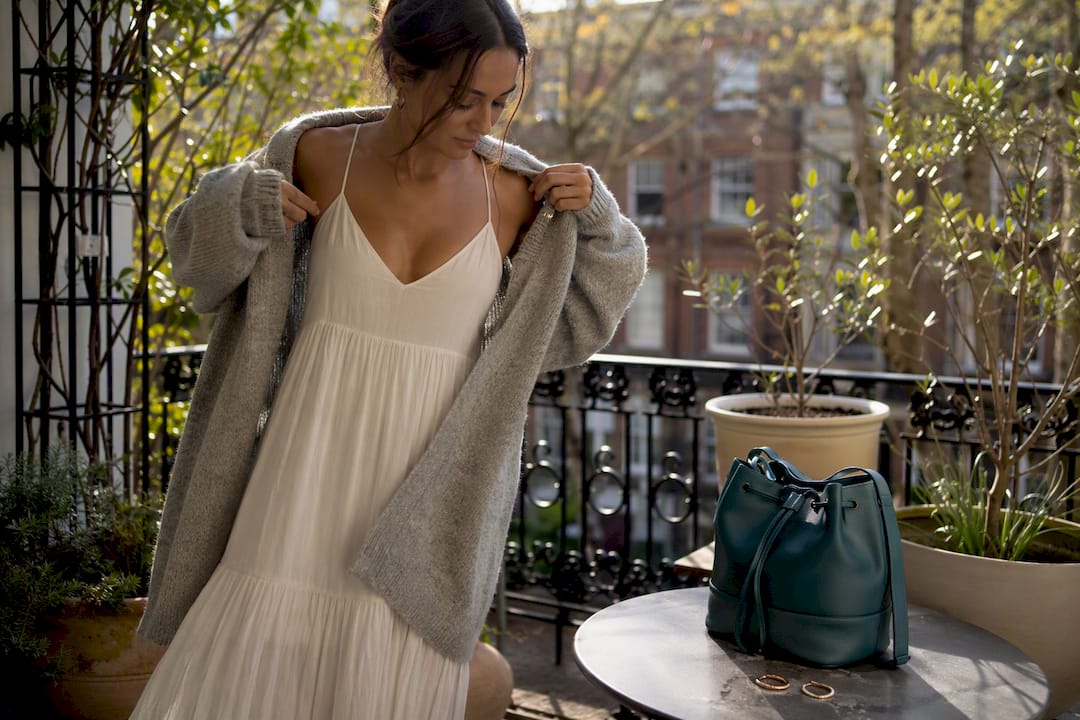
Column + frame. Wear one colour top to bottom to create a long, lean “column,” then frame it with an outer layer or accessory in a contrasting tone. The column does the quiet work; the frame does the talking. Change the frame, and the column becomes invisible.
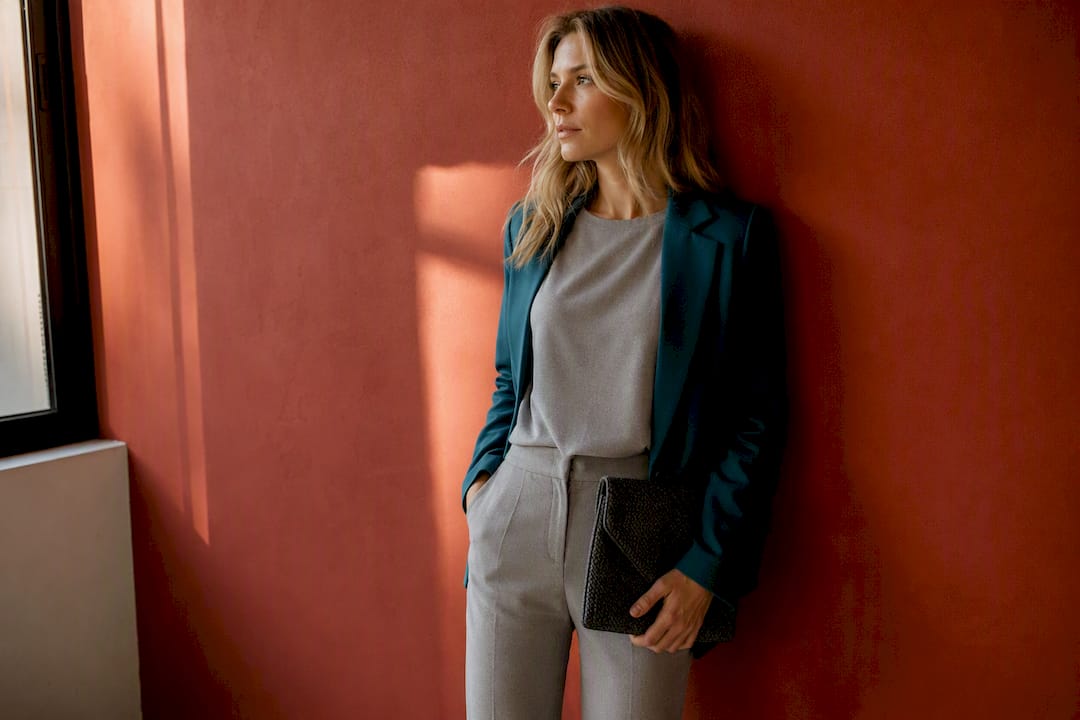
Jack Cooper’s styling guide frames this well: treat your wardrobe like a film set with a recurring cast of pieces, but change the “frame” and the “spotlight” each scene so it never looks like a rerun.
The trick to making this sustainable long-term is choosing one variety slot, the single item you commit to swapping every time (shoes work well for this), and one signature signal, a recognisable detail (always a red lip, always gold jewellery, always the same silhouette shape) that becomes your visual thumbprint rather than a repeated outfit.
Two small routines make this stick:
- Build a 10-minute closet. Group your three-function pieces together physically, so the shirt-trouser-cardigan combinations that work are grabbable in seconds, not buried behind things you never wear.
- Apply the one-minute morning rule. Before you leave the house, ask one question only: “Have I changed the outline or the accent since I last wore this?” If yes, you’re done deciding.
A small photographed lookbook, even a folder on your phone, helps you remember which combinations actually worked, according to Outflik’s wardrobe advice, and stops you defaulting to the one outfit you know is safe.
How do you style the same clothes to look different?
Four moves change how a garment reads without changing the garment itself.
- The tuck spectrum. Full tuck, front tuck, half tuck, no tuck. Each one moves the waistline and changes the proportion of the same top and trousers.
- The sleeve edit. Push sleeves up, roll a cuff, or push a jumper’s sleeves to three-quarter length. Small, but it resets the arm line entirely.
- The knot or fold. Knot a shirt hem, fold a jacket cuff back, cinch fabric at the waist with a simple twist.
- The belt illusion. A belt over a dress or cardigan reintroduces a waistline and turns a loose silhouette into a fitted one.
Contrast is the second lever. Pulling a lighter or brighter tone near your face (a scarf, a necklace, an open collar) redirects attention upward and away from “haven’t I seen this before.” Mixing textures, a smooth silk top under a chunky knit, a matte trouser with a glossy boot, does similar work by giving the eye something new to register.
Then there’s the fastest fix of all: rotate the spotlight. Shoes, bag, jewellery, and hair or makeup are the four items that change perception fastest, because they sit closest to where people naturally look first.
Pro Tip: If you only have five minutes to make a repeat outfit feel fresh, change your shoes and your hair. Those two alone shift more visual perception than a full new outfit.
How often can you repeat an outfit at work or in photos?
The rule that actually matters isn’t “never repeat,” it’s “never repeat identically, back to back.” Glamour’s guide to outfit repeating at work confirms what most people sense instinctively: an exact combo two days running gets noticed; the same combo with one slot swapped, three weeks apart, doesn’t.
Office-safe swaps that solve this fast:
- Change the layer: blazer one day, cardigan the next, over the same base.
- Change the shoes: heels to loafers changes the entire tone of an outfit.
- Change the bag or a single piece of jewellery.
For photos, the same base outfit reads completely differently against a new background, according to The Quiet Luxe Edit, so vary where you’re standing before you vary the clothes. Opening a collar, swapping a scarf, or changing a neckline detail near your face does the rest.
Care and maintenance that make repeating look intentional
Repeating only works if the clothes still look crisp on wear four. That starts with fabric choice: cotton blends, ponte, and merino resist creasing and odour far better than pieces that need dry cleaning after every outing, which travel-fashion guidance from L’ANIMAL CO points to as the difference between a wardrobe you can actually rewear and one you’re always waiting to have cleaned.
Between full washes, a sink rinse, a rolled towel to blot excess water, and an overnight air-dry resets most knits and dresses. A five-minute steam sorts out creasing without a full iron session.
- Wipe down shoes and condition leather bags regularly
- Rotate two pairs of everyday shoes so neither wears out fast
- Steam rather than iron delicate fabrics to protect fibres
Pro Tip: Keep a small fabric steamer near your wardrobe. It’s the single fastest way to make a repeated outfit look freshly pressed rather than pulled from the laundry basket.
Staple pieces JV London recommends for repeatable dressing
Three-function pieces are the backbone of any repeatable wardrobe, and a few categories do more work than the rest of your wardrobe combined.
- A crisp shirt worn buttoned for the office, open over a top for the weekend, or tied at the waist for evening.
- Relaxed trousers dressed up with heels and a blazer, or down with trainers and a tee.
- A versatile dress worn alone in summer, layered over a top in autumn, or belted with a jumper knotted at the waist in winter.
- A cardigan, which does more silhouette-changing work per pound spent than almost anything else in a capsule wardrobe.
For the formulas behind these combinations, JV London’s guide to everyday minimalist outfit formulas walks through the base-layer-accent structure in more depth, and the building blocks piece covers how to choose your foundation pieces in the first place.
What most advice on outfit repeating gets wrong
Most articles on this topic treat repeating as a confidence problem: “just stop caring what people think.” That’s incomplete advice. The actual fix is a systems problem, not a mindset one. Give someone three shirts that each do three jobs, and they’ll repeat happily and confidently, because the outfit genuinely does look different each time.
Where conventional wardrobe advice falls short is in over-indexing on quantity. More clothes doesn’t solve decision fatigue or repetition anxiety, better formulas do. A ten-piece wardrobe built around two solid formulas will outperform a forty-piece wardrobe with no repeatable logic behind it, every single morning.
If there’s one thing to prioritise first, it’s the variety slot, the one item you commit to changing every time. Not the flashiest fix, but the one that actually gets used at 7am when you’re half awake and running late. Everything else, the tuck, the belt, the contrast near the face, is refinement once that habit is in place.
Build your repeatable wardrobe with JV London
The three-function pieces this article keeps coming back to, a shirt that works three ways, a dress that layers for three seasons, a cardigan that changes any silhouette in seconds, are exactly what JV London’s cardigan collection is built around. Fit and fabric matter here: look for pieces that hold their shape wash after wash, since a cardigan that pills or stretches out stops doing the styling work it’s meant to do.
Rather than buying more, buy pieces engineered to be worn on repeat. Browse the cardigan collection, check sizing against JV London’s fit guidance, and add one versatile layer that earns its place in your weekly rotation from day one.
Frequently asked questions
Does outfit repeating actually save money? Yes. Rewearing a piece lowers its cost-per-wear significantly, which is the core financial argument behind treating repetition as smart dressing rather than a compromise.
How many times can you wear the same outfit before people notice?
What’s the easiest way to make a repeated outfit look different? Change your shoes, bag, or jewellery. These sit closest to where the eye naturally lands first, so they shift perception faster than altering the clothing itself.
Is outfit repeating unprofessional at work? No, provided you avoid wearing the exact same combination two days running. Rotating one layer or accessory keeps a repeated outfit office-appropriate.
What fabrics are best for outfits you plan to repeat often? Cotton blends, ponte knits, and merino wool resist creasing and hold odour less, making them easier to reset between wears without a full laundry cycle.
Sources
- One Bag, Many Looks: Repeat outfits without looking repetitive—styling tricks that actually work - Jack Cooper
- A guide to repeating outfits at work - Glamour
- Can we normalise outfit repeating already? - Cosmopolitan UK
- Outfit repeating — Why it’s smart, not lazy | Outflik Blog