Newsletter discounts drive immediate sales and list growth, but their real role in fashion marketing is more nuanced than a simple percentage off. Segmented email marketing accounts for 30–40% of total revenue for fashion brands that run it well, with promotional emails including welcome offers and flash sales doing the heavy lifting on transaction volume. The catch is that discounts deployed without a strategy quietly erode pricing integrity, train subscribers to wait for sales, and suppress full-price purchases over time. The brands getting this right in 2026 treat their newsletter as an owned media channel, not a coupon dispenser.
Here is what that looks like in practice:
- Segmented discount offers outperform blanket codes because they match the incentive to the subscriber’s behaviour and value tier.
- Exclusivity tactics such as early access and private sales preserve premium positioning better than standard percentage codes.
- Overuse of welcome discounts risks anchoring customers to a discounted price point, making full-price purchases feel like overpaying.
- Editorial content alongside promotions reduces unsubscribes and builds the kind of loyalty that converts repeatedly, not just once.
- UK compliance under the Privacy and Electronic Communications Regulations (PECR) and the ICO’s guidance requires explicit consent for promotional emails, making list quality a legal as well as commercial priority.
How newsletter discount strategies actually work for fashion brands
1. Segment your list before you send anything
Sending the same discount to every subscriber is one of the most common and costly mistakes in fashion email marketing. A first-time buyer needs a different message to a VIP spending in the top 10% of your customer base. Purchase-behaviour segmentation splits your list into at minimum four groups: new subscribers, repeat buyers, high-value customers, and lapsed customers. Each group gets a different offer, cadence, and tone. A repeat buyer does not need a welcome discount. A VIP does not want a generic sale.
2. Use welcome offers that do not anchor price
The welcome discount is the most overused tactic in fashion email marketing. Brands that lead with a 15% off code see short-term list growth, but they also teach new subscribers that the brand’s real price is always lower than the ticket price. A stronger alternative is a non-price incentive: a digital lookbook, early access to a new drop, or behind-the-scenes content. These signal reciprocity without compressing your margin or setting a discount expectation that is difficult to walk back.
Pro Tip: If you do offer a welcome discount, cap it at a single-use code tied to the subscriber’s email address. This limits the serial signup abuse that plagues open welcome offers.
3. Run flash sales with genuine deadlines
Flash sales work when the deadline is real. A 24–48 hour window with a clear end time creates urgency that drives conversions. The mistake is running flash sales so frequently that subscribers learn to wait for the next one rather than buying at full price. Flash sale announcements belong in your promotional 40%, not your editorial 60%, and they should feel like an event rather than a default state.

4. Offer early access as a loyalty reward
Newsletter subscribers who receive early access to new collections or private sales before the general public feel genuinely valued. This tactic builds subscriber loyalty without reducing your prices at all. The exclusivity itself is the incentive. For premium and contemporary fashion brands, this approach protects brand positioning far better than a percentage code that any customer can screenshot and share.

5. Build birthday and anniversary offers into your automation
Personalised milestone discounts, a birthday code or a subscriber anniversary reward, convert at a higher rate than broadcast promotions because they feel individual. They also arrive at a moment when the subscriber is already primed to treat themselves. Keep these offers modest and time-limited: a 10–15% code valid for seven days is enough to prompt action without training the broader list to expect constant discounts.
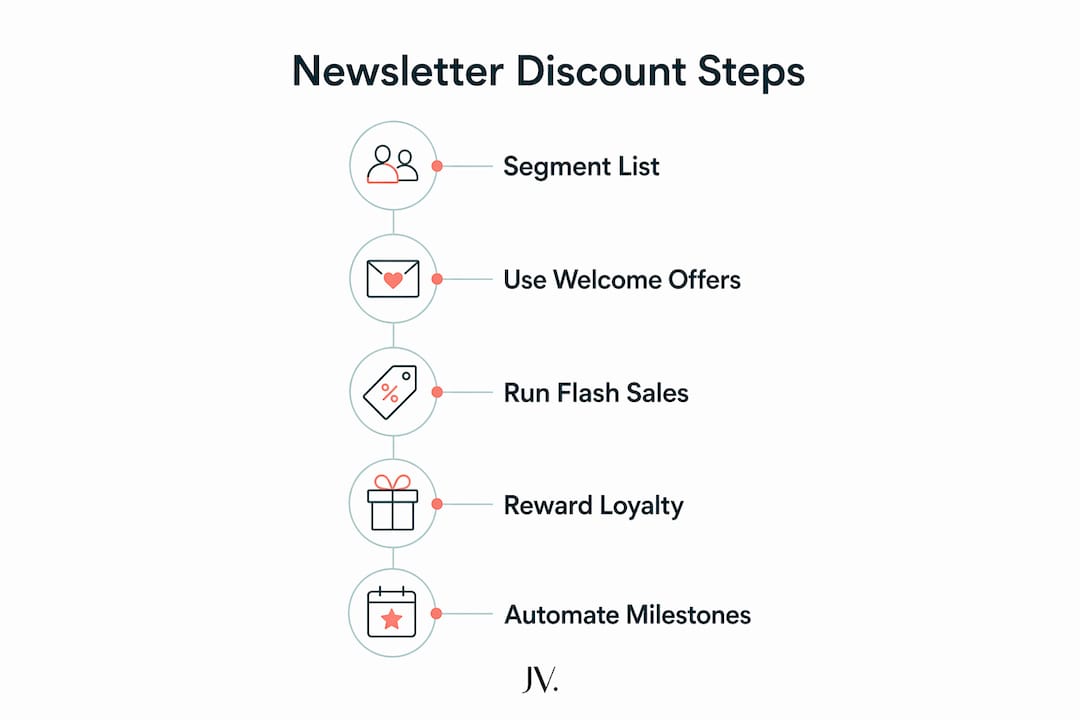
6. Use bundle promotions to increase order value
Bundle deals, complete outfits at a reduced combined price, serve two purposes at once. They increase average order value and they introduce subscribers to product categories they might not have explored independently. A newsletter pairing a midi dress set with a matching accessory at a combined price is a stronger conversion prompt than a flat site-wide discount, and it does not depress your full-price sell-through across the board.
7. Incorporate gamified engagement emails
Gamification in email, prize draws, style quizzes, interactive polls, generates engagement that pure discount emails cannot match. One clothing retailer case study found that gamified emails generated up to 15% of their total email channel revenue, driven by the loyalty and repeat engagement they created. The discount is not always the draw. Sometimes the experience is.
8. Set up abandoned cart recovery with a tiered offer
Abandoned cart emails recover revenue that would otherwise be lost entirely. The most effective sequences escalate: a first email with no discount (just a reminder), a second email 24–48 hours later with a modest incentive such as free shipping, and a third with a small percentage off if the subscriber still has not converted. This tiered approach means you are not giving away margin to customers who would have returned anyway.
9. Align discount frequency with your brand positioning
How often you send promotional emails signals your brand’s price positioning as clearly as your ticket prices do. A brand sending weekly discount codes trains its audience to see it as a sale brand. Bi-weekly or monthly promotional sends, interspersed with editorial content, preserve the sense that a discount is an event worth acting on. Fashion marketing strategists consistently advise treating the newsletter as an organic social media equivalent: brand voice and genuine content first, promotions as punctuation rather than the whole sentence.
10. Use loyalty programme integration to replace pure discounts
Points-based loyalty rewards tied to newsletter engagement give subscribers a reason to open every email, not just the ones with a code. Reminding subscribers of their points balance, and what they could redeem it for, drives repeat purchases without requiring a new discount each time. This approach also generates first-party data on purchase behaviour that sharpens your segmentation over time.
| Discount type | Typical frequency | Primary goal | Risk level |
|---|---|---|---|
| Welcome offer | Once per new subscriber | List growth, first purchase | High if overused |
| Flash sale | Monthly or less | Short-term revenue spike | Medium |
| Early access | Per new collection | Loyalty, brand prestige | Low |
| Birthday code | Annual, automated | Personal conversion | Low |
| Bundle promotion | Seasonal | Average order value | Low |
| Abandoned cart | Triggered | Revenue recovery | Low |
| Loyalty reward | Ongoing, triggered | Retention | Low |
Why brand storytelling belongs in every fashion newsletter
The most effective fashion newsletters in 2026 do not read like catalogues. They read like a small magazine that happens to sell clothes. Shifting from weekly promotional sends to bi-weekly editorial newsletters reduces unsubscribes and lifts revenue per email, according to Litmus 2025 data cited by fashion email operators. The structure that works is roughly one piece of editorial content from the brand, one featured product with a genuine story behind it, and one moment of personality, whether that is a styling tip, a behind-the-scenes glimpse, or a recommended read.
Artisanal hat brand Ruslan Baginskiy reported that regular editorial newsletters increased orders on their website by up to 10%, with content covering care guides, styling advice, and collection stories rather than discount codes. The newsletter did the selling by being genuinely useful, not by being cheap.
The balance to aim for is approximately 60% editorial and inspirational content against 40% promotional. If every email is a discount, subscribers wait for the next sale. If every email is pure content with no commercial hook, you leave revenue on the table. The sweet spot is a newsletter that subscribers actually want to read, with promotions that feel like a natural part of the conversation rather than the whole point of it.
Treating your newsletter as an owned media channel rather than a broadcast tool also changes how you measure success. Open rate and click-through rate matter, but so does the quality of engagement: are subscribers clicking through to editorial content, not just discount pages? Are they sharing? Are they replying? These signals indicate a list that will convert repeatedly over months, not just once on a welcome code.
- Avoid discount fatigue by reserving promotional emails for genuine events: new collections, seasonal sales, and subscriber milestones.
- Use personalised newsletter strategies to tailor editorial content as well as offers, matching the brand story to the subscriber’s demonstrated interests.
- Protect pricing integrity by never sending a site-wide discount to your full list without a clear strategic reason.
- Reward inbox loyalty with exclusive content, early access, and subscriber-only experiences that cannot be replicated by a casual website visitor.
What the research says about email discounts and customer loyalty in UK fashion
The revenue case for email marketing in UK fashion is well established. Segmented email programmes consistently account for 30–40% of total brand revenue when promotional and editorial emails are run together with proper audience segmentation. That figure reflects brands running the full mix: welcome series, editorial newsletters, VIP early access, and triggered promotional flows.
The risk of over-indexing on discounts is equally well documented. Welcome discounts drive short-term list growth but depress full-price sell-through for at least 12 months afterwards. Brands targeting premium positioning are advised to replace price-based welcome incentives with non-price offers such as lookbooks or atelier content, preserving pricing integrity while still rewarding new subscribers.
Subscriber quality matters more than list size. Brands that build loyal communities through valuable editorial content see higher retention than those relying on introductory coupons. A large list of subscribers who only open emails when there is a discount code is worth considerably less than a smaller list of genuinely engaged readers who trust the brand’s editorial voice.
Discount abuse is a practical problem too. Serial signup customers create multiple email addresses to claim welcome codes repeatedly. The most effective mitigation combines trigger-based flows with exclusive subscriber rewards that require genuine engagement, such as a loyalty tier that unlocks only after a second purchase. This makes the reward meaningful and the abuse considerably harder to execute.
On the compliance side, UK brands sending promotional emails must comply with PECR and the ICO’s direct marketing guidance, which requires clear opt-in consent, an easy unsubscribe mechanism in every email, and accurate sender identification. Non-compliance carries fines from the ICO and, more practically, destroys the list quality that makes email marketing valuable in the first place. For brands using discount codes in fashion newsletters, ensuring that every subscriber on the promotional list has given explicit consent is both a legal requirement and a signal that the list is genuinely engaged.
Key takeaways
Newsletter discounts in fashion marketing generate the strongest returns when combined with editorial content, audience segmentation, and exclusivity tactics rather than deployed as blanket promotional blasts.
| Point | Details |
|---|---|
| Email revenue contribution | Segmented email marketing accounts for 30–40% of total revenue for fashion brands running it well. |
| Welcome discount risk | Welcome discounts drive list growth but depress full-price sell-through for at least 12 months. |
| Editorial content balance | Aiming for roughly 60% editorial and 40% promotional content reduces unsubscribes and sustains engagement. |
| Exclusivity over price cuts | Early access and private sales build loyalty without compressing margins or anchoring subscribers to discounted prices. |
| Compliance requirement | UK brands must meet PECR and ICO consent requirements for every promotional email sent. |
Discover Jvwear’s latest collections
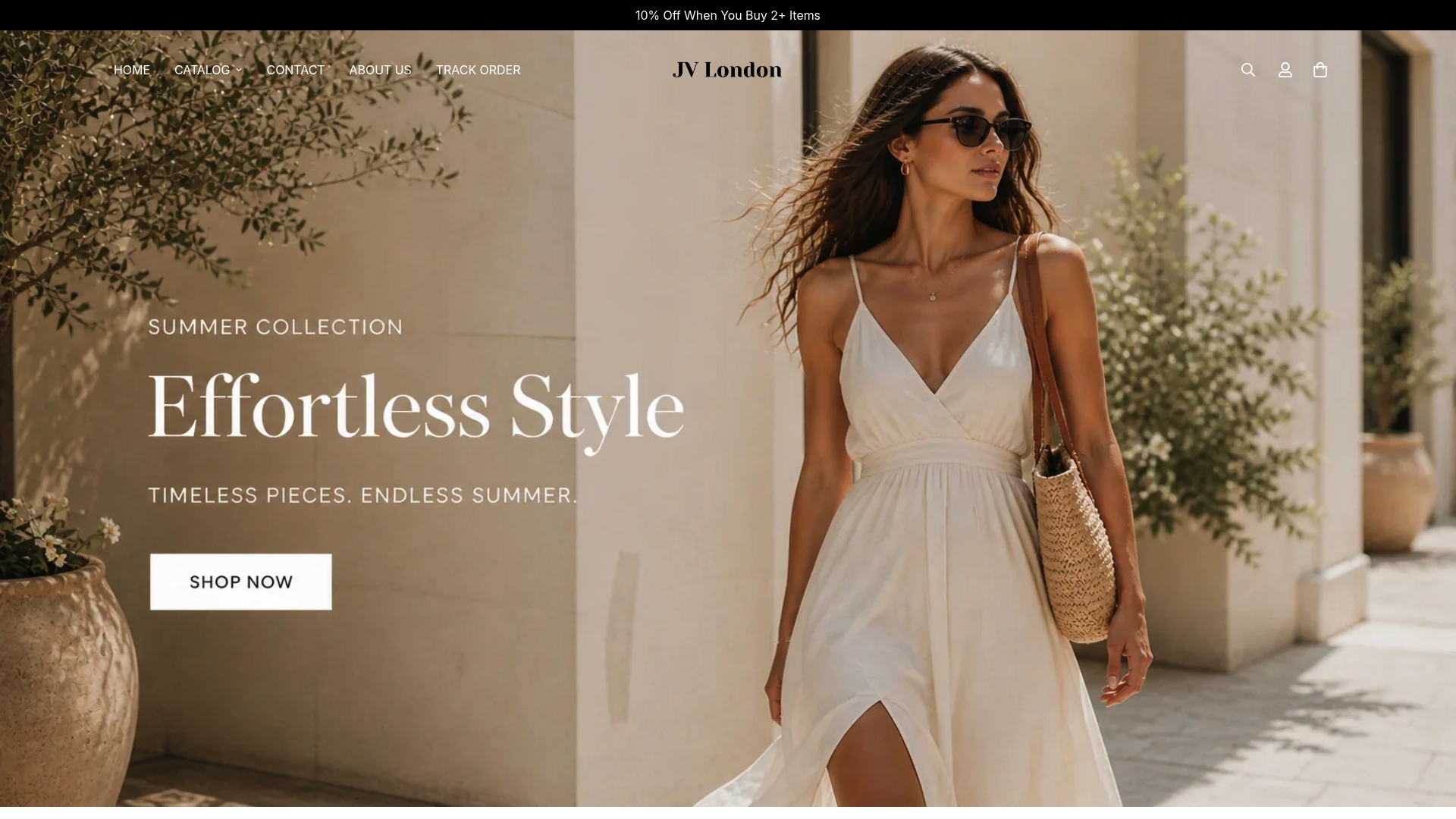
Jvwear’s newsletter subscribers get first access to new arrivals, exclusive offers, and styling content before anyone else. From the cardigan collection to seasonal dresses and accessories, every new drop lands in your inbox before it reaches the wider public. Sign up to the Jvwear newsletter and shop the pieces worth knowing about first.