Online fashion promotions are defined as time-limited or ongoing digital incentives that brands use to drive purchases, reward loyalty, and attract new shoppers. The most effective types of online fashion promotions blend urgency with personalisation, pulling shoppers in through flash sales, coupon codes, social commerce, and value-add rewards. Industry benchmarks suggest brands allocate roughly 60% of their marketing budgets to long-term brand building and 40% to conversion-driven promotions. That split explains why you will rarely see a quality fashion brand running permanent discounts. Understanding the full range of promotion types helps you shop smarter and spend less.
1. What are the types of online fashion promotions?
Online fashion promotions fall into six main categories: flash sales, coupon codes, social commerce deals, loyalty rewards, omnichannel offers, and value-add promotions. Each type serves a different purpose. Flash sales create urgency. Coupon codes reward specific behaviours. Social commerce deals meet shoppers where they already spend time. Knowing which type you are dealing with helps you decide whether to act immediately or wait for something better.
The industry term for this broader category is “sales promotion,” a recognised marketing discipline covering any short-term incentive designed to accelerate a purchase decision. You will see the phrase “online fashion promotions” used widely by shoppers, but “sales promotion” is the term marketers and retailers use internally. Both refer to the same set of tactics.
2. Flash sales: urgency-driven discounts with a tight window
Flash sales are short, sharp discount events, typically lasting anywhere from a few hours to two days, with price cuts that make hesitation costly. They are one of the most recognisable forms of digital fashion sales because the countdown clock is built into the experience. The pressure is real, and brands design it that way deliberately.

For shoppers, the key is preparation. Brands rarely announce flash sales far in advance, so you need to be on their radar before the event starts. Signing up for email alerts and following brand accounts on social media are the two most reliable ways to get early notice. Jvwear, for example, uses its newsletter to give subscribers first access to time-sensitive offers before they appear on the main site.
Pro Tip: Set a browser bookmark folder for your favourite fashion sites and check it on monday and friday mornings. Flash sales most commonly launch at the start and end of the working week, when online traffic peaks.
The 60/40 marketing budget split means flash sales are a deliberate, rationed tool, not a permanent feature. Brands that run them too often train shoppers to wait for discounts rather than buying at full price. When you see a genuine flash sale from a brand that rarely discounts, that is the one worth acting on. Read more about how flash sales work before your next purchase decision.
3. Coupon codes and seasonal holiday promotions
Coupon codes are alphanumeric strings, such as “XS400” or “JULY42026,” that shoppers enter at checkout to unlock a discount. Seasonal holiday promotions typically offer discounts of 10%–40% and run for 5–10 days around key calendar dates. That short window is intentional. It creates the same urgency as a flash sale but gives shoppers slightly more time to decide.
The strategic purpose of coupon codes goes beyond simple discounting. Brands use specific codes to track which channel drove a conversion, whether that was an email, a social post, or a partner site. A code tied to an abandoned cart email, for instance, tells the brand that the shopper was close to buying and just needed a nudge. That data shapes future campaigns.
| Promotion type | Typical discount | Usual duration |
|---|---|---|
| Seasonal holiday code | 10%–40% | 5–10 days |
| Newsletter exclusive | 10%–20% | 7–14 days |
| Abandoned cart offer | 10%–15% | 24–72 hours |
| Bulk purchase discount | 5%–25% | Ongoing |
Pro Tip: The deepest coupon discounts rarely appear on public sale pages. Newsletter exclusives and abandoned cart emails consistently yield better codes than anything listed on a brand’s homepage. Subscribe and then browse without buying to trigger the best offers.
Seasonal codes also serve an inventory function. A brand sitting on surplus summer stock in late july will push a holiday code to clear it before the new season arrives. Knowing this rhythm helps you find the best deals at exactly the right moment.
4. What is social commerce and why does it dominate fashion promotions?
Social commerce is the practice of completing a purchase directly within a social media platform, without leaving the app. It is not just advertising. It is a fully integrated storefront embedded inside your feed, stories, or short video content. Shopee holds a 53.22% user access share in social commerce for fashion in Indonesia as of 2025, with TikTok Shop at 27.37%. Those figures show how decisively shoppers have shifted toward buying inside social platforms rather than clicking through to external sites.
For fashion brands, social commerce changes the entire promotional structure. A brand no longer needs to drive traffic from Instagram to its website. The sale happens inside Instagram itself. That compression of the purchase journey means promotions must be built for the feed, not for a product page. Short interactive videos now drive more engagement and purchase intent than static banner ads or email campaigns.
As a shopper, you can use social commerce features to your advantage:
- Follow brand accounts on TikTok and Instagram to catch in-feed exclusive offers that do not appear on the brand’s website.
- Use platform wishlist or save features to track items and receive price-drop notifications.
- Watch live shopping events, where hosts often release one-time codes valid only during the broadcast.
- Check the “Shop” tab on brand profiles regularly, as platform-specific discounts are often listed there first.
Social commerce is a direct storefront, not just a discovery channel. Brands that understand this build promotions specifically for each platform rather than repurposing the same campaign everywhere.
5. Loyalty programmes and value-add promotions
Loyalty programmes are structured reward systems that give shoppers points, early access, or exclusive perks in exchange for repeat purchases. They represent a fundamentally different approach to fashion marketing strategies compared to flash sales or coupon codes. Instead of cutting the price, the brand adds value without touching the number on the price tag.
Luxury and premium brands actively avoid direct discounts to protect their price integrity. A markdown signals that the original price was inflated. A gift with purchase, free expedited shipping, or early access to a new collection signals generosity without undermining the brand’s positioning. This is why you will almost never see a high-end label running a site-wide percentage-off sale.
For shoppers, loyalty programmes reward patience and consistency. The benefits worth looking for include:
- Free expedited shipping on all orders above a threshold, saving £5–£10 per order.
- Early collection access, which matters most for limited-run pieces that sell out quickly.
- Gift with purchase, where a free accessory or sample is added at checkout above a spend level.
- Tiered member discounts, where higher spend unlocks better rates on future purchases.
The practical tip here is to consolidate your fashion spending with two or three brands rather than spreading it across many. Concentrated loyalty earns tier upgrades faster and unlocks the perks that genuinely offset the full price you pay.
6. What role do omnichannel promotions like BOPIS play in fashion sales?
Buy-Online-Pick-Up-In-Store, known as BOPIS, is an omnichannel promotion that lets shoppers order online and collect in person, often with a coupon that is exclusive to the in-store pickup option. Retailers use BOPIS-specific promotions to encourage store visits, knowing that shoppers who enter a physical space tend to browse and buy additional items beyond their original order.
The financial logic is straightforward. BOPIS eliminates last-mile delivery costs for the retailer. That saving gets partially passed to the shopper as an exclusive discount, unavailable for home delivery orders. Both sides benefit. The shopper gets a better price. The retailer gets a store visit and the additional sales that come with it.
Modern fashion promotions operate as narrative systems across channels, giving personalised, higher-value offers to shoppers who engage on multiple platforms. A shopper who browses online, follows the brand on Instagram, and picks up in store is worth more to the brand than a one-time buyer. That multi-touch behaviour unlocks better offers. You can read about retail display and promotion trends to understand how physical store environments are designed to maximise these in-store moments.
Pro Tip: When a brand offers a BOPIS option at checkout, check whether a unique coupon code appears in the confirmation email. These codes are often valid for 48 hours in-store and cover categories not included in the online sale.
| Channel | Promotion type | Key shopper benefit |
|---|---|---|
| Online only | Flash sale, coupon code | Convenience, immediate saving |
| In-store only | BOPIS exclusive coupon | Better discount, no delivery wait |
| Social commerce | In-feed deal, live event code | Discovery, platform-exclusive price |
| Multi-channel | Loyalty tier reward | Cumulative value, early access |
Key takeaways
The most effective online fashion promotions combine time pressure with personalisation, rewarding shoppers who engage across multiple channels rather than waiting for site-wide sales.
| Point | Details |
|---|---|
| Flash sales reward preparation | Sign up for brand newsletters to access flash sales before they go public. |
| Coupon codes track behaviour | Abandoned cart and newsletter codes consistently offer deeper discounts than public sale pages. |
| Social commerce is a storefront | Platforms like TikTok Shop and Instagram Shop host exclusive deals not listed on brand websites. |
| Loyalty beats one-off discounts | Concentrating spend with fewer brands unlocks tier perks worth more than a single markdown. |
| BOPIS unlocks hidden savings | In-store pickup orders often carry exclusive coupons unavailable for home delivery. |
My take on where fashion promotions are heading
The shift I find most significant in 2026 is the move away from always-on discount culture toward what the industry calls curated, narrative-driven campaigns. For years, the default was to run a sale every other week and train shoppers to expect it. That approach eroded brand value and conditioned buyers to never pay full price. The brands doing interesting work now are the ones building promotions around a story, a season, or a cultural moment rather than just a percentage off.
What this means practically is that the best deals are increasingly hidden. They live in newsletters, in loyalty tiers, in social commerce live events, and in BOPIS confirmation emails. The shopper who knows where to look gets far better value than the one who waits for a homepage banner. I would encourage you to think of promotion hunting as a skill rather than luck. The mechanics are learnable, and the savings are real.
The other thing worth saying is that social commerce has permanently changed the speed at which promotions move. A live shopping event on TikTok can sell out a product in minutes. If you are serious about catching those deals, you need to be in the right places before the event starts, not scrambling to find the link after it ends.
— Mykola
Jvwear’s curated collections: where promotions meet style
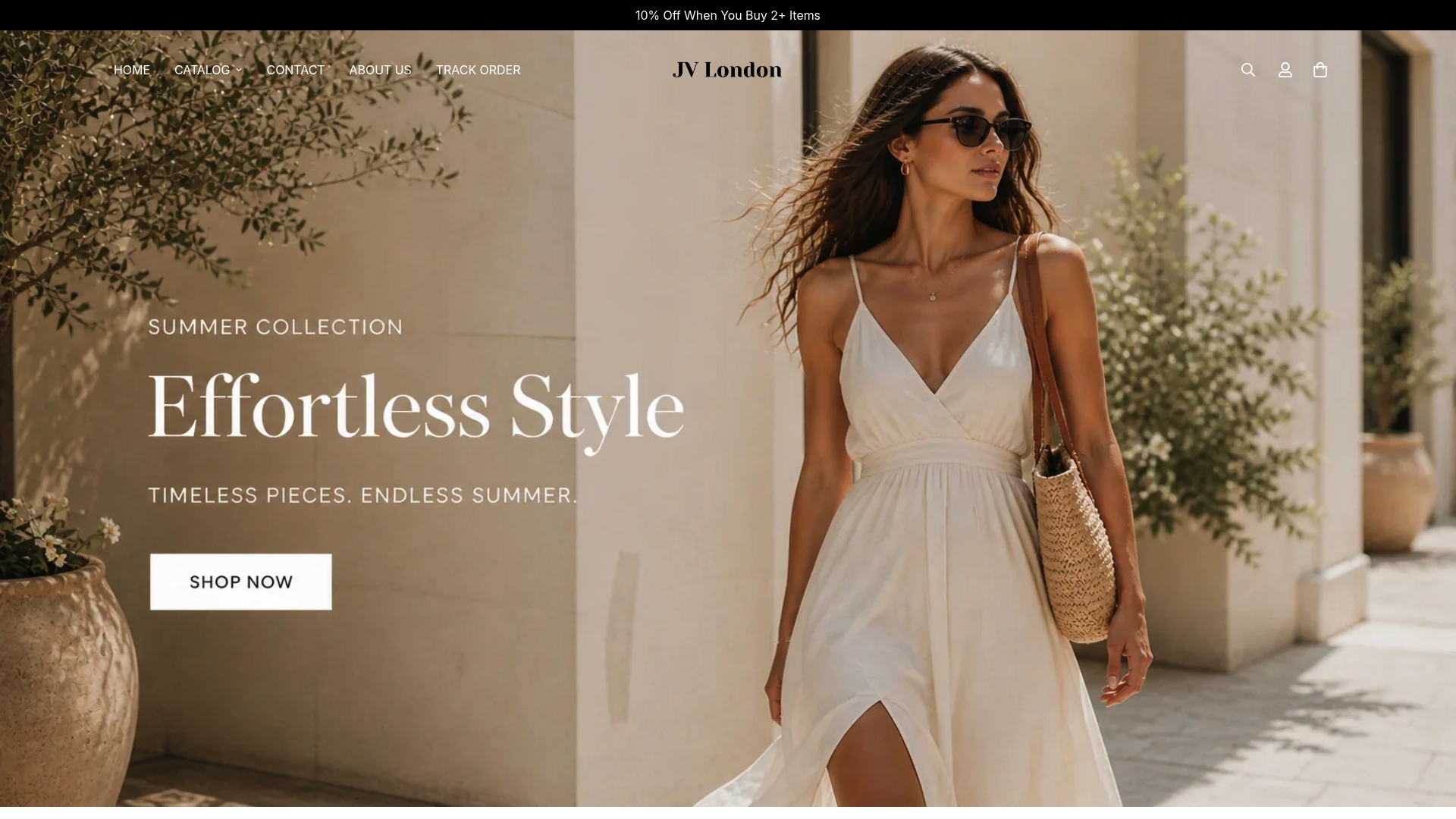
Jvwear brings together a carefully selected range of women’s clothing and accessories, from versatile knitwear to statement midi dresses, with promotional offers built into the shopping experience. Free UK shipping, 30-day hassle-free returns, and bulk purchase discounts make it straightforward to shop confidently without overspending.
The Solvra two-piece midi dress set is a strong example of the kind of piece that performs well during seasonal promotions: versatile enough for multiple occasions, well-priced at full rate, and even better value when a coupon code applies. Subscribe to the Jvwear newsletter to receive exclusive codes and early access to new arrivals before they reach the main catalogue.
FAQ
What are the most common types of online fashion promotions?
The most common types are flash sales, percentage-off coupon codes, seasonal holiday promotions, loyalty programme rewards, and social commerce deals. Each targets a different shopper behaviour and purchase stage.
How do I find exclusive fashion coupon codes?
Newsletter exclusives and abandoned cart emails consistently offer better codes than public sale pages. Subscribe to brand emails and browse without completing a purchase to trigger personalised discount offers.
What is social commerce in fashion?
Social commerce is the ability to browse and complete a purchase directly within a social media app such as TikTok or Instagram. Shopee and TikTok Shop are the dominant platforms for fashion social commerce, with combined user shares exceeding 80% in key markets.
Why do luxury fashion brands avoid direct discounts?
Luxury brands protect price integrity by offering value-adds such as free shipping, early access, and gifts with purchase rather than markdowns. A direct discount implies the original price was too high, which undermines brand positioning.
What is BOPIS and how does it save shoppers money?
BOPIS stands for Buy-Online-Pick-Up-In-Store. Retailers pair BOPIS orders with exclusive coupons unavailable for home delivery, passing on logistics savings to shoppers who collect in person.