A neckline is simply the top edge of a garment, the line that frames your face and collarbones and sets the tone for everything else you wear. The single rule that matters most is proportion: pick a shape that balances your frame and suits the occasion, rather than chasing whatever’s trending. The glossary below names every common cut, and the section after it turns that naming into a decision.
TL;DR:
- Choosing a neckline should be based on proportion, depth, and support needs rather than trending shapes or body type categorizations.
- Vertical necklines like V-necks elongate the torso, while horizontal styles like boat necks add width across the shoulders and collarbone.
- Fabric type significantly impacts neckline appearance; stiff fabrics hold sharp edges, while fluid fabrics drape and soften the shape.
- The right support, such as appropriate bras or tape, is crucial for preventing gaping or discomfort, especially in plunging or strapless styles.
- Seasonal layering and cultural context influence neckline choice, with heavier fabrics and coverings suited for winter and modest cuts preferred in certain cultures.
Table of Contents
- Dress necklines guide: every common type explained
- How to choose a neckline that suits you
- Styling and support: bras, tape and jewellery pairings
- Wedding and formal neckline considerations
- What images should accompany this guide
- How this guide was put together
- A short history of the dress neckline
- Matching necklines to neck length and shoulder width
- Fabric and neckline interaction
- Necklines for different seasons and climates
- Cultural variations and current trends
- A straight-talking take on choosing a neckline
- Shop the necklines from this guide at Jvwear
- Sources
Dress necklines guide: every common type explained
Before you can choose a flattering cut, you need to know what to call it. Most fashion guides list between 20 and 27 common neckline variations, and the terminology overlaps constantly between retailers, tailors and stylists. Wikipedia’s own overview of the neckline as a garment feature confirms just how many named variants exist, from the everyday to the highly specific.
Here’s the working vocabulary for this dress necklines guide, with a typical use case for each.
- V-neck: A pointed cut meeting in a V below the collarbone. Flattering for most figures because the vertical line elongates the torso. Common in everyday jersey dresses and eveningwear alike, including Jvwear’s V-neck mini dress.
- Crew/jewel: A simple round cut that sits close to the base of the neck. Classic and unfussy, often seen on knitwear and structured daywear.
- Scoop: A wider, deeper U shape than a crew neck. Softens angular shoulders and works well on casual dresses.
- Square: A straight-edged cut across the chest with right-angled corners. Adds structure and shows off collarbones without plunging.
- Sweetheart: Shaped like the top of a heart, dipping at the centre. A bridal and eveningwear staple that flatters a fuller bust.
- Halter: Straps that wrap around the back of the neck, leaving shoulders and upper back bare. Popular for structured, supportive summer dresses such as the halter-neck midi with corset bodice.
- Boat/bateau: A wide, shallow cut running almost straight across from shoulder to shoulder. Broadens the collarbone visually, seen in the boat neck maxi dress with sheer overlay.
- Off-the-shoulder (Bardot/Carmen): Sits below the shoulder line, baring both shoulders. A romantic choice for occasionwear.
- Cowl: Loosely draped, folded fabric that falls in soft curves. Works best in fluid fabrics like satin or jersey.
- Keyhole: A small cutout, usually teardrop shaped, at the centre front or back. A subtle way to add interest without much skin exposure.
- Plunging/plunging V: A deep V that extends well below the bust line. Needs structured support underneath to hold its shape.
- Illusion: Sheer mesh or tulle used to create the appearance of skin, often extending a neckline higher for modesty while keeping a low-cut look underneath.
- Strapless: No straps at all, relying entirely on internal structure to stay up. A formalwear and bridal favourite.
- One-shoulder: Asymmetric, with a single strap over one shoulder and the other bare, as on the one-shoulder floral maxi dress.
- Surplice/wrap: Diagonal folds of fabric crossing over the bust, resembling a wrap cardigan. Flattering and adjustable for a range of bust sizes.
- Turtleneck/mock/funnel: High necklines that cover the throat, ranging from close-fitting (turtleneck) to a looser standing collar (funnel). Suited to autumn and winter layering.
Fashion glossaries this size aren’t padding. With 20 to 27 recognised variants in circulation, half the confusion around “what is this neckline called” comes down to overlapping names for near-identical cuts, not genuinely different shapes.
How to choose a neckline that suits you
Stylists increasingly advise against treating neckline choice as a fixed rulebook. Proportion, depth and construction matter far more than a generic “your body type should wear X” checklist, because two V-necks cut at different depths can produce completely different results on the same person.
That said, one genuinely useful principle holds up: vertical lines elongate, horizontal lines widen. A V-neck or plunging cut draws the eye down and narrows the shoulder line. A boat neck or wide scoop does the opposite, adding visual width across the collarbone, a technique confirmed across practitioner styling guides.
With that rule in mind, here’s a practical starting point by shape:
- Pear (fuller hips, narrower shoulders): Boat, off-the-shoulder or halter necklines broaden the upper body and balance the silhouette.
- Apple (fuller midsection): A V-neck or surplice wrap draws a flattering vertical line and skims rather than clings.
- Hourglass (balanced bust and hips, defined waist): Sweetheart, scoop or square necklines all work, since the proportions are already balanced.
- Rectangle (straighter waistline): Cowl or asymmetric one-shoulder styles add curve and visual interest.
- Inverted triangle (broader shoulders): A V-neck or scoop softens the shoulder line rather than adding to it.
Bust size and neck length matter just as much as body shape. A fuller bust generally needs more structure at a plunge or sweetheart neckline to avoid gaping, while a longer neck can carry higher, closer necklines like a crew or funnel without looking severe. A shorter neck usually benefits from open, lower necklines that create length.
Before you commit, run any dress through this checklist:
- Can you move, sit and reach comfortably without adjusting the neckline?
- Does it gape when you lean forward?
- Does your usual bra work with it, or will you need a different one?
- Can you wear the jewellery you actually own with it?
Pro Tip: Try the dress on with the exact bra, shapewear or jewellery you plan to wear with it. A neckline that looks perfect on a hanger can gape, dig or clash entirely once real underpinnings are involved.
Styling and support: bras, tape and jewellery pairings
The right neckline still needs the right support underneath. Strapless and plunge cuts usually need a strapless bra with silicone grip or an adhesive bra; halter necklines pair with a halter or convertible-strap bra; corset-style dresses like structured halters often build support directly into the bodice.
- Use fashion tape or a modesty panel for gaping V-necks or wraps rather than pinning fabric, which shows.
- Illusion panels and clip-in inserts raise coverage on plunging necklines without changing the outer silhouette.
- A minor gape at the bust usually means the dress needs internal boning or a smaller cup size adjustment, not a different dress entirely, a fix confirmed by most construction and fit guides.
- Necklace length should follow the neckline: shorter chains suit high necklines, while longer pendants pair better with V and scoop cuts, since a short chain on a deep V just gets lost.
Wedding and formal neckline considerations
Illusion and sweetheart necklines dominate bridalwear for good reason: illusion mesh lets a gown look daringly low from a distance while keeping coverage close-up in photographs, and sweetheart cuts flatter a wide range of busts without needing straps.
- Strapless and plunging gowns typically rely on internal boning or built-in corsetry rather than a separate bra.
- A high illusion neckline, like the lace mini dress with a sheer panel, works well for ceremonies with dress codes that call for more coverage.
- Coordinate veil length and hairstyle with the neckline: a strapless or sweetheart gown usually carries an updo well, while a high neckline often looks cleaner with hair worn down or loosely pinned.
- Keep bridal jewellery minimal on illusion or heavily beaded necklines, since the fabric itself already does the visual work.
What images should accompany this guide
Pair line drawings or flat icons with each named neckline, captioned in six to eight words (“V-neck: point meets below the collarbone”). Show at least three necklines in both a wedding and a casual example side by side, since seeing the same shape in two contexts helps readers map the name to real garments faster than text alone.
How this guide was put together
This dress necklines guide draws on published fashion glossaries, stylist proportion guidance and garment-construction notes on fit and support. The brand’s own catalogue, UK shipping and 30-day returns policy are referenced as brand facts, applicable to UK customers only.
A short history of the dress neckline
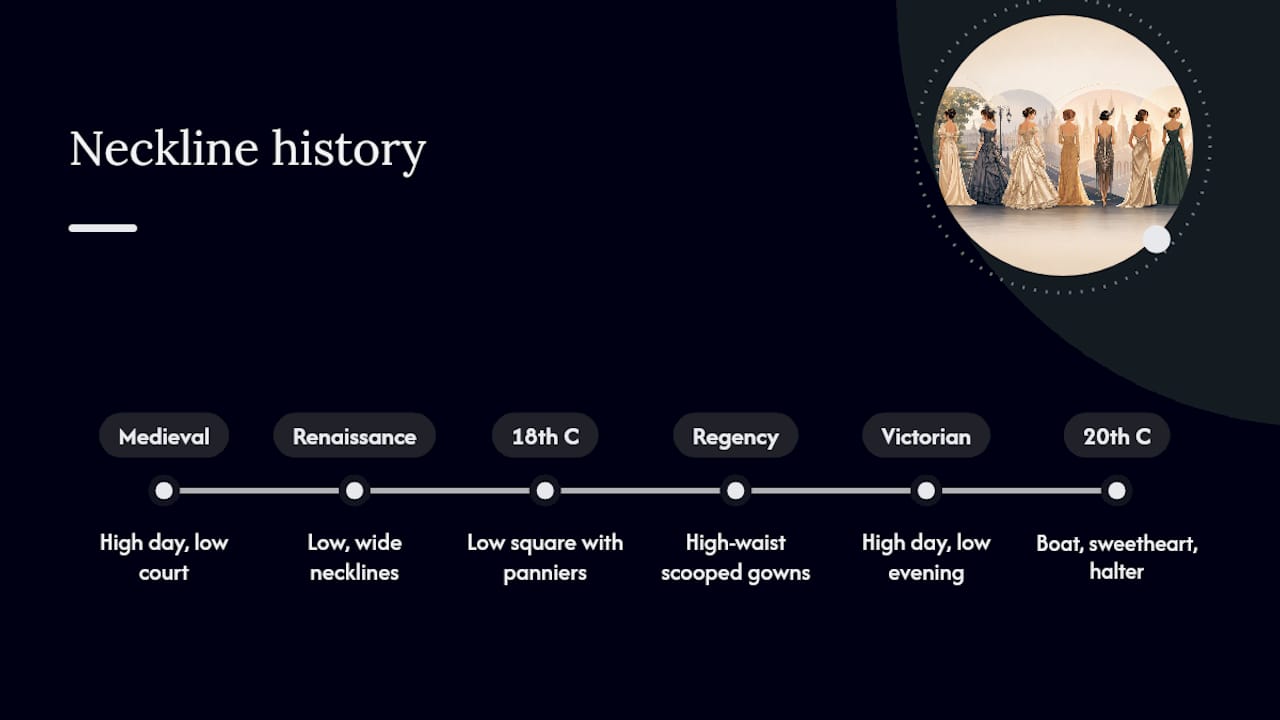
Necklines have shifted with whatever a given era considered proper, practical or fashionable, and the pendulum swings further than most people realise. Medieval European dress favoured high, modest necklines for daywear, often with a wimple or veil covering the neck entirely, while court fashion in the same period could carry surprisingly low, wide necklines for aristocratic women, particularly in the late medieval and Renaissance courts.
The 18th century brought the fitted, low square neckline associated with panniers and stomachers, then the Regency era simplified everything into high-waisted, softly scooped Empire-line gowns. Victorian daywear clamped back down to high, boned collars, a direct reaction against the exposure fashionable a century earlier, while evening gowns of the same decades still dipped low across the shoulders.
The 20th century moved faster than any era before it. The 1920s dropped waistlines and simplified necklines into boat and scoop shapes suited to looser, boyish silhouettes. The 1950s brought the sweetheart neckline into mainstream eveningwear, tied to the era’s hourglass ideal. The 1970s popularised halter and plunging necklines for daywear, something unthinkable a generation earlier. Bridal fashion has followed its own separate arc, cycling between high Victorian-revival necklines and strapless minimalism roughly every couple of decades. What counts as daring or demure has never been fixed. It’s always been a moving target shaped by what a particular decade decided modesty and glamour actually meant.
Matching necklines to neck length and shoulder width
Neck length and shoulder width change how identical necklines read on different people, which is why the same dress can look completely different on two friends of similar height.
A longer neck can carry high necklines, turtlenecks and funnel collars without looking severe, since there’s already length to spare. A shorter neck usually benefits from open necklines like a scoop, V or off-the-shoulder cut, all of which create the illusion of length by exposing more of the collarbone and upper chest. Piling a high, tight collar onto a shorter neck tends to shorten it further, which is worth remembering before buying a polo-neck dress on impulse.
Shoulder width works on a similar logic. Narrower or sloped shoulders generally benefit from boat necks, off-the-shoulder cuts or structured halters, all of which add horizontal width at the collarbone. Broader shoulders usually look more balanced in a V-neck or scoop, both of which soften the shoulder line rather than emphasising it further. Off-the-shoulder styles need a little extra caution on broader frames, since baring the whole shoulder line can draw more attention to width rather than less.
None of this is about “flaws” to hide. It’s about using a neckline’s natural line to work with your frame instead of against it, the same logic that makes a boat neck useful for one person and unflattering for another.
Fabric and neckline interaction
A neckline’s shape on the hanger and its shape on your body are two different things, and fabric is the reason. Structured fabrics like taffeta, cotton poplin or heavier satin hold a shape crisply, which is exactly why square, sweetheart and boat necklines, all of which rely on a defined edge, tend to be cut in firmer fabrics. A square neckline in soft jersey will simply fold and lose its corners within a day of wear.
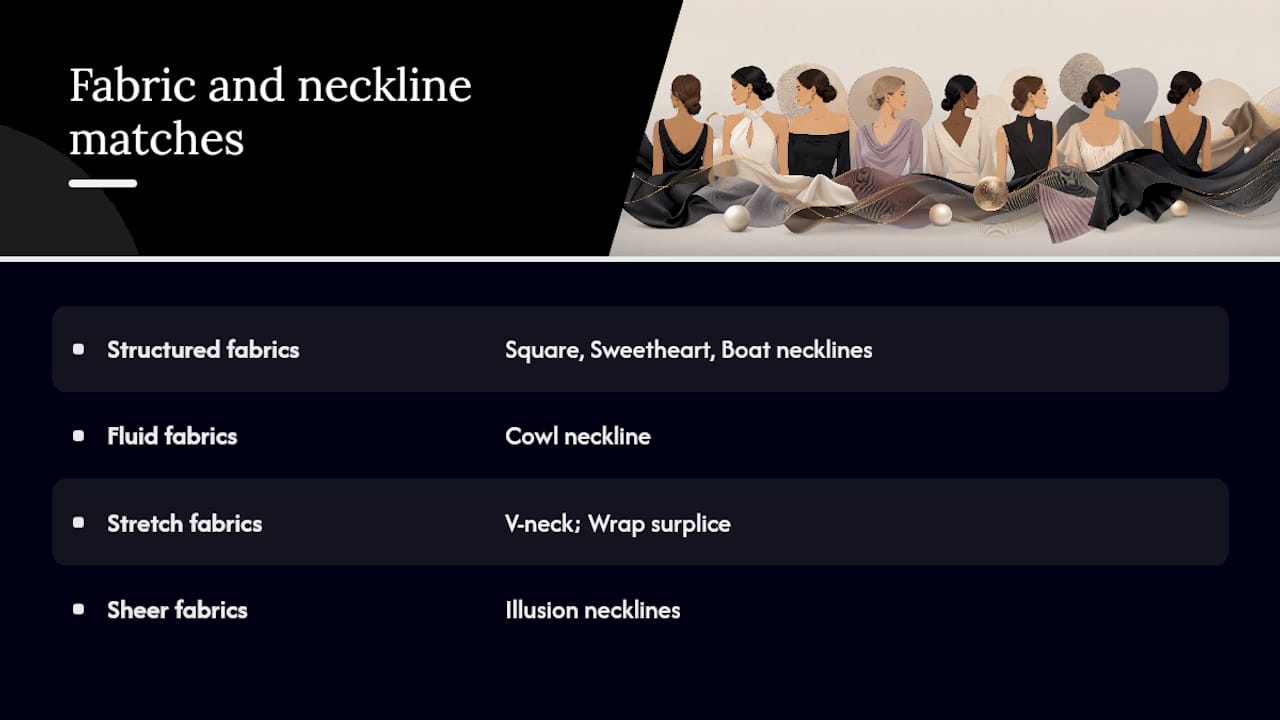
Fluid fabrics like silk charmeuse, viscose and lightweight jersey behave in the opposite way. They drape, fall and skim the body, which is exactly what a cowl neckline needs to create its soft folds. Try to cut a cowl in stiff cotton and it will stand away from the body awkwardly instead of draping.
Stretch content changes the equation again. A V-neck or wrap surplice in a fabric with decent stretch, jersey or a stretch crepe, adjusts slightly to the body and resists gaping better than the same cut in a rigid, non-stretch weave. That’s part of why wrap dresses are almost always made in jersey rather than stiff cotton: the stretch is doing structural work, not just comfort work.
Sheer fabrics, mesh, tulle, chiffon, are what make illusion necklines possible in the first place. The neckline only works as a style because the fabric itself is doing the visual trick of appearing to expose skin while actually covering it. Choosing the wrong fabric for a neckline isn’t a small styling slip; it can make the entire construction fail.
Necklines for different seasons and climates
Neckline choice doesn’t stop mattering once the weather turns, it just adds a layering problem on top of a styling one. Warmer months favour more open necklines, scoop, V, halter and off-the-shoulder, both because they’re cooler to wear and because they pair naturally with bare arms and lighter fabrics.
Colder months don’t mean abandoning a favourite neckline, just building around it. A deep V or scoop-neck dress still works in winter under a structured coat or blazer, with the neckline peeking out at the collar. Cowl necklines are particularly useful for cold-weather layering, since the folded fabric already sits close to the throat, doing double duty as both a style feature and a small amount of warmth.
Cardigans and knitwear are the easiest fix for a dress bought for its neckline but worn out of season. A cardigan layered over a sweetheart or off-the-shoulder dress changes the entire silhouette, softening a formal cut into something wearable on a cold evening without losing the dress underneath. Strapless and plunging necklines are the trickiest to carry through winter, since so much support relies on the dress itself; a fitted jacket or shrug worn open, rather than buttoned over the neckline, tends to solve this better than trying to layer directly on top of the structure.
Climate aside, fabric weight does double duty here too: a heavier crepe or wool-blend dress with a modest neckline reads as a winter piece automatically, while the same neckline in a light cotton voile signals summer regardless of the cut.
Cultural variations and current trends
Necklines carry different meanings depending on where and when you’re wearing them, and what reads as formal in one culture can read as casual in another. High, covered necklines remain standard for many religious and cultural contexts, from certain wedding traditions to workplace dress codes across different regions, while other cultures have long embraced necklines Western fashion only normalised more recently, such as the deep halter and asymmetric cuts common in some South Asian and African formalwear traditions for decades before they became mainstream in Western eveningwear.
Trend cycles move faster than cultural norms, though. The last few years have seen a swing back towards structured, sculptural necklines, corset-style boning, sweetheart cuts and cutouts, after a long stretch dominated by minimalist scoop and crew necks. Cowl necklines have had a steady resurgence too, largely driven by the return of bias-cut slip dresses. One-shoulder and asymmetric cuts have moved from red-carpet novelty into fairly ordinary occasionwear, helped along by how flattering they are across a genuinely wide range of body shapes.
What doesn’t change is the underlying logic. Fashion cycles back to old necklines constantly, it’s less about a genuinely new shape appearing and more about which cut a given decade decides to bring back into fashion.
A straight-talking take on choosing a neckline
Most people overthink the neckline debate and underthink the fit debate. A V-neck cut two inches deeper stops behaving like the flattering V-neck everyone recommends and starts behaving like a plunge that needs a different bra entirely. The shape name matters less than the depth, the fabric and whether you tried it on with the actual underwear you’ll wear on the day.
If there’s one habit worth adopting from this guide, it’s trying dresses on with your real bra, your real shapewear and the jewellery you’d actually pair with them, not the flat, styled version you saw online. Chase proportion and comfort over whatever neckline is trending this season, and you’ll get more wear out of every dress you buy.
— Mykola
Shop the necklines from this guide at Jvwear
Working examples of most of the necklines covered here are available, so you don’t have to hunt across a dozen retailers to see how a sweetheart, halter or V-neck actually looks in different fabrics and lengths.
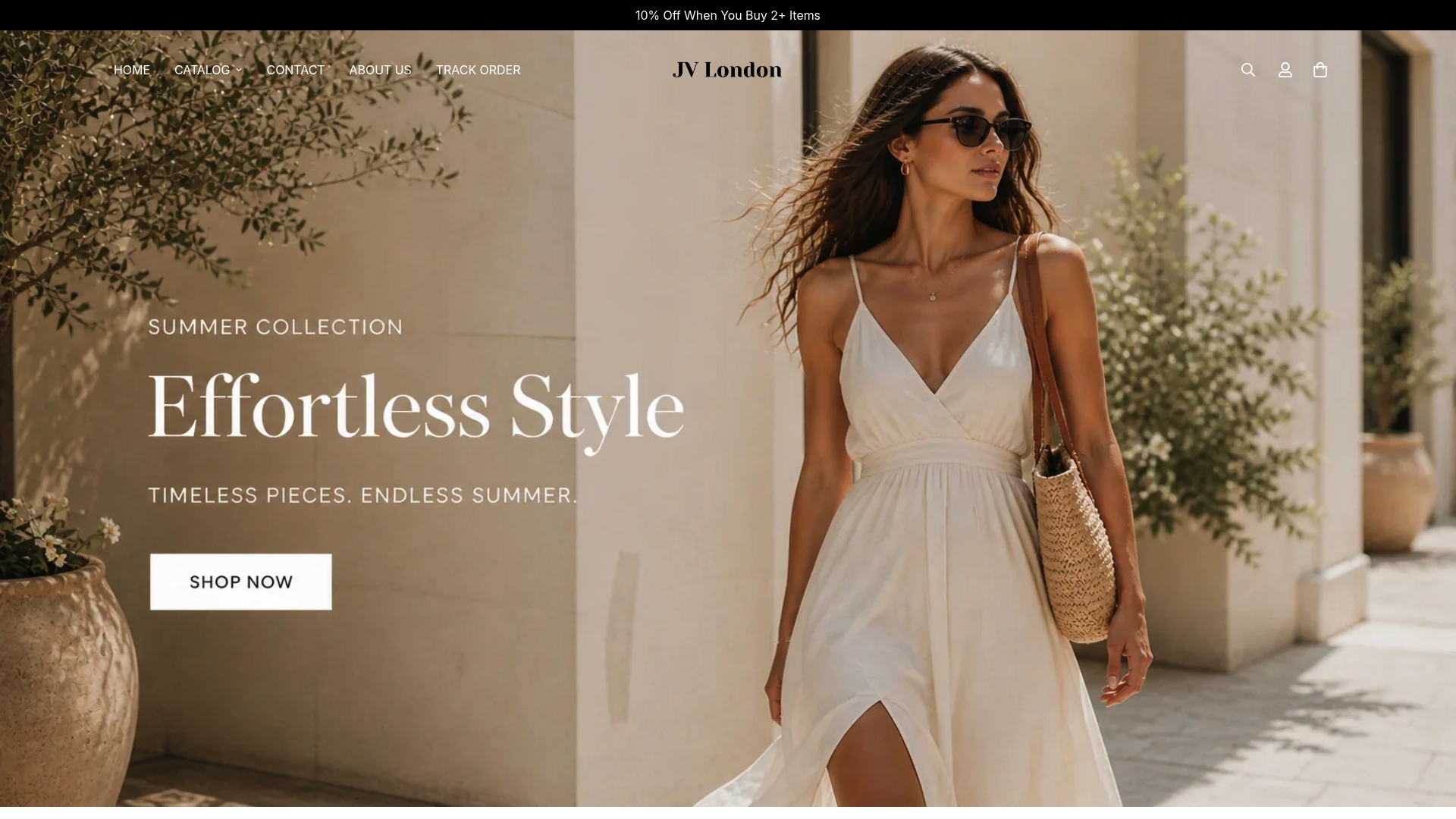
If a plunging V is your starting point, the V-neck mini dress shows the cut in an easy, everyday fabric. Prefer more structure at the bust? The elegant halter mini dress pairs a halter neckline with built-in support, while the two-piece midi dress set gives you a cardigan layer ready-made for cooler-weather wear over a lower neckline. Every dress ships free within the UK, with 30 days to return it if the fit or the neckline doesn’t work once you’ve tried it on properly. Browse the current range and find the cut that matches your proportions rather than the trend.
Sources
- 24 Types of Necklines Explained: The Ultimate Guide
- Neckline proportion, width, depth and balance
- Neckline — Wikipedia
- Top Necklace Lengths for Layering – British Chains